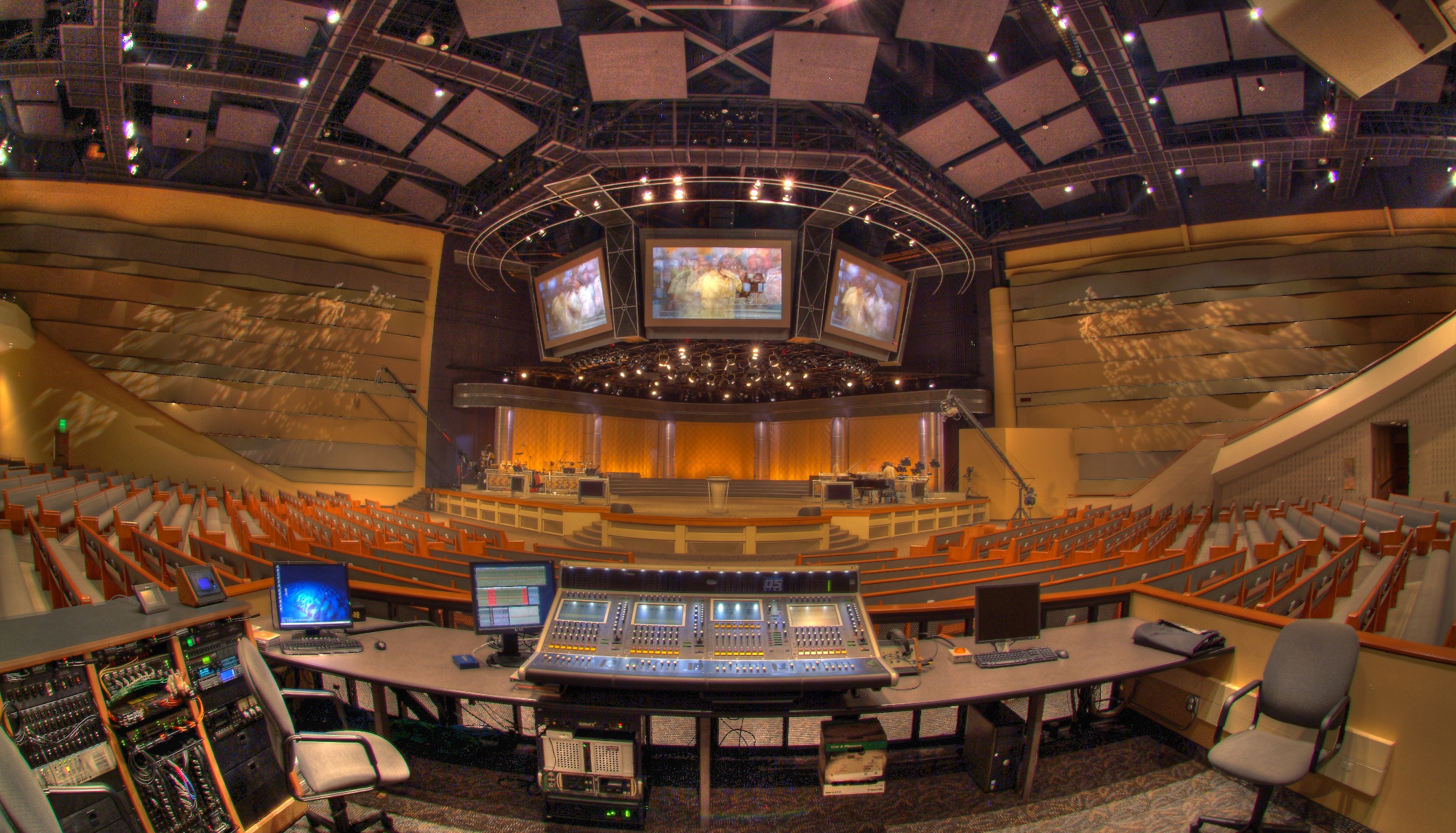
I can see why that $300,000 didn’t last long…
For some divine reason it appears to be church day at Ethics Alarms, though I attribute much of the phenomenon to my #1 topic scout Fred, who has been on fire of late.
David McQueen was the architect of a ruthless $46 million Ponzi scheme. While filling his own bank account, he also gave generously to Resurrection Life Church in Grandville, Michigan, one of the so-called “mega-churches,” as you can see in the photo above. McQueen donated about $300,000 in a three-year period, beginning in 2006, when the church was involved in a building project. See? He wasn’t so bad!
Assistant U.S. Attorney Matthew Borgula is involved in effort to reimburse victims by recovering some of the money taken by McQueen. The $300,000 looked like a nice chunk to go after, so he sent an e-mail to the church elders asking, pretty please, if they would give the money back.
“Resurrection Life Church had no knowledge of the source of the funds, nor was it in any way complicit with this donor,” The Rev. Bernard Blauwkamp, secretary of the church’s Board of Elders, wrote back.”We have read and considered the detailed information contained in your email of November 26, 2014, regarding the tithe monies and gifts given to the church by Mr. David McQueen. We were saddened to hear the news of his wrongdoing, and pray that God will work in his heart and life and bring repentance. We have prayerfully considered your request that the Church return all or part of this donor’s gifts and tithe monies, and must respectfully decline to do so.”
Taking the pressure to the next level, Borgula shared the letter with victims of McQueen’s scam. As a result, the church is getting some angry communications from victims who feel that it is benefiting from their misfortune…as they indeed are .
Ethics Calls:
Issue 1. Is the Church behaving ethically to refuse to return the money?
Sure. Money is money, and fungible. It is not the job of Resurrection Life Church to investigate and certify how virtuously obtained the money in each contribution may be. A church receives sinners, welcomes them, and reforms them if possible. It would be peculiar indeed if a church rejected a gift once it learned that the money was obtained unethically or even illegally, while being willing to embrace and forgive the miscreant who obtained it. If being contributed to a charitable institution isn’t sufficient to cleanse “dirty” cash, what is?
Issue 2. Is it poor citizenship for a church to reject a direct government law enforcement request?
No. Religious freedom relieves a religion of many ordinary obligations of citizenship. A religion’s first obligation is to God, then to its mission for humanity. It would be unethical for a church to neglect that mission in favor of the government’s objectives.
Issue 3. Was it unethical, as the church contends, for AUSA Borgula to publicize the church’s refusal to return the money in order to pressure the church to change its position?
Also no. Borgula is an attorney, and he represents the government, which is dedicated to returning as much of the stolen money as possible to the individuals scammed. The church is impeding that objective. It is completely ethical to use whatever legal tactics are available to pressure the church. Indeed, it would be unethical not to try such tactics.
Borgula also has an obligation to keep the victims informed regarding the success and failure of the government’s efforts. As U.S. Attorney Patrick Miles Jr. explained in a statement: “The U.S. Attorney’s Office must try to return assets stolen from innocent investors as restitution. We requested that various third parties voluntarily reimburse or return funds from David McQueen. We will continue our objective to keep victims apprised of our efforts.”
Nobody is in the wrong. The government and the church have different stakeholders, that’s all, and each is ethically obligated to place the welfare of its stakeholder first.
The church, however, has the money.
 Ethics Alarms
Oh-oh. I just noticed that the post is exactly 666 words.
Ick factor in spades!
I’ll pray for you, Jack!
“Nobody is in the wrong. The government and the church have different stakeholders, that’s all, and each is ethically obligated to place the welfare of its stakeholder first.
The church, however, has the money.”
This is why I find ethics such a hollow, pointless, mystifying discipline.
Surely not pointless.
Hey, two out a three ain’t bad.
But seriously, so often ethical and moral are on different planets. Why can’t the goofballs at this mega church (what a preposterous, telling name) simply apply the golden rule and write a check to the feds to allow them to recoup some of the victims’ funds? They can afford to do so. It would be the, gasp, Christian thing to do. And isn’t it a Christian church? Wouldn’t a temple be shamed into giving back any Madoff money they’d received that belonged to his countless Jewish victims?
If someone steals something from me and 6 months later I find it in a pawn shop and can prove 100%, via serial numbers, that that item was mine who which was stolen, is not the pawn shop owner the one who gets shafted in the end (assuming the thief is never apprehended)?
Yup.
How is that not analogous to the church in question?
A pawn shop doesn’t own the object. It’s collateral for a loan. Moreover, money isn’t like property—it’s fungible. That’s why money laundering works.
There’s that…I hit enter and went to take a shower and then recognized that money is the difference.
If a car thief donated a stolen car to a church, I’d assume the church could be compelled to surrender it to the rightful owner.
As for the “A pawn shop doesn’t own the object”, I don’t think that matters for the analogy, I could have just made the scenario some poor shlub just got sold my stolen property for $1000…he’d still be out the $1000 after I recovered my property.
You’re right.
Is this only an object because it’s a church?
Could I refuse to return the $300,000 if McQueen gave it to me?
What if he tacked on the $300,000 as one of those “voluntary additional taxes” that the IRS gives people the option of doing each year?
More on the rest after I do some checking, but here’s a good discussion of the pawnproker issue: http://www.grayduffylaw.com/wp-content/uploads/2014/05/Disposition-of-Stolen-Property.pdf
I’m guessing most any pawn shop transaction carries a presumption of suspicion.
The church’s actions may not be unethical in the secular world, but this is supposed to be a Christian Church. Once they were shown that this money was stolen from others, that taking this money harmed other people, they should have returned it. Once they were asked to return the money to repay the people their CHURCH MEMBER stole and gave to the church, the church should have agreed to help remedy this wrong. I see no other option for a Christian church.
Now, if I were on the leadership board of the church, I would have refused to give it to the government. I would have suggested we ask the government for a list of those harmed in the Ponzi scheme so that we can return the money directly to them. The money wasn’t stolen from the government, it isn’t, and never has been there money and they have no right to it. It was stolen from people and it should be returned to those people with the apologies of the church.
I like the analysis.