Ethics Quiz: The Anti-Washington Redskins Activist’s Bob Marley Costume

The Native American in the middle is dressed as a famous Jamaican. Would it have been offensive if he dressed as Sitting Bull?

The Native American in the middle is dressed as a famous Jamaican. Would it have been offensive if he dressed as Sitting Bull?

Terry Rambler, chief of the San Carlos Apache Tribe in Arizona, has  been at the forefront of the effort to force The Washington Redskins, a privately owned NFL sports franchise, to change its name and logo of long-standing because both are allegedly racist. [ As I have made clear many times, the team’s name is not racist, as neither its origins nor current use suggest or imply racist intent, purpose or impact, and the team’s owner has a First Amendment right to call his team whatever he wants. The decades long political correctness stunt has gained more traction under the Obama administration, because the Obama Administration and Senate Democrats do not respect the Constitution or follow it when it gets in the way of its agenda. (See: drones, Obamacare, immigration, NSA domestic spying, harassment of reporters, IRS partisan activities, recess appointments, Libya bombing, selective prosecution,  putting government pressure on the Redskins to change its name, etc )

But I digress.

This year, Rambler’s Halloween costume was Jamaican musician Bob Marley, complete with dreadlocks, wig, and rasta beanie. He also wore appropriate make-up to look like Marley.

Here is what the chief looks like most days:

Terry

Here he is on Halloween as the Reggae icon…
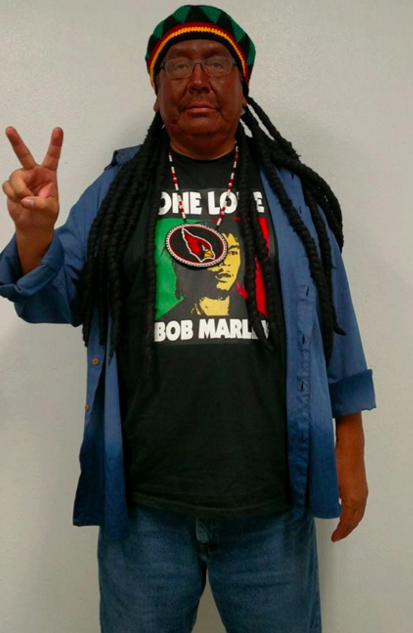
Halloween Marley

The costume is making  Rambler the target of criticism from both sides of the controversy: Redskins defenders who view his make-up as “blackface” and thus hypocritical, and his own Team Political Correctness, which sees Rambler as engaging in the same kind of insensitive conduct they claim the Washington Redskins embody.

To make things worse for Rambler, there was another recent Bob Marley controversy in  Gaston County, (North Carolina), where a sheriff’s captain  apologized  for wearing dark make-up as part of her own Marley Halloween costume after her in-costume photo appeared online.

And thus your Ethics Alarms Ethics Quiz of the Day is…
Was the Native American activist’s Bob Marley make-up unethical or hypocritical?

Continue reading

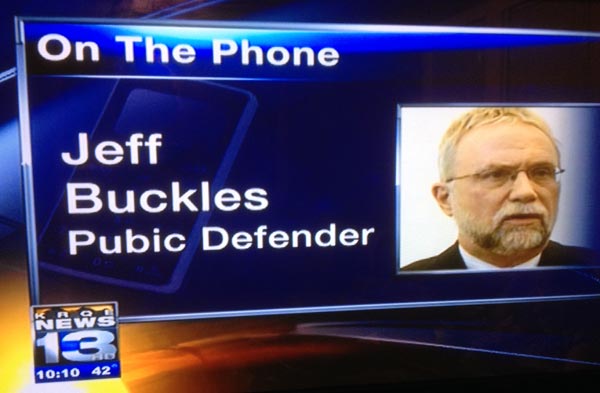
My Bi-Annual Typo Apology

pubic-defender-typo

I just decided to go over recent posts to catch typos until I hit one of them that had none. That took six typo-riddled posts, so now I’m taking a break and beating my head against the wall.

Typos here have been more quickly addressed this year than before, because kind and sharp-eyed reader SamePenn has been checking for them with his proof-reading super-power and quickly alerting me. Unfortunately, I’m about 20 posts behind in fixing the typos he flagged. That’s all my fault: this is the ProEthics crunch time, I’m traveling or speaking a lot, there are a lot of important ethics issues to cover, both of my computers are having issues, and most of all, I am handicapped by a lifetime inability to type or spell. When I’m juggling too many things at once, it gets worse

Believe me, I know: this is publishing, the issues are important, and typos are unprofessional, undermining the credibility and persuasiveness of everything I write. One reason I enjoy Prof. Jonathan Turley’s blog is that he has almost as many typos as I do.  It makes me feel a little better.

I apologize to all of you. It will continue to be a struggle, but I promise that I  am not unaware of the problem, or minimizing its importance.

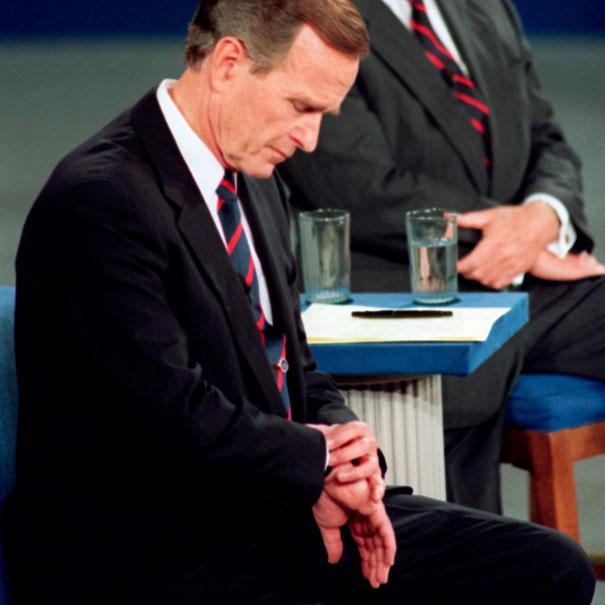
Ethics Dunce: President George H.W. Bush

Bush watchThe big news on the Bush-bashing front is that Papa Bush, #41, has a biography coming out next week, and section released by the publisher shows that he didn’t care much for his son’s (#43) staff, as well as containing other critiques.

To begin with, Bush I is a selfish jerk for allowing his biography to be released during the 2016 campaign, when it can only be used as a weapon against his sons and his party. His publishers want that, of course, because it means sales, and other than the campaign controversy angle I cannot imagine a one-term President whose biography anyone but family members would be less interested in reading. Benjamin Harrison, maybe. (But I’ve actually read not one biography of Ben, but three: Harry J. Sievers’s three-volume biography of Harrison, published between 1952 and 1968. It wasn’t my idea.) Bush, however, doesn’t need the money. His ego has obviously swallowed his common sense and loyalty, or he is being manipulated in his dotage.

That’s one obnoxious feature of the book. The worst, however, is this passage from the Times story describing a section in which Bush confesses that nearly didn’t run for re-election: Continue reading

Ethics Hero: Washington Nationals Star Bryce Harper

Bryce Harper

The knock on Bryce Harper, the Nationals’ 22 year-old burgeoning superstar who will soon be named the 2015 NL MVP, is that he’s immature, cocky, and self-destructive. But he seems to have proven himself to be far less so than the same sportswriters who have so often leveled such doubts about his character. This is good news for the Nationals and their fans, and also for suckers like me, who believe that baseball stars have an obligation to be good role models.

I wrote here about the late September, mid-game dugout fight between Harper and Jonathan Papelbon, a late season acquisition by the Nats whose arrival as a new bullpen ace coincided with team’s collapse in the National League East race. Post hoc ergo propter hoc being as seductive a logical fallacy as it is, Nats fans and, less excusably, the D.C. sports press blamed much of the Nats failure on the ex-Phillies, ex-Red Sox closer, along with manager Matt Williams, who was fired immediately after the regular season. Papelbon was also blamed for the fight, which is fair: he started it.

I noted in a follow-up post: Continue reading

Now THIS Is Hate Speech…No, Wait, It’s A Gay Writer Hating A Straight Baseball Player, So It’s All Good

Daniel Murphy


In March, in a post about Dr. Ben Carson’s awful apology for his ignorant statement on CNN about prison turning prisoners gay, I compared his ignorance to that of Mets second-baseman Daniel Murphy, who had just listened to Billy Bean, a former major league baseball player who is gay, and had been appointed as the sport’s “ambassador for inclusion.”  Murphy said,

“I disagree with his lifestyle.I do disagree with the fact that Billy is a homosexual. That doesn’t mean I can’t still invest in him and get to know him. I don’t think the fact that someone is a homosexual should completely shut the door on investing in them in a relational aspect. Getting to know him. That, I would say, you can still accept them but I do disagree with the lifestyle, 100 percent.”

His statement loosely translated means, “I don’t know anything about gays except what I have been told by people who also know nothing about gays but think they do.  I believed all of it, since, honestly, I don’t think about the topic much. But the question was about whether the fact that a team mate was gay would cause me to distrust him or not want to play with him, and my answer is no.”

Later Murphy elaborated,

“Maybe, as a Christian, that we haven’t been as articulate enough in describing what our actual stance is on homosexuality. We love the people. We disagree the lifestyle. That’s the way I would describe it for me. It’s the same way that there are aspects of my life that I’m trying to surrender to Christ in my own life. There’s a great deal of many things, like my pride.”

I mentioned Murphy then because he, unlike Carson, is just a baseball player, and his having ignorant ideas about gays (what does “disagreeing” with the fact that someone is gay even mean? He’s gay–you can’t “disagree.” Anyone using “lifestyle” to describe gays has just written his ignorance in sky-writing. If one knows any gays at all, the idiocy of this is manifest. What would ever make an 8 year old wake up one morning and say, “I’ve weighed the options, and made my choice: I want to be gay!” This literally never happens.) and stating the ideas out loud only hurts Murphy, while Carson’s ignorance is relevant to the job he’s seeking and his qualifications for it. Carson is a narrow, biased, irresponsible amateur, and thus unqualified to hold office. Nobody, however, should care what Murphy thinks, as long as he can hit and field his position.

For someone who is clueless, Murphy’s comments are even admirable. He’s not going to judge a man’s character based on “his lifestyle” or wish him ill, which makes him infinitely preferable to Slate’s gay issues blogger, Mark Joseph Stern. Continue reading

The Harvard Law School Seal: Apparently They Are No Longer Teaching Critical Thinking At Harvard Law School

H Law SchoolSee that seal to the left? Apparently that is a racist symbol that must be banned. At least that’s the conclusion a group of Harvard Law School students have come to, thus compelling my conclusion that either Harvard Law School is no longer a trustworthy institution for training young minds in relentlessly logical analysis as the practice of law at 400 bucks an hour requires, or that it is admitting too many students so indoctrinated in mindless progressive cant that they are beyond help.

These young adults need to skip the law and go straight to community organizing.

I’m sure all of you saw the bushels of wheat in the Harvard Law School seal and immediately recoiled in disgust and horror. No? That’s because need a masters in Obscure Harvard History to understand what these fanatics are complaining about:

From the Harvard Crimson:

A new student movement at Harvard Law School is organizing to change the seal at the school, which the students argue represents and endorses a slaveholding legacy. The seal is the coat of arms of the family of Isaac Royall Jr., a slaveholder who endowed the first professorship of law at Harvard.

They have launched a Facebook page and are now in the process of further organizing. They are drafting a letter to send to the Dean of the Law School Martha L. Minow with their positions, according to Mawuse H. Vormawor, a Law School student and organizer of the effort. Students involved in the effort argued that imagery from a slaveholding era has no place at today’s Harvard Law School.

“These symbols set the tone for the rest of the school and the fact that we hold up the Harvard crest as something to be proud of when it represents something so ugly is a profound disappointment and should be a source of shame for the whole school,” said Alexander J. Clayborne, one of the Law students involved.

Vormawor pointed to the research and scholarship of visiting Law School professor Daniel R. Coquillette, who recently published a book about the first century of Harvard Law School, as inspiration for the movement. In the book, Coquillette details the relationship between the Royall family’s slaveholding and the endowment of the Law School.

Thus proceeds the process of airbrushing history, withdrawing credit that has been justly  earned, and judging past figures  by the standards of today. This is a particularly silly example, as the design of the seal is likely to be meaningless to 99% of Harvard law students, not to mention 99.99999% of everyone else. Continue reading

Unethical Quote Of The Week: My Progressive, Rational, Educated and Gay Facebook Friend

texas-alamo-H

“I never want to step foot in Texas. I don’t even want to change planes in an airport there. In fairness to Texas, there are several states in this country that I refuse to visit, not in a political boycott way but in a I’d-rather-not-get-harassed-by-white-trash-or-shot-by-a-gun-nut kind of way. Basically, you won’t be seeing any pics of our family in the Deep South…ever!”

——-Posted to Facebook by a Facebook friend.

It constantly astonishes me that otherwise kind and intelligent people who regard themselves as tolerant, accepting and enemies of prejudice and bigotry can be so devoid of self-awareness that they openly display not only their own irrational bias and ignorance as if it is a badge of honor, but also think that avoiding new data and experiences that challenge their facile assumptions makes them look wise and virtuous.

Bulletin to my friend: This makes you look like a hateful fool, and I know you are not.

I’m waiting to see how many “likes” his post gets; I assume a lot. I don’t know who it was who first observed that as we age we tend to become the kind of human being we hate the most, but it struck me as a perceptive observation the first time I heard it, and I have never read a more perfect example of the phenomenon.


The Unlikely Ethics Dunce, And Why Nobody Pays Attention To Ethicists And I Don’t Blame Them

Wait, how can the nation's most famous ethicist be an Ethics Dunce? It's not easy...

Wait, how can the nation’s most famous ethicist be an Ethics Dunce? It’s not easy…

Ethicists have managed to make ethics nearly invisible in our cultural debates, and nearly useless as a decision-making tool, when it ought to be the most useful tool of all. They accomplished this over centuries of work, making the discipline of ethics abstruse, elitist, abstract, and worse of all, boring. Nobody should be bored with ethics, hence my statement, “Ethics isn’t boring, ethicists are.” Once ethics was pigeon-holed in the realm of philosophy, however (it belongs with “crucial life skills” and “critical thinking”) and philosophy became associated with scholarship, advanced degrees and academia, the jig was up.

The problem is that academic ethicists teach and write about abstract ethics, and life is not abstract. Their quest is for one formula to determine right from wrong, and life and human beings are more complicated than any one formula can encompass. When I started this blog, I got a lot of grad students writing me who demanded to know whether I was a Utilitarian,  Kantian Deontologist, a follower of Natural Law Ethics,  a Virtue Ethicist or a devotee of Stakeholder theory. My answer was “all of the above and none of them.” All of these and more are useful tools of analysis, but none work all the time, and the amount of words loaded into jargon to explain and debate the nuances of any of them render them all useless except for  writing scholarly papers.

The ethics that the public learns, as a result, are what pop culture and society teach them, and most of that isn’t ethics at all. For example, in the cable series “The Affair,” a well-educated older man was advising a young woman, the mistress in the affair, about how to think about the illicit relationship that broke up he lover’s marriage. Wise and thoughtful, he described his own adulterous affair, and then said, “What you did wasn’t wrong. You didn’t kill anybody. You didn’t break any laws.  Don’t be so hard on yourself.”  There is no ethics in that statement. Itis just employs two popular and facile rationalizations (#4. Marion Barry’s Misdirection, or “If it isn’t illegal, it’s ethical,” and #22, the worst of all, #22. The Comparative Virtue Excuse: “There are worse things.”) with another lurking but unspoken one, the Cheater’s Special, #23. Woody’s Excuse: “The heart wants what the heart wants,’ underlying the whole scene.

That’s ethics, I would guess, to about 90% of the population. Scary. This is, however, where ethicists have taken us. They could be so important to the culture, if they would get their heads out of their asinine models and explain ethical principles that are relevant to real lives in a manner that doesn’t make normal people become hostile to the subject.

This brings us to Peter Singer, Princeton’s acclaimed professor of bioethics who has been called the most influential ethicist alive. It is admittedly faint praise, but probably correct. Continue reading

Comment of the Day: “World Series Ethics: Another Pine Tar Sighting, As Baseball Ethics Rot Gets A Thumbs Up From Legal Ethics Rot”

Volquez, unaware...

Volquez, unaware…

I think I made a poor call deciding not to write about the interesting ethics question that arose during Game #1 of the just completed World Series.

We learned during the broadcast of Game 2 on Fox that Daniel Volquez, the father of Kansas city Royals Game #1 starting pitcher Edinson Volquez, had died of heart trouble during the day in the Dominican Republic. But Volquez’s family had asked the team not to inform Volquez until after the game, and the team, on behalf of the family, asked the same of the broadcasters, directing them to withhold the news from the TV audience. I decided to pass on the story because I couldn’t confirm that Volquez didn’t know about his father’s passing, though it now appears he did not. That was foolish: the ethics issues are the same regardless of whether he knew.

Fortunately Ethics Alarms reader Noah D. insisted that the issue was attention worthy, and wrote his own commentary. I’ll have some comment at the end. Here is his Comment of the Day on the post, World Series Ethics: Another Pine Tar Sighting, As Baseball Ethics Rot Gets A Thumbs Up From Legal Ethics Rot: Continue reading

“Whining”

Whining

I said that we would learn a lot about individual political commentators fairness and integrity by observing their reactions to the nakedly anti-GOP bias displayed by the CNBC moderators, especially John Harwood, in the recent Republican debate, and indeed we have. To any objective analyst who isn’t poisoned by partisan prejudice—and no such analysts has any business practicing journalism until they are cured of the malady—the breach of objectivity and professionalism evinced by such antagonistic queries as…


  • “Is this a comic book version of a presidential campaign?” (Harwood to Trump)
  •  “I talked to economic advisers who have served presidents of both parties. They said that you have as chance of cutting taxes that much without increasing the deficit as you would of flying away from that podium by flapping your arms.” (Harwood to Trump)
  • “So what analysis got you to the point where you think this will work?” (Quick to Carson)
  • “You want to bring 70,000 pages to three? Is that using really small type? Is that using really small type? (Quintanilla to Fiorina)

…is obvious, alarming and unacceptable. Those are attacks framed as questions, and the moderators are not supposed to attack the candidates.  Debate questions should be tough; here is one of the first televised debate questions ever from journalist Sander Vanocur to Richatrd Nixon in the initial Nixon-Kennedy debate:

VANOCUR:  Mr. Vice President, since the question of executive leadership is a very important campaign issue, I’d like to follow Mr. Novins’ question. Now, Republican campaign slogans – you’ll see them on signs around the country as you did last week – say it’s experience that counts – that’s over a picture of yourself; sir- implying that you’ve had more governmental executive decision-making  experience than your opponent. Now, in his news conference on August24, President Eisenhower was asked to give one example of a major idea of yours that he adopted. His reply was, and I’m quoting; “If you give me a week I might think of one. I don’t remember.” Now that was a month ago, sir, and the President hasn’t brought it up since, and I’m wondering, sir, if you can clarify which version is correct – the one put out by Republican campaign leaders or the one put out by President Eisenhower?

Tough. Yet there is no sarcasm, or editorializing insults in the question, no mockery, as in the “really small type” crack. Indeed, Vanocur’s question could be from a friendly journalist and Nixon ally (giving him a chance to defuse an embarrassing incident) or a hostile one. That is professional journalism…ah, I had almost forgotten what it looks like! Faced with across the panel hostility, however, the 2016 class of Republican candidates had two choices: accept the status quo, represented by

  • CNN’s Candy Crowley interfering with the last 2012 debate and throwing President Obama a misleading life-line when he was being pressed by Mitt Romney on his participation in the same lie that Hillary’s e-mails exposed regarding the Benghazi attack
  • ABC’s Martha Raddatz allowing Joe Biden to flout debate ettiquette by constantly interrupting Paul Ryan in the 2012 Vice Presidential debate.
  • Anderson Cooper shutting out the one moderate in the Democratic debate, James Webb, several times not asking him questions that the other fur candidates were given chances to answer.*
  • Obvious and documented favoritism toward Barack Obama in both the 2008 and 2012 debate
  • The evisceration of Sarah Palin based on her “lack of experience” in the 2008 campaign, with Obama’s greater lack of experience virtually ignored,
  • The major news organizations, except for Fox, openly lobbying the public for Democratic proposed policy measures, like gun control, amnesty for illegal immigrants, the Affordable Care Act, and more.
  • Statistics showing that progressives outnumber conservatives in the media by more than 4-1.

…or to start objecting to it, as well as the dangerous warping of the democratic process it represents. They have, and it should be taken as a non-partisan boon to the nation.

It is not healthy, and indeed dangerous to have journalists so lopsidedly supporting  one party against  the other, so allied with the government, and so far from objective. The danger, and the fact that CNBC crossed any reasonable limits of bias and unfairness  were immediately acknowledged by such predictable liberals as Juan Williams, Piers Morgan, Tina Brown’s Daily Beast, Bill Maher, and Carl Bernstein, among others.

Another segment of the media, however, those who believe that their occupation gives them the license and obligation to tilt news reporting and public opinion the “right” way, as well as Democrats, who hope to hold on to power with the news media as their front line, hit on a proven strategy from the playground to marginalize and trivialize the issue. Dismiss the complaints as “whining.”

Those who abuse their power to the detriment of others have always used this unethical tactic. Continue reading