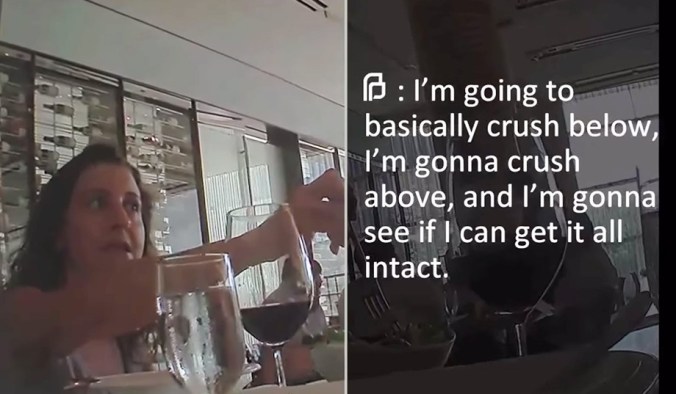
A Houston grand jury investigating undercover footage of Planned Parenthood taken in a lengthy hidden-camera sting operation engineered by the Center for Medical Progress not only found no wrongdoing by Planned Parenthood, it instead indicted the anti-abortion activists involved in making the videos. The Center’s founder David Daleiden was indicted on a felony charge of tampering with a governmental record and a misdemeanor count related to purchasing human organs. Another activist involved in the operation, Sandra Merritt, was indicted on a charge of tampering with a governmental record, which carries a maximum penalty of 20 years in prison.
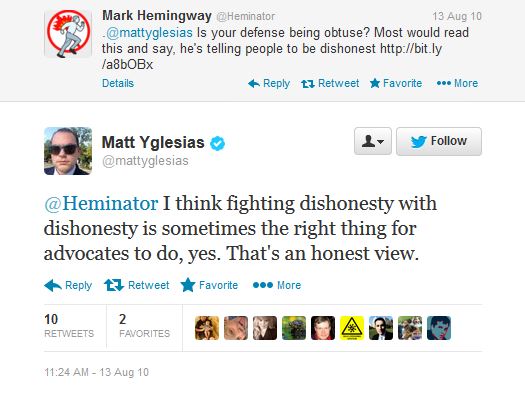
1. It looks like they may have violated the law, at least it looks that way sufficiently to justify an indictment. In order to sting Planned Parenthood, the Center and its allies 1) used a fake drivers license and 2) allegedly offered to buy human baby parts, which is against the law. I have no problem with the indictment, and neither should anybody else. The ends don’t justify the means, and an activist group trying to do what it thinks is right has no more leave to break laws than anyone else.
2. The Center for Medical Progress defends it actions by arguing that its activists use “the same undercover techniques that investigative journalists have used for decades in exercising our First Amendment rights to freedom of speech and of the press.” That’s an everybody does ut argument. As the Volokh Conspiracy, points out, journalists have no more right to break laws than anyone else.
3. Kevin Drum, at Mother Jones, of all places, questions the indictment because “the law prohibiting the solicitation of human organs for purchase was clearly intended to prevent a black market in such things, not to punish people who are so against the sale of human organs that they falsely represent themselves as buyers in hopes of discovering and shutting down illegal activity.” I take it back; that sounds like a Mother Jones argument. It’s like saying that murder laws exist to stop good people from being killed by bad people, and shouldn’t apply to good people killing bad people. Or that laws against theft were never intended to punish a poor family trying to feed its children. Laws are put in place to stop conduct that society doesn’t want to occur. When an exception is necessary, then an exception must be drafted, passed, and signed into. law. Continue reading




Rising Ethics Alarms comment star Zoltar Speaks! has weighed in with a passionate and perceptive comment inspired my recent overview of the ethical bankruptcy among the public’s current top choices to be our next President. Most commentators, even partisan ones, have become sensitive to what ZS describes, though they describe it in differing ways. Here’s a fascinating post on City Journal, giving Arthur Schlesinger, Jr., Kennedy’s hagiographer and once influential liberal/Democratic historian credit for predicting the phenomenon:
Government, especially democratic government, relies on trust. Nixon and Watergate exacerbated the decline in trust created by the Vietnam War, then Clinton betrayed the dignity and image of his office to make almost any conduct by the President not just imaginable, but defensible. Sam Donaldson famously said that Clinton would have to resign if the allegation about Monica were true, and he had lied. Sam was right under previous rules, and a President who cared more about the country’s trust than himself would have done as Donaldson predicted.
Next came the completely random catastrophe of the tied 2000 election. Democrats, to their undying shame, employed it as a wedge, and to insist that the election had been stolen, a practice I described at the time as picking at the connective threads of the tapestry of our society. 9-11 was used to suggest that our government would murder its own people; Katrina was used to suggest that our government would allow black people to die because they were black. Bush’s administration blundered into a war, and then into a near-depression—in past generations, these would both be attributed to miscalculations. But the tapestry, as I warned, was unraveling. Now those mistakes were being seen as deliberate, sinister.Then came Obama, once promising hope and harmony, who has deliberately exacerbated divisions and distrust to build a political firewall around his own incompetence. Public trust in government, before the Vietnam protests, was at 73%; it is below 25% today. Of course it is. The question is: Now what?
Here is Zoltar Speaks! in his Comment of the Day on the post, Ethics Update: The Frontrunners: