The Quest For A Positive Argument For A Donald Trump Presidency Continues: The Pathetic Professor Kesler

Searching

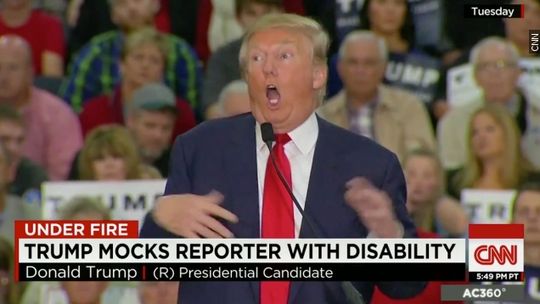
I am not a “Never Trump” advocate. I can conceive of a Presidential race that would force me to vote for Donald Trump, over, say, a Gorn, frightful Florida Congressman Alan Grayson, “Simple Jack” or Darth Vader. None of those, fortunately, are likely to be running in 2016, however, so the issue is moot. I have stated that there is no rational reason to vote for a candidate as undeniably unfit as Trump when the alternative is a candidate as undeniably as unfit as Hillary Clinton. Unlike Trump, Clinton does have positive features in her resume. As a Senator and former Secretary of State, she presumably has a passing comprehension of how the government works, and she comprehends the importance  of  public decorum and civility for a national leader, meaning that she knows that boasting about her penis or doing this…
Trump-Mocks-Disabled-Reporter-CNN-USA-Today

…is not remotely Presidential. Hillary’s positive features are, we all know, buried beneath the avalanche of her dishonesty, venality, incompetence and corruption,  but still, she has something. +1 beats – 1,606…even zero beats – 1,606.

Months ago, I challenged Trump supporters, Trump fans, Trump defenders and even Trump “oh come on, nobody is that bad”-ers to present a single, substantive, positive feature of Donald Trump that could justify voting for him as President. I have searched for and read alleged posts by professional pundits and others; I have listened to (until overcome with depression and nausea) Trump’s uniformly idiotic surrogates, and I have invited submissions. The results? Zilch. Nada. Bupkis.

“Hillary is evil!” is not a positive argument for Trump. Other submissions— “He’ll destroy the Republican Party, those collaborating traitors!”“I’m mad as hell, and I’m not going to take it any more!,” “He says what he thinks!,” “I hate political correctness!,” “He’ll stick it to the elites!” and the ever-popular incoherent grunt—are similarly non-responsive. I don’t think it is too much to ask, and the lack of any entry remotely meeting the modest requirements (the best so far is, “At least the news media might do their job with someone like him as President”) makes me more certain by the day that 1) I am correct to reject him and 2) that Gorn may not be so bad.

Clearly I am not the only one engaging in this quest. The Washington Post obviously searched under every rock to come up with an academic who would put his name on an op-ed last week titled “Why ‘Never Trump’ conservatives are wrong about Trump.”

He is Charles R. Kesler, a professor of government at Claremont McKenna College, and the editor of the Claremont Review of Books. My heart soared like a hawk when I saw the column:  Claremont McKenna is an excellent institution, and finally someone who does not communicate in howls, hocks and memes had written down a substantive argument to vote for Donald Trump!

But no.

Here, alas,  are his “substantive” points: Continue reading
Ethics Quiz: Satirical Baby Hate

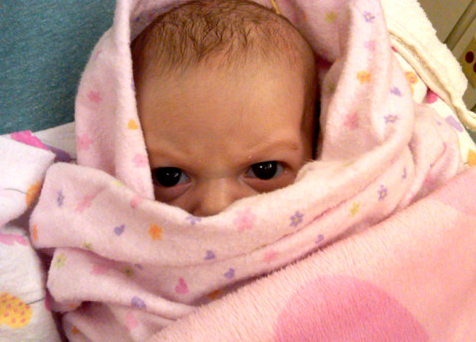
scary baby

I’m still getting hate comments about my verdict on the Bon Jovi DirecTV commercial that extols the virtue of erasing one’s children from existence, so this piece of New Yorker satire, by real parents about a real newborn child, gave me pause. Here is how  “An Honest Birth Announcement” starts…

Dear friends and family,

Jen and I are utterly horrified to announce the arrival of our son, Jasper Heusen-­Gravenstein, born May 21st at 4:56 A.M. For nine long months, we’ve wondered who this little creature would be. Well, now we know: he’s the living embodiment of our darkest imaginings, with a nefarious agenda and Grandpa Jim’s nose.

At seven pounds four ounces, Jasper may be small, but he’s large enough to have triggered our most primal fears. We’ve already been driven to the brink of madness with unanswerable questions such as: How can we sustain the life of a creature whose incessant, blood­curdling screams communicate nothing but blind rage and indeterminate need? What if he senses our fear and, like a wild hyena, is instinctively triggered to attack? Will we ever finish the most recent season of “House of Cards”?

It goes on in that tongue-in-cheek-but-you-know-we’re-half-serious-right-fellow-parent-vein…

But it names the child, who is, or course, helpless, blameless and defenseless, and creates a permanent record of parental faux-hate for Jasper to read…when he’s a parent, and old enough to get the joke, or when he’s 8, and a classmate sends it to him.

Your Ethics Alarms Ethics Quiz of the Day is…

Even as obvious humor, would it be ethical for Rob and Jen Heusen-­Gravenstein to have this published?

Continue reading

Ethics Quote Of This Day, July 2: The Inscription On the Monument To The First Minnesota Regiment At Gettysburg National Battlefield Park

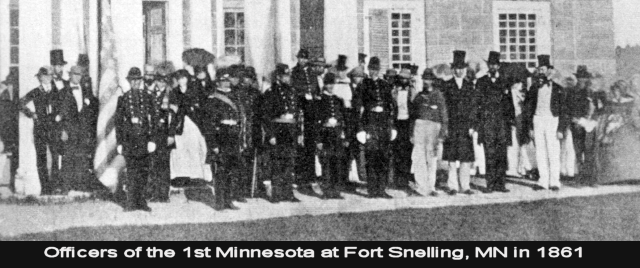
first-minn-fort-snelling

 “On the afternoon of July 2, 1863 Sickles’ Third Corps, having advanced from this line to the Emmitsburg Road, eight companies of the First Minnesota Regiment, numbering 262 men were sent to this place to support a battery upon Sickles repulse. As his men were passing here in confused retreat, two Confederate brigades in pursuit were crossing the swale. To gain time to bring up the reserves and save this position, Gen Hancock in person ordered the eight companies to charge the rapidly advancing enemy. The order was instantly repeated by Col Wm Colvill. And the charge as instantly made down the slope at full speed through the concentrated fire of the two brigades breaking with the bayonet the enemy’s front line as it was crossing the small brook in the low ground there the remnant of the eight companies, nearly surrounded by the enemy held its entire force at bay for a considerable time and till it retired on the approach of the reserve the charge successfully accomplished its object. It saved this position and probably the battlefield. The loss of the eight companies in the charge was 215 killed & wounded. More than 83% percent. 47 men were still in line and no man missing. In self sacrificing desperate valor this charge has no parallel in any war. Among the severely wounded were Col Wm Colvill, Lt Col Chas P Adams & Maj Mark W. Downie. Among the killed Capt Joseph Periam, Capt Louis Muller & Lt Waldo Farrar. The next day the regiment participated in repelling Pickett’s charge losing 17 more men killed and wounded.”

On July 2, 1863, in Gettysburg, Pennsylvania, 262 Union soldiers in the First Minnesota Regiment rushed—which apparently specialized in desperate fighting-–to throw themselves into a breach in the Union line at Cemetery against a greatly superior force, knowing that they were almost surely to die. 215 of them did, but the regiment bought crucial minutes that allowed reinforcements to arrive.

It is perhaps one of the most inspiring of the many acts of courage that day, the second day of the battle that changed the course of the Civil War. I first wrote about the sacrifice of the First Minnesota five years ago, here.

Let’s try to remember.

(A recommendation: Sometime between July 1 and the Fourth ever year, we always watch Ted Turner’s excellent film, which also has one of my favorite film scores.  It  helps.)

Essay: On Loretta Lynch And Fighting Cynicism And Distrust Regarding The FBI Investigation Of Hillary Clinton

America_Falling_Apar

Warning:

This is long.

I think it’s important

In the wake of Attorney General Lynch’s acknowledgment of wrongdoing in meeting, however briefly and innocently, with Bill Clinton, some  reader comments here are redolent of the destructive distrust of government and leadership engendered by this administration and others, particularly Bill’s. Yet this attitude feeds on itself, and is to an extent a self-fulfilling prophecy. If leaders think that people expect corruption, they are less likely to shy away from it. Cynicism leads to acceptance. Of course, this is one explanation of why the tarmac meeting took place—pure arrogance and a belief that with the news media’s complicity, now virtually any degree of government dishonesty and corruption will be either effectively hidden from the public, or accepted by it.

This is untrue, still. Indeed, this episode is proof that it is untrue, though the news media did make (disgusting and ignorant) efforts to shrug off the clear appearance of impropriety represented by Lynch having a meeting with Clinton the Impeached under these circumstances. Why do I labor trying to write these essays explaining the legal and ethical context of such events if readers are so poisoned by bitterness and distrust that they can’t or won’t process them, and just default to “it doesn’t make any difference, all is shit, all is lost”?  If I believed that, I wouldn’t be spending time—work  time, uncompensated time—writing this stuff. I can earn peanuts directing professional theatrical productions: it makes people happy, gives actors work, and is a lot more fun, believe me.

Paranoia, suspicion, despair, and conspiratorial views of government, which are all these comments represent, are just forms of bias. Bias makes us stupid, and in this case, bias makes us dysfunctional as a people and fearful and miserable as individuals. Continue reading

Now, Whatever Else, We Know That Attorney General Loretta Lynch Is More Ethical Than Hillary Clinton

Lynch2

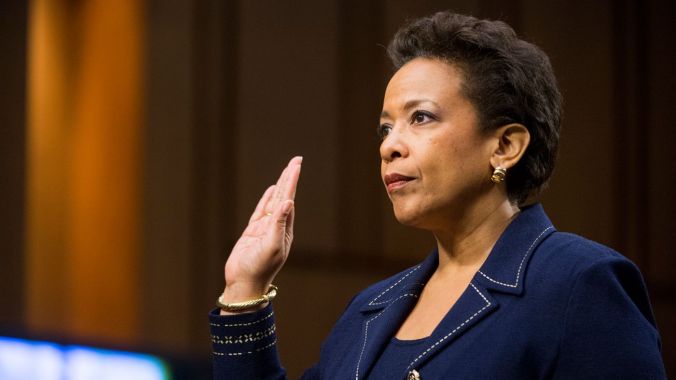
Attorney General Loretta Lynch’s response to the immediate criticism of her private, suspicion-generating meeting with Bill Clinton was the correct one and the only ethical response open to her now. Today she admitted that that her airport meeting with former President Bill Clinton while possible charges against Hillary Clinton were being explored by the FBI had undermined public trust in the investigation, and she also took remedial action. She did more than recuse herself from the matter. She announced that she would  accept whatever recommendations that career prosecutors and the F.B.I. director make about whether to bring charges against the presumptive Democratic nominee.

“I will be accepting their recommendations,”  Lynch said in an appearance at the Aspen Ideas Festival. She said that “the case will be resolved by the same team that has been working on it from the beginning.”

This remarkable move will not remove the stain on the meeting, which already created the “appearance of impropriety” at the worst possible time in the worst possible matter. However, Lynch acted quickly, appropriately, honestly and decisively.  Incredibly, the episode may have actually resulted in a situation that will reduce public and political cynicism if Clinton is not indicted, except for those who will insist that the fix was in from the beginning, as indeed it might have been, given the general lack of accountability and propensity for cover-ups in the Obama administration.

As one delicious scenario, it is possible that Bill Clinton’s characteristic penchant for breaking the rules at will may have created a situation that leads to his wife having to face criminal charges. It is certainly true that the chances, still slim, that Hillary will have to face the music is greater now than it was two days ago. Continue reading

Four Supreme Court Decisions: Abortion, Guns, Affirmative Action, Corruption…And Ethics. Part 2: McDonnell v. United States

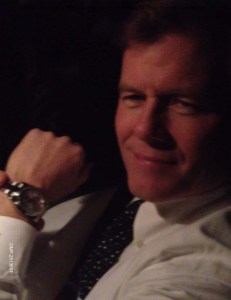
Virginia Governor McDonnell shows off the luxury watch he got as a gift from a businessman he barely knew who expected expected nothing in return...

Virginia Governor McDonnell shows off the luxury watch he got as a gift from a businessman he barely knew who expected expected nothing in return…

Governor Bob McDonnell, Virginia’s Republican governor from 2010 to 2014, was charged with using his office to assist businessman Jonnie R. Williams Sr., who, often with Mrs. McDonnell as a conduit, gave his family wedding receptions, loans, vacations and jewelry worth more than $175,000. I wrote about this scandal here, here, and here. The gifts were legal, thanks to absurdly lenient Virginia ethics laws, just as they were obviously unethical, except perhaps to the clueless McDonnells.

Governor McDonnell arranged meetings for Williams and attended events with him. My favorite part of the criminal trial was when McDonnell claimed that he never dreamed that Williams expected anything in exchange for all of his gifts, and then Williams said that of course he expected some favors in return. The jury found that McDonnell’s actions amounted to corruption and a quid pro quo exchange amounting to bribery. A federal appeals court upheld the conviction.

The Supreme Court’s 8-0 decision this week to vacate the conviction upholds the principle that even if someone has done something obviously bad, there has to be a law against what was done before the act occurred in order to convict him. It’s a rather narrow decision. The Court points out that the law McDonnell was convicted of breaking requires “official acts” to be bought and sold for the law to be breached, but that all McDonnell did was hand out political favors to his “friend”: setting up meetings, communicating his favor, greasing the wheels, essentially. (Much is made of the fact that Williams didn’t benefit very much from any of this, which is just moral luck. It doesn’t make what the governor did any less sleazy.)

Wrote Chief Justice Roberts in his opinion for the unanimous Court: Continue reading

From The Appearance of Impropriety Files: Justice Scalia’s Hunting Trip

ScaliaCheney

A partyist, ignorant hack named Andrea Paysinger, who is banned from further commentary by the Ethics Alarms “too dumb and biased to contribute” rule, just wrote a comment to the Clinton-Lynch post making the typical ratioanalization-rotted argument that “all the brouhaha over this is ridiculous, childish on the part of all the RIGHT WING jerks who SAW NOTHING WRONG with JUSTICE SCALIA taking gifts and spending vacations PAID FOR by those who actually had cases coming up before SCOTUS AND NOT ONE FUCKING TIME DID HE RECUSE HIMSELF.”

I just love it when people accuse me of being a partisan hypocrite without bothering to check what I have written. As it happens, I wrote a great deal about Scalia’s infamous hunting trip, which I unequivocally condemned as creating the appearance of impropriety. (It was, however, factually less troubling than the Clinton-Lynch meeting, as Scalia and Cheney were never alone during the trip in question.) So for people like Andrea (though not Andrea herself, who won’t be able to get back on this site if she recruits an army of Myrmidons), I will hereby post the two Scalia essays, which currently reside only on the Ethics Scoreboard, now an archive of my ethics commentary prior to 2010.

Unfortunately, the site’s search function stopped working when I had to change platforms recently. If you want to check out the Scoreboard now, just use Google: type “Ethics Scoreboard” and the subject or topic. If there was commentary, you’ll find it.

To give due credit, Andrea did identify real hypocrisy on the Lynch issue. Many of the Democrats exposing themselves as corrupted by partisan bias by now trying to defend Lynch also furiously attacked Scalia’s appearance of impropriety. They—your idols, Andrea— have no integrity. I do.

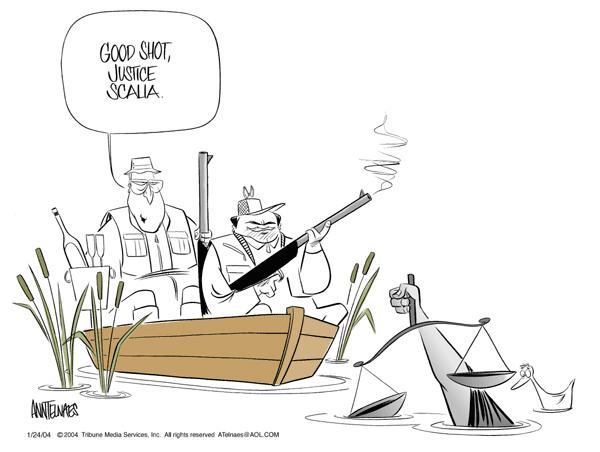
Here was what I wrote about Scalia’s clear appearance of impropriety in 2004.

Good Judge Hunting: Antonin Scalia and the Cheney Case

Supreme Court Justice Antonin Scalia recently went hunting with Vice President Cheney, even as the Supreme Court prepares to rule on whether the documents pertaining to Cheney’s meetings with energy company officials regarding future US energy policies must be made public. This has led to critics calling for Scalia’s recusal from the case, on the grounds that the social contact renders his objectivity in the matter suspect. Scalia, feisty as always, denies this, and maintains that he is fully capable of ruling objectively.

And I’m sure he is, but that’s beside the point. In the case of judicial independence, it is often appearances that count, and because this is an issue particularly charged with partisan passions, the Supreme Court must avoid any hint that cronyism or personal loyalties are playing a part in the outcome of the legal showdown. Scalia should remove himself from the case.

Justice Scalia has pointed out that personal friendships between the justices and Washington leaders are commonplace, and that mere friendships among professionals should not raise the specter of favoritism or bias. Indeed, had Scalia maintained exactly the same collegial relationship with Cheney, but avoided the hunting trip, there would be no issue. But the outing conjures images of male bonding and frank talk by the campfire (lobbying, perhaps?), and if Justice Scalia were to rule Cheney’s way (and Scalia’s past opinions would suggest that this is likely), the legitimacy of the ruling would be, in the eyes of many, tainted. But there is more.

According to the L.A. Times, Scalia was flown to the hunting reserve on the small jet that serves as Air Force Two. That could be interpreted as a gift to a judge from a pending litigant. The trip has value, and judges are not supposed to accept things of value under circumstances where it calls their objectivity into question. This alone would justify a recusal. And there’s a “strike three.”

The Times reports that the reserve where the duck hunting took place is owned by Wallace Carline, the head of Diamond Services Corp., an oil services firm that is on 41 acres of waterfront property in Amelia, La. The company provides oil dredging, pile driving, salvage work, fabrication, pipe-rolling capability and general oilfield construction. There is no indication that he has a direct stake in the case, but he is an energy executive. So we have a Supreme Court Justice ruling on whether materials should be released regarding the input of the energy industry into national energy policy in meetings held by the Vice-President, after he spends a hunting trip with the Vice-President, who has also provided charter jet transportation, at a hunting reserve where he is the guest of an energy executive.

Come on, Justice Scalia. Continue reading

Attorney General Lynch, Meet The Appearance Of Impropriety! Funny, I Assumed You Were Acquainted…

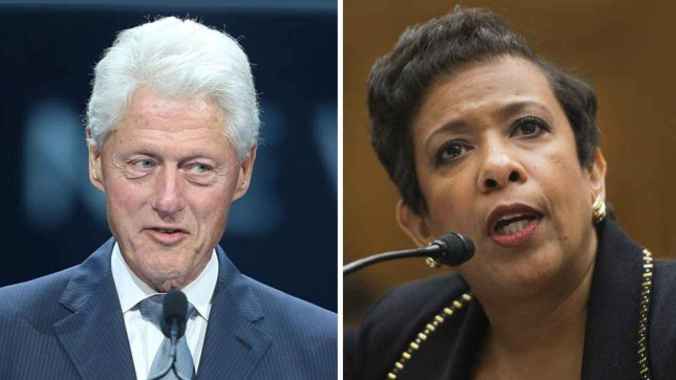
Clinton Lynch

U.S. Government officers and employees are directed to avoid engaging in conduct  “creating the appearance that they are violating the law or the ethical standards promulgated pursuant to this order. ” Some of those officers, like those who work in law enforcement and the justice system, shouldn’t require Executive Order 12674 – Principles of Ethical Conduct for Government Officers and Employees to know that the appearance of impropriety, including bias, favoritism, influence peddling and conflicts of interest, is unethical, since judges have a prohibition against creating such appearances in their codes of conduct no matter where their courts are located. They also know that as  professionals charged with making sure the rule of law works equitably and efficiently for all, rich and poor, high and low, the public trust is essential and indispensable. If the public doesn’t trust the fairness, objectivity, competence and wisdom  of those who enforce the law, then the public will not trust the law itself, and the rule of law, and democracy itself, will be threatened.

This is ingrained into every government lawyer’s hide, and so core to the principles of justice professionalism that the news that Attorney General Loretta Lynch met privately with  former President Bill Clinton this week just defies explanation. Supposedly President Clinton walked uninvited from his plane to her government plane, which were both parked on a tarmac at Phoenix Sky Harbor International Airport to chat.

Her only proper and ethical response to Clinton is undebatable:

“I’m sorry, Mr. President, but my Department is in the midst of investigating your wife, and it is crucial that the public does not detect any evidence of collusion or influence occurring, and observes no evidence that would cause it to question in any way the ultimate determination by Justice regarding any possible legal action. You certainly must understand my position…and by the way, since you do understand, what the hell are you doing here? Go! Now!”

She did not say this, however.

She met with him.

Game over.

Appearance of impropriety. Continue reading