Morning Ethics Warm-Up, 3/19/18: Unethical Wedding Gifts, The Fairness Conundrum, What Really Makes Students Unsafe, And More

Good Morning!

1 A Not Exactly Hypothetical… A family member is getting married, and the social justice warrior spouse has decreed that no gifts should be sent, just contributions in the happy couples’ name to designated charities and causes, all political, partisan, and ideological. Does this obligate guests to give money to causes and organizations they object to or disagree with? One might be tempted to teach a life-lesson in abuse of power, and pointedly give a contribution to, say, The Family Research Counsel, the NRA, or Paul Ryan’s re-election campaign, but that would be wrong. Wouldn’t it?

2. “Progressive fines” poll update. The percentage of readers who regard so-called “progressive fines” as fairer than fining all law violators the same amount regardless of resources is about 6%, in contracts to 40% who think this is less fair. As I suspected, the schism is driven by the long-standing (and resolvable) arguments over what constitutes “fair” government policies, and whether it is the government’s job to try to make life less unfair. Is it “fair” to treat everyone the same, when we know that life doesn’t treat everyone the same? Are those who argue that life’s unfairness should be addressed by individuals, not society, taking that position because they are winners in life’s chaotic lottery? Can society and governments be trusted to address “unfairness” and inequality without being influenced by the conflicts and biases of the human beings making and carrying out laws and policies. I don’t generally care to spend a lot of Ethics Alarms time or space on abstract ethics questions, but some of them can’t be avoided. You can take the poll, if you haven’t already, here.

3. On the topic of fairness, here is a study that will make you bang your head against the wall: Following on the heels of this discouraging study I posted about on March 3 is this report by researchers at Stanford, Harvard and the Census Bureau, as described here by the New York Times. A taste sufficient to ruin your day: Continue reading

Ethics Observations On A Reductio Ad Absurdum In The Ongoing Gun Control Train Wreck

Nursery schoolers expressing their contempt for the NRA. Or they would, if they could spell it…

This story would be a KABOOM, except for some reason my head didn’t explode, perhaps because at some level I expected something like this, as I know that anti-gun zealots are without shame or common sense.

From NBC:

Students across the nation walked out of school Wednesday in honor of the victims of the Parkland shooting last month, including a group of New London kindergarteners….While people involved in the walkout involving a group of 5-year-olds at Harbor Elementary School said the demonstration was about school safety, student safety and parent permission have been called into question. 

…New London Interim Superintendent Dr. Stephen Tracy said he didn’t have a problem with the safety message, but he and the principal didn’t know about the march ahead of time and there was no written permission from parents. “When you’re going to do something like that, in connection with something that, let’s face it, is controversial, you need to seek the approval of the principal and the parents before you involve 5-year-olds in something like that,” Tracy said.

…Harbor Elementary’s crossing guard Joyce Powers said she saw the children escorted in two lines by teachers who were carrying signs that read “enough.” “I thought it was pushing it with that age group,” Powers said. “I don’t think they understood what was actually happening.”

Tracy said he’s talked to the two teachers involved but would not say if any disciplinary measures were taken.

Observations: Continue reading

Morning Ethics Warm-Up, 3/18/18: McCabe, Brennan, And “Fighting Joe” Hooker

Good Morning!

1 McCabe Ethics. If you want a starting place to find smoking guns regarding the stunning bias of the mainstream media, one need look no further than the overwhelming sympathy being expressed for Andrew McCabe, the senior FBI official just fired by AG Jeff Sessions.

 Justice Department Inspector General Michael Horowitz concluded that McCabe misled investigators about his role in directing other officials at the FBI to speak to “The Wall Street Journal” regarding his involvement in a public corruption investigation into the Clinton Foundation. Horowitz’s report on McCabe was referred to the FBI’s Office of Professional Responsibility and the career officials there recommended McCabe’s termination.That means McCabe had to be fired. I never had a job in which I wouldn’t have been fired if an internal investigation showed I had lied on the job. Have you? In a law enforcement job, this is an even worse offense. Firing for cause is virtually mandatory. Of course it is. But here, for example, is “The Atlantic”:

“Andrew McCabe, a former acting and deputy FBI director who had drawn the ire of President Trump, was fired by Attorney General Jeff Sessions late Friday evening, a decision that raises troubling questions about the independence of both the Justice Department and the FBI.”

What? It raises no “troubling questions” at all! McCabe had to be fired. The fact that the President had criticized him is 100% irrelevant. He would have had to be fired if the President said he was the salt of the earth. He would have to be fired if the President said he was the spawn of Hell. McCabe lied. The internal investigation said so. He was fired. Good.

There were plenty of other reasons to be suspicious of McCabe. NBC News reported,  for example, that when McCabe’s wife, Jill, ran for the state Senate in Virginia in 2015, she accepted a donation from a political action committee controlled by then Virginia governor Terry McAuliffe, one of the Clintons’ closest allies. Then, in 2017, McCabe became a key official in the investigation of Hillary’s e-mail tricks. He should have recused himself: it’s called the appearance of impropriety. James Comey should have forced him to recuse himself. Never mind: the lies alone were enough to mandate a firing.

The news media, many believe (including me), support McCabe because he was a source for leaks—in other words, he violated the law and legal ethics to pass along confidential information. For that, if it could be proven, McCabe ought to be disbarred and prosecuted.

To read my progressive Facebook friends’ rants, as their IQ and integrity declines further every day, the current outrage is over the fact that McCabe was fired a mere day before he could take early retirement. Again, good. A high-ranked FBI official who lies on the job must be fired, not allowed to escape accountability by retiring. Once he retired, the only recourse for the Justice Department would be to indict him. It doesn’t matter that he was a day away from retiring. So what? What if he was a month away? A year? A minute? He lied. He deserved to be fired, not to be allowed to retire. The quick retirement dodge was how the Obama Administration justified letting IRS officials that criminally misused the agency for partisan warfare escape accountability.

2. And this is why the President of the United States shouldn’t tweet like a junior high school student, or like Larry Tribe  Here is former CIA Director John Brennan’s tweet in response to McCabe’s firing”

When the full extent of your venality, moral turpitude, and political corruption becomes known, you will take your rightful place as a disgraced demagogue in the dustbin of history. You may scapegoat Andy McCabe, but you will not destroy America…America will triumph over you.

It is unprofessional, uncivil, misleading and unethical. However, when the President of the United States’ daily habits make such tweets a Presidential norm, this is what you get: not just a Nation of Assholes, but a government of assholes.

Kudos to journalist Sharyl Attkisson for tweeting the perfect response to Brennan’s thuggishness:

“A guy like this would never misuse intel or his authority—would he?” Continue reading

Comment Of The Day (2): “A Cruel And Stupid Flight Attendant, A Dead Puppy, And A Plane Full Of Sheep”

The second Comment of the Day on the recent Ethics Alarms post about a United attendant killing a French bulldog puppy through her ignorance, cruelty and stupidity focuses on a crucial factor not covered in my post: the harried mother who allowed it to happen. I have seen this issue raised on social media, only to be followed by “how dare you blame the victim?” attacks. Well, the immediate victim was the little dog, and anyone who adopts a pet has accepted the responsibility of keeping the trusting animal safe from authority-abusing fools and the perils of being imprisoned in small, hot, airless spaces like a furry piece of luggage.

Here is Emily’s Comment of the Day on the post, A Cruel And Stupid Flight Attendant, A Dead Puppy, And A Plane Full Of Sheep:

This is a reply to several people at once who wondered about the pet owner…It’s also not a defense of the pet owner, but more an attempt to pin point where the ethical breach was on her part. A number of people here have wondered what she was thinking. From reading the article, Jack’s description, and a few other recountings across the net I can tell you exactly what she was thinking.

She was traveling with an infant, another daughter (I haven’t seen the kid’s age)* and a dog. With an infant, there’s probably a 70% chance the mother didn’t get enough sleep the night before. Then she got both kids ready to go, and trekked through an airport, clearing security, keeping track of all of their stuff, feeding the baby, keeping the puppy quiet, making sure the other kid got her shoes off and back on, getting to the gate, getting everyone boarded…

Then a flight attendant tells her there’s a problem with the dog’s carrier. Now, from what I read elsewhere, it was a TSA approved carrier, so I’m not sure what the problem was. Maybe she also had the diaper bag crammed under the seat, maybe it was an older model bag or plane, maybe she didn’t have it closed right. But whatever the case, the flight attendant tells her to put it in the overhead.

She points out there’s a dog in it, and the flight attendant insists.

I can tell you that pet owner was not thinking clearly, and had no mental space to be thinking about her pet while dealing with the two kids. I’ll be honest:  she might even have been relieved to have the dog someplace “safe” and tucked away for the flight, assuming (as other people have suggested, and I agree) she didn’t know much about the overhead compartments and expected the flight attendant to know what she was talking about.

I understand 100% what was going through this woman’s mind, as she was juggling a hundred things at once, and that’s where she was unethical. Continue reading

Comment Of The Day (1): “A Cruel And Stupid Flight Attendant, A Dead Puppy, And A Plane Full Of Sheep”

Choosing the best among so many excellent comments on this topics was nigh impossible. I chose two in the end, beginning with Michael West’s systemic analysis that also opens several ethics issues that could justify separate posts on their own. The second COTD, coming up forthwith, addresses a completely different aspect of the story.

Here is Michael West’s Comment of the Day on the post, A Cruel And Stupid Flight Attendant, A Dead Puppy, And A Plane Full Of Sheep”

1) Airlines have clearly delineated standards for carry-on sizes. Enforcement of these sizes has been perennially neglected to where passengers routinely carry noticeably larger than permitted carry-on bags. This is marginal rule breaking.

2) No doubt this puppy was in such a carry-on that would never have been permitted if rules were enforced…NOR EVER EVEN ATTEMPTED if the owners knew that rules were enforced. But the larger culture has acquiesced to the flouting of a “no big deal” rule. Continue reading

Ethics Quiz: Income-Based Legal Penalties

In an op-ed in the Times,  lawyer Alec Schierenbeck argues for “progressive fines”:

“For a justice system committed to treating like offenders alike, scaling fines to income is a matter of basic fairness. Making everyone pay the same sticker price is evenhanded on the surface, but only if you ignore the consequences of a fine on the life of the person paying. The flat fine threatens poor people with financial ruin while letting rich people break the law without meaningful repercussions. Equity requires punishment that is equally felt.”

Your Ethics Alarms Ethics Quiz of the Day is..

Do you agree that “progressive fines” are a more ethical policy than having the same fines for the same violation, regardless of the offender?

Continue reading

Morning Ethics Warm-Up, 3/17/2018: Mockingbirds, Headlines, And Reasonable Doubt

Good Morning, Scout!

1 Assorted blog stuff. I’m going to have to fly to Boston next month for the hearing on my motion to dismiss the specious defamation suit against me by an Ethics Alarms  commenter to whom my responses were no more defamatory than what I have said to many of you when provoked…Every now and then some blog or social media participant with a huge following links to an old post here, and I am swamped with visits from a lot of individuals with no serious interest in ethics. They almost never comment, and if they do, the comments typically don’t meet my posting standards. Still, they swell the traffic stats, and I’ll take ’em. In 2017 I had none of these fluky hit avalanches, after a 2016 that had several. This time, the post suddenly drawing interest is a 2014 essay about a letter written to director Terry Gilliam in 2005. You just never know…Expect a lot of Comments of the Day this weekend: I am way behind, and I’m sorry. Tough week.

2. Keep hope alive! Yesterday’s New York Times front page headline perfectly embodied the fake news-by-innuendo tactic that has marked the mainstream media’s efforts to pander to the “resistance.” The Special Prosecutor’s fishing expedition just subpoenaed the business records of the Trump organization relating to its dealings in Russia. Says the Times headline: “Investigation nears President.” Ooooh! Scary!

Hype, and unprofessional. This is the “He’s getting closer! And closer!” narrative the anti-Trump journalists have been flogging for a year. Yeah, I guess any time an investigation involves someone’s business it is “near” the owner, but why would that obvious fact justify a headline?  The reality is that Trump’s organization had business dealings in Russia (legal and unremarkable), the fact that Mueller is looking does not prove or suggest that those dealings had any connection to the campaign, and Mueller could have asked for these records a year ago. There is nothing ominous about the request from the President’s perspective at all, unless, as this whole fiasco has presumed from the moment Democrats seized on Wikileaks and fake Facebook news as the designated excuses for Hillary’s inexcusable defeat, there really was “collusion.”

That an investigation has been launched does not imply, suggest, or indicate wrongdoing. The news media’s reporting continues to suggest otherwise because they want the President to be guilty of something heinous. Imagine that: there are Americans who want their elected President to be proven guilty of wrongdoing.

3. To kill a “To Kill A Mockingbird.”  Harper Lee’s estate filed a complaint last week in federal court in Alabama, arguing that a Broadway bound stage adaptation of “To Kill A Mockingbird” by “The West Wing” creator and “A Few Good Men” writer Aaron Sorkin violates a contract, between Harper Lee and the producers that stipulates that the characters and plot must remain faithful to the spirit of the book. (I wrote about the complexities surrounding Atticus Finch’s character in a 2015 post.) Continue reading

Comment Of The Day: “Morning Ethics Warm-Up, 3/6/ 2018: “Remember the Alamo” Edition” (#2: “The Option”))

Commenter Zanshin returned to expand on his answer to the hypothetical I offered a Boy Scout troop based on one of my late, lamented professional theater company’s many dilemmas over the years. Here is the situation again…

The Option

Your professional theater company has limited funds, so it offers its actors an option. They may choose a flat fee for their roles, or get a percentage of the show’s profits, if there are any, on top of a much smaller base fee.

The company just completed an extremely profitable production, the biggest hit your theater has ever had. Nine of the show’s ten cast members chose the percentage of profits option, a gamble, because most of the shows lose money. One, the star, who you know could not afford to gamble, took the flat fee for the role. After the accounting for the production is complete, you realize that every member of the cast will make $1000 more than the star, because of the show’s profits.

Question 1: What do you do?

  1. Give him the extra $1000. It’s only fair.
  2. Pay him the flat fee. A deal’s a deal.

Question 2: You remount the production, and the exact same thing happens. The actor chooses the flat fee, the show is again a huge money-maker,,and the rest of the cast will make much more than him because they chose the percentage. Do you give him the extra amount again?

  1. No. Now he’s taking advantage of me.
  2. Yes. Nothing has changed.

You can read the initial responses here, and check the poll results.

And here is Zanshin’s Comment of the Day, on the post Morning Ethics Warm-Up, 3/6/ 2018: “Remember the Alamo” Edition:

Here are my reflections on this ethical (hypothetical) issue.

Question 1: Some personal background influencing my thinking: In the early years of my career I worked at a small company (about 40 employees). After having worked there for 2 years the owners sold the company, probably for a very good price, because they decided to give every employee about $ 200 for each year that he had worked with the company. Some of my colleagues worked with them for 15 years and more.

For me it would be a nice $ 400 but to my surprise I received $ 1.000 with a handwritten note which stated something like, “We’ll give you $600 extra because we are very pleased with your performance with us. Please do not discuss this with your colleagues.”

Back to the question.

I would go for a third option. First, Pay him the flat fee. A deal’s a deal.

But at the same time, give him in some personalized way, about $500 extra.With personalized I mean, fitting the situation. Why couldn’t he gamble with his reward? For instance, his car is broke, he needs it very bad for whatever reason. Offer to pay a part of the bill, etc.

Question 2: In my opinion the set-up of the first situation (question 1) was already tainted. Just as we expect of journalists that they don’t “interview people who are drunk, drugged, impaired, or not in a mentally or emotionally stable state.” one should also not ask an employee who you know could not afford to gamble to just do that, gamble with his income. Continue reading

Addendum: The “Ableist” Accusation And The Insidious Spread Of Rationalization #64

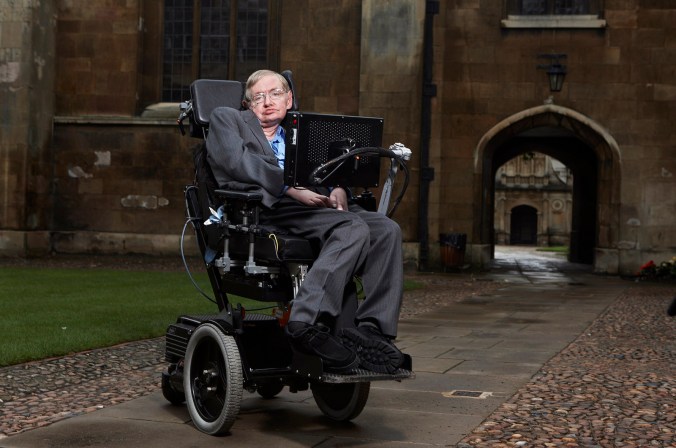
I had not intended to post further on the Gal Gadot controversy, mentioned as item #5 in today’s Ethics Warm-Up, where she is being slammed as “ableist” for suggesting that Stephen Hawking might be relieved to shed the crippling limitations of his near lifetime battle with Lou Gehrig’s Disease. (Knowing Hawking’s famed sense of humor, I assume he appreciated the best gag ever executed on  “Friends,” when idiot Joey asked what Yankee first baseman Lou Gehrig died of. “Lou Gehrig’s Disease,” he was told. “Wow,” said Joey. “What are the odds of that!“) However, I realized that the argument against Gadot was yet another example of the increasing popularity of one of the most destructive and insidious of the rationalizations on the list, #64, Yoo’s Rationalization or “It isn’t what it is”:

Named after John Yoo, the Bush Justice Department lawyer who wrote the infamous memo declaring waterboarding an “enhanced interrogation technique,” and not technically torture,  #64 is one of the most effective self-deceptions there is, a handy-dandy way to avoid logic, conscience, accountability and reality.

Examples of this are everywhere. Paul Krugman, the progressive economist and Times columnist, began a column like this:

“Remember all the news reports suggesting, without evidence, that the Clinton Foundation’s fund-raising created conflicts of interest?”

The Clinton Foundation’s fundraising created a conflict of interest, by definition. For a non-profit organization, with family connections to either a current Secretary of State or a Presidential candidate, to accept money from any country, company or individual who has or might have interests that the Secretary or potential President can advance is a conflict. It’s indisputable. No further ‘evidence” is needed.”

How does Krugman deal with this problem? Simple: he convinces himself that screaming conflicts aren’t what they are without “evidence,” by which he means “proof of a quid pro quo.” But a quid pro quo is bribery, not a conflict of interest. A conflict of interest might lead to bribery, but a conflict is created as soon as there is a tangible reason for an official’s loyalties to be divided.

Yoo’s Rationalization or “It isn’t what it is” turns up everywhere, and has since time began. A mother swears that her serial killer son “is a good boy,” so she doesn’t have to face that fact that he’s not. It is denial, it is lying, but it is lying to convince oneself, because the truth is unbearable, or inconvenient.  It is asserting that the obvious is the opposite of what it is, hoping that enough people will be deluded, confused or corrupted to follow a fraudulent argument while convincing yourself as well. The Rationalization includes euphemisms, lawyerisms, and the logic of the con artist. Illegal immigration is just immigration. Oral sex isn’t sex, and so it’s not adultery, either. I didn’t steal the money from the treasury! I was just borrowing it!

And waterboarding isn’t torture.

#64  also could be named after Orwell’s “1984,” and called “Big Brother’s Rationalization” in homage to “War is Peace,” etc. But John Yoo deserves it.

Rationalization #64 is also closely related to the Jumbo.

The Republican denial that torture was torture remains the worst example of “It isn’t what it is”, but the list is getting longer and becoming more of a burden to public discourse and problem-solving every day. In the case of advocates for the disabled, the rationalization actually holds that a physical handicap isn’t a disability at all, and one without certain abilities we would naturally regard as normal are just “differently abled.” No, that individual is disabled. The fact that Stephen Hawking, with an IQ estimated at 280, had a compensating superpower that allowed him to achieve amazing things does not make his disability imaginary. Maybe he would have liked to play softball. Maybe he would have liked to tap dance. Maybe he would have liked to hold his grandchildren. Denying his disability accomplishes nothing but distorting reality and making it less vivid and clear. Continue reading

Morning Ethics Warm-Up, 3/16/2018: First They Came For Wonder Woman….[CORRECTED and UPDATED]

Good Morning

… to end a frantic ethics week…

(An unusual number of the items this morning deserve a free-standing post. I’m not sure what to do about that; it’s been happening a lot lately.)

1 Not fake news, just a false news story that everyone ran with...Oops. All the angry condemnations of new CIA director designate Gina Haspel and President Trump (for nominating her, along with existing) were based on a mistake. From ProPublica:

On Feb. 22, 2017, ProPublica published a story that inaccurately described Gina Haspel’s role in the treatment of Abu Zubaydah, a suspected al-Qaida leader who was imprisoned by the CIA at a secret “black site” in Thailand in 2002. The story said that Haspel, a career CIA officer who President Trump has nominated to be the next director of central intelligence, oversaw the clandestine base where Zubaydah was subjected to waterboarding and other coercive interrogation methods that are widely seen as torture. The story also said she mocked the prisoner’s suffering in a private conversation. Neither of these assertions is correct and we retract them. It is now clear that Haspel did not take charge of the base until after the interrogation of Zubaydah ended.

ProPublica, unlike, say, CNN, knows how to accept responsibility for a bad journalism botch. Stephen Engelberg, editor-in-chief, sums up the episode after explaining how the story was misreported:

A few reflections on what went wrong in our reporting and editing process.

The awkward communications between officials barred from disclosing classified information and reporters trying to reveal secrets in which there is legitimate public interest can sometimes end in miscommunication. In this instance, we failed to understand the message the CIA’s press office was trying to convey in its statement.

None of this in any way excuses our mistakes. We at ProPublica hold government officials responsible for their missteps, and we must be equally accountable. This error was particularly unfortunate because it muddied an important national debate about Haspel and the CIA’s recent history. To her, and to our readers, we can only apologize, correct the record and make certain that we do better in the future.

Perfect. This is a news source we can trust.

2. That was ProPublica. This is CNN (The Chris Cuomo post was here originally, but it got so long I posted it separately.) Continue reading