No Wonder We Can’t Communicate With Each Other Or Have Coherent Debates: We’re Culturally Illiterate

“Who?”

Ugh.

 I was watching the MLB channel this morning, and the hosts were discussing the Milwaukee Brewers and their general manager’s statement that the team would “keep its powder dry” until the mid-season trading deadline. All three hosts professed to have no idea whatsoever what the phrase about keeping powder dry meant. In his 1988 book “Cultural Literacy,” E.D.Hirsch, Jr., argued that children in the United States are not learning the basic knowledge that they need to function competently in society. the background information about world, Western and U.S. culture that literate writers and speakers assume their audience already has. The three MLB hosts were all schooled since 1988, and clearly, the problem has only gotten worse.

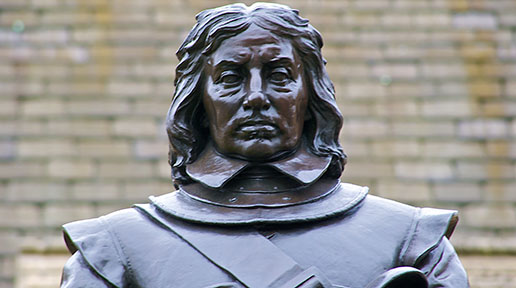
The phrase at issue is a useful and formerly famous one. It comes from a reported quote from Oliver Cromwell—Teddy Roosevelt wrote a biography of Oliver Cromwell. I bet fewer than one out of a thousand Americans could tell you who he was—during the Battle of Edgehill in 1642. Cromwell supposedly told his Roundhead troops in that opening fight of the English Civil War, ”Put your trust in God, my boys, but mind to keep your powder dry.” The last part of the quote is usually evoked to mean “keep cool,” but the entire quote is more profound. As the late language maven William Safire wrote in the New York Times, it means ”stay calm” but carries an implicit, most ominous threat: ”and be prepared to blow the enemy’s head off at the propitious moment.” Prayer is great, but the Lord helps those who help themselves. Or, as a World War II slogan had it, “Praise the Lord and pass the ammunition!” This was made into a popular wartime song by Frank Loesser, who wrote “Guys and Dolls.” I know: what’s “Guys and Dolls”? What’s “World War II?”

This morning’s depression reminded me of an essay by Patrick Deneen from 2016, titled “How a Generation Lost Its Common Culture.” He wrote in part, Continue reading

Morning Ethics Warm-Up, 4/4/2018: Baseball Lies, A Presidential High Crime, And A Judge Makes A Panty Raid


http://www.youtube.com/watch?v=BPoiac9I9OY

Wake Up!

1 Fake history, baseball style. Broadcasts of Red Sox games from Fenway Park in Boston refer to “the Pesky Pole,” the official name of the tall, yellow foul pole in right field. It is named in honer of the late Johnny Pesky, who also is honored in a statue outside the park—it featured him and his team mates and longtime friends, Ted Williams, Dom DiMaggio, and Bobby Doerr. Pesky, with a couple of brief interruptions,was a Red Sox lifer, beginning with his 1942 rookie season, and ending with his death several years ago as an honorary coach. In between, he was Sox minor league manager, the big team’s manager, a hitting coach and a broadcaster.

The Pesky Pole got its name because the notoriously power-free shortstop reputedly hit several of the few he managed to slug in his career by knocking a pitch  around the marker, which arose from  what is now the shortest foul line in baseball. The  low Fenway right field fence veers sharply out from there to over 400 feet, so such homers are considered, and indeed are, lucky flukes. During his brief and undistinguished tenure as a Red Sox radio color man, former Red Sox pitching ace Mel Parnell repeatedly told the story about how Johnny won a game for Mel in 1948 with a pole-shot. This tale led directly to the team officially naming the pole on September 27, 2006, on Pesky’s 87th birthday, with a commemorative plaque placed at its base and everything.

Afterwards, and not before, someone actually checked the game records. Pesky never hit the home run  described by Parnell. He only hit six home runs in Fenway at all, and nobody knows how many hit the pole, looped around the pole, or even went to right field. (Pop-ups hit by Punch-and-Judy hitting shortstops sometimes landed in the screen over the left field wall for home runs, as the cursed Bucky Dent can attest.) Nevertheless, the fake history is in place: the Pesky Pole is named that because Johnny Pesky hit a famous home run off of it, or was famous for looping cheap homers around it, or something.

Baseball excels at creating fake history, the most notable being represented by the locale of its Hall of Fame, in Cooperstown, New York. When the museum was envisioned, the accepted story about the game’s origin was the Union general Abner Doubleday invented the sport in 1839 and organized the first game in Cooperstown. After the construction was underway,  research suggested that everything about the Doubleday tale was rumor and myth, but baseball and the museum’s management, in one of the all-time classic examples of adopting the philosophy of the newspaper editor in “The Man Who Shot Liberty Valence,” went to great lengths to keep the original story before the public. Eventually some hard evidence surfaced suggesting that the game was invented by Alexander Cartwright, who was eventually inducted into the Hall as the game’s creator, while Doubleday is not. Nonetheless, the myth survives. Major League Baseball Commissioner Bud Selig, for example,  said in 2010 that “I really believe that Abner Doubleday is the ‘Father of Baseball.'” This is the equivalent of saying that one believes in the Easter Bunny.

Selig was later inducted into the Hall of Fame.

2.Believe it or Not! I would support impeaching  President Trump for his tweeting attacks against Amazon. This is such an abuse of Presidential power that it demands at least a Congressional reprimand or sanction. Amazon lost $53 billion in market value in the wake of the tweets, meaning that investors, retirees, and ordinary Americans lost wealth as well. It is unconscionable for a President of the United States to deliberately target a company, just as it is wrong for a President to punch down at a private citizen, but the consequences of doing what Trump has done to Amazon is far, far worse. The Wall Street Journal suggested in an editorial that if the attack on Amazon was politically motivated because Amazon mogul Jeff Bezos owns the Washington Post, impeachment would be justified. Yes, that would be even worse, but it is not an essential element of this “high crime.” The President of the United States must not abuse his power by intentionally harming lawful businesses.

The foolish resistance is so focused on trying to impeach Trump based on exotic laws and imaginary conspiracies that it doesn’t see the real thing when it’s right in front of its face, and the anti-Trump media has so destroyed its credibility by embracing ridiculous impeachment theories that a valid one will just look like more of the same. Continue reading

Ethics Hero: Andrew Sullivan

Once again, Ethics Alarms is honoring Andrew Sullivan for unusual courage in the field of punditry. In this case, the honor is less for what he has written than the fact that he wrote it at all.

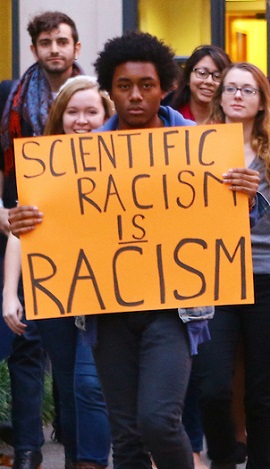
His general topic is genetic research, taking off from a recent op-ed appeared in the New York Times by Professor David Reich, a  Harvard geneticist, which broached the virtually taboo topic genetic variations between subpopulations of humans, that is to say, races. On the way through Sullivan’s essay, called “Denying Genetics Isn’t Shutting Down Racism, It’s Fueling It,” Sullivan makes many perceptive observations, like…

“This argument should not be so controversial — every species is subject to these variations — and yet it is. For many on the academic and journalistic left, genetics are deemed largely irrelevant when it comes to humans. Our large brains and the societies we have constructed with them, many argue, swamp almost all genetic influences.

Humans, in this view, are the only species on Earth largely unaffected by recent (or ancient) evolution, the only species where, for example, the natural division of labor between male and female has no salience at all, the only species, in fact, where natural variations are almost entirely social constructions, subject to reinvention. We are, in this worldview, alone on the planet, born as blank slates, to be written on solely by culture. All differences between men and women are a function of this social effect; as are all differences between the races. If, in the aggregate, any differences in outcome between groups emerge, it is entirely because of oppression, patriarchy, white supremacy, etc. And it is a matter of great urgency that we use whatever power we have to combat these inequalities.”

Agreed, and stipulated: the progressive position on this aspect of science is, as in so many other areas, a deliberate refusal to deal with reality in order that ideological goals may proceed.

More from Sullivan later in his piece… Continue reading

Comment Of The Day: “Don’t Cheer Mississippi’s Westboro Baptist Tactics Too Loudly: You Never Know Who Might Hear You”

An Ethics Alarms commenter with the evocative screen name of Fuck you, who is a bit behind on his surfing, or perhaps a really, really slow reader, was moved to author today’s Comment of the Day on a post from seven years ago regarding the tactics used by Mississippi law enforcement to foil a legal demonstration by Fred Phelps’ merry band of homophobes.

Why is this a Comment of the Day? It perfectly embodies the rudimentary, lizard-brain level of ethical analysis that predominates in the public, in much of the media, and among our elected officials. It is helpful, to me at least, to read such comments, for this is exactly the find of gut-level, emotion-based, legally and ethically ignorant reaction that my work exists to overcome. I’ll have more to say after the Fuck You has his say.

As an aside, it was nostalgic reading the names of the commenters on the original post. There, for example, fighting as usual, were liberal logic-cop tgt and uber-conservative Stephen Mark Pilling. Ah, those were the days…

Here is Fuck You’s Comment of the Day on the post, Don’t Cheer Mississippi’s Westboro Baptist Tactics Too Loudly: You Never Know Who Might Hear You—I’ll be back at the end:

Fuck you for this comparison. I know I’m coming in years later with this and I hope that others have already expressed a similar sentiment. I also understand the point you are trying to make. But still FUCK YOU. I sincerely hope that if you ever lose someone dear to you, these fucking hatemongers show up and protest that person’s funeral. FUCK YOU. Yes they have a right to protest but this type of shit should definitely qualify as a reasonable restriction, like yelling fire in a crowed theater.

FUCK YOU. This comparison is not only an insult to the Marine in question but also to the civil rights activists from decades ago that you just compared to the fucking WBC. FUCK YOU.

Once again Fuck you, you goddamn scum ass mother fucker. Oh, and FUCK YOU.

Continue reading

Morning Ethics Warm-Up, 4/3/2018: Hypocrisy, Exploitation, Fake Definitions And Fake News

Good Morning…

…and believe me, it takes a super-human effort for me to say that right now…

1.  Good. Rep. Esty is not running for re-election. We discussed her hypocrisy in a post two days ago. Now she says, “Too many women have been harmed by harassment in the workplace. In the terrible situation in my office, I could have and should have done better.” This would have been a meaningful and productive statement if she hadn’t previously insisted that she handled the matter correctly and refused to be accountable. She did, however, and mouthing platitudes now should not alter the verdict that she was a cynical and grandstanding #MeToo performer who, when time came to act according to the standards she was demanding of others, failed miserably.

2. Anybody know of an ethical computer protection service? I now have two ghost services torturing me with pop-up ads, slowing down my computer, and generally behaving like a virus because I cancelled them. When I cancel a service I allowed onto my computer, I expect them to say good-bye and leave. I do not recall agreeing in my original contracts that “the undersigned hereby agrees that if for any reason he chooses to end his relationship with ____________, the service will continue to hound him with warnings, special offers, unrequested scans and other harassment until he dies or throws his computer out the window.”

The two companies at issue are AVG and McAfee. I will chew off my foot before I engage either of them again.

3. Big Brother’s way of winning a debate: change the meaning of the terms so you can’t lose.  After the repeated misuses of the term “assault rifle” as a disinformation and fear-mongering tactic by the anti-gun mob were flagged by Second Amendment supporters to the embarrassment of the zealots, Mirriam-Webster rode to the rescue,  changing its online dictionary entry for the term so its ignorant ideological allies could now cite authority:

On March 31, 2018, the following definition was published:

noun: any of various intermediate-range, magazine-fed military rifles (such as the AK-47) that can be set for automatic or semiautomatic fire; also a rifle that resembles a military assault rifle but is designed to allow only semiautomatic fire

Translation: “This is what the term really means, but it also means what ignorant politicians, journalists and activist refer to erroneously as the same thing even though it’s not, because we support them and this will make it easier for them to mislead other without looking dishonest and foolish.”

[UPDATE: There is some question of whether that definition was added before or after Parkland. Reader Steve Langton reports that he read the current version a couple of days after the shooting.]

Continue reading

Review: Ethics Alarms Concepts And Special Terms

Recently updating the Ethics Alarms list of concepts and frequently used terms reminded me that I had been meaning to post them for review and assistance to those relatively new here. Of course, the link has always been right there at the top of the home page, but I have this sneaking suspicion that it isn’t visited very often.  Here, then, is the up-to-date list.

CONCEPTS

Non-Ethical Considerations: Defined above, non-ethical considerations are important because they are often the powerful impediments to ethical conduct, and the cause of many conflicts of interest. Non-ethical considerations are many and diverse, and include:

  • The need and desire for shelter, health, wealth, fame, security, self-esteem, reputation, power, professional advancement, comfort, love, sex, praise, credit, appreciation, affection, or satisfaction
  • The desire for the health, comfort, safety, welfare and happiness for one’s family, loved ones, friends, colleagues, an co-workers
  • The pursuit of vengeance or retribution
  • Hunger, lust, pain, ambition, prejudice, bias, hatred, laziness, fatigue, disgust, anger, fear
  • …and many more

Ethical Dilemma: This is an ethical problem in which the ethical choice involves ignoring a powerful non-ethical consideration. Do the right thing, but lose your job, a friend, a lover, or an opportunity for advancement. A non-ethical consideration can be powerful and important enough to justify choosing it over the strict ethical action.

Ethical Conflict: When two ethical principles demand opposite results in the same situation, this is an ethical conflict. Solving ethical conflicts may require establishing a hierarchy or priority of ethical principles, or examining the situation through another ethical system.

Ethical Gray Area: Gray areas are situations and problems that don’t fit neatly into any existing mode of ethical analysis. In some cases, there may even be a dispute regarding whether ethics is involved.

Reciprocity: The ethical system embodied by The Golden Rule, and given slightly different form in other religions and philosophies. It is a straight-forward way of judging conduct affecting others by putting oneself in the position of those affected. Reciprocity should always be available in any ethical analysis, but it is frequently too simple to be helpful in complex ethical situations with multiple competing interests.

Absolutism: Absolutist systems do not permit any exception to certain ethical principles. The champion of all absolutists, philosopher Immanuel Kant, declared that the ethical act was one that the actor was willing to have stand as a universal principle.

One principle of absolutism is that human beings can never be harmed for any objective, no matter how otherwise worthwhile. Absolutism has the advantage of making tough ethical calls seem easy, and the disadvantage of making debate impossible. One sees absolutism reflected today in the controversies over war, torture, abortion, cloning, and capital punishment.

Utilitarianism: Utilitarianism accepts the existence of ethical conflicts and the legitimacy of some ethical dilemmas, and proposes ethical analysis based on the question, “Which act will result in the greatest good for the greatest number of people?’ It entails the balancing of greater and lesser goods, and is useful for unraveling complex ethical problems. Its drawback, or trap, is that utilitarianism can slide into “The ends justify the means” without some application of absolutist and reciprocity principles.

Consequentialism: In formal ethics, utilitarian schools of philosophy are sometimes lumped together as “consequentialism,” in that the ethical decision-making is based on seeking the best result. Here we just uses the above term, utilitarianism.  Consequentialsm, in contrast, is the flawed belief that the rightness or wrongness, or even wisdom, of chosen conduct is measures by its actual results rather than its intended results. If “if all worked out for the best,” in other words, the conduct that created the desirable result most have been ethical, whatever its intent or however the conduct was determined to be necessary or desirable. This is a fallacy.

Cognitive Dissonance:
Cognitive dissonance is a psychological phenomenon first identified by Leon Festinger. It occurs when there is a discrepancy between what a person believes, knows and values, and persuasive information that calls these into question. The discrepancy causes psychological discomfort, and the mind adjusts to reduce the discrepancy. In ethics, cognitive dissonance is important in its ability to alter values, such as when an admired celebrity embraces behavior that his or her admirers deplore. Their dissonance will often result in changing their attitudes toward the behavior. Dissonance also leads to rationalizations of unethical conduct, as when the appeal and potential benefits of a large amount of money makes unethical actions to acquire it seem less objectionable than if they were applied to smaller amounts.

Moral Luck: The common situation where an unethical act is only discovered, noticed, or deemed worthy of condemnation due to unpredictable occurrences that come as a result of the act or that affect its consequences. Moral luck is the difference, for example, between two mildly intoxicated drivers, one of whom arrives home without incident, while the other has an unwary child dash in front of his automobile, leading to a fatal accident that he couldn’t have avoided if completely sober. Yet the unlucky driver will be a pariah in the community, while the more fortunate driver goes on with his life.

SPECIAL TERMS USED ON ETHICS ALARMS

Continue reading

Morning Ethics Warm-Up, 4/2/2018: The Unreliable Authorities Edition

Good morning!

1.  Another baseball ethics dispute! This is an exciting time of changes in the traditional wisdom of how to play Major League Baseball, all sparked by that new ethics bugaboo, Big Data. Now that so many aspects of the game can be measured and analyzed, tradition and assumptions rarely challenged are now under fire. One massive shift is, ironically, in the matter of shifts, radical defensive alignments in which players are not fielding their normal positions, but rather are places where computer spray charts for each batter suggest that the likelihood of fielding a ball is highest.  This can mean anything from one lonely fielder on the left side of the infield, or four outfielders.

Shifts are not new, but they used to be used on a handful of super-sluggers with dead-pull propensities, notably Ted Williams, who famously refused to bunt for easy hits to the unoccupied side of the field, and instead usually tried to hit through or over the shift. It has been estimated that the Williams Shift, combined with the player’s infamous stubbornness, cost him many points off of his lifetime batting average, especially since Williams defeating the shift by bunting might have discouraged its use.

But he was Ted Williams, the second greatest hitter of all time.  The question of whether lesser batters should bunt against shifts, for now many teams shift against everyone, has an easy answer: Of course they should.

In yesterday’s Twins-Orioles game, Twins starter Jose Berrios had  a one-hit shutout in the ninth inning. leading with one out and no runners on base. O’s rookie catcher Chance Sisco came to the plate—he has my favorite baseball name this season–and the Twins put on a shift like the one Ted Williams despised:

So, knowing he wasn’t Ted Williams and also knowing that in baseball even seven run leads aren’t a sure thing, Chance dropped down a bunt to the left side for a single. Berrios then walked two batter Davis and Manny Machado to load the bases, but finished his shutout by getting the next two outs without further disruptions.

After the game, the Twins players questioned the ethics of Sisco’s hit. Berrios said, “I just know it’s not good for baseball [to bunt] in that situation. That’s it.” Twins outfielder Eddie Rosario said, “Nobody liked that. No, no, no. That’s not a good play.” Second baseman Brian Dozier added, “Obviously, we’re not a fan of it. He’s a young kid. I could’ve said something at second base but they have tremendous veteran leadership over there. I’m sure they’ll address that. It’s all about learning. You learn up here.”

When do you “learn” not to try to win the game and get on base? For Sisco, a rookie, sending the message that shifting against him is a bad risk also is a wise career move. There is a long-standing, and stupid, unwritten rule in baseball that it is “bush league” to try to break up a no-hitter with a bunt, but extending that dubious logic to a mere shutout breaks the Stupid Meter.

2. Coffee is good for you, but be worried when you drink it. Continuing its rapid devolution into Bizarro World, just as increasing scientific evidence suggest that coffee is good for you, California is demanding that it carry a tobacco-like warning label. Last week a judge ruled that Starbucks and  other coffee companies in California must carry a cancer warning label because of a chemical produced while beans roast has been shown to cause cancer in high doses. California’s Safe Drinking Water and Toxic Enforcement Act  requires companies with more than 10 employees to warn their customers about the presence of carcinogenic and toxic chemicals in their products, even in tiny amounts. Acrylamide, a chemical compound that is produced naturally during the roasting of coffee beans, is on the state’s list of chemicals known to cause cancer or reproductive toxicity. The judge ruled that the coffee company had the burden of proof  to show that acrylamide posed no significant health risk to coffee drinkers, even though there is no evidence that coffee does pose a risk. Continue reading

An Ethics Alarms Challenge: Defend Criticism Of The Brooklyn Museum’s Hiring Of Two White Curators Of Its African Art Collections Without Endorsing Racism

The Ethics Alarms verdict is that such a defense is impossible. Asks the Huffington Post in its “Black Voices” section, “People Want To Know Why Brooklyn Museum’s New African Art Curator Is White.” Why are they asking this? The answer is obvious and backed by the curriculum vitae of the two (not one) scholars hired, Drew Sawyer and Kristen Windmuller-Luna. They are eminently qualified for their new jobs, and the color of job applicants is not, and never should be considered “a credential.”

From the museum’s release:

Windmuller-Luna will rethink the Brooklyn Museum’s extensive collection of African art, which is comprised of more than 6,000 objects, and organize a freshly conceived temporary installation showcasing the depth of the collection. Her focus will be to create a dialogue between the African art collection and other works within the museum’s holdings while also helping to develop educational programming.

As a curator and historian of African arts and architecture, with a specialization in the early modern period and Christian Ethiopia, her work counters myths about African civilizations and artistic production by focusing on cultural specificity, artistic diversity and global historical context. Windmuller-Luna received her Ph.D. and M.A. in Art and Archaeology from Princeton University and her B.A. in the History of Art from Yale University.

Drew Sawyer will reimagine the role of photography collection within the museum and explore ways to integrate it with other collection galleries and exhibitions.

Sawyer is currently Head of Exhibitions and the William J. and Sarah Ross Soter Associate Curator of Photography at the Columbus Museum of Art in Ohio. He is also a co-organizer of the upcoming historical survey Art after Stonewall, 1969 to 1989 which will tour during the 50th anniversary of the Stonewall Riots in 2019. Sawyer holds a Ph.D. in Art History and Archaeology from Columbia University, specializing in North American art and visual culture of the nineteenth and twentieth centuries.

“Kristen’s vision for a new permanent collection installation that transforms how viewers relate to the arts of Africa is tremendously exciting for us as we near the 100th anniversary of the Brooklyn Museum’s pioneering exhibition of African art in 1923, ”said Deputy Director and Chief Curator Jennifer Chi. “Drew’s deep expertise in social and experimental documentary practices during the twentieth and twenty-first centuries will significantly augment our strong collection and will contribute to our history of championing contemporary artists who continue in this vein.”

Continue reading

Comment Of The Day: “Harassing McGruff: Oh-Oh…Am I Going Crazy?”

I’m going to post the whole ad at issue again, because it is an essential reference point for context:

My almost entirely serious post about the GEICO ad showing McGruff the Crime Dog being subjected to office harassment based on his appearance and species/race prompted more and more diverse commentary than I expected, and one slam-dunk Comment of the Day, by Zanshin, who has a record of deconstructing oddball Ethics Alarms posts.

Three points:

1. I was not aware that McGruff had starred in anti-bullying videos, and I doubt that any but a tiny fraction of the intended audience for the GEICO commercial is either,

2. Kudos to Zanshin for seeing a connection to The Jehovah Paradox, which I did not. It is not often that I am told that I don’t understand my own inventions, but he makes an excellent argument. I also need to add TJP to the Ethics Alarms list of concepts and special terms, which I had neglected to do.

3. I just saw the ad again, and it still feels to me like GEICO is making light of workplace racism, bullying and harassment, and

Here is Zanshin’s Comment of the Day on the post, Harassing McGruff: Oh-Oh…Am I Going Crazy?:

Jack asked, […] am I just seeing an ethics breach that isn’t there?

My answer, You saw only the unethical part in this commercial because you didn’t have the context to ‘see’ the ethical part in it.

tl/dr

1. McGruff is subjected to cruel bullying and office harassment.

2. Is that an ethics breach? No, not if one understands “The Jehovah Paradox”.

3. In the commercial McGruff doesn’t break character.

4. (At the minimal) the commercial doesn’t go against the teachings of McGruff.

5. The commercial makers should have done a better job in making the teachings of McGruff more explicit.
(But maybe couldn’t given intellectual property/licensing issues?)

Let me explain. Continue reading

Facebook’s “Ugly Memo” Is Completely Ethical.

Facebook employees were horrified last week by over a leaked 2016 memo from  Facebook VP Andrew “Boz” Bosworth defending the social network’s aggressive expansion plans. Naturally, since the news media is in a Hate Facebook mode, ever since it was discovered that the social networking giants didn’t just let Barack Obama and Hillary Clinton acquire personal, data from its users: Republicans got some of the “big data” too, the Bosworth memo, nicknamed “The Ugly,” was more fodder to declare Mark Zuckerberg’s baby evil.

It may be evil, but not on the basis of the memo. Here’s what Bosworth wrote:

The Ugly

We talk about the good and the bad of our work often. I want to talk about the ugly.

We connect people.

That can be good if they make it positive. Maybe someone finds love. Maybe it even saves the life of someone on the brink of suicide.

So we connect more people

That can be bad if they make it negative. Maybe it costs a life by exposing someone to bullies. Maybe someone dies in a terrorist attack coordinated on our tools.

And still we connect people.

The ugly truth is that we believe in connecting people so deeply that anything that allows us to connect more people more often is *de facto* good. It is perhaps the only area where the metrics do tell the true story as far as we are concerned. That isn’t something we are doing for ourselves. Or for our stock price (ha!). It is literally just what we do. We connect people. Period.

That’s why all the work we do in growth is justified. All the questionable contact importing practices. All the subtle language that helps people stay searchable by friends. All of the work we do to bring more communication in. The work we will likely have to do in China some day. All of it.

The natural state of the world is not connected. It is not unified. It is fragmented by borders, languages, and increasingly by different products. The best products don’t win. The ones everyone use win.

I know a lot of people don’t want to hear this. Most of us have the luxury of working in the warm glow of building products consumers love. But make no mistake, growth tactics are how we got here. If you joined the company because it is doing great work, that’s why we get to do that great work. We do have great products but we still wouldn’t be half our size without pushing the envelope on growth. Nothing makes Facebook as valuable as having your friends on it, and no product decisions have gotten as many friends on as the ones made in growth. Not photo tagging. Not news feed. Not messenger. Nothing.

In almost all of our work, we have to answer hard questions about what we believe. We have to justify the metrics and make sure they aren’t losing out on a bigger picture. But connecting people. That’s our imperative. Because that’s what we do. We connect people.

Anyone who thinks this is a horrible or unethical sentiment doesn’t understand the fallacy of consequentialism, doesn’t comprehend moral luck, and doesn’t understand ethics or the concept of liberty. The section in the memo that has the Left’s new moralists suffering from the vapours is this one:

“So we connect more people. That can be bad if they make it negative. Maybe it costs a life by exposing someone to bullies. Maybe someone dies in a terrorist attack coordinated on our tools.”

That’s not “ugly.” That is a statement of reality, though admittedly one that certain political groups can’t understand, or choose not to accept. The value of tools that expand human power and experience is not diminished because they can be, and predictably will be, misused by some people, sometimes tragically. The nation was built on a basic understanding and embrace of that concept. Recently, a powerful movement has arisen challenging the assertion that personal; liberty is a universal good, on the grounds that liberty can be abused..  Here are some of the parallel and equivalent statements that this group currently challenges, often in  angry and demonizing terms: Continue reading