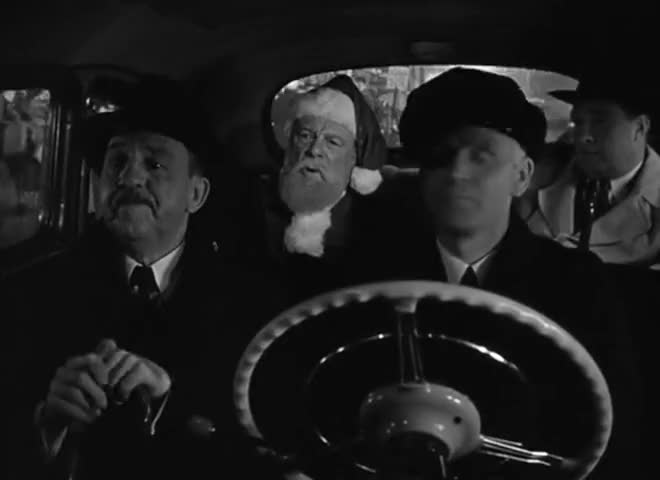
As promised, I am finally completing the “’Miracle On 34th Street’ Ethics Companion,” which I began a year ago and took so long to complete that I ran out of 2019 holidays. As a refresher, I am also, in this post, presenting a Comment of the Day on Chapter Three from all the way back to January 1 of 2020, an excellent analysis of a feature of the story that I missed, by A.M. Golden.
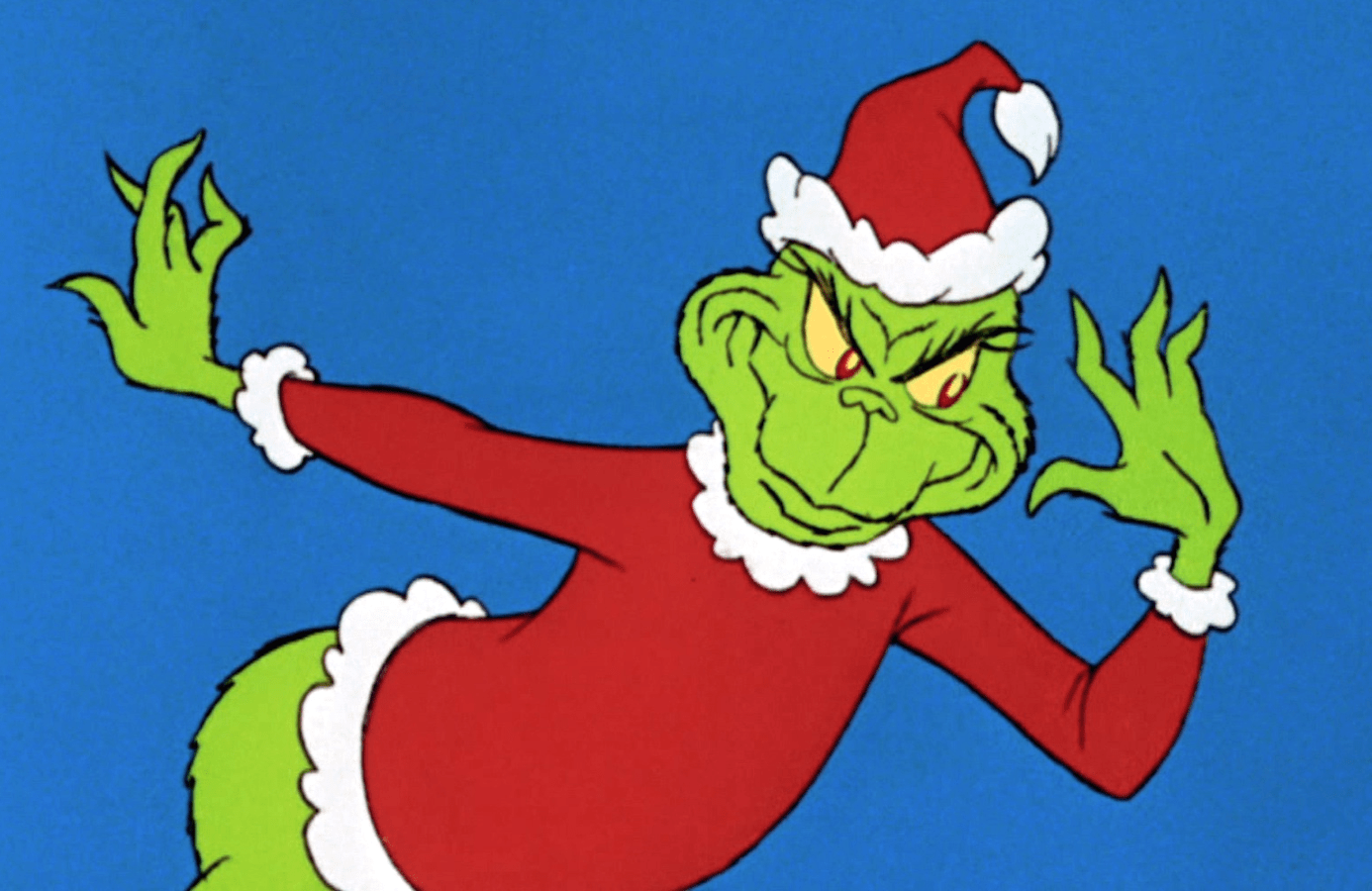
Yesterday’s latest installment attracted some flack from commenters. “Wow, what a Christmas downer, Jack. Channeling Scrooge or the Grinch?” wrote one. “I suspect we could poke holes in any film with respect to morality and ethics if we wanted to.” On the last observation,
- I want to, because it’s my job
- Movies are excellent for tuning up ethics alarms
- Christmas movies, which are seen by children, have a special obligation to teach the right lessons, both prominently and subliminally, and
- No, in fact you can’t poke holes in any film, at least not fairly.
I suspect this will be the last of the traditional holiday film fare to get the ethics work-over, along with “It’s A Wonderful Life” and “White Christmas,” which will have the annual Christmas season re-posting with updated text up today. The three classics were chosen for different reasons. IAWL was designed as an ethics movie with very important and profound ethics messages, and the more one examines it, the more there is to think about. Nonetheless, its cheats on the way to its most important messages are pretty flagrant—justified, but flagrant—and deserve to be flagged. “White Christmas” is different: it’s a musical, for one thing, and musicals never make sense (why are these people singing?), but it also is story about ethics, so it is fair to examine it on that basis. Moreover, one doesn’t need to poke holes in it, the story is full of ethics holes. None of them bothered me before I became a full time ethicist: Bing Crosby and Danny Kaye are two of my favorite entertainers of all time, and the ending still moistens my eye. But the movie is almost impossible to watch now, with my ethics alarms on, and even with my brain on. I had an obligation to dissect it. As for “Miracle,” I accept it as a classic, but the story was constructed to reach the climactic trial gimmick, and scant attention was given to consistency or playing fair. Moreover, I am a legal ethics expert, after all. You can’t honestly expect me not to analyze a trial like that.
You will never see me try to “poke holes” in the greatest of all Christmas stories, and arguably the best ethics story period, “A Christmas Carol,” because it is pretty close to perfect. (AND I now see that the link to the text on the home page has gone bad; I’ll be fixing it ASAP!). “A Christmas Story” is off my list because it is seen through a child’s eyes, and ethics has nothing to do with it. Critiquing “Holiday Inn” would be like shooting ethics eels in a barrel, but it’s just not worth the trouble.
There are also holiday films and ethics films that are written superbly, and have few if any ethics holes to find. Among these are “Toy Story,” “Finding Nemo” (most of the Pixar movies, in fact), “Mary Poppins,” “The Sound of Music,” “Babe,” and even “Groundhog Day.” I’m not the Grinch, but if you set out to make an ethics movie, you had better pay attention to ethics.
Now here almost a year late, is A.M. Golden’s Comment of the Day on the post, “’Miracle On 34th Street,’An Ethics Companion, Continued…Chapter 3: Kris Joins The Macy’s Family!”
Continue reading →





 Ethics Alarms