Incompetent Elected Official Of The Month: Rep. Marjorie Taylor Greene (R-GA)…For The Second Time!

Greene

It’s a record!

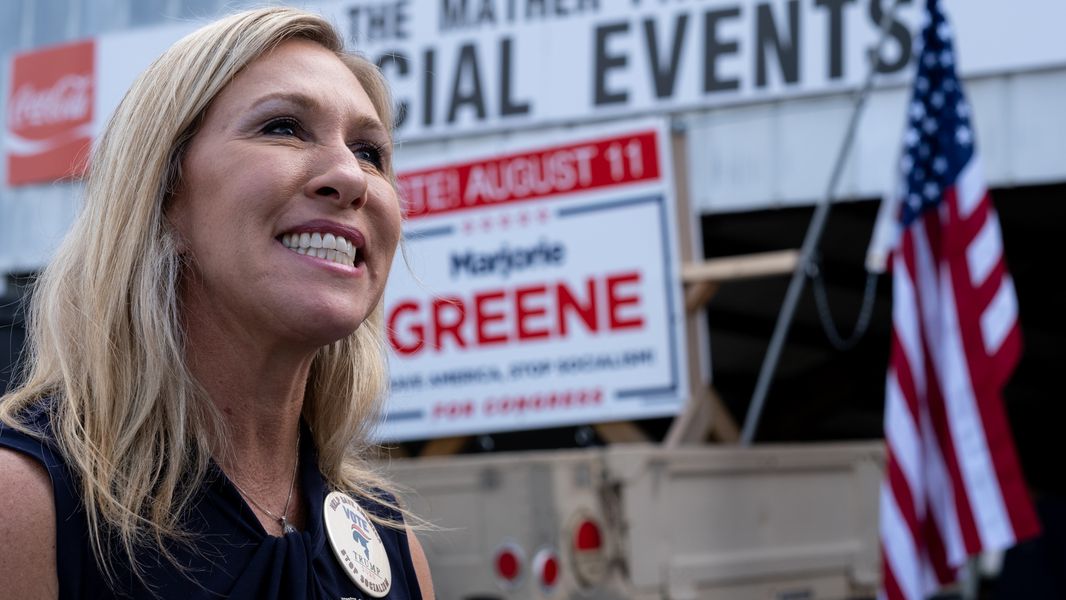
Ah, the Stupid is strong with this one! Rep. Marjorie Taylor Greene invited the press to a town hall event last night in which she planned on answering questions about her support of various wacko conspiracy theories, as well as her silly filing of a bill of impeachment against President Biden. Despite inviting the press, Greene’s instructions were that they couldn’t ask any questions. Yeah, that always works.

A reporter and videographer from a local Georgia station tried to question the Congresswoman, and Greene told them that she was there to speak to her constituents, and not to deal with the news media. Then a Whitfield County sheriff’s deputy escorted the journalists out of the town hall and threatened to arrest and charge the crew with criminal trespassing if they refused to leave. Later, a spokesperson for Greene’s office explained that the crew was removed because the town hall event was “not a press conference.”

Continue reading

GameStop Ethics

Guest Post by Andrew Nelson and Rich in Ct, with a note by Humble Talent

GameStop

[I would say that finance is among my worst topics along with soccer and calculus. My request for clarification on the current GameStop controversy and its ethics implications attracted helpful responses, and I am combining them into one collaborative post. First, Andrew:]

Gamestop, a publicly traded company, was seen as undervalued by some users of an internet forum, in this case, a reddit forum called r/wallstreetbets. That same stock was seen as on the brink of collapse by a hedge fund management group, Melvin Capital, who decided to short sell….

_______________________

Here Humble Talent clarifies:

A short sell is when someone, usually a broker, is holding stock in a company they think is overvalued. They owe their client X number of shares, regardless of the price. So if you have 100 shares of Game Stop stock at $4, and you think it’s going to $2, you sell at $4 and then rebuy the stock at $2, pocketing the difference and letting your client swallow the loss. It’s a loss they would have swallowed one way or the other, so they’re not really hurt, per se. Basically, you’re betting that a stock will go down in value. If the stock instead increases in value, you lose the difference. I think it breaks a fundamental fiduciary duty and should be illegal, but it’s where we are.

So what happened here was that a lot of people thought Game Stop was overvalued, it was listed at approximately what I said it was, between $3 and $4 per share. Short sellers were banking on it decreasing in value, so they sold all their client’s shares. Now that there’s been a ridiculous noise buy on these stocks, and they’ve *increased* in value 1000% (real number) instead of decreasing 50% (expectation) the firms that short sold the stock are going to have to find stock to buy to make their client’s portfolios whole. Which means that they will have to buy thousands of shares back at $400 when they sold them at $4, instead of $2, which they expected to. That 2000% difference over all those shares represents tens of millions of dollars, just on the Game Stop shares.

Basically, a bunch of unethical portfolio managers got their paws slammed hard in the cookie jars of their client’s portfolios, and it’s magnificent.

_______________________

….Whether through intent or accident, these two groups converged on Gamestop at roughly the same time.Regardless of original intent, the users of the reddit forum got more and more people to buy into that stock, causing the price per share to inflate drastically. It’s sitting at over $400 per share when I last checked. A similar situation is happening with AMC stock, though with less drastic inflation.

Continue reading

Well, This Was GOING To Be A Morning Warm-Up Until I Got Derailed Trying To Track A Commenter Rumble That Doesn’t Belong On An Ethics Blog…

But enough of that.

Let us never speak of it again.

1. A day that will live in ethics infamy...on 11:38 a.m. EST, on January 28, 1986, the Space Shuttle Challenger blew up shortly after launch, signalling the beginning of the end of the NASA manned space program. Ethics Alarms has published a lot about the ethics space wreck that led to the disaster and continued in its wake. The Challenger Disaster tag has a most of the relevant posts, of which this one, this (which I built a legal ethics seminar—and a song!—around) and this are the most extensive.

2. Another historical ethics note: Walter Bernstein died last weekend. He was one of the screenwriters blacklisted during the Red Scare. Blacklisting seems especially relevant right now. Most of his films were political; the best known is probably “Fail-Safe,” a movie I deeply dislike that was and is over-shadowed by the superior “Dr. Strangelove…” which hit theaters around the same time. His best screenplay was probably “The Magnificent Seven,” an ethics Western, which he contributed to surreptitiously while he was still blacklisted. After he could write under his own name again, Bernstein wrote “The Front,” a mordant comedy about based on his experiences being “cancelled” in Tinseltown.

Bernstein, unlike many others who were blacklisted (like my friend Bob McElwaine), really had joined the Communist Party. The Communist cause was attractive to him after the war, he said in an interview, because the “Communists seemed like they were doing something.” Such was the intellectual focus of Hollywood Communists, but having lazy and naive political opinions isn’t supposed to cost you your profession and livelihood in the United States of America.

Continue reading

Ethics Rot On The Sports Pages

colin-kaepernick-nike

I have written here before that following baseball and baseball commentary as a child formed the foundation of my interest in ethics and ethical virtues. This was made possible by my idealistic, lawyer, war hero father guiding me through various thickets of confusion and toxic rationalizations, but I worked a lot of it out myself. Boston sportswriting was famously full of fools and blow-hards back then, but at least there was seldom any political opining on the sports pages. I assume that responsible editors forbade it, since the typical sportswriter possessed the sophistication of the average eleven-year old. Sports was seen, correctly, as an often abstract metaphor for real life, where one could learn useful lessons about human nature and problem solving, but one which would curdle quickly once it was confused with the more complex issues that lay outside the stadiums, parks, fields and arenas.

An important book could be written about how politics spoiled, and perhaps even ruined, sports, and the negative effect of this on the rest of American society. I don’t have the time for that, and it’s outside of my area of expertise anyway. However, it seems clear that the politicization and progressive brain-washing that has perverted so much else today has infected sports, perhaps fatally, and that whatever value the topic may have had in conveying cultural values to our young has evaporated in the steam of empty wokeness and ruthless propaganda.

This week provided additional damning evidence. Monday was epic, as the sports page propagandists prepared us for the brain-twisting logic of the baseball Hall of Fame voters determining that Curt Schilling’s support for the previous President of the United States made him a worse pitcher. One Times article demonstrated just how devoid of critical thinking skills sports writers are by quoting with approval a supposedly astute baseball writer’s’ suggestion that “making transphobic comments” is a “much better” reason to keep a player out of the Hall of Fame than his steroid use. Incredible! The latter is cheating on the field. The former is the expression of an opinion, and has nothing to do with baseball at all.

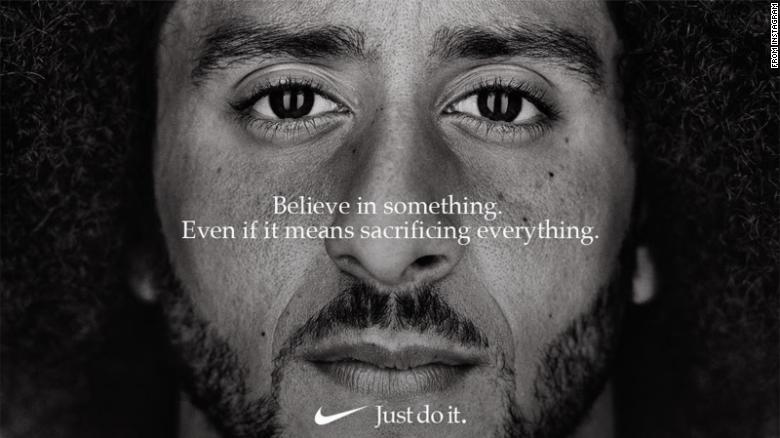
But that wasn’t the worst of what Monday’s sportswriting wisdom brought us. The new primary sports columnist of the New York Times, Kurt Streeter, reflecting on the end of the NFL season, issued a screed celebrating—wait for it—Colin Kaepernick.

Continue reading

In This Week’s Very Special Episode of “The Conways”….

Claudia and Kellyanne

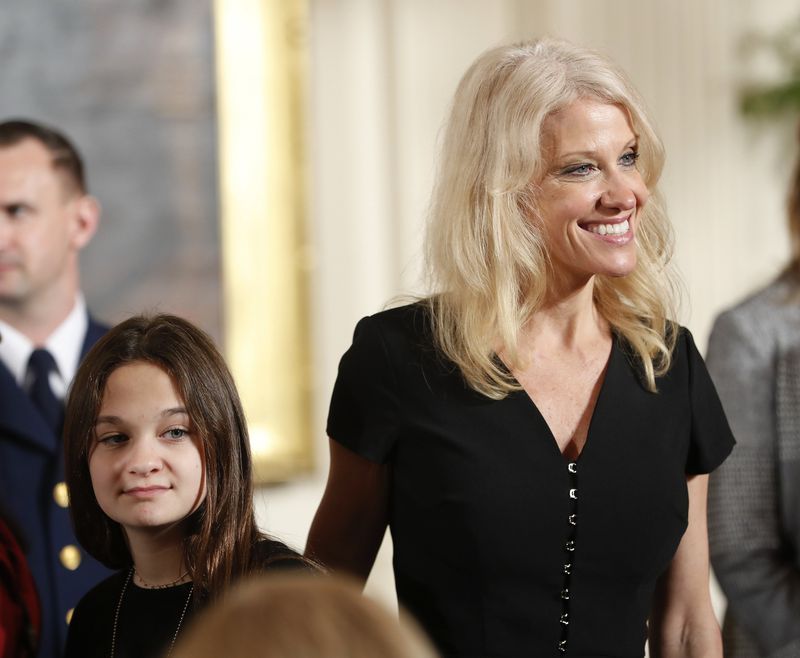
When we last left the lovable and unpredictable Conways, Kellyanne Conway, Counselor to President Trump, announced that she was exiting her White House post to focus on her family after her 16-year-old daughter, Claudia, claimed she was seeking emancipation from her parents over alleged “trauma and abuse.” At the same time, George Conway, the D.C. lawyer who repeatedly embarrassed his wife by attacking her boss and helping to create the anti-Trump Lincoln Project, quit his role with the group, also to deal with the family crisis.

In this week’s Very Special episode, a topless photo of Claudia was posted on Mom Kellyanne’s Twitter account using Twitter’s recently launched Fleets feature, which deletes posts after a 24-hour period. The Fleet was captured by many Twitter users anyway. Claudia then posted videos on TikTok, her favorite milieu (they are now deleted but also captured by others and reposted) confirming that the nude picture was authentic. Claudia speculated, “I’m assuming my mom took a picture of it to use against me one day and then somebody hacked her or something. I’m literally at a loss for words. If you see it, report it.” In one of the TikTok videos, Claudia Conway said that “nobody would ever have any photo like that, ever. So, Kellyanne, you’re going to fucking jail.”

Yesterday, Claudia announced that she and her mother will be “taking a break from social media” and will work on their relationship adding, “I know that my mom would never, ever post anything to hurt me like that intentionally, and I do believe she was hacked…… Please do not incite hate or violence on my family. Please, no threats, no calls to authorities. I love my mom and she loves me.”

Forgive me if I am skeptical that a daughter who just this month again said her parents abused her authored that voluntarily.

Observations:

Continue reading

Ethics Quote Of The Week: Christopher Bedford

nationalguard

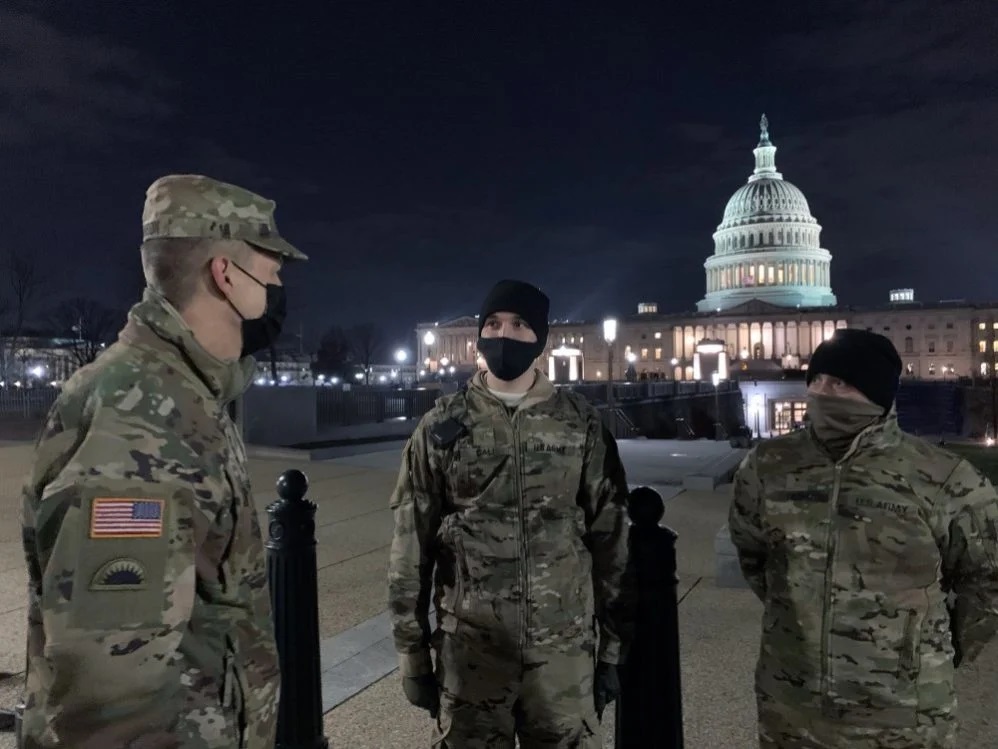
“None of this matters to the leaders in Washington: Not walling themselves from the public they serve, nor spreading even more fear and distrust among their supporters than already existed. What matters is that the Democrats and the troops be seen as the only things standing between America and a Ku Klux MAGA apocalypse.”

Christopher Bedford, National Review editor, in his essay, The Occupation Of Washington Is Pure Panic Porn — And You Are The Target

I don’t usually like to devote an Ethics Alarms post to quoting another writer’s work, but Mr. Bedford has expressed what I would have so perfectly that I’ll make an exception. Please go to the National Review and read the whole thing, but note these points:

Continue reading

Ethics Cleansing, 1/27/2021: I’m Afraid This Edition Exceeds The Limit For Disturbing Stories…

Horrible text message

As a prelude, I don’t know why some commenters are arguing that the 1876 William Belknap impeachment trial is a valid precedent for trying a private citizen no longer in office on a charge that has no other purpose but to remove that individual from his or her federal office. It’s just a bad argument, which is why Belknap has only been raised by desperate anti-Trump zealots. As I pointed out in the comments, an unconstitutional act doesn’t change the Constitution. There have been many, many unconstitutional actions by our government that were allowed to occur in the past (President Jackson’s defiance of the U.S. Supreme Court to forec the Trail of Tears is an especially egregious one.\); they still can’t be cited as proof that the actions were Constitutional, or precedent for violating the Constitution again. Balknap, who had resigned as Grant’s Secretary of War just as he was about to be impeached by the House, submitted to the Senate’s unconstitutional trial. I have always assumed this was because he was certain that he would be acquitted, so he could later claim innocence. (He was incredibly guilty.) Since he was acquitted, there was no occasion to challenge the trial, the issue being moot.

The entire system was in chaos in 1876; if the Belknap trial is binding precedent that a private citizen can be tried by the Senate to remove him from office when he isn’t in that office, why not make the same claim about the unconstitutional deal between Republicans and Democrats to install the loser of the 1876 Presidential election (Hayes) in the White House in exchange for removing federal troops from the former Confederate states?

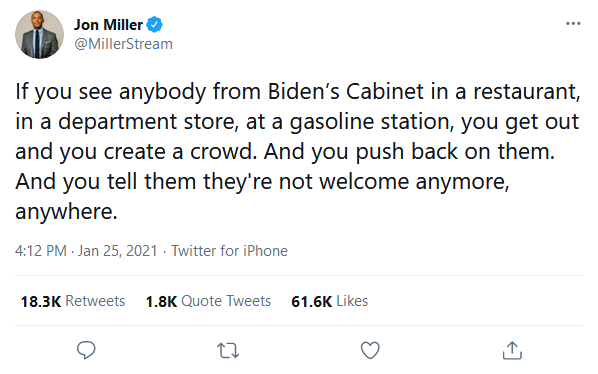
1. An example of ethical trolling, I think:

Ironic Tweet

Miller is getting all sorts of outraged responses from critics online who seem to have missed the critical fact that he was just quoting Maxine Waters’ call for harassment of Trump administration officials. Normally I regard deliberate posting of positions one doesn’t believe as unethical unless the poster makes the sarcasm or irony obvious. This one is obvious, unless the reader wasn’t paying attention to how irresponsible and vicious Democrats were in the past four years, and if the such a reader was that ignorant, he shouldn’t be involved in the discussion at all.

Continue reading

Once Again, Hall Of Fame Ethics (Or The Lack Of Them)

Schilling

The MLB Hall of Fame vote, at least since the Steroid Era, gives us a window into the ethics of baseball writers, and the view is pretty grim. Baseball Writers’ Association of America ballots, many of which are made public before the election results are revealed, annually show dead ethics alarms and an absence of critical thinking, but as someone who has been reading these guys (they are almost all guys) since I was 12, this is no surprise. The smart and thoughtful ones like Joe Posnanski, Roger Angell, Bill James and Peter Gammons, are exceptions. I wouldn’t trust most of the rest to take out the trash.

A player who has been retired for at least five years has to be on 75% of the writers’ ballots (ten players can be listed on a ballot) needed to be “enshrined,” as they like to say in the Cooperstown museum, and a player has ten tries to make it. This year, nobody was selected.

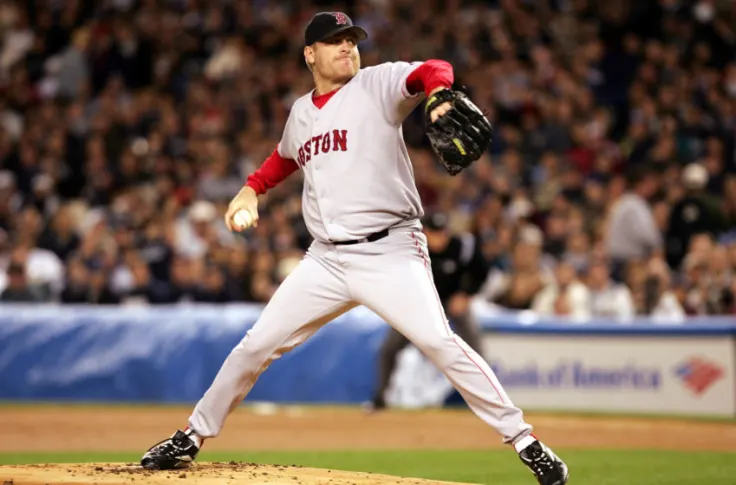
The result was a slap in the face to former Orioles, Philadelphia, Arizona and Red Sox starting pitcher Curt Schilling, and was intended to be. He just missed the 75% level last year, and usually that means that a player gets in the Hall the next time, especially in a year like this one, where there were no major additions to the candidates. Schilling, by prior standards, by statistical analysis, and by the simple reality that he was famous while playing and had a single iconic moment that will keep him in baseball lore forever—the “bloody sock” game, should be an easy call. Yet ESPN and other sources refer to him as “controversial.” Why is he controversial? He’s controversial because he is religious, conservative, Republican, and an outspoken Trump supporter, none of which has a thing to do with baseball. Schilling also, to his credit, refuses to submit to his critics and the social media mobs. He is independent and comfortable with who he is, he is articulate in expressing his opinions (at least by typical athlete standards), and can and will defend his points of view. He shouldn’t have to, however, to be admitted to the Hall of Fame.

His sportsmanship and professional comportment while playing was never less than impeccable. Curt Schilling has a deep respect for the game (one opinion that has been held against him is his insistence that steroid users are cheaters), and he has done nothing since leaving baseball that was sufficiently vile to harm it in any way. To the contrary, he and his wife (now battling cancer) have been active in charity work and community projects. That satisfies the Hall’s so-called “character clause.”

Continue reading

Ethics Dunces: The 55 U.S. Senators Who Voted That It Is Constitutional For The Senate To Impeach A Private Citizen

Paul

Sen. Rand Paul (R-Ky) offered the obvious and obligatory point of order resolution that a Senate trial of a private citizen, that being former President Trump, is unconstitutional, which it unquestionably is. The resolution failed 55-45, with every Democrat voting for the measure along with five NeverTrump Republicans: Mitt Romney of Utah, Lisa Murkowski of Alaska, Susan Collins of Maine, Ben Sasse of Nebraska, and Pat Toomey of Pennsylvania.

This means that 55 U.S. Senators, all of whom took an oath to defend and protect the Constitution, have stated on the record that they will do no such thing. Yet their votes do not decide what is constitutional. The Constitution decides. Consider: not a single Democratic Senator had the integrity, independence and courage to declare that what the Constitution says is what the Constitution says, and that the U.S. Senate should not, indeed must not, ignore it to satisfy obsessive Democratic spite. Not one.

That’s one helluva party you got there, Joe.

In addition to that,

Continue reading

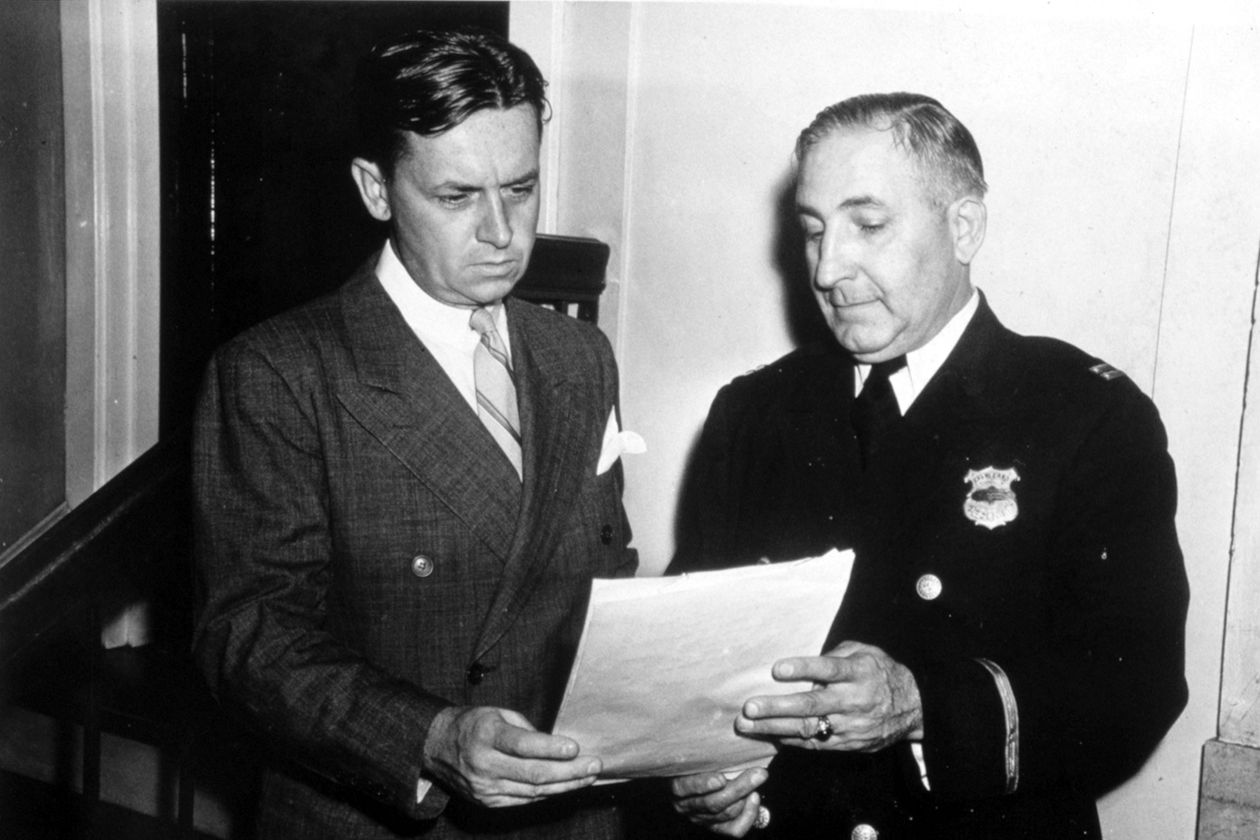
History And Ethics #1: The Mad Butcher And Eliot Ness

im-215311

Today in 1936, the dismembered body of Florence Polillo was found in a basket and several burlap sacks in Cleveland. She was the third victim in 18 months to be found dismembered with suspicious skill. The murderer was dubbed the “Mad Butcher,” and by the summer of 1938, the body count had reached double digits, and the body parts much higher. The Cleveland policee, desperate to find the Mad Butcher (also known as “the Torso , persecuted an actual butcher named Frank Dolezal, who was interrogated for 40 straight hours until he confessed to killing Polillo. It was a coerced confession, however, and he changed his story many times before committing suicide in his cell.

Then and today, nobody really believes poor Dolezal was really the Mad Butcher. His role was as an instrument of a cover-up. The real story is one of deception, privilege, and a conflict of interest involving an iconic law-enforcement figure, Elliot Ness.

Continue reading