Unethical “American Idol” Tricks

American-Idol-Season

Wow. Has it really been that long since my last “American Idol” post? The last one appears to have been in 2012. I began losing interest in the updated version of “Major Bowe’s Amateur Hour” when it became clear to me that the show’s system routinely missed the best talent, notably Adam Lambert, who so obviously had “star” written all over him during the 2009 season that his loss to the vanilla Kris Allen (Who?) was an embarrassment. I stopped paying attention a few years later—yes, I guess 2012 fits.

But I can’t let this pass.

At the end of last month on “American Idol” Season 19, MC Ryan Seacrest announced that ten “familiar faces” from last season, when the show was made remote and virtually dead by the production limitations prompted by Wuhan virus fears , would be permitted to compete for a spot in this year’s top 10. “Those finalists never got the true experience of the big stage, the lights, the cameras, the hair, the makeup, the wardrobe, that fun stuff, Kris Pooley and the band backing them up,” Ryan said, not really justifying anything. Yup, they got a tough break. But it was that season’s groups’ tough break, and the current season’s competitors shouldn’t be penalized for it. Adding those performers now obviously ould skew the voting: some of them already had a solid fan base. This was especially true of last popular season’s runner-up, Arthur Gunn.

Sure enough, Gunn predictably won the “comeback round,” and thus was added to the Season 19 Top Ten. That meant that one of this season’s singers who would have made the finalist group without the Invasion of the Losers from Season 18 was robbed of his or her shot. At very least, Gunn should have been the 11th finalist if he was going to be allowed to compete at all. Then he was voted into the Final Seven, compounding the damage.
Continue reading

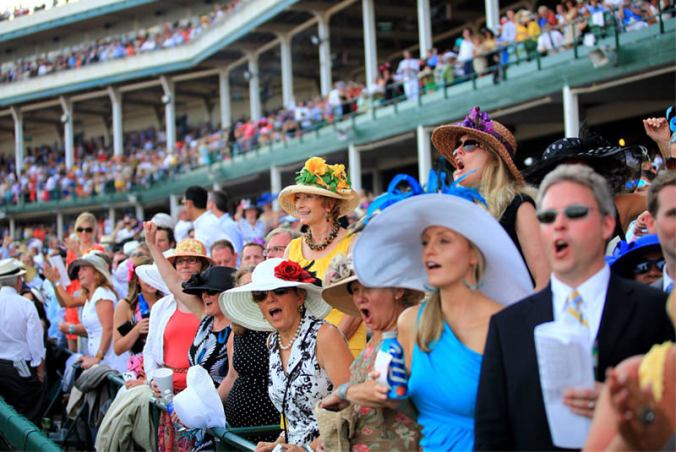
May The Fourth Ethics Warm-Up: The Derby, Booing Mitt, And Other Pastimes…

Besides the terrible pun, May the 4th has great ethical significance in U.S. history. The children of the Sixties have the date seared into their memories as the 1970 tipping point in the Vietnam war protests. Twenty-eight young and badly trained National Guardsmen fired their weapons at a group of anti-war demonstrators on the Kent State University campus. Four students were killed, eight were wounded, and one was permanently paralyzed. The tragedy didn’t make the war any more or less wrong, but it massively shifted sympathies to students, protesters, and the one-time punchline of the previous few years, hippies. Future U.S. activists learned the lesson of Kent State well: if you can goad the opposition into violence, it is a victory for the cause, just and reasonable or not. This makes no sense, of course, other than being the ideal use of the cognitive dissonance scale

But Kent State doesn’t came close to the impact of the Haymarket Square Riot in Chicago, Illinois on this date in 1886. A bomb was thrown at a squad of police attempting to break up a peaceful labor rally that was getting rowdy. The police responded to the bomb by wildly shooting into the crowd, killing more than a dozen people and injuring hundreds. The episode had wide-reaching effects in labor, law and politics, galvanizing the union movement, leading to great political courage by some politicians (like Illinois Governor John Peter Altgeld, who pardoned three arrested activists who hadn’t been executed or died in 1893) and craven expediency by others.

The episode was also the major catalyst in bring a small-time lawyer named Clarence Darrow to Chicago, and inspiring him to be a labor lawyer.

1. More on Brandon Mitchell, the Chauvin juror who couldn’t keep his mouth shut. The photo of Mitchell wearing a Black Lives Matter T-shirt at a protest in Washington D.C. last August…

…has some legal experts…and me…wondering if the chances of the Chauvin verdict being overturned just got a whole lot better. “I’d never been to D.C.,” Mitchell humina-huminaed about his reasons for attending the event. “The opportunity to go to D.C., the opportunity to be around thousands and thousands of Black people; I just thought it was a good opportunity to be a part of something.”

Part of what, exactly, sir?

Brandon also says he doesn’t recall wearing such a shirt. That’s not encouraging regarding his honesty, is it?

Meanwhile, in the story about the latest development in the George Floyd Ethics Train Wreck, the AP writes,

A photo, posted on social media, shows Brandon Mitchell, who is Black, attending the Aug. 28 event to commemorate Martin Luther King Jr.’s “I Have a Dream” speech during the 1963 March on Washington. Floyd’s brother and sister, Philonise and Bridgett Floyd, and relatives of others who have been shot by police addressed the crowd.

Others who have been shot by the police? Floyd was shot too? I did not know that!

Continue reading

Democracy Or Mob Action? It Depends On Your Point Of View…

School boards are testing the limits of democracy and tolerance for its abuse on two fronts now: mandatory masking, and Critical Race Theory indoctrination. Parents and others are learning that being nice and compliant has backfired badly on them (and the nation) and are finally beginning to push back. Good. Late, perhaps disastrously late, but still: good.

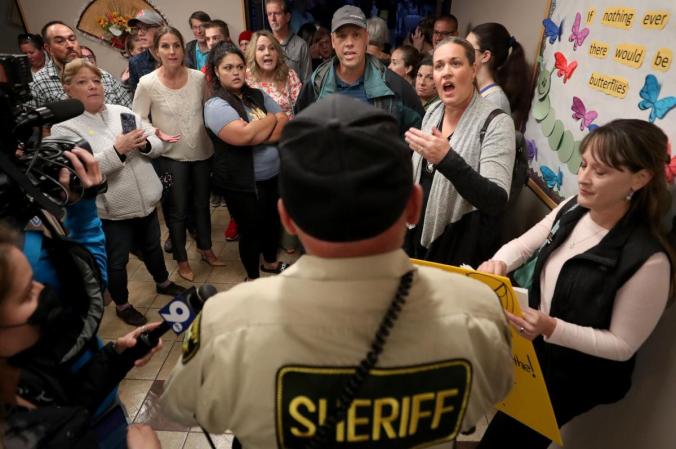
In Vail, Arizona, where the school board is one of many in the state taking a harder policy on mask-wearing than other areas of the state, hundreds of parents and protesters turned up at a public school board meeting to demand a more reasonable mandate. Overwhelmed and outnumbered, the school broad ended the meeting and fled. (Someone even called the police on “the Nazis,: causing understandable confusion. Who are the real fascists in this controversy?) The remaining citizens, armed with “Robert’s Rules of Order,” then declared that the board had dissolved, elected a new board by a voice vote, and then the “new board” voted to make masks voluntary in schools.

Uh, well, it doesn’t work like that, though the conservative media cheered on the episode while misrepresenting it. Robert’s Rules lay out orderly procedures for holding meetings, not how to hold elections. The elections of Vail school board members is guided by law, and, of course, the whole city gets to vote, not just those who show up spontaneously at a meeting. Reportedly, a lot of the protesters in Vail didn’t even live in Vail, though rightish blogger like PJ Media’s Steven Green insisted on calling them (falsely) “parents” without any verification that they were.

It is also more than a little hypocritical for conservatives to simultaneously endorse efforts to make voting less conducive to manipulation and fraud while applauding a mob takeover of a school board.

Nonetheless, sneering at the incident is as unwise as over-praising it. Democracy works only with the consent of participants, and the increasingly power-mad and self-righteousness besotted Left is begging for uprisings like the one in Vail. (Was it an insurrection?) They will get them, and if civility, fairness and respect doesn’t enter the process soon, they will involve a lot more than a misuse of “Rorbert’s Rules of Order.”

Here is the the video of the Vail meeting:

From The Increasingly Fantastic Annals Of The Great Stupid: Norton And The Philip Roth Biography

One more time I have to remark, “I don’t understand this at all.”

Last week, publisher W.W. Norton sent a memo to its staff announcing that it will permanently take Blake Bailey’s biography of Philip Roth out of print, as a result of allegations that Bailey sexually assaulted multiple women and also behaved inappropriately toward his students when he was an eighth grade English teacher.

If that sentence makes sense to you, The Big Stupid has you by the brain stem.

“Norton is permanently putting out of print our editions of ‘Philip Roth: The Biography’ …Mr. Bailey will be free to seek publication elsewhere if he chooses,” the email said in part, and was signed by Norton’s president, Julia A. Reidhead. Reidhead later said that Norton would make a donation in the amount of the advance it paid to Bailey in a mid-six-figure book deal to organizations that support sexual assault survivors and victims of sexual harassment.

What’s the theory here? That the book is eeeevil? The late Philip Roth did nothing to justify banning his book, and besides, since when did we ban autobiographies of bad people anyway? Reviews of the biography were mostly positive: in The New York Times Book Review, novelist Cynthia Ozick called it “a narrative masterwork both of wholeness and particularity, of crises wedded to character, of character erupting into insight, insight into desire, and desire into destiny.” The Washington Post described it as “a colorful, confident and uncompromising biographical triumph.” The book quickly landed on the New York Times best-seller list.

As for Bailey, he is an acclaimed literary biographer of writers like Richard Yates, John Cheever and Charles Jackson, and the author of a memoir of his own. He received the Guggenheim Fellowship and was a Pulitzer finalist for his Cheever biography. Philip Roth handpicked Bailey to write his biography after meeting with him in 2012.

In addition, the allegations against Bailey have nothing to do with his profession as a writer or his professional output. It’s not as if he was running for President and was accused by a former staffer of raping her while he was serving as a U.S. Senator. More importantly, the allegations are unproven and untested. Bailey denies them, saying in a statement, “I can assure you I have never had non-consensual sex of any kind, with anybody, ever, and if it comes to a point I shall vigorously defend my reputation and livelihood.”

Suzanne Nossel, the chief executive of the writers organization PEN America said that Norton’s action risked establishing a new, troubling norm that could narrow the range of ideas and information available to readers.

Gee, ya think?

“Bringing out a book should signify that a publisher believes there is something edifying, worthwhile or elucidating contained in the volume,” Nossel said. “It should not be construed as an endorsement of the ideas or narrative purveyed, nor of the personal conduct of the author.”

Continue reading

This Is Not The Statement Of A Juror In A “Fair Trial” [Updated]

This is the first crack in the dam, and there will be more. I was certain this was coming.

Brandon Mitchell, a black, 31-year-old high school basketball coach on the jury that convicted Derk Chauvin, spoke to the Wall Street Journal saying that “staying anonymous wouldn’t help push for change.” If he wants Chauivin to say convicted, he should have kept quiet. From the interview (WSJ has a paywall—sorry):

Mitchell said he was pulled over for no reason by Minneapolis police dozens of times in his early 20s, usually driving his mother’s aging Chrysler Sebring. He said he has always told his players to follow the checklist his mother gave him during these encounters. Take your hat off; announce what you’re doing; be polite; do what you’re told.

Then Mitchell tells the Journal that serving on the jury made him see it was wrong that a person should be so afraid that a police officer could do them harm that they needed to change their behavior, adding,

“That’s also part of the reason why I’m speaking up now because that is a narrative that is horrible…So somebody follows directions or not, they don’t deserve to die. That’s completely ridiculous.”

THEN Mitchell says he “related” to Floyd, saying,

“I just related to it too much.Being big, you know, former athlete and all these things—it just, it really just hit home… It just felt like something that easily could have been me or anybody else that I know.”

Good thinking there, Coach! And America, welcome to the jury system.

Rueful observations in random order:

Continue reading

Ethics Quiz: The Basecamp Political Discussion Ban

Last week, software company Basecamp’s CEO Jason Fried anounced in a blog post that employees would no longer be allowed to openly share their “societal and political discussions” at work. “Every discussion remotely related to politics, advocacy or society at large quickly spins away from pleasant,” Fried wrote. “You shouldn’t have to wonder if staying out of it means you’re complicit, or wading into it means you’re a target.” Coinbase, a cryptocurrency company, issued a similar edict last year, but the internal reaction to Fried’s announcement was a rebellion. Basecamp employs around 60 people, and about a third of the them have accepted buyouts to leave in an apparent protest against the new policy.

There are few legal limits on employers regulating political speech in the workplace. First Amendment rights do not apply to private sector employers. Any speech ban has to clearly state that the policy will not apply to discussions relating to terms and conditions of employment protected under Section 7 of the National Labor Relations Act. An employer must also consistently enforce the policy lest selective enforcement suggest discrimination on the basis of race, gender, or other protected classifications.

Your Ethics Alarms Ethics Quiz of the Week is…

Is such a ban ethical?

Continue reading

“It’s A New Week!” Ethics Warm-Up, 5/3/2021: Good Day Edition

Bad, BAD week last week, and not just for me. It was a bad week in ethics, and because of my own shortcomings, I wasn’t able to properly provide a path through it. This week will be better, starting today. At least if I have anything to say about it…

1. From “the rest of the story” files: Remember when Jonathan Papelbon attacked Bryce Harper in the Washington Nationals dugout? It was 2015, and pretty much marked the end of relief ace Paplebon’s career. Harper went on to become a mega-million dollar free agent after the 2018 season, when he signed with the Phillies for a ridiculous 30 million dollars a year long-term contract. Papelbon finally resurfaced in Boston this season as an amusingly unrestrained analyst for NESN, which broadcasts the the Red Sox games. And I recently discovered how almost right he was to accost Harper, if admittedly a bit too enthusiastically. The prompt for Pap to go grab Harper by the neck was the latter loafing down the line as he barely ran out a ground ball. Harper’s periodic lack of hustle had been a source of annoyance for years (to be fair, he was “only” being paid 2.5 million bucks to play hard in 2015), but I just saw the stats for his last year in Washington. Having been a plus-defensive player in previous years, Harper stopped hustling entirely in 2018, both in the field and on the bases. Though he had once saved over 20 runs in a season in the field alone, in his free agent year Harper cost his team over 20 runs that year, making sure he stayed healthy for the big payday to come (to be fair, he was “only” being paid 21.6 million bucks to play hard in 2018). As soon as he had a guaranteed contract with Philadelphia, Harper started playing hard again, dashing around the bases and diving in the outfield.

Both Papelbon and Harper were jerks during their careers, but nobody could accuse “Pap” of not doing his best to win for the fans, his team, its city and his team mates every single time he stepped onto a baseball field.

2. Not Harvard this time: it’s back to Georgetown! Both of my schools’ diplomas are turned to the wall of my office in a symbolic protest against their continuing unethical policies and conduct—-I’m not sure what more I can do to signal my contempt and embarrassment. Now it’s Georgetown’s turn again—I worked for the University for five years after I graduated from the Law Center—to make me wish I had graduated from a school with some integrity. Though it has been notably un-covered by the mainstream news media, Georgetown Professor Michele Swers read the words of a Ku Klux Klan leader in her “U.S. Political Systems” class for the college, but because she “did not censor” the word “nigger,” a large contingent of her students sent a smoking gun letter letter to Swers and the college’s diversity office, demanding that she apologize profusely, review all future presentation and lecture material for potential bias;  and demonstrate her “understanding of the history of the N-word and why it is inappropriate for a non-Black person to say it in any context, including an educational context.” [Pointer: Steve Witherspoon]

So far, I can find no record of a response from the university or the professor, but writing of the incident, Prof. Turley says in part,

Continue reading

Ethics Dunces: 500 Former “Jeopardy!” Contestants, Except “Dunces” Doesn’t Nearly Describe How Truly Despicable They Are…Or Dangerous [Updated And Corrected]

Ethics observations on the unbelievably idiotic Kelly Donohue “Jeopardy” controversy….

If you, like, have a life or don’t live on the web, you may have missed this story, which means you might still live in a place dominated by sane people. I’m almost hesitant to spoil your delusion…

Last week, Kelly Donohue, a 35-year-old state bank examiner from Winthrop, Massachusetts, fulfilled the Nerd’s Dream of appearing appear on “Jeopardy!” Somehow, the silly, naive man still thought there were safe places in the media where one was not at risk of becoming a victim of the vicious, left-wing outrage machine, which nourishes itself on the metaphorical splattered blood of those they destroy, just to demonstrate it can.

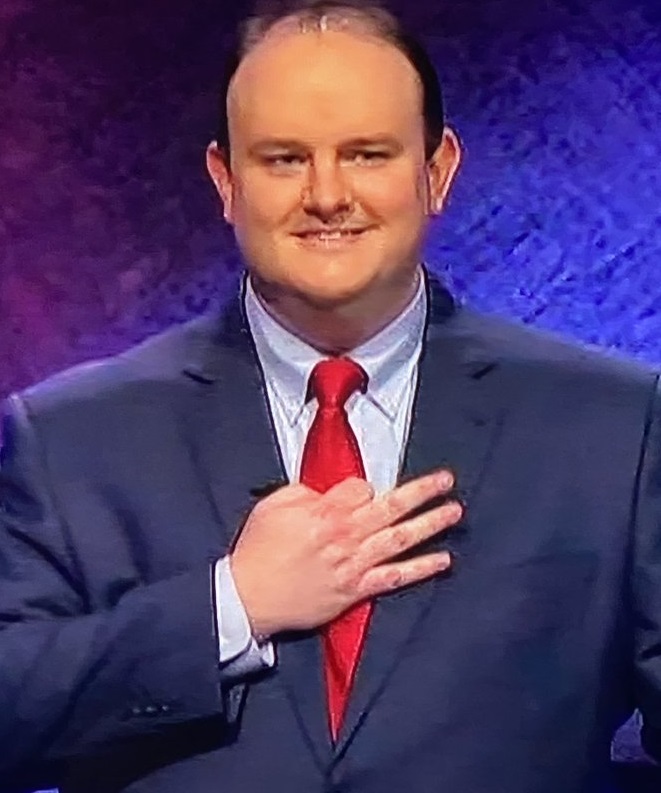
Kelly decided to celebrate each of his three wins by making hand gestures to mark them. (Jeez, man…) The gestures after his his first and second wins—you know, one finger, then two fingers?—were deemed acceptible, but when he made the symbol above signifying his third victory, some people set out to destroy his life. A reasonable response, don’t you think? An online letter supposedly signed by more than 500 former “Jeopardy!” contestants—nobody’s checked if they all are— called the symbol “offensive” and a “racist dog whistle.”

“What I can say is that it’s pretty well known that that particular gesture has become associated with white power,” said Emily Kelly, a contestant in 2012 who signed the letter.

Emily is an asshole, but then, they all are, whether they were ever on “Jeopardy” or not.

Continue reading

As I Apparently Watch My Life Flash Before My Eyes, I Revisit My Legal Ethics Discrimination Controversy—And Damn It, I Was Right. I’m Still Right.

Bar associations are trying to woke-up their ethics rules regarding sexual harassment and sexual discrimination, and it’s not going well. The states pretty much rejected the language of the ABA’s broad and vague proposed 8.4g, declaring it unethical for a lawyer to engage in harassment or discrimination “related to the practice of law,” whatever that means. Moreover, the rule implies that more than illegal “discrimination” is covered, and doesn’t bother to define sexual “harassment,” which has been a moving target since it was conceived. Tennessee adopted the ABA’s language, and the rule was quickly declared unconstitutional by the state Supreme Court. Now the ABA is back to the drawing board after causing this chaos, trying to tighten the language.

Maybe it was reading about the latest developments in this mess that sent my mind reeling back to 2018, when an attendee at a monthly ethics seminar I had given for more than a decade suddenly had a tantrum over my interpretation of another bar association’s ‘discrimination” rule, which prohibited a lawyer from engaging in discrimination in “employment.” Or maybe it was the shadow of doom, since I had recently set a personal record for the most unwelcome bodily sources of voluminous expurgations of blood in a 24 hour period.

Boy, if my life is going to pass before my eyes, I would urge the editor to skip this episode.

Continue reading

“Veritas”…Right.

veritas_logo

Only my recent travails have delayed my letter not only withdrawing from my Georgetown Law Center class reunion committee but announcing that I have no intention of attending any celebration of a degree that has embarrassed me repeatedly for several years, most notably in this revolting episode. But, to be fair, my undergraduate degree has been rendered equally nauseating, and over a much longer period. That Harvard—it has to be #1 in everything.

This Month’s Harvard Magazine continued the apparently irreversible trend. The Harvard Library announced that it is removing the “illegal alien” subject heading from its collection descriptions, citing the hoary progressive talking-point that “actions can be illegal, but people cannot.” This has always been sophistry and rhetorical sleight of hand to make it linguistically difficult to describe what it is that is objectionable about those who illegally cross our borders and remains here, receiving the benefits of this nation without having been granted them. When the elite and educated in a society start bolstering bad ideas and flawed logic by abusing their perceived authority and confusing the ignorant and gullible, propaganda gains overwhelming power.

The “no person is illegal” trick is intellectually dishonest, of course. Illegal aliens are people who are in this country illegally. Ergo, while remaining in this country, their existence here is illegal, and hence they are illegal. One could say with equal validity—that is, none—that no drug can be truly illegal, because objects themselves can’t do anything, legal or not. It’s what is done with the drugs that is illegal–make them, distribute them, sell them, use them. You can’t prosecute an object.

Continue reading