Ray Fosse And A Lesson In How Ethics Evolve

People who don’t read the baseball-related posts here miss the point: sports in general and baseball in particular create ethical problems that clarify ethics in all fields. The story of former catcher and broadcaster Ray Fosse is a prime example.

Fosse, was an All-Star catcher, a multiple Gold Glove-winner, a two-time World Series champ, and a long-time broadcaster who died yesterday, of cancer at the age of 74. His claim on immortality is the famous play above, which ended the 1970 All-Star Game, back when baseball’s “Mid-Season Classic” was more than just a chummy parade of stars playing baseball with the intensity of an office picnic softball game.

In 1970, Fosse was in his first full big league season with the Cleveland Indians, and signaled that he could be one of the all-time greats at his position. He won a Gold Glove, received some MVP votes, and had a 23-game hitting streak from early June into early July (That’s a lot. especially for a catcher). Fosse made the All-Star team that year and had his rendezvous with destiny when, in the bottom of 12th inning of a tense, tie game, the Reds’ Pete Rose, famous for his hustle and trying to score the winning run from second base, was beaten by the throw home but smashed into Fosse at home plate, causing the catcher to drop the ball and winning the game for the National league. It was a thrilling play, one of the most memorable in the nearly 90 years history of the exhibition, but Rose separated and fractured Fosse’s shoulder. Fosse continued to play for the rest of the 1970 season but because doctors didn’t discover the injuries until the following season his body never healed properly. Fosse would suffer lingering effects from play for the rest of his life. He also was never as good a player again.

Rose was unapologetic, and most conceded that his tactic was a clean play. Fosse was blocking the plate, and the only way Rose could score was to reach home while making him drop the ball. The controversy was over whether it was ethical for Rose to risk injuring another player in an exhibition game. Had Rose epitomized a sporting ideal by playing hard to win—after all, he could have been hurt too—or had he engaged in poor sportsmanship?


Continue reading

Morning Ethics Warm-Up, 2021: To Boldly Go…

Shatner in space

1. William Shatner didn’t die. It doesn’t matter. People really don’t get moral luck, do they? Of course, only a tiny percentage of the public reads Ethics Alarms. 90-year-old William Shatner flew into space yesterday aboard a ship built by Jeff Bezos’ Blue Origin company. The former “James T. Kirk” and three fellow passengers boldly went to an altitude of 66.5 miles over the West Texas desert in the fully automated capsule, then safely parachuted back to Earth. The flight lasted just over 10 minutes. I had previously and correctly pointed out that Bezos had violated basic Kantian ethics, the Categorical Imperative, by exploiting Shatner and placing the old egomaniac at risk in order to promote Blue Origin. “But Shatner consented!” Bezos apologists kept telling me. So if someone consents to being used as a means to an end, that makes using a human being as a means to an end ethical?

Well, sometimes—Kant was an absolutist, and there are no absolutes. However, Shatner’s exploitation doesn’t qualify as an exception. What if the stress of the flight had killed him? Then many would be questioning Bezos’s motives, but the ethical problem is the same whether Shatner survived or not. That the flight didn’t end up looking like an elaborate grand suicide for an iconic actor who knew his time had almost run out anyway was pure moral luck.

Continue reading

“Good” Racial Prejudice At The Art Institute of Chicago

Stein

You have to wonder how long it will be before all these idealistic, liberal-minded, wealthy white people begin to realize that their support for progressive candidates and causes won’t save them from being discriminated against, insulted and abused as the woke mob they helped put in power presses on with its plan of compensatory racism. If the answer is “never, because they are weenies and fools”—and it might be—there is no calculating how far this Bizarro World version of “justice” and “inclusiveness” might go.

The Art Institute of Chicago summarily fired all of its volunteer docents. Almost all were retired white women. They were canned in a masterpiece of authentic frontier gibberish authored by Veronica Stein (above), the museum’s newly appointed Woman’s Board Executive Director of Learning and Public Engagement, who announced her priorities as “designing culturally responsive programming and anti-racist curricula, cultivating fully accessible spaces, and ensuring staff wellness and learning.” Somehow, anti-racism also meant eliminating the trained and dedicated docent staff because they were too white. “She had further stated, we acknowledge our responsibility to rebuild the volunteer educator program in a way that allows community members of all income levels to participate, responds to issues of class and income equity, and does not require financial flexibility to participate. Rather than refresh our current program, systems, and processes, we feel that now is the time to rebuild our program from the ground up.”

Volunteers are not covered by federal employment laws, so the wealthy white women who chose to serve the community for free out of their civic pride and generosity will be replaced with a new “diverse” group of non-volunteers, who will be paid $25 an hour to do be less trained and experienced than the docents just released. The few non-white volunteers had to go as well, because there was no way to fire just the white women without making the racist motives behind the move too apparent.

The Docent Council complained about the decision in a letter to Art Institute President James Rondeau, which listed their members accomplishments and qualifications and further stated,

We believe we were dismissed (1) because the museum’s perspective is that the current docent corps’ demographics do not meet the need of the strategic plan (2) the museum concluded that reengineering the docent program was a step towards achieving the museum’s important goal of creating a culture of diversity and inclusion.

And that’s what you get, ladies, when you accept the dubious proposition of diversity for diversity’s sake, where merit takes a back seat to quotas. They were not given the courtesy, gratitude or loyalty of being moved into the new positions they would be overwhelmingly qualified for if they weren’t too white and “privileged.”

The Chicago Tribune, hardly Fox News, wrote in an editorial, “Once you cut through the blather, [Stein’s] letter basically said the museum had looked critically at its corps of docents, a group dominated by mostly (but not entirely) white, retired women with some time to spare, and found them wanting as a demographic,” stated the Chicago Tribune.

Continue reading

No, It’s Not “The Worst Lawyer Advertisement Ever”…But It’s Bad Enough

Medows site

A lawyer sent around an ad by a Brooklyn, NY., traffic ticket lawyer (that’s his website above) that read,

October 13th is National Herpes Awareness Day!

This is an opportunity to raise awareness around the causes, risks, and treatment of different types of herpes infections.

Question: What is the difference between your traffic ticket and herpes?

Answer: Your traffic ticket doesn’t have to affect you forever!
We here at the Law Office of James Medows would like to bring awareness to

National Herpes Awareness Day!

To celebrate this day, we are offering

$100 OFF your next traffic ticket.

Use Promo Code: Herpes100

Expiration: The sale ends 10/19/2021 and cannot be combined with any other promotions.

Call: 845 – TICKETS or 845-842-5387 now to redeem this offer!

The lawyer who sent the copy of the ad to ethics specialists asked, “Is this the worst lawyer advertisement ever?” The answer is easy: it’s not even close. Nor is the ad unethical under the legal ethics rules of any jurisdiction, including New York. Today IS National Herpes Awareness Day, so the ad isn’t misleading. Unethical lawyer ads are misleading ads. It’s certainly a tasteless ad, but the Old Guard in the legal profession believed all lawyer advertising was in bad taste. Bars know that punishing lawyers because their ad copy is obnoxious risks having the advertising ethics rules struck down as free speech violations.

It might even be an effective marketing ploy for the lawyer, encouraging reckless drivers to go to his website.

Are The GOP NeverTrumpers Genuinely Deranged Or Just Self-Revealed Hypocrites?

Question_mark

In the end, it doesn’t matter: either way they discredit themselves and cannot be trusted. As Democrats and the news media (cue hoary cliché: “But I repeat myself!”) become increasingly desperate to stave off a much-deserved Democratic Party wipe-out in 2022, the NeverTrumpers are suddenly in demand again even though Trump will not be running. The desperation theory is that such bitter and personally biased flip-floppers can convince saner conservatives and GOP supporters to vote Democrat, even when that party has never been as extreme as it is today, or as hostile to American principles including democracy itself.

Yesterday provided a jaw-dropping example, an op-ed in the Times headlined, “We Are Republicans With A Plea: Elect Democrats.” Like so much we are seeing, hearing and reading lately, the screed is desperation itself, but fascinating. Amazingly, the melt-down of The Lincoln Project wasn’t enough to discourage the Axis of Unethical Conduct (the resistance, Democrats and the mainstream media) from hailing the leaky NeverTrumper lifeboat as their ship goes down. The only justification for the plea is that the authors hate Donald trump. That’s it. Nothing else. What current Democratic policies do the authors approve of? None are mentioned. Which Democratic Party leaders do they view as responsible and trustworthy? Nancy Pelosi? Joe Biden? Again, crickets.

Oh yes, about those authors. The thing is jointly authored by Miles Taylor, who was the Times’ sensational (and dishonest) “Anonymous” Deep State mole, and who famously (and profitably) wrote that he was sabotaging Trump administration initiatives from within the Department of Homeland Security, and Christine Todd Whitman, the failed New Jersey governor and W’s EPA head. She is one more Bush Family acolyte pledged to avenge Trump’s gratuitously mean statements about George and Jeb. These people are relentless. Naturally, the op-ed praises Rep. Liz Cheney, also a member of that club, who supported two illegal and contrived impeachments, violating the intent of the Constitution and permanently rendering the important impeachment safety valve as useless, to slake her personal grudge (Attacking President Bush means attacking Daddy). Whitman and Taylor call Cheney “courageous.”

Continue reading

Ethics Alarms Officially Designates Trangender Activism An Ethics Train Wreck [Updated And Expanded]

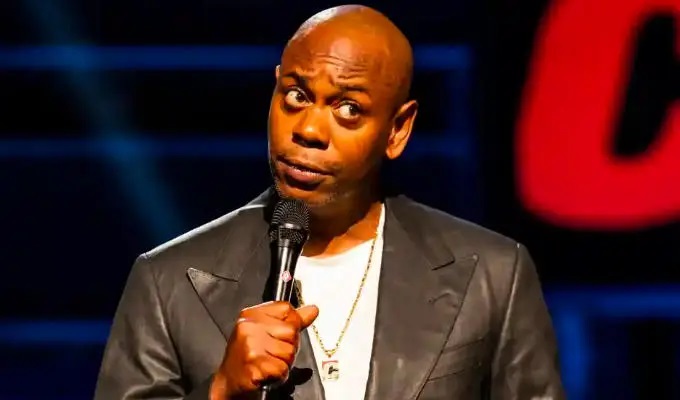
dc-dave-chappelle-closer

An ethics train wreck is an ethics-fraught situation or event that manages to make virtually everyone involved, on all sides of the issues, behave unethically or express unethical positions. I should have identified the Transgender Activism Ethics Train Wreck much earlier, of course: I was asleep at the switch.

The tipping point that prompted this is the Dave Chappelle Netflix special, “The Closer,” the latest in a series of stand-up concerts by the talented, often perceptive and intentionally politically incorrect comedian. (I haven’t watched it yet, but I will, possibly tonight.) The show is under attack by LGTBQ activists because Chappelle jokes at the expense of transgender individuals, and this is, they say, hate speech. As I said, I haven’t seen this concert, but I have seen others, and Chappelle has targeted trans people before. I can’t say his anti-trans material isn’t sometimes funny: a lot of his jokes provoke the dual “I can’t believe he said that!”/ “Ha! Oh, no, I hate myself for laughing!” response. This is because he is good at what he does. Nevertheless, I regard such jokes as punching down. Chappelle should be better than that.

I also have two transsexual friends, one a former neighbor, the other a young man I have known since he was a child. I find nothing funny or ridiculous about either of them.

Continue reading

To Be Fair, MIT Was Probably Corrupted By Being Too Close To Harvard….

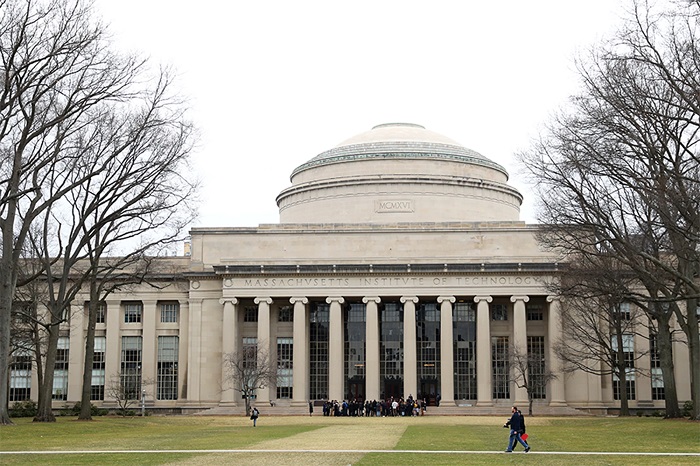
MIT

Dorian Abbot, an associate professor of geophysics at the University of Chicago, wrote in an op-ed on New York Times exile Bari Weiss’ Substack last weeky that MIT, just a few bocks beyond Harvrad on Massachusetts Avenue in Cambridge, Mass., had informed him that his Carlson Lecture was being canceled to “avoid controversy.” He wrote in part,

“In the fall of 2020 I started advocating openly for academic freedom and merit-based evaluations. I recorded some short YouTube videos in which I argued for the importance of treating each person as an individual worthy of dignity and respect. In an academic context, that means giving everyone a fair and equal opportunity when they apply for a position as well as allowing them to express their opinions openly, even if you disagree with them. 

“As a result, I was immediately targeted for cancellation, primarily by a group of graduate students in my department. Whistleblowers later revealed that the attack was partially planned and coordinated on the Ford Foundation Fellowship Program listserv by a graduate student in my department….

“That group of graduate students organized a letter of denunciation. It claimed that I threatened the ‘safety and belonging of all underrepresented groups within the department,’ and it was presented to my department chair. The letter demanded that my teaching and research be restricted in a way that would cripple my ability to function as a scientist. A strong statement in support of faculty free expression by University of Chicago President Robert Zimmer put an end to that, and that is where things stood until the summer of 2021. 

“On August 12, a colleague and I wrote an op-ed in Newsweek in which we argued that Diversity, Equity, and Inclusion (DEI) as it currently is implemented on campus “violates the ethical and legal principle of equal treatment” and “treats persons as merely means to an end, giving primacy to a statistic over the individuality of a human being.” We proposed instead ‘an alternative framework called Merit, Fairness, and Equality (MFE) whereby university applicants are treated as individuals and evaluated through a rigorous and unbiased process based on their merit and qualifications alone.’ We noted that this would mean an end to legacy and athletic admission advantages, which significantly favor white applicants. 

“Shortly thereafter, my detractors developed a new strategy to try to isolate me and intimidate everyone else into silence: They argued on Twitter that I should not be invited to give science seminars at other universities and coordinated replacement speakers. This is an effective and increasingly common way to ratchet up the cost of dissenting because disseminating new work to colleagues is an important part of the scientific endeavor. 

“Sure enough, this strategy was employed when I was chosen to give the Carlson Lecture at MIT — a major honor in my field. It is an annual public talk given to a large audience and my topic was “climate and the potential for life on other planets.” On September 22, a new Twitter mob, composed of a group of MIT students, postdocs, and recent alumni, demanded that I be uninvited

“It worked….”

Observations:

Continue reading

Morning Ethics Warm-Up, 10/12/2021: Thanks, Columbus!

Columbus 2

This is the real Columbus Day: After sailing across the Atlantic Ocean, Italian explorer Christopher Columbus saw a Bahamian island on October 12, 1492. He believed he had reached East Asia: Chris was right about the world being round, but it was bigger than he thought. His expedition went ashore and claimed the land for Isabella and Ferdinand of Spain, the sponsors of his attempt to find a western ocean route to to the far East. Columbus changed the route of history, science and culture, with incalculable effects long and short term, good and bad. He also was directly responsible for brutal treatment of Native Americans, because he was a product of the 15th Century. We honor historical figures for their positive achievements, and if they are positive and important enough, the personal and public evils such figures might have also had on their ledgers are secondary. That is as it should be: the alternative is to honor no one at all, and to make history a parade of villains….

…although I would be hard pressed to find anything negative to say about the amazing Desmond Doss, who became the first Conscientious Objector to be awarded the Medal of Honor on this date in 1945. Ethics Alarms told his astounding story here, in 2017; so did the film “Hacksaw Ridge.” I still have a hard time believing it.

1. Nah, there’s no mainstream media bias! (#1): Here is the Washington Post, deliberately promoting statue toppling with a handy-dandy guide. This is the kind of thing that made me stop subscribing to my hometown paper. It does not explain why I subscribe to the Times, which just raised its rates to 90 bucks a month.

wapo_list_of_columbus_statues_10-11-2021

2. Nah, there’s no mainstream media bias! (#2): From Sunday’s “Reliable Sources” on CNN (That’s the hangout of absurdly unreliable Brian Stelter, who pretends to opine on journalism ethics while having none of his own):

Once respectable liberal journalist James Fallows, now employed by the extreme left-wing “Atlantic”: “The struggle for us all in the media is if we keep pointing out that one side of the political divide is actually instigating these things, defying subpoenas, trying to renege on the debt, holding up State Department appointments, et cetera, we are conscious of seeming shrill, we’re conscious of seeming unbalanced, we’re conscious of seeming to take a side. And so it’s something about our culture, we need to figure out how we can give out a narrative of the actual realities recognizing how this is at odds with our conventions.”

Oh, no! Seeming to take a side when they are taking sides? Seeming to be shrill when they are shrill? “Actual realities,” meaning “our biased views, represented as irrefutable truth to accomplish our agendas”? Whatever shall good journalists do? Wow. [Pointer: Steve-O-in NJ]

Continue reading

Comment Of The Day: “Ethics Quiz: The Dying Patient’s Denial”

Unlabeled pills

The Ethics Quiz last week about the ethical propriety of doctor telling a dying man in denial that he had only a brief time to live sparked many excellent comments, but none better than that of comment wars veteran Dwayne N Zechman.

Here is his Comment of the Day on the post, “Ethics Quiz: The Dying Patient’s Denial”:

***

oh . . . Oh . . . OH . . . this one is such an easy call for me that it makes me want to scream.

A Doctor’s Lie Almost Killed Me

A few notes:
– When I was born my mother was already older than was considered advisable to have children at the time.
– I have two older brothers, but I was my mother’s fourth pregnancy. The third ended in miscarriage.
– Because of the various conditions in play and from the examinations and tests they performed, the doctors predicted (incorrectly) that I would be born brain-damaged and mentally retarded and (correctly) that I would be born with life-threatening birth defects.
– Because of the above, the doctor encouraged my parents to abort the pregnancy.

Continue reading

A Déjà Vu Ethics Dunce: Pete Rose

Pete Rose

I confess that at this time of year, with the Boston Red Sox in the play-offs (and doing splendidly so far), my thoughts keep defaulting to baseball and baseball ethics. However, I couldn’t have resisted this inspiration in the dead of winter.

I was already considering writing about how Major League Baseball has now abandoned its former principled stand against gambling on the game to the point where its gambling industry partners are encouraging suckers to bet on game details like extra-base hits and runs-batted-in, and during games, using special bonus pay-offs—you know, like the casinos that give out free chips to get tourists hooked? How MLB is going to square this sudden embrace of professional gambling with the sport’s so-called “third rail” rule that demands a lifetime ban of any player, coach or manager who is caught betting on baseball games is anybody’s guess.

Pete Rose, the all-time career hits leader, is the most famous victim of the third rail, and he was also my very first Ethics Dunce. In January of 2004, Pete’s sleaziness helped launched The Ethics Scoreboard when I wrote,

Pete Rose now admits he bet on baseball (after ten years of lying about it) but says that his bets (always in favor of his team, never against it, he says) as manager of the Cincinnati Reds never effected his management decisions, and thus he did not harm the integrity of the game. He feels he should be let back into the game as a manager.

A couple of things, Pete:

1) Even if this were true, fans of the game cannot put their faith in the outcome of games when they know that those who help determine the outcome might be motivated by their wagers. This is the reason that we call “the appearance of impropriety” an ethical problem.

2) Presumably you did not bet on the Reds when a key player was sitting out, or when your starting pitcher wasn’t feeling good. Right? Or are we supposed to believe that you bet large amounts of money while already in debt to bookies in circumstances when you thought you would lose? So every time you didn’t bet on the Reds, you were sending information to the bookies, and it affected their odds on the game. Got it?

3) You say you never bet against the Reds. You used to say you never bet on baseball. You’re a liar. Why should anyone believe you now?

Pete continued to embarrass himself and baseball, leading to several posts on Ethics Alarms. My favorite Pete Post is this one, in which I wrote in part,

All of the above could be more concisely summarized by six words: Pete Rose is a stupid man. As comedian Ron White says, “You can’t fix stupid.” Manfred, in his letter telling Pete that he can forget about any future employment in baseball, noted more than once that Rose does not appear to understand the import and purpose of the rule he violated, which exists  to protect the integrity of the game. Indeed,  Pete Rose wouldn’t know what integrity was if it sat on his face.

“This final chapter (I hope) in the sad Rose gambling saga drives home a fact that is under-appreciated in the ethics world. Ethics is hard, and requires attention, critical thinking, and a modicum of intelligence. Ethics involves choosing among competing options in difficult situations, often under pressure; it involves recognizing when non-ethical considerations are threatening to overwhelm ethical principles; it involves being able to understand why an ethical society is preferable to a corrupt one, and the difference between rationalizations and ethical values.

When tying your shoes is a challenge, most of this is out of the question. Or to put it in Pete Rose terms, if you are seeking forgiveness for  placing bets on baseball when you knew that baseball bans anyone who does that, and can’t figure out that continuing to gamble on baseball isn’t going to help your case, the chances that you are going to be able to figure out whether a particular situation requires an application of the Rule of Universality or not are those of Frosty the Snowman bumpety-bump-bumping safely through Hell...”

As you have probably guessed by now, that was not “the final chapter.” A new chapter came out today. Pete, who is always playing some angle to make money off of his baseball exploits because he is perpetually broke, has launched a sports gambling podcast.

Continue reading