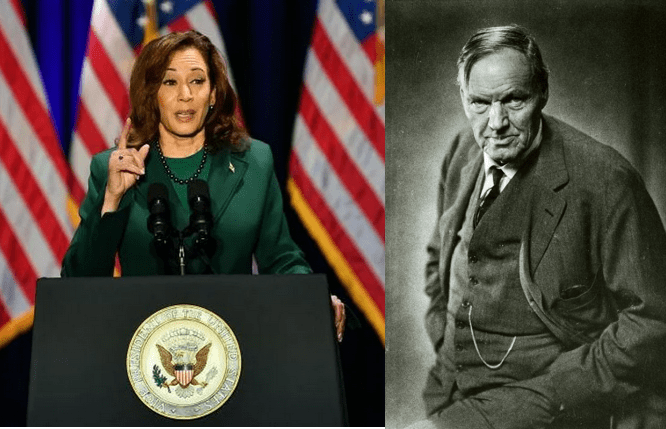
Vice President Kamala Harris, in her speech delivered on the 50th anniversary of Roe v.Wade, didn’t babble incoherently as usual. She just invoked one logical fallacy, rationalization and intellectually dishonest statement after another. The highlight, however, was her claim to the abortion fans in her audience that “we are on the right side of history.”
That’s signature significance. Nobody makes that argument unless they are a con-artist, a demagogue, or an idiot. In Kamala’s case, all three are likely true. Saying one is on the right side of history is just an extraordinarily obnoxious way of saying, “We’re right and everyone else is wrong” without actually making a substantive argument. To quote myself in the description of the phrase (it’s Rationalization #1B. The Psychic Historian on the list):
Every movement, every dictator, Nazis, Communists, ISIS, the Klan, activists for every conceivable policy across the ideological spectrum, think their position will be vindicated eventually. In truth, they have no idea whether it will or not, or if it is, for how long. If history teaches anything, it is that we have no idea what will happen and what ideas and movements will prevail. “I’m on the right side of history is nothing but the secular version of “God is on our side,” and exactly as unprovable.
Abortion supporters have been working hard lately to argue that the Bible supports abortion because it doesn’t expressly condemn it. A text thousands of years old that predates all scientific knowledge about the unborn and the predates modern medicine is irrelevant to the abortion debate. More…
It is a device to sanctify one’s own beliefs while mocking opposing views, evoking an imaginary future that can neither be proven or relied upon. Nor is there any support for the assertion that where history goes is intrinsically and unequivocally good or desirable… Those who resort to “I’m on the right side of history” (or “You’re on the wrong side”) are telling us that they have run out of honest arguments.
Which nicely describes Kamala, if not all abortion advocates. Here is dishonesty exemplified: Harris, in her speech, said, “We are here together because we collectively believe and know America is a promise. America is a promise. It is a promise of freedom and liberty — not for some, but for all. A promise we made in the Declaration of Independence that we are each endowed with the right to liberty and the pursuit of happiness.” Continue reading



 Ethics Alarms
There is a little more to it than that:-
– On the legal maxim of “nemo dat quod non habet”, of course the Turks couldn’t convey title. But they didn’t, they offered a quitclaim, as it were; they removed themselves from obstructing.
– As regards any original owners, there simply weren’t any left. The last remaining ones were ended by rounds of persecution of pagans, centuries earlier.
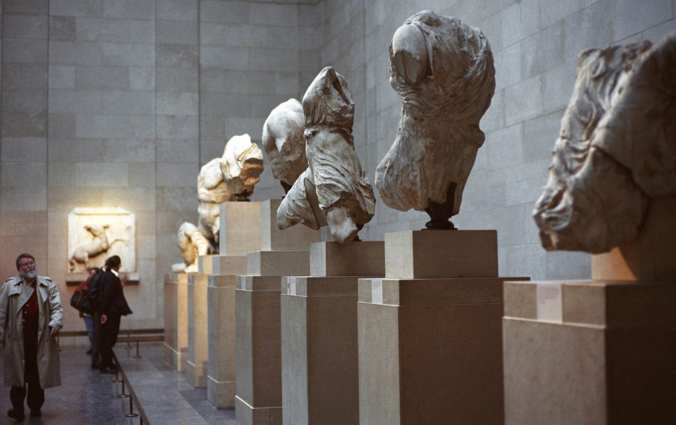
– As far as any generic claims of common heritage of western civilisation go, and those claims only go for want of better (there being no direct heirs), what better place to put the items than in a museum furthering that common heritage? Are the British somehow less heirs of that than are the Graeculi? Particularly considering how much safer the items were in that museum(those not taken have suffered horribly from war, corrosion, and what not). And, of course, the very word “museum” proclaims that furthering that common heritage.
Now, none of that conveys title to the British Museum, but adverse possession in the years since does – adverse, in that no better claimant came forward. Just as today’s Greeks feel an understandable connection to these items, as they do to the Lions of St. Mark’s, so too do today’s British – and as today’s Venetians do to the Lions of St. Mark’s. They are as intertwined with the histories of each place as of the other.
The Solomonic solution would be to sand blast the items to the condition of those not taken if any effort to transfer them were ever made. But I expect the Sir Humphreys will loudly assert ownership while underhandedly arranging a loan in name only with no means of foreclosing, just as they have with foundational documents that ought to have remained in British archives. That would satisfy none but the Sir Humphreys.
Continue reading →