Now and then people contact EA privately for some ethics guidance, which I usually supply free of charge. Yesterday an inquirer spun this tale:
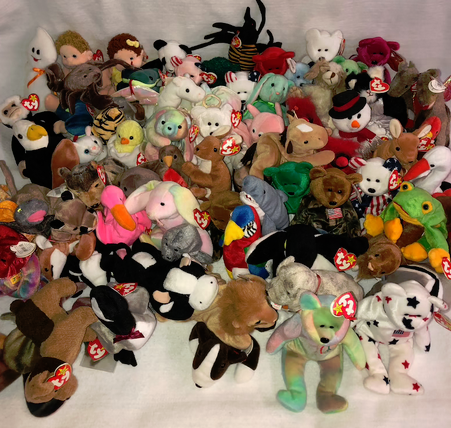
Her neighbor decided to clean house, and get rid of all of her now grown and out children’s abandoned toys. Among these were dozens and dozens of Beanie Babies, the toy fad of the Nineties. My inquirer said that neighborhood parents and pre-schoolers were just scooping the things up, and so she asked her neighbor if she could have three, two for her granddaughter, now 4, and one for as a future stocking-stuffer. Receiving a positive response, she chose three that she thought a little girl would like.
She swears it didn’t occur to her at the time that Beanie Babies are collectibles, but when she got home, she was moved to investigate. She was shocked at what some of the old stuffed animals are worth, and was particularly shocked to see that one of the BB’s she had chosen at random and that appeared to be in mint condition is considered rare and valued at $70,000. Her question: what is the ethical course to pursue at this point?
One option, she said, was to ignore what she had discovered about the value of the toys and to give them to her granddaughter as planned, warning the parents to keep the valuable one safe as a future investment for the child. Another, she suggested, was to sell the valuable toy (a walrus) herself, and to give a portion of the proceeds to her neighbor.
I told her that there was no unethical course at this point in the story, just varying degrees of exemplary ethics. If she had realized that her neighbor was unwittingly giving away potentially valuable collectibles and chuckled under her breath as she slyly took the most valuable one she could find, I said, that would have been unethical. But she hadn’t and didn’t. She had acquired the toys fair, square, and legally: the neighbor had no claim on them now, and couldn’t blame anyone but herself for surrendering something of value without just compensation. Ethically, there was no obligation for my inquirer to do anything.
Several courses available would be kind and generous however. She could return the walrus to the neighbor, saying that it was obviously given to her by mistake, and there was reason to believe it was valuable.(At that point, the neighbor would have been obligated to share any proceeds from an auction or sale with the inquirer.) I told her that pretending she didn’t know what she knew and giving the Beanie Babies to her granddaughter would certainly be generous in the extreme, but, again, she had no obligation to do it: her original plan was to convey a used toy, not a windfall.
I endorsed the plan of testing the market for Mr. Walrus, and if the yield was significant, splitting it with the neighbor. She assured me that her neighbor was trustworthy and rational; I hope so, because these scenarios have turned into lawsuits in the past.
My inquirer also said that she noticed a lobster among the un-grabbed Beanie Babies and now regretted not taking it, because her research indicated that one might have been the most valuable of all. I suggested calling her neighbor as soon as possible and urging her not to give away the lobster, if she hadn’t already.
There is a tangential issue here: the ethics of the mother giving away her kids’ possessions. If her children were not informed and given the chance to consent or refuse, that was unethical. It also wasn’t the inquirer’s problem to solve.
 Ethics Alarms
I would take this lesson about disposing of my kid’s toys to heart, except that would assume they didn’t destroy all their toys…
I don’t see why selling the toys and keeping the money isn’t unethical. Legal, yes, but it violates the Golden and likely Platinum Rules for sure.
Nope. It’s her property, and legally acquired. The Golden Rule doesn’t apply when the motivation attributed to “others” is pure self-interest. Sure, everyone would like a do-over when they make a bad deal, but business, commerce and transactions generally would be chaotic if such a rule or principle were established. When would the obligation to give back money to the one who made a bad deal expire? Never? A year? A week? Let the Buyer Beware is an invitation to abuse, but let the seller beware? Absolutely.
Probably never expire. I think there’s a material difference between, say, selling someone land that ends up having an oil deposit in it vs giving someone a toy on a whim because they asked for it. But I do see your point.
Wait—the inquirer didn’t ask for it, as in inducing the “seller” to do something against interest.. The BB’s were out on the lawn for anyone to take: the neighbor was offering them for free to children. They were being given away to someone, no matter what.
“My inquirer said that neighborhood parents and pre-schoolers were just scooping the things up, and so she asked her neighbor if she could have three, two for her granddaughter, now 4, and one for as a future stocking-stuffer.”
Missed enough of the first part of this sentence that it sounded to me like she was helping clean out the house and asked if she could take some of the BBs that she found while cleaning.
Every so often in the book business, you list a book for sale for which you have drastically underpriced, for one reason or another.
I remember listing a hardback once that was somewhat beat up, might have been ex-library and I listed it for $4.00. Little did I know that the publisher was known for known for exceedingly well designed and illustrated hardbacks in very small press runs. They operated back in the 40s and 50s and now they are instant collectibles, regardless of condition.
I think I had something like 20 people attempt to purchase my single book — obviously I could have listed and sold it for much more than my $4 listing. But it was my mistake, so I sold it for that price to the earliest buyer — lesson learned. And wore myself out responding to the other 19 folks.
Yes I had the same question.
Why is it unethical to know the toy is worth money while picking it out, only to sell it, versus finding out later, only to sell it?
Being aware that someone is unwittingly harming themselves and not warning them is unethical. In extreme cases, when its a purchase, the law will often nullify the sale. If it’s unethical to buy something without disclosing to the owner its true value, it is certainly unethical when one is taking the object for free.
But didn’t you say:
“She had acquired the toys fair, square, and legally: the neighbor had no claim on them now, and couldn’t blame anyone but herself for surrendering something of value without just compensation.”?
And:
“Sure, everyone would like a do-over when they make a bad deal, but business, commerce and transactions generally would be chaotic if such a rule or principle were established. When would the obligation to give back money to the one who made a bad deal expire”?
The neighbor is still harming herself by giving away these toys for free. And the inquirer knows this now.
1. You’re right! What I meant was “apparently” so and for the purposes of the inquiry,all that matters is that: the neighbor had apparent authority to give away the stuff. I didn’t consider the unfairness to the kids until I was about ready to post.
2.That’s why I suggested that the inquirer alert her about the lobster!
f she had realized that her neighbor was unwittingly giving away potentially valuable collectibles and chuckled under her breath as she slyly took the most valuable one she could find, I said, that would have been unethical.
A number of years ago I found myself going to garage sales going on where I lived. I happened upon a binder full of rare magic cards with at least one of them being the a Black Lotus. The lady wanted $20 for the binder. At the time, I knew it was at least $10,000 for that single card and estimated other cards in the binder to also bring in quite a bit of money. I don’t think she believed me when I told her, but thanked me all the same and pulled it down.
A year or two ago, I watched Post Malone talk about loosing an auction for one at 500k. I often wonder if that lady took my advice, just sold it to some lucky collector/player or if the thing was fake. You can get the whole power nine off etsy for a few dollars. Maybe whoever left it behind did something like that. I can’t imagine someone not knowing the value of those cards if they kept them in a binder, but I could understand a mom selling them just to get rid of them.
We have one of those Beanies that may or may not be worth anything. I see quotes online as little as $50 while Buzzfeed clickbait articles mentioned as much as $35K.
In the end, the thing is only worth what someone is willing to pay for it.
So long as Mom cleared it with her kids, I don’t see anything unethical about taking the toy as offered.
Clearing it with her kids is the key to ethical behavior. While my hubby was in college decades ago, his mom decided that four shoe boxes of baseball cards he’d stored in the attic were “junk” so she tossed them without asking him. Bye Bye to the whole batch of rookie cards of Mickey Mantle, Hank Aaron, etc. Sigh.
I assume he has read, owns and treasures “The Great American Baseball Card Flipping, Trading and Bubble Gum Book”? An all-time classic by two guys whose mother did the same thing.
Just ordered….thanks! It’s one of those great family stories that we all have in one form or another.
My mother tossed my 45s from the early to mid-60’s. I had Beatles, Elvis, Sinatra (I was a weird 2nd grader) and she tossed them.
My rock and fossil collection, too. That stung.