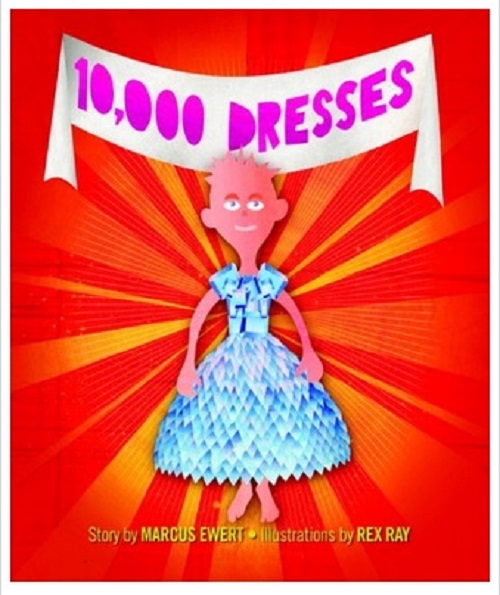
…Which is that there are no good reasons at all to expose elementary-school-aged children to LGTBQ literature and propaganda. This is depressing. While the Supreme Court conservative Justices have shown themselves capable of ruling against extreme right-wing agenda items when the law dictates, the Three Progressive Sisters on the Court increasingly seem incapable of anything but lockstep wokism.
During nearly two-and-a-half hours of oral arguments last week regarding the case of a group of Maryland parents who sued Montgomery County (Maryland) to be able to pull their elementary-school-aged children out of instruction that includes LGBTQ themes, a clear majority of the Justices indicated that they had the better argument. That is that the local school board’s refusal to give them an opt-out violates the family’s religious beliefs and therefore their constitutional right to freely exercise their religion.
I find it annoying that the case has to rest on Freedom of Religion at all: why shouldn’t any parents be able to decide that they don’t want their children introduced to these topics before puberty, or exposed to indoctrination on subjects that only parents should handle, within the family?
The parents in the case include Tamer Mahmoud and Enas Barakat, who are Muslim, Melissa and Chris Persak, who are Roman Catholic, and Svitlana and Jeff Roman, who are Ukrainian Orthodox and Roman Catholic. (Having some Scientologists and Evangelical Christians would have been nice…)
In 2023, the Montgomery County School Board in one of the most Democratic counties in the nation was flushed with the Democratic Party’s totalitarian vigor, and announced that it would no longer allow parents to excuse their children from instruction using LGBTQ-themed books. The parents argued in federal court that the board’s refusal to allow them to opt their children out violated their rights under the First Amendment to freely exercise their religion, since it stripped them of their ability to instruct their children on gender and sexuality and to control how and when their children are exposed to these issues. How radical of them!
The lower courts, being as left-biased as the state itself, refused to require the school board to notify the parents when the books would be used or give them a chance to opt their children out of the indoctrination. Next a federal appeals court ruled that the parents had not demonstrated that exposing their children to the the LGBTQ books compelled the parents to violate their religion. SCOTUS accepted the case, and seems poised to stop this nonsense.
The Justices learned that the County’s teachers must use the books, with the school board suggesting that they do so five times before the end of the year. Why? Why is it so crucial that sixth graders or younger be instructed in the joys of using one’s pee-pees and woo-woos in non-conventional ways?
Justice Amy Coney Barrett, the one female on the Court not committed to voting as a bloc, suggested that the teaching of such storybooks might amount to indoctrination rather than mere exposure. Presentation of an idea as fact, such as telling students that “this is the right view of the world,” she said, is different from telling students that “some people think” a particular thing. Meanwhile, the village idiot on the Court, Justice Sonia Sotomayor, said, “Haven’t we made very clear that the mere exposure to things that you object to is not coercion?” But it isn’t “mere exposure,” is it? It’s all in the teaching, and parents, quite simply, can’t trust today’s woke-marinated teachers.
Justice Samuel Alito asked the advocate representing the school board about a teacher instructing students that anyone disapproving of same-sex marriage “is not a good person.” Alito emphasized that under the county’s current policy a school can teach children controversial moral positions regarding sex that are “highly objectionable to parents and they can’t opt out.”
Again, why do school boards think that it’s necessary to introduce these topics at these ages at all?
The court’s Democratic appointees all took the same approach, with the one clearly qualified member of the group, Justice Elena Kagan, asking, “Is the key question that when a religious person confronts something in a classroom that conflicts with her parent’s religious beliefs, then the parent can opt out?” Unable to make a good argument why small children should be taught about alternative sexuality, Kagan cynically resorted to a straw man argument: ‘Today its anal sex, tomorrow, evolution!” Kagan said that parents would then decide that their children having to leave the classroom would be a burden and detriment, leading to a challenge to the materials themselves. Gee, can’t have that! Is it really so difficult to have a curriculum before middle school that doesn’t involve sex at all? Really?
Sotomayor continued the straw man attack, fearing that these narrow-minded bigot parents—you know, conservatives—will next object to “biographical material about women who have been recognized for achievement outside their home,” or books featuring divorce, interfaith marriage, and immodest dress. Where is the line beyond requiring the school to inform parents of the curriculum and then allow the students to opt out, she wondered. Immodest dress? Why would that ever be an issue in the sixth grade? If teachers’ judgement was trustworthy, which it no longer is, choice of curriculum wouldn’t be an issue. It isn’t trustworthy, however. Parents can and should demand transparency.
Justice Ketanji Brown Jackson asked if a parent could insist that a child not be placed in a classroom with a teacher who has pictures of his same-sex wedding in the classroom. My answer: personal photos don’t belong in a classroom. The personal lives of teachers are irrelevant to education.
The pro-mandatory indoctrination attorney said that “dozens of students” had been opting out in Montgomery County, making it impossible for school officials to make arrangements for the space, supervision, and alternate instruction necessary. I ask again: why is it so difficult to construct a curriculum that doesn’t have “dozens of students” opting out?
The betting is that the woke forces lose this one. Good. But they never give up….
 Ethics Alarms
Perhaps the reason that kids in MCPS cannot read at grade level is because the Board wants to focus on socializing kids to their right way of thinking instead of being able to have the skills to evaluate ideas on their own. Keep them illiterate and use technology to make them minimally productive as adults and then we can control them and stay in power.
“Perhaps”????
That was a rhetorical “perhaps”. As the son of two public school teachers and members of the AFT, I know from first hand experience that one of the the principal arguments against home schooling espoused by so many in public education is that the children “miss” the socializing aspects of public schools. Sixty years ago when I went to grade school the majority of teachers believed socialization meant being a good honest hard working citizen. A minority believed it meant obedience to authority.
Fortunately for my brothers and me, my parents did not subscribe to every argument. The minority socialization argument fell on deaf ears in our household and it was obvious to them that I was not one to be simply compliant and accept ideas that many teachers wished that we (my brothers and I) would simply adopt without question. Compliant kids are not often suspended from first grade and then moved to a different teacher.
I will admit that some of the arguments against vouchers were embraced by my mother you believed that the only kids left in public schools would be the ones with no interest in learning. My takeaway from that was that she was failing to see that her rationale was to protect her classroom environment instead of maximizing student success. If this attitude was pervasive then, which I believe it was and still is, then public schools are in a race to the bottom because those not wishing to learn to read, write or be competent in math or history will do more damage to the learning environment then studious ones will positively elevate the learning of the less studious.
The 9th Amendment made it clear that there are rights retained by a The People that were not enumerated in the Bill of Rights. Unfortunately, the Framers didn’t leave us with clear criteria for identifying them. Judges have attempted over the years to elucidate such a standard, from “history and tradition”, to a “scheme of ordered liberty” to various “emanations and penumbras”.
However, whichever scheme you pick, I’m confident that the right of parents to direct the education of their children must pass the test.
In summary, Sotomayor’s would like for us to know that due to her abundant wisdom, she struggles with discerning a substantive difference between 2+2=4 and anal sex.
What makes me uncomfortable in these SCOTUS arguments is the focus on exemptions based on religious grounds, and not on the fact that a public school funded by the taxpayers subjects a captive audience of small children to indoctrination with extreme views and dogma’s on sexuality, and disregarding parental rights. Is there a legitimate state interest to inculcate children with woke ideology? Or should the Supreme Court weigh in on whether this indoctrination is constitutional?
I can see that there is a legitimate public interest in having a well-educated populace, proficient in reading, writing, arithmetic, and civics. However, you do not need a government provided public school system to do that; the private market should be fully able to provide the necessary educational services, with the assistance of vouchers. This would put authority back in the hands of the parents, where it belongs, boost the quality of education due to competition, at much less than what it costs the taxpayers today.
“Again, why do school boards think that it’s necessary to introduce these topics at these ages at all?”
Answer? Grade school faculties and administrators are predominantly gay and lesbian, and they want the gay and lesbian kids in sixth grade to have an easier time of it than they did?
I think I’m out of the loop on this one. Do we know what sorts of content people are objecting to? I assume the image at the top is an example.
Would a story that has a same-sex married couple be considered propaganda, or would it just be one that has characters inspired by some real-life Earth families? Are stories featuring fathers and mothers considered sexual content? Are stories about Christmas considered religious indoctrination? What about stories about holidays from non-Christian religions and cultures? Are stories with magic or talking animal characters considered anti-scientific? What exactly are we concerned about human children learning here?
I agree that there is some content that should be age-restricted, and we should be mindful of what lessons and impressions human children are getting from their literature. At present, I don’t trust every human parent to make good choices on their child’s education, but I also don’t trust the United States federal and state governments to make certain decisions about education either.
Perhaps parents should be able to set general but not absolute boundaries on the information environment their children are raised in. I worry about parents indoctrinating their own children without any opportunity for people outside the family’s cultural bubble to introduce challenges and alternative perspectives. At some point, parents have to take responsibility for educating their children about how to make sense of what they read instead of just preventing them from reading it in the first place.
I figure that as long as school introduces nuanced perspectives and their consequences without pronouncing judgment on which ones are “correct”, that’s part of a quality education. Almost every story has characters that feel emotions about specific situations, but other stories can provide counterpoints. Parents can discuss with their children the ideas that the children read about. If they can’t, maybe they shouldn’t be parents. If they want to teach certain lessons their own way, that’s… alright? But I would hope that both school and families would be set up such that parents would not feel threatened by anything taught in school.
Unfortunately I don’t have time to write something more substantial or concrete; I’m currently working on a project to help people have these conversations in the first place. Hopefully this comment serves well enough to introduce questions we may need to consider.