
I have no idea what’s right or wrong in this scenario, so it makes an appropriate topic for an ethics quiz. The realm is high fashion and modeling. There are few things I know less about than those subjects. I’m kinda weak on metallurgy and thoracic surgery too.
That’s Nicole Kidman and Keith Urban’s daughter, Sunday Rose, above. The teen recently became the object of vicious social media scorn following her appearance at New York Fashion Week on February 13, 2026.
The 17-year-old’s big time modeling debut at a Calvin Klein show put her under a harsh spotlight. Many mocked her runway demeanor and declared that her qualifications for high-profile modeling opportunities consisted of famous parents and a movie-star mother, and nothing else. The central ethics issue is nepotism. One social media critic wrote, “Remember when models were stunning, unique and natural? Not just some celeb’s child.”
To be honest, no, I don’t remember when models were natural. Were they ever? Most of them look like freaks, with odd proportions that resemble newspaper drawings of women wearing dresses, and too many of them have looked like recent concentration camp escapees in make-up. But again, I don’t get the whole fashion thing, why it exists, or why anyone pays attention to it.
To my untrained eye, I see nothing about Sunday Rose (what an awful name!) that explains why she is a model except her Hollywood pedigree. Do you? She’s not particularly pretty, seems sullen, and resembles the original “Young Sherlock” in drag. See?
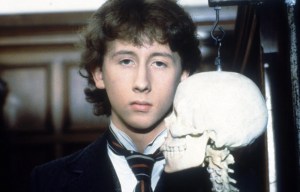
Some models resemble whomever that is with Young Sherlock…
But the real question is how to treat the children of the rich, famous and powerful fairly. Surely the fact that she is Nicole Kidman’s daughter shouldn’t prevent a young, talented, aspiring model from pursuing her dream, but how can unfair advantages be avoided? Nepotism is even more advantageous in Hollywood. Acting success is normally based more on luck and opportunity than stand-out talent, but the children of already established stars are born lucky.
Should they be blamed for accepting what their lineage hands them? Horror writer Joe Hill deliberately used a fake name on his first attempts to follow in his father’s footsteps (Dad is Stephen King) so he could be sure that his work was judged on its own merits. He’s an ethics hero for that, but the list of the offsprings of movie stars who used their names to get on screen and went on to respectable careers, sometimes even surpassing their parents, is too long to publish.
Still, if the the daughter of a movie star puts herself out in range of public judgment, is it unfair for critics to take aim? Does it change the question if she is only 17, like Sunday Rose?
Your Ethics Alarms Ethics Quiz of the Day:
What is ethical treatment for the beneficiaries of nepotism in modeling or any other competitive field?
 Ethics Alarms
She should be treated as she would have been had she not had her lineage. To suggest that her achievements are based on nepotism sounds vaguely like all black achievement is a function of affirmative action. The same is true for young Doocy at Fox. We all receive some assistance in getting through a particular door and we have no idea if her parents put their fingers on the scale, but at some point any assistance received will be old history and you will be judged on the merits of the work. Chelsea Clinton got a nearly $1mm per year contract at a major news outlet but you never see any of her work anymore.
I have no difficulty calling out her sullen looks ( I think many models always look angry or sullen) or anything else related to being a fashion model but to link it to some unproven nepotism claim is wrong.
I agree. Nepotism may get you in the door, but, at some point, you better be good.
Counterexample: Hunter Biden.
-Jut
Somewhere, in the back of my mind, there lurks in the ephemera useless trivia about short-lived television shows I watched back in the day. Besides nepotism, Hollywood loves making remakes.
About 20 years ago, a remake of “Family Affair” was made starring Gary Cole as Uncle Bill and Tim Curry as Mr. French. It was short-lived, but charming. One of my favorite moments was when rich Uncle Bill took his nieces and nephew to his modest hometown to trick-or-treat, ran into his childhood bully and was diplomatically gracious when the guy bragged about his small business success. Stand up behavior on Bill’s part. Then French waited until Bill and the kids were off to the next house and announced to the former bully that he was Bill’s butler and that Bill was so rich he could buy his little mom-and-pop business several times over.
But I digress…
In one episode, Sissy got the lead role in a play only to find that it was due, in part, to her connection to Uncle Bill. The other girls knew this, too, and were giving her a hard time. Offended, she considered dropping out of the play. French advised her that having an edge is something that can happen in any situation and, in any event, getting roles because of who you know is something that often happens in the entertainment business. He challenged her to stay in the play and to show that she was the right choice for the part, regardless of her connections.
Now, I realize that this is pretty close to the rationalizations “This is how we’ve always done it” and “We can’t stop it”, but, I suppose, I should argue that Sunday Rose should be able to get out there and prove she’s got what it takes.
As for her age, well, that’s mom and dad’s responsibility to determine if she is mature enough to handle this environment. I can tell you that neither my mom or dad interfered when we got jobs as teenagers in fast food or retail. It was a lesson in growing up. If I couldn’t handle criticism from co-workers, managers or customers working the drive-thru booth at McDonald’s, I shouldn’t have taken the job. If Sunday Rose can’t handle constructive criticism about her modeling, she should try something else.
What is the ethical treatment? Treat them as you would any other person in the same role. If they’ve got the chops for it, good for them. If they don’t, give your honest opinion.
I tend to agree with AM on this one. Is it fair that children of famous people get doors opened to them? Maybe not but ath is the way of the world. It has been happening since the dawn of time.
As for Sunday, she does not look much different from all other fashion models. In fact, she is perfectly starved in the right places, glowers on command, and looks properly ambivalent about . . . well . . . everything. m
jvb
Of course, if you’re a plain Jane but you’re the stepdaughter of a Democrat, you’re fabulous and whatever world you choose is your oyster:
The Transformation Of Kamala Harris’ Stepdaughter, Ella Emhoff
My knowledge and interest in fashion are well described by the Kaufman quote. (Aren’t models SUPPOSED to look bored and sneer at the camera? Isn’t that, aside from the requirement to be skeletal and photo-shopped, one of the standards?) However, I have had some experience with nepotism on both sides of the aisle and it’s a hard thing to handle.
My first thought, whenever someone brings us nepotism is the nepotism I benefited from. My dad was the assistant manager of one of the two grocery stores in one of the little towns I grew up in. So when I was old enough to get my first job, I got a job as a minimum wage grocery carryout, and, a year later, was promoted to a minimum wage cashier. People commented many times on the nepotism that got me my job. Coworkers under 25 thought I was stuck up especially since I didn’t smoke, drink, or do drugs (I was a 16 year old valedictorian candidate). Supervisors, on the other hand, wanted me to be perfect. It was hard being a nepotism hire. My dad’s good name was on the line, so I had to be better than the average hire. I had to work harder than the other kids. My drawer had to be more accurate. The busiest day of the year, July 3rd (holiday and 1st of the month SNAP), and my drawer was off by less than a quarter but everyone else had to be under a buck. I could never goof off like the other high schoolers, like stopping work to chat or slacking when it was slow instead of finding something to clean/stock. The other kids felt I was a spy for management because I never did this. Management suspected I was goofing off when I was out of sight because that’s what kids of managers do. I was never late to work, back from break or lunch, and I never left early. I got lectures from management about how my paycheck would be docked if I was even a minute late. I got called names by the others for being punctual. Between trying to prove I was good enough for my minimum wage job and keeping my dad’s good name, I felt I had to be perfect, and no mistakes, even mistakes expected of new workers, were ever to be permitted. I would crash the blasted WIC/SNAP machine for the fourth time of the day (instead of six like everyone else) and for the entire next week, I’d be afraid that my dad would reprimand me, even though he never did. But my near age peers would mock me for being too perfect. It was social suicide.
However, when I got my first real job, a process engineer for a refinery, I got to see the other side of nepotism. Every summer, we would hire college kids as interns. Nearly every department had interns, and each department had different required in-progress degrees, workloads, and most importantly pay scales for their interns. If you interned for HR, you got to do secretarial work for a pittance, but in process engineering, we required pressure surveys, vessel entry, tower climbs, outside data gathering, and whatever paperwork we could foist off on them. We paid $35 an hour (no benefits) for this. My boss’s eldest daughter was a freshman in college (usually we only hired juniors and seniors), nominally working on a chemical engineering degree (ACT score 19, so mostly remedial classes), claustrophobic, acrophobic, “allergic” to sunlight, and unable to write a coherent sentence or solve real life math problems. The girl was useless. However, her dad was our boss, so we had to suck it up and deal with her all summer long. She came late, left early, and missed work often. She was not really worth $7.25, much less $35 an hour. At the end of the summer, we had to write up evaluations of our three interns. The man who collected all of our responses, number two in the department, called me in to discuss this and told me that, while he agreed, my honest assessment could not be handed in, as we could not tell the boss his daughter was a failure, though she was. The final assessment had to have her above dead last, so to keep from upsetting the boss, we had to say that one hard working kid was worse than her, even though he stood head and shoulders above her in all factors that should have counted.
The refinery was a mess of some form of nepotism. The refinery was not a public owned corporation, but instead owned by a billionaire family. That meant that friends and family of the dynasty got jobs that were unassailable. Also, they saw nothing wrong with keeping certain hires in families that had shown loyalty in the past. Names have been replaced to protect the guilty. One man was a fantastic manager. We’ll call him Don. They hired his older son, Sonny, who was pretty good at running high temperature and pressure units, or at least mostly skillfully managing those that do. Then they hired the younger son, “Fredo”. The less said about that choice, the better, but he’s not a real asset to the operation. At this point, the old guy is retired, but both of his sons, his daughters-in-law, and at least two of his grandsons are working there. These folks are bulletproof and only some of them are decent workers. From my admittedly limited interactions with them, I’m not sure either of the youngest generation is more than mediocre at their jobs.
Nepotism is a much like getting a job based on who you know, which seems very unfair to me. However, I have continually been told that networking is normal, not slimy, behavior and I don’t see that there’s much of a difference. Certainly, networking has a downside of allowing some people a position they cannot be removed from due to who sponsored them. References are much the same. If my references for my first real job are from a professor and the lady who ran my volunteer gig, are they worth much? Do those people actually know me well enough to say anything? How do you tell? I’ve been part of a hiring team on several occasions and references were always glowing, even for the people who should not have gotten glowing referrals for anything above a bait shop. Where is the line drawn? I got a job one summer in college based on a phone call to a very distant step-relative, who was also a friend of a friend of my parents, who needed someone who could help down stack trucks and stock shelves in the wee hours of the morning. Is that nepotism? Is that networking? Is there a difference?
Generally, I think that nepotism needs to be considered similar to networking. Get a job with a recommendation, note that there is a bias, and judge the person on their own merits. Pete’s daughter shouldn’t have to have preternatural skill with the constantly malfunctioning register equipment, but Bob’s daughter should be able to write a paragraph on the pressure survey she was supposed to do. Fredo doesn’t need to be in charge of multimillion dollar projects just because Sonny pulls it off most of the time. Judge people, not on who they know, who their parents are, the color of their skin, or their personal activities that have no bearing on the job, but instead on their abilities, work ethic, and devotion to virtue.
Once again, Sarah, you are thorough and insightful. I truly enjoy reading your comments.
jvb
What JVB said!
PWS
What Paul said that JVB said.
It’s always a treat when Sarah contributes to the discussion. Her style is totally engaging and the content is totally captivating.
If she’s not already “one of the five commenters” here, her CV is moving her towards that august moniker!
Well this is fun for me just to do a simple google search and see who the recent nepo-babies are that I didn’t know were nepo-babies.
Maya Hawke (Uma Thurman & Ethan Hawke). She’s maybe my current favorite because one of her recent interviews about being on set she talked about growing up and opting in to every opportunity she could to join a parent on set and learn about the art of making movies and television, constantly battering directors and anyone she could about what they were doing, why they were doing it. That’s curiosity and grinding to earn a place. (Also, Ethan Hawke absolutely should win Best Actor this year for his role playing Larry (Lorenz) Hart in “Blue Moon”. What a fabulous movie!)
Margaret Qualley (Andie MacDowell & Paul Qualley). One of the three uber-successful ladies coming from Quentin Tarantino’s “Once Upon A Time In Hollywood” (Mikey Madison won Best Actress last year and Sydney Sweeney has been on an “it-girl” rocket ship). Margaret has been in a few of the movies I’ve recently seen including The Substance (very strange) and How to Make a Killing (very enjoyable).
Mason Gooding (Cuba Gooding Jr.) who has had a few outings in the Scream franchise. I’ve enjoyed seeing him the few times I have, but he’s definitely fighting for roles still and not a sure success. Like others said above – it might get you in the door, but it won’t keep you there.
Nico Parker (Thandiwe Newton & Ol Parker) I had no idea she was a nepo baby. Her casting in How to Train Your Dragon was controversial because of the race swap from the cartoon, but honestly, she crushed it. Not sure she’s had much else for a break in the industry, but that’s a heck of a start.
Maude Apatow I don’t know much about, we’ll see.
Saleka Shyamalan was able to be cast in M Night Shyamalan’s “Trap” movie in a prominent role. Her presence didn’t take me out of the moment and I enjoyed the movie. However, doesn’t look like there’s any other activity.
Ishana Shyamalan was writer and director of her own movie that M. Night helped to produce “The Watchers”. It was an interesting film – again, a lot of work for someone to complete. Again, doesn’t look like there’s any other activity.
If you want a text book example of nepotism, it’s probably the Shyamalan daughters involved in Shyamalan productions. Is it bad? No, I don’t think so….but it also shows that you have to have your own self motivation and skill if you want to survive.
The all-time nadir for me was Francis Ford Coppola casting his stunningly unattractive, screen presence-free, boring and untalented daughter in the key female role in “Godfather 3.” Sophia has subsequently shown talent as a director, but that nepotism outburst hurt everyone and everything involved.
The recent death of Robert Carradine was a reminder of how helpful it is to have a well-traveled acting vet as a parent, with three of pater John Carradine’s boys getting significant film careers. out of Dad’s contacts. At least they all proved talanted enough to justify their breaks. John Wayne was helping his pal John, who was in Wayne’s first hit (“Stagecoach”) and his last (“The Shootist”) by casting young Robert Carradine as one of the kids in “The Cowboys.”
Don’t forget Tom Hanks’ son, who is a serviceable comic actor, but no Tom.
“Godfather 3” is the least engaging of the franchise. To me, the whole film was subpar. Eli Wallach and Diane Keaton seemed to be dialing in their performances and Robert Duvall’s absence was disappointing bexcause George Hamilton needed to spend a lot less time in the tanning beds. Talia Shire, though, was terrific.
I believe Sofia appearing in “Godfather 3” was the result Winona Ryder’s personal problems and other commitments Coppola thought about casting Julia Roberts or Madonna (heaven help us all!) in the role but, thankfully, wiser heads prevailed. Roberts would have made a terrible “Mary” because Roberts has absolutely no depth or range. (Yeah, I said it – “Pretty Woman” is an awful retelling of “Cinderella” and Roberts is way overrated). Coppola had to find a replacement and chose his daugther, who made her acting debut as Michael’s goddaughter during the bapitsmal scene.
I am not as harsh as Jack about Sophia’s talents (I simply do not know of other screen performances to judge) but I do agree that she did not do the role or the film justice, especially in a crucial role along side Andy García and Al Pacino. I also felt that Joe Mantegna was a distraction as Joey Zaza.
jvb
I firmly support the meritocracy. I believe it is the best (though imperfect) mechanism for maximizing justice in society and for maximizing the talent of society for the benefit of all. I believe that one of the key things that made the US such a great power was that we were able to utilize more of our native talent than other countries. Not 100%, mind you, but more. In France, for example, I could not have gone to graduate school. Since my family is all commoners, I could have gone to college, but they would not have allowed me to go to graduate school. That is what tracking in their schools is for, practically. So, the leaders, decision makers, and discoverers in France can only come from the 1% or so who are descended from the nobility. One of the things that made England such a power was that their gentry class was so large that it allowed even someone from rather modest means (such as Isaac Newton) to rise to prominence as a ‘respectable’ person. We increased this by basically opening up all positions to everyone, in theory. Abraham Lincoln never could have become a national leader in a European country. Very few of our early scientists or innovators came from wealthy families.
Having said all that, I really could care less about this controversy over Sunday Rose. Fashion modelling is a career that only affects the wealthy who care about such fashion. The ‘clothing’ of fashion modelling is not geared towards the public, but a small group of elites. If they want to promote members of their club for their little club, why do I care? This isn’t journalism or high finance that has blocked out the middle class by requiring illegal, unpaid internships for entry to the detriment of us all. If we can confine such inbred nepotism to things such as fashion modelling, polo, and yacht racing, it will be much better for society.