The Good News: This Hasn’t Happened Here…Yet. Well, Not Exactly…

I detest memes, but like all other rules, there are exceptions. Sometimes, only a meme will do.

Of the many warpings and distortions of a healthy culture we have seen emanating from the ideologically extreme, one of the more insidious is the antagonism towards humor. This episode speaks for itself.

The UNICEF on Campus chapter at the University of London sent five local comedians a request to perform at a club sponsored event. However, the requirements to be hired led all five to turn down the job.

Fisayo Eniolorunda, the club’s event organizer, wrote in an email, “Attached is a short behavioural agreement form that we will ask for you to sign on the day to avoid problems.”

Problems like actually being funny, apparently.

The “behavioral agreement” states,

“This comedy night… aims to provide a safe space for everyone to share and listen to Comedy. This contract has been written to ensure an environment where joy, love, and acceptance are reciprocated by all. By signing this contract, you are agreeing to our no tolerance policy with regards to racism, sexism, classism, ageism, ableism, homophobia, biphobia, transphobia, xenophobia, Islamophobia or anti-religion or anti-atheism. All topics must be presented in a way that is respectful and kind. It does not mean that these topics can not be discussed. But, it must be done in a respectful and non-abusive way.”

Respectful of whom and not abusive in what way? Oh, never mind. The agreement is a joke itself. What does “love and acceptance” have to do with humor? Does Fisayo Eniolorunda know what “Comedy” is? Of course comedy doesn’t have to be cruel or mean, but then an audience that would lay out such rigid standards can’t be trusted to judge what cruel, mean, respectful, non-abusive, safe—lordy, especially “safe”–or funny is. These are subjective standards being judged by people who are so besotted with ideological mania, virtue-signaling addiction and political correctness that they can’t be trusted. Continue reading →

Open Forum Ethics

I’m off to an early morning ethics training session, so let’s try the experiment we discussed over the weekend. Talk about and debate any ethics topics you like, from current events to cultural controversies. Please keep it civil, please, and, of course, fascinating.

Ethics Dunce (Again!): The Daily Caller


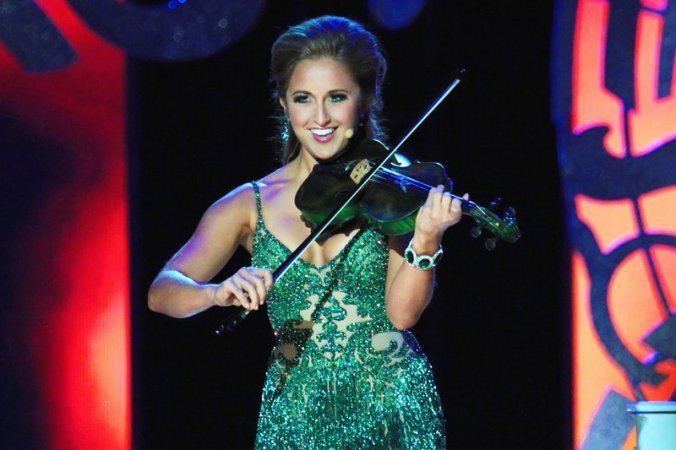
Yeah, I know…”She can play on my violin any time she likes…”

Tucker Carlson’s toy, conservative website “The Daily Caller,” headlined the story I mentioned in today’s warm-up about a teacher who sent naked photos of herself to a teen-aged former student, this way:

“Former Miss Kentucky Arrested For Assaulting 15-Year-Old Teen’s Eyes With Her Naked Body.”

I’ve called Carlson’s site on this kind of idiocy before. It’s the brainless, macho, “yeah, I sure wish a teacher had mistreated me like that when I was a kid” jerkism that seeds the next generation of Harvey Weinsteins and Matt Lauers, as well as perpetuating the still flourishing double standard that sees a male teacher who has sex with female high school student  as a rapist, but a male student who is seduced by his female teacher as lucky dog.

This is one of many reasons I don’t watch Carlson’s popular show on Fox.  I really don’t care what assholes with those kinds of warped values have to say about anything. Teachers cannot use their position to prey on students, and it doesn’t matter how attractive the teacher is or how appreciative her victim is.  The fact that so many conservatives gravitate to Carlson’s frat boy attitudes is one reason to be wary of conservatives.

I haven’t checked…let’s see if the comments on this article express the usual Daily Caller reader perspective… Continue reading →

Ethics Quiz Of The Day: What’s None Of Harvard’s Business?

Now we own you.

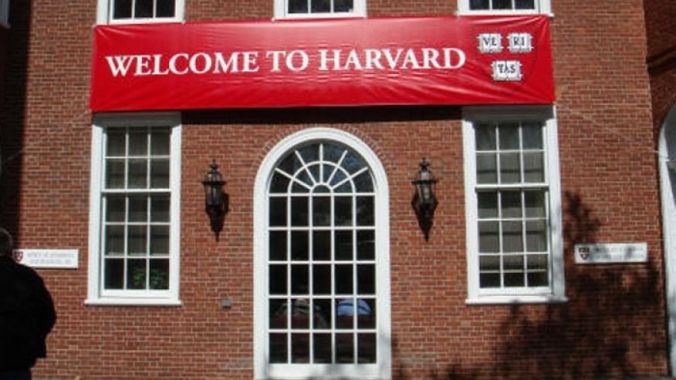
Boy, Harvard is getting like the Candyman (no, not Willy Wonka, the horror movie version): mention its name enough times, and it appears behind you, with mayhem on its mind.

A case filed in federal court by a Harvard University student, “John Doe,” argues that the school overstepped  its authority by investigating him for a rape allegation lodged by a non-student in a city where police declined to prosecute. He contends that Harvard did not have the authority to open an investigation into sexual assault allegations levied by a non-Harvard student regarding an incident that did not take place on University property. “Doe” demands that Harvard end the investigation and pay him $75,000 in damages, as well as compensate him for any costs incurred during litigation.

Doe’s suit states that, during summer 2017, Doe and “Jane Roe” ( the unnamed woman he allegedly raped) were both working internships in Washington, D.C. The D.C. Metropolitan Police Department investigated the alleged assault but ultimately decided not to prosecute the case. “Roe” has filed a civil suit against the Harvard student.

The University’s Office for Dispute Resolution opened an investigation into Doe in October 2018

Harvard University’s policies related to sexual and gender-based misconduct, readable here, apply only to misconduct perpetrated by students while on campus or in connection with University-recognized activities. The  guidelines followed by the Faculty of Arts and Sciences are more expansive, as it states that the school  may hold all students to the expectation that they behave in a “in a mature and responsible manner” no matter where they are.

“It is the expectation of the Faculty of Arts and Sciences that all students, whether or not they are on campus or are currently enrolled in a degree program, will behave in a mature and responsible manner. Consistent with this principle, sexual and gender-based misconduct are not tolerated by the FAS even when, because they do not have the effect of creating a hostile environment for a member of the University community, they fall outside the jurisdiction of the University Policy.”

Whatever that means.

Meanwhile, new Title IX guidelines proposed by Education Secretary Betsy DeVos and released by the department last month stipulate that schools are not required to open investigations into alleged acts of sexual misconduct that took place outside the bounds of a school “program or activity.”

Doe’s suit charges Harvard with breach of contract and breach of covenant of faith and fair dealing. In allowing him to attend classes in exchange for “substantial amounts of money,” Harvard created a reasonable expectation that Doe would earn a degree from the school. One possible result of an ODR investigation would be expulsion.

“Harvard has breached, and is breaching, its contractual obligations by subjecting Mr. Doe to a disciplinary process that—in the ways, and for the reasons, set out above—is arbitrary, capricious, malicious, and being conducted in bad faith,” the complaint states. ODR informed Doe that the investigation is based on Roe’s allegations. In an email submitted as an exhibit in the lawsuit,  ODR’s senior investigator wrote that the College Title IX coordinator filed the case, then reached out to Roe to ask her to participate as a complainant in the investigation. Doe asked Harvard to temporarily suspend the investigation pending the results of Roe’s civil suit. Doe stated a simultaneous ODR investigation would have a “serious impact” on his ability to defend himself in the ongoing civil case, according to the complaint.

Harvard, noting that the D.C. police was not going to investigate the allegations, rejected the request.

Let’s put aside the law and Harvard’s policies for now, and stick to ethics.

Your Ethics Alarms Ethics Quiz of the Day is…

“Is it fair for a college to investigate alleged misconduct, including crimes, on the part of student, when the conduct occurs in a different city and local police have declined to take action?”

Continue reading →

Cold Monday Morning Ethics Warm-Up, 12/10/18: You’ve Got Ethics To Keep You Warm!

Brrrrr!

Maybe this will help...

1. Starting with the important stuff: Baseball’s badly-named Today’s Game Era Committee announced that long-time right-fielder/designated hitter Harold Baines and towering closer Lee Smith had been voted into the Major League Baseball Hall of Fame. Smith, who retired as the all-time saves leader and is now third behind two Hall of Famers, was a defensible pick, but not Baines. The Committee’s job is to look back on players who were rejected in the regular Hall of Fame voting process and see if some of them fell through the cracks who were Hall caliber. There are only 16 members of the committee, and an ex-player needs 12 votes to enter Cooperstown. The sixteen members included at least four with strong ties to Baines, and they  presumably argued eight more members into letting him squeak by.  Bias made them stupid. Those four, which included Baines’ former manager and the owner of the Chicago White Sox, which retired his number, should have had to recuse themselves because of conflicts of interest.

Baines led the league in an offensive category, once, when he had the best slugging percentage in the American League. He never finished high in the Most Valuable Player voting. Most of the players who compare most closely to him are not in the Hall. The big thing Baines had going for his candidacy as a very good but not great player was that everybody liked him. He’s sort of the opposite of Curt Schilling, who is clearly Hall-worthy but whom most sportswriters hate—too religious, too conservative, too mouthy.

Now the argument for admitting other good but not great players will be, “But he was better than Harold Baines!” This is how conflicts of interest undermine the integrity of institutions.

2. When Naked Teachers have no excuses.  The Naked Teacher Principle holds that when a teacher allows a nude photo of herself or himself to circulate on the web where it can be seen by students, that teacher cannot complain when and if it leads to their dismissal.  A teacher really can’t complain if she sends the photo to a student intentionally, which is what Ramsey Bearse, 28, a former Miss Kentucky now teaching at Andrew Jackson Middle School in Cross Lanes, West Virginia, did with a 15-year-old former student , according to the sheriff’s office. She faces four felony counts of distributing or displaying obscene matter to a minor.

3. Pondering whether to include an open Ethics Alarms forum as a regular feature. Many of the blogs I frequent for story ideas do this late at night. Ethics Alarms has done it once when I was forced to be away from a keyboard for most of the day, and I was impressed with the results. Those forums on the other blogs often devolve into silliness, bad jokes, memes and worse, and I would insist that an “open forum” on Ethics Alarms be restricted to raising and discussing ethics and ethical topics. Continue reading →

Fire Lisa Mars

I usually hesitate to call for anyone to be fired, though there have been exceptions. In this case, however, the call is mandatory on ethical grounds. It is unethical for a school dedicated to the arts to hand oversight to an gross incompetent who doesn’t comprehend the arts she is supposedly responsible for teaching; it is unethical for someone to take on this responsibility who is wildly unqualified for the job; and it is unethical for that individual to act in a way that undermines the mission of the school she heads.

I have just fairly described Lisa Mars, currently the principal at the Fiorello LaGuardia High School, the high school “of music, arts the performing arts” made famous in the movie and TV show, “Fame.”

On opening night of a school production of “The Sound of Music,” she ordered all Nazi-themed props and set pieces struck. They are offensive, you see. Never mind that the show is set during Germany’s take-over of Austria as the Third Reich was expanding. Never mind that Nazi Germany and its officers are major elements in the plot, or that the plot is based on the real-life escape of the singing Von Trapp family from the Nazis. Never mind that theater is a representational art form. Stage deaths are not real killings, stage rape isn’t really rape, stage racism isn’t really racism, and stage representations of Nazi symbols do not promote fascism. Most grade-school actors can grasp this basic principle, but not the head of a school for the performing arts.

“This is a very liberal school, we’re all against Nazis,” one sophomore said. “But to take out the symbol is to try to erase history.” Yes, that too. “Obviously the symbols are offensive,” he added. “But in context, they are supposed to be.”

Make him principal. Continue reading →

Sunday Ethics Warm-Up, 12/8/18: “Unconscionable, Despicable, And Indefensible”

Good morning!

1. The Hader Gotcha strikes again. Let me be clear: this is unconscionable, despicable, and indefensible. (Aside: Do you like that trio? In “Perry Mason,” the lawyers always objected that a question was “incompetent, irrelevant, and immaterial,” because it sounded nifty. I’ve never heard that objection made in a real trial, or read it in a transcript.) To remind you all, during the baseball season, beginning with young All-Star pitcher Josh Hader, multiple baseball players were embarrassed when someone with ill intent searched their old Twitter feeds to search for tweets that could be deemed racially offensive, hostile to gays, or disrespectful of women. I dubbed this miserable practice as “The Hader Gotcha.“All of the players had to grovel apologies to their team mates and the public, as “woke” sportswriters condemned them and lobbied for MLB to punish them for impulsive social media comments made before they could vote, before they were celebrities, and when their followers consisted of fourteen or so pimply-faced jerks. The same basic principle was employed to smear Brett Kavanaugh, the unfair and factually false preemption that conduct and attitudes displayed by minors indicate what their character is in adulthood.

Well, I guess it’s nice to know that not only whites, baseball players and conservatives are victims of this crap. Mere hours after winning the Heisman Trophy as the nation’s outstanding college football player, Oklahoma Sooners quarterback Kyler Murray had to apologize today for anti-gay tweets he made in 2011-12 , when he was 14 and 15 years old.

In case you are keeping score, because I am, the culprits here are an irresponsible, vicious news media, totalitarian-leaning leftists who want to police thoughts and intimidate the public into ideological conformity, and social media lynch mobs.

2. Sure, Donald Trump is the fear-monger. The increasingly hysterical and hyped warnings and soothsaying by various climate change-promoting bodies are either causing over-sensitive, scientifically ignorant and gullible members of the public to descend into despair, or members  of the news media are deliberately trying to cause fear and panic—at least based on the broadcast lament of MSNBC’s Katie Tur. The anchor told her audience that life was meaningless without a mass effort to combat the horrors of the warming planet. Discussing a New Yorker article on the topic, she said,

“I read that New Yorker article today and I thought gosh, how pointless is my life, and how pointless are the decisions that I make on a day-to-day basis when we are not focused on climate change every day, when it’s not leading every one of our newscasts?”

Unconscionable, despicable, and indefensible? No, just irresponsible, unprofessional, and stupid. And they wonder why so many people can’t take these hysterics seriously…

3. And the winner is…Plan K? Former federal prosecutor Andrew McCarthy thinks that the sentencing statement on Michael Cohen means that the President is very likely to be indicted on a charge of violating federal campaign finance laws  by the U.S. Attorney for the Southern District of New York, who has openly been pursuing a “get Trump” campaign. The theory would be election law violations in the pay-offs to Stormy Daniels, even though paying off a kiss-and -tell threat is usually legal, and even though election law violations are typically handled with fines, not indictments. McCarthy writes,

When it was discovered that Barack Obama’s 2008 presidential campaign was guilty of violations involving nearly $2 million – an amount that dwarfs the $280,000 in Cohen’s case – the Obama Justice Department decided not to prosecute. Instead, the matter was quietly disposed of by a $375,000 fine by the Federal Election Commission.

Yes, but Obama’s Justice Department’s mission was to run interference for the President, and there was not an ongoing effort to find some way to undo a presidential election. Continue reading →

Ethics Poll: How Bad Does A Theatrical Performance Have To Be To Ethically Obligate A Refund?

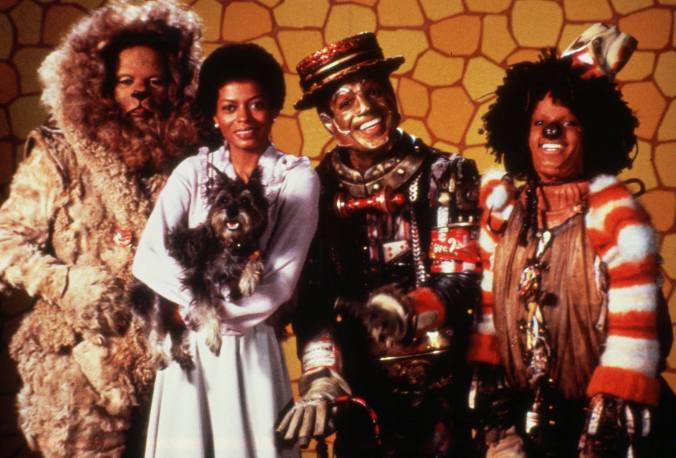
Apparently audiences were unhappy with an allegedly subpar performance  of “The Wiz”  at the Brown Theatre in Louisville, Kentucky. An unusual number of customers called to call demand refunds, based on complaints ranging from botched lines to a bad Cowardly Lion costume (he looked like e bear) and to a cheesy projection of magical land of Oz  from a laptop projector.

“The Wiz” is the hit Seventies Broadway adaptation of the “The Wizard of Oz,” but with an all-black cast, rock-style music, hip-hop dancing and contemporary slang. It was made into a successful film starring Diana Ross and Dorothy and Michael Jackson as the Scarecrow.

Tickets cost between $35 to $65. Despite the complaints, Lavarious Slaughter, the show’s producer for Island Entertainment KC, of Kansas City, Missouri has said that there will be no refunds.

(Lavarious Slaughter? He sounds like an escapee from a Harry Potter book.)

It’s hard for me to tell just how bad the performance was based on second hand accounts. (I wouldn’t pay 65 bucks for the greatest production of “The Wiz” ever. The whole concept behind “The Wiz ” was cynical, and all-black casts are a divisive gimmick. How bad was it?

Helen Barnett was one malcontent who talked to the press. “It was terrible,” Barnett said. “Dorothy was wearing a Walmart dress. They forgot their dialogues … at one point Dorothy said she wanted to go back to Texas!” (In “The Wiz,” Dorothy is from Harlem while Dorothy in “The Wizard of Oz” is from Kansas.) Other complaint noted that the computer projected set kept  being uninterrupted by pop-up dialogue boxes.

Yeah, that sounds pretty bad.

But funny!

One of the actors, Kori Black, who played the role of the Good Witch of the North tried to explain, “The three o’clock show ended up being pretty much our dress rehearsal because we didn’t have enough time to do the show full-out at the venue before we performed it.”

I have mixed feelings about this, as a former professional theatrical producer and a long-time director and performer. There is no excuse for a badly rehearsed, done-on-the-cheap production that isn’t aimed at giving the audience genuine entertainment. On the other hand, one of the features of live theater that TV and movies lack is that nothing is guaranteed. Stuff goes wrong; things don’t work, actors botch line and entrances, costumes rip, props break, lights blow out. The show goes on. Going to the theater is the ultimate caveat emptor—“Let the buyer beware.” I’ve demanded refunds when projectors broke down in movie theaters, and I’ve given refunds or rain-checks to theater audiences when a performance couldn’t be completed. (Among the causes for those catastrophes: a power outage, a smoke machine that went crazy and blinded everyone, and a lead actor who got knocked cold on stage.) I’ve also had to open shows that were not as ready as I would have liked, but that is a common occurrence everywhere. You can’t give refunds for missed lines. Getting Dorothy’s home wrong is bad for sure, but if that ruins the show for someone, they weren’t going to like anything. One of the most popular and best reviewed productions I ever directed was Orson Welles’ adaptation of “Moby Dick.” One night, the actor playing Ishmael forgot the first line of the play, which is “Call me Ishmael”–one of the most famous opening lines in literature, and also the character’s own name. I got some flack, but the rest of the show recovered.

I fear that audiences are so unfamiliar with live theater that they expect movie-like special effects and the slick perfection that digitally created, multiple  take filming provides. Live theater’s imperfections are part of what makes it dynamic and exciting. On the other hand, those pop-up dialogue boxes sound like the work of a production staff just trying to make a quick buck off the locals and then get out of town.

My policy would be that if a patron asked for a refund, I’d approve it. In 20 years, however, not one of our audience members demanded one.

Now, your poll. Vote for as many answers as you like:

________________________

Pointer: Luke

Saturday Ethics Warm-Up, 12/8/18: Last Weekend Before I Have To Decorate The %^&$! Christmas Tree Edition

Good morning!

1. How can this be? Based on the same documents, the President crowed that Mueller had nothin,’ and the mainstream Trump-hating media crowed that the walls were closing in. It’s a confirmation bias orgy! Charges aren’t evidence, and attempted contacts with a foreign power isn’t “collusion,” and we’ve already talked about the theory that paying off a floozy not to kiss and tell, which is 100% legal at all other times, is a stretch to call and election law violation when the rake is running for President. No such case has ever been brought; it’s dubious whether one would prevail; even if it did, this is a fining offense at most. [ For the record, this is the “resistance’s” Impeachment Plan K, in my view, one of the lamest.]

Both sides are jumping the gun. In the media’s case, it’s more fake new, future news and hype.

2. Stare decisis vs. the prohibition on double jeopardy. In Gamble v. US, just argued before the Supreme Court, the question is whether the federal government can try a citizen for the same crime a state court acquitted him of committing. I’ve always hated the rule that it can (the cops in the Rodney King case were jailed that way), because it seems clear to me that the Constitutional prohibition on double jeopardy (that’s the Fifth Amendment) was intended to prevent such trials. Still,  previous Supreme Court decisions have upheld the convictions.  In the current case, it appears from oral argument that a majority of the current justices agree with me, but are hesitant to so rule because of the doctrine of stare decisis,  which means respecting long-standing SCOTUS precedent.

A ruling to apply double jeopardy would be a ruling against stare decisis, meaning that Roe v. Wade might have less protection than many—including me–have thought. Stay tunes, and watch Justice Kavanaugh’s vote particularly.

3.  Is wanting to/needing to/ actually taking steps to changing one’s sex a mental disorder? There have been a lot of articles about this lately, especially in light of evidence that peer groups, the news media, LGBT advocacy and parents are making many young children want to change their sex before they even know what sex or gender is. The question is itself deceptive, because it pretends that “mental disorder” is anything but a label that can be used or removed with a change of attitude or political agendas. Vox writes,

Major medical organizations, like the American Medical Association and American Psychiatric Association, say being transgender is not a mental disorder. The APA explained this in explicit terms when it stopped using the term “gender identity disorder” in favor of “gender dysphoria”: “Part of removing stigma is about choosing the right words. Replacing ‘disorder’ with ‘dysphoria’ in the diagnostic label is not only more appropriate and consistent with familiar clinical sexology terminology, it also removes the connotation that the patient is ‘disordered.’”

Well, “removing a stigma” is hardly a valid criteria for deciding whether something is a malady or not. What being transgender “is” can’t be changed by what we call it. Recently narcissism was removed from the mental disorder list—that doesn’t change the fact that narcissists see the world and themselves in a way that most people do not, and that this perspective causes them and the people around them a lot of trouble during their lives. The process worked in reverse with alcoholism, where being officially labelled a disease removed a stigma.

I once directed the comedy/drama “Nuts,” which opines that “insanity” is just a view of reality not shared by the majority. It was on this basis that the Soviet Union sent dissidents to mental hospitals. I don’t care what various associations or professionals call these minority positions: we know that they are using bias and political agendas to devise the label. This is one area where a phrase I despise, “It is what it is,” may be appropriate. Continue reading →

The “White Christmas” Ethics Guide (REVISED And UPDATED)

I’m looking at some holiday movies to add to the Ethics Alarms library of annotated classics—no, ethics and “A Christmas Story” are irrelevant, it being a child’s remembrance and hardly literal–but I might as well begin with  revising and revisiting the “White Christmas” guide, which first appeared in 2012. 

I still like the film—my wife hates it—being a fan of all four stars, especially Bing and Danny, as well as the director, Michael Curtiz.  I do like it a bit less each time I see it, mostly from an ethics perspective, and the successive revisions reflect that.

I still get misty when the old general, played by Dean Jagger, gets saluted by his reunited army unit, which has gathered at his struggling, snowless, Vermont inn on Christmas Eve to remind him that he is still remembered and loved. Nonetheless, “White Christmas” is by far the strangest of the Christmas movies, and also the most unethical. Though everything works out in the end, the characters in the sloppy plot spend the whole movie lying, extorting, betraying, manipulating and generally mistreating each other, always with no recriminations at all, and usually with no consequences either.

In his addendum last year to my original post, Michael West found the film foundering from the second the opening credits ended. He began with the script for the opening scenes—General Waverly* is played by Dean Jagger; Captain Bob Wallace is Bing Crosby, and Private Phil Davis is Danny Kaye:

Opening Scene in the Jeep as they hear the Entertainment show.

GEN CARLTON (To Adjutant): What’s this all about, Captain?

ADJUTANT: A little entertainment for the men, sir. Tonight’s Christmas Eve.

GEN CARLTON: These men are moving up tonight, General Waverly. They should be lined up for full inspection!

GEN WAVERLY (To Carlton): You’re absolutely right. (To Adjutant): There’s no Christmas in the Army, Captain.

ADJUTANT: Yes, sir.

GEN WAVERLY (To Carlton): There’s always a slip-up or two during a change in command. The men get a little loose. But I know I’m leaving them in good hands.

GEN CARLTON: (To Waverly): Thank you, General. (To Driver): Sergeant, take me to headquarters immediately! We’ll have those men turned out on the double!

The Sergeant looks at General Waverly.

GEN WAVERLY: Goodbye, Sergeant. Take the short cut.

SERGEANT: Yes, sir!

The jeep pulls off and makes a half circle. The Adjutant makes a gesture, as if to stop it. Waverly stops him. The Adjutant turns to him.

ADJUTANT: That’s not the way back to headquarters!

GEN WAVERLY: Joe, you know that, and I know that, but the new General doesn’t know it. Or he won’t for about an hour and a half.

ADJUTANT: That Sergeant’ll be a private tomorrow!

GEN WAVERLY: Yes… isn’t he lucky?

SCENE CHANGE TO ENTERTAINMENT SITE:

CAPTAIN BOB WALLACE and PRIVATE PHILIP DAVIS are doing a number on stage to entertain a mass of 200 or so soldiers. GENERAL AND ADJUTANT just starting to take seats, off to one side where they are not noticed by the performers. ABOUT 6 SOLDIERS seated in audience. They look off, see General, start to rise. The General notices them – motions for them to sit down again, indicating he doesn’t want attention called to himself. Captain Wallace sings “White Christmas”.

CPT WALLACE: Well that just about wraps it up, fellas. It’s certainly too bad General Waverly couldn’t be here for this little yuletide clambake ’cause we really had a slam bang finished cooked up for him. I guess by now you know the Old Man’s being replaced by a new Commanding General fresh out of the Pentagon…it’s not a very nice Christmas present for a division like us that’s moving up. The Old Man’s moving toward the rear. That’s a direction he’s never taken in his entire life. Well all I can say is we owe an awful lot to General Waverly and to the way…

GEN WAVERLY: ATTENTION!

Every man is at attention and every head has turned to where General Waverly has taken up a position near the front of the platform.

GEN WAVERLY: Captain Wallace, who’s responsible for holding a show in this advanced area?

CPT WALLACE: Well sir as a matter of fact it was…

PVT DAVIS: …me Sir! It was my idea sir. Uh, I mean when you gotta entertainer sir of the caliber of Captain Wallace, sir…I mean sir…it’s Christmas Eve, sir. And well, sir, I mean that if you were in New York, Sir, you’d have to pay six sixty or even eight eighty to hear a great singer like Captain Wallace, sir.

GEN WAVERLY: I’m well aware of Captain Wallace’s capabilities. Who are you?

PVT DAVIS: Er…Phillip Davis, sir. Private First Class, sir.

GEN WAVERLY: Well, at ease, Davis.

DAVIS: Yes, Sir!

WAVERLY: I said, At Ease!

DAVIS: Oh, uh, Yes, sir, thank you sir.

WAVERLY: This division is now under the command of General Harold G. Carlton, and I don’t want anyone to forget it — not that he’ll let you. He’s tough — just what this sloppy outfit needs. He’ll have you standing inspection night and day — you may even learn how to march. And if you don’t give him everything you got, I may come back and fight for the enemy. Merry Christmas!

ASSEMBLED MEN: Merry Christmas!

GEN WAVERLY: Well, I guess, all I can say is, how much I…what a fine outfit…How am I going… (to Wallace) don’t just stand there, how am I going to get off…?

CPT WALLACE: We happen to have a slam-bang finish…He turns to the musicians, gives the downbeat.

They play “THE OLD MAN,” which is sung by the entire outfit.

ARTY FALLS IN VICINITY…Soldiers crouch…then finish singing.

GENERAL AND ADJUTANT DEPART.

MORE ARTY FALLS, ON SITE…Men scatter. Captain Wallace and Private Davis try to get men to cover. Private Davis man handles the Captain to cover as a wall collapses where he had just been standing.

For starters, we see a mass of soldiers in an open air situation within effective range of enemy artillery fire. A single well-placed artillery round could eliminate approximately 200 soldiers — more than an entire World War 2 Infantry Company (whose authorized strength is about 190-195 men; but given this stage of the war and attrition, this could easily be 2-3 companies of EXPERIENCED soldiers). Someone in the chain of command KNOWS this to be true and authorized this gathering despite the obvious danger. We know for certain that the Adjutant knows what the gathering is, as he answers in line #2 precisely what is going on. But an Adjutant has no command authority, so someone else authorized the gathering. We have to assume General Waverly didn’t know until the Adjutant answered General Carlton’s inquiry based on General Waverly’s later questioning of Captain Wallace. We can’t ever be sure who actually made the decision to have the entertainment occur at that location since Private Wallace, breaking an incredible number of military bearing protocols, interrupts a Captain, to answer a General. This Private, Private Davis, accepts all responsibility for the decision to expose upwards of 2 companies-worth of men to devastating artillery fire.

This information leaves us with two options: Either it really was Private Davis’s idea to have the venue at that location, in which case, Private Davis’s commanding officer and the various commanding officers AND EVERYONE ELSE in their chain of command are colossally INEPT for agreeing to the idea. The second option is that Captain Wallace DID indeed make the decision to have the venue at that site, and now he’s standing there like a lump allowing a subordinate to cut him off mid-sentence, a military no-no, and then allowing the subordinate to take the heat of any potential censure that was forthcoming. Of course, since he’s a Private trying to cover for his boss, he’ll say anything, so I won’t even ding him for the horrible excuse that 200 men should be exposed to German artillery fire because CPT Wallace is a famous singer – we all know it’s worth dying to hear Bing sing…

But of course, even General Waverly doesn’t seem to mind that 200 of his soldiers are idling around with a population density rivaling that of Bombay, just one artillery strike away from having more in common with mist than with humanity. When HE discovered what was going on by the Adjutant’s answer in line #2, he should have immediately ordered the soldiers disperse and had about two dozen commissioned officers who had every ability to stop the farce standing in his headquarters receiving the most royal dressing down of their careers and maybe a few firings.

What possibly does General Waverly think outweighs the need to disperse a mass of soldiers within effective range of artillery? Why, a Christmas music concert of course! It is Christmas Eve, after all!  Now, the Army does a really good job bending over backwards for the morale, welfare, and recreation of soldiers, much more than was ever considered a military precedent. BUT, we learn from the dialogue, the entire division is on orders to “move up tonight.” This somewhat vague description could range anywhere from simply occupying a section of the line to relieve a unit coming back or it could mean they are initiating a major offensive operation. We learn, however, that this movement, whatever it is, is occurring in mere hours. Having experienced large movements of soldiers myself, I know that if a Division is stepping off in a few hours, the men down to the platoon level are ALREADY in their assembly areas doing final preparations. This is apparent to the new commander, General Carlton, who is astonished that the men aren’t doing their final checks of equipment and gear.

Which leads us to the next bit: General Waverly is none too concerned about the unjustifiable exposure he’s tolerating of his…well, now General Carlton’s men…as we know Waverly has just been replaced by General Carlton, who, trope-tastically, we learn is one of those wretched new leaders who is probably horribly incompetent. The movie lets us know early on that he’s a despicable piss-and-vinegar type when he is mad that the men are having Christmas entertainment. Never mind that we now know that Carlton is severely concerned about a huge mass of men within artillery range open and exposed as well as not anywhere near where they ought to be to initiate movement of the entire Division.

The movie also lets us know he’s a jerk because it pushes the whole “fresh out of ________” trope. The usual way this plays out is the “fresh out of West Point” or “fresh out of ROTC” smear applied to new Lieutenants who assume Platoon Leadership with little to no actual experience. Unfortunately, this doesn’t exactly play out on the General level. Yes, the General ranks expanded rapidly during World War II, but an individual didn’t become one by being a complete buffoon (and yes there are always exceptions — but General Carlton, who seems to have a sense of urgency that no one in Waverly’s sphere of influence seems to possess, does not seem to be the exception).

Never mind, we’ll go on with the traditional “smearing of the new guy who replaces the beloved experienced leader.” In the original script I copied and analyzed, the dialogue was OVERTLY insubordinate and actively undermining of the men’s confidence in their new commander. In the corrected dialogue, though cleaned up a lot, there are still hints of undermining the new guy’s authority before he even makes a decision as the commander. There’s General Waverly’s smart-ass “There’s no Christmas in the Army” jab as a response to Carlton’s concern about the location and timing of the entertainment event — which he says “knowingly” to the Adjutant, who, we must remind ourselves no longer works for the Waverly but for Carlton.

There is the extra-rotten move when Carlton, recognizing the imminent danger as well as the horrifying breach of schedule in implementing the plan of operations, indicates he plans to move to Headquarters immediately to begin rectifying the situation and is undermined either by the Sergeant driving Carlton or by General Waverly himself. The driver decides to undermine Carlton’s ability to fix the problem by taking an extra long route back to headquarters. Between a driver and a singing-private, this division is apparently full of the lowest-ranking guys thinking they know best when to leave a behind-the-schedule division exposed to enemy fire just so they can catch a few tunes from Bing. The only other possible explanation is that General Waverly, himself, with a nod-nod wink-wink, authorized the driver to follow the reckless plan to take an hour-and-a-half detour, which we assume will require another hour-and-a-half correction before Carlton can get to Headquarters. Just as with the Adjutant before, let’s again consider that this driver no longer works for Waverly, but for Carlton The Sergeant is being openly insubordinate.

Even if Waverly was not responsible for the three-hour diversion, he immediately became complicit when the Adjutant, in an apparent realization who his new boss is (Carlton), moved to correct the driver but was stopped  from doing so.by General Waverly

The last bit of insubordination and undermining  the chain of command comes from the subtle digs Captain Wallace makes during his speech. His “Fresh out of the Pentagon” disdain undermines faith that Carlton may be a good commander, followed by the snide “not a nice Christmas present” for the division is enough to get any soldier censured. Soldiers and peers WILL whisper about their leaders, but an open act of insubordination like that? Stamped out like a spark in a dry forest… I won’t even address the fact that it’s a COMMISSIONED OFFICER making the openly insubordinate comments and a CAPTAIN no less. He would be dismissed and transferred immediately.

But hey, I suppose Waverly recognized all their rotten conduct when he feebly tried to make things right by saying “hey guys, he’s a good commander, never mind all the stuff we said before and our attitudes we displayed before!” A few moments later, just to do Carlton some justice, the artillery shelling arrives.

Then the movie moves into its funny guilt extortion phase. Army private Phil Davis (Danny Kaye) rescues his smooth-singing captain, Bob Wallace (Bing Crosby) from being crushed by a falling wall in a World War II bombing raid, and injures his arm in the process. (It’s not a plot feature, but the battlefield set for the entire opening sequence is itself unethically unprofessional by being chintzy even by musical standards: it looks like they are filming a skit for a Bob Hope Christmas Special.  I thought it was lousy when I saw it as a kid. Michael Curtiz deserved better; the man directed “Casablanca.” Show some respect.) Phil then uses Wallace’s debt of gratitude to coerce him into accepting the aspiring comic as a partner in Wallace’s already successful civilian act. This is obviously unfair and exploitative, but Bing accepts the ploy with good spirits, and the next we see  the new team of Wallace and Davis knocking ’em dead and rising in the ranks of stage stars.

The act looks terrible. Bing was never much of a dancer, a game hoofer at best, and you don’t feature the greatest voice in the history of American popular music by having him sing exclusively duets. Nevertheless, all we see of the team’s rise is both of them singing and corny dancing inferior to what Bing did with Bob Hope in the “Road” movies.

Never mind. They have a show on Broadway, and as a favor to a mutual army buddy, they agree to watch the boonies nightclub act of “The Haynes Sisters” (Rosemary Clooney as Betty, and Vera-Ellen, of wasp-waist fame, as kid sister Judy. Did you know that in the “Sisters” number, Clooney sang both parts? ). Bing is immediately smitten with older sister Rosemary, but there is a tiff over the fact that younger sister Judy fooled them into seeing their act: she, not her brother, had sent the letter asking for a “favor.”

This is the first revealed of many lies woven into the script. This one is a double beach of ethics: Judy uses her brother’s name and contacts without his permission or knowledge, and lures Wallace and Davis to the night club under false pretenses.

Bing dismisses Judy’s cheat by noting that everyone “has an angle” in show business, so he’s not angry. Rosemary is, though, and reprimands Bing for being cynical. That’s right: Vera/Judy uses their brother’s name to trick two Broadway stars into watching their little act, and Rosemary/ Betty is annoyed because Bing/Bob (Bing’s bandleader, look-alike, sound-alike brother was also named Bob) shrugs off the lie as show business as usual. True, Betty is technically correct to flag the Everybody Does It rationalization, but shouldn’t she be grateful that Bob isn’t reaming out the Haynes sisters and leaving the club in a huff? OK, nice and uncynical is better than nice and cynical, but Bob is still giving her and Judy a break. As the beneficiary on Judy’s angle, Betty is ethically estopped from complaining that Bing/Bob’s reaction was “I don’t expect any better.” I can, she can’t. He should expect better: accepting unethical conduct allows it to thrive.

As we soon find out, however, Betty often flies off the handle.
Continue reading →