Public Confidence And Trust (1): Observations On Gallup’s Trust In Occupations Poll

I’ve been following the Gallup organization’s yearly polls on public attitudes toward institutions and occupations for a long time. The results are in for 2017. I’ll discuss the ethics implication of the Gallup occupations poll first; Part 2 will cover the institutions.

The occupations poll tends to fluctuate more year to year, and is most interesting as viewed a competition. Who are most trusted and regarded as most honest? Who are least trusted? Nurses have been ranked #1 in public trust for 16 straight years. I guess this means not too many people watch “Nurse Jackie.” I assume the consistently high rating is because we tend to trust people we have to trust, thus confirmation bias, and because there haven’t been any major nursing scandals or “Angels of Death” in the news. As you will see from the chart, medical doctors are trusted much less. I think that’s the result of an illusion.

Only six professions rate as more than 50% “high” or “very high” for honesty and ethical standards: nurses, military officers, grade school teachers, medical doctors, police officers and pharmacists. The honesty rating of pharmacists dropped five points since 2016, however, and it an occupation that has sometimes finished right behind the nurses. Gallup guesses that the opioid crisis is to blame, and maybe that’s right, though I would think the doctors who prescribe the drugs are more to blame then the druggists who sell them.

Public views of the clergy have fallen like a Chinese space station. Before the Catholic Church child molesting scandal in 2001, the clergy was very trusted at the high 60% level. Now it is all the way down to 42%, though the total of high trust and average trust is still 85%. I think the film “Spotlight” hurt, as it should have.

Occupations that I would regard as having positive public trust include those whose high trust+average scores are higher than their low trust+average scores. That group, in addition to the occupations already named above, includes day care providers, judges, auto mechanics, nursing home operators and bankers. I think in all of these cases, the public has no real idea about how trustworthy these occupations really are. We just hope they are trustworthy, so again, we have a result that is polluted by wishful thinking. These people are entrusted with the welfare of our children, our cars, our parents and our money, plus the justice system. They better be trustworthy. Ignorance is bliss.

I confess amazement that Wells Fargo scandal didn’t result in lowered trust for bankers. Continue reading →

Morning Ethics Warm-Up, 1/6/2018: The “Too Sick To Come Up With A Good Headline” Edition

He’s lucky: he has hair...

Good Morning!

1 A solution to a perpetual problem. I do the mandatory introduction to legal ethics for two jurisdictions. Both are early in the morning,and both have courts monitoring them, insisting that to get credit, attendees must be present for every second of the course. The problem: late arrivals. One of my jurisdictions had a tendency to let late-comers in if it’s just a few minutes, but sometimes it gets ridiculous. Once the line is blurred, when does it get hard again? I have sen the administrators tell a lawyer that she is absolutely the last one who will get a break, only to see another late comer burst through the door panicked, upset, and with a doozy of an excuse…and then another, and another. This is especially ironic because lawyers are ethically required to be on time to court, or else.

In my other jurisdiction, they deal with the problem by absolute enforcement. 30 seconds late, and you have to come back next month. It doesn’t matter why, it doesn’t matter where the lawyer came from (one had flown in from Seoul and was two minutes late). If you arrive after the doors are closed at 9 am sharp, you can’t get credit. This, as you might imagine, often sparks tantrums, tears, threats, and “Do you know who I am?” One furious attendee actually cast a curse on every bar employee in sight. I’m talking about a real curse, right out of the movies, pointing and chanting. Some months we have had more than ten latecomers in the lobby, acting like an angry mob, and threatening a riot.

This jurisdiction has solved the problem by recently telling all who need the course on the bar website and  in email messages that the program begins at 8:30 am, when it really doesn’t. In other words, the solution is a lie: if someone arrives at 8:59, there’s no problem.

Is this ethical?

2. Oh, this was obviously going to be an ethics rain wreck long ago. AG Sessions announced that the Justice Department would not be following the Obama Administration’s policy regarding federal anti-pot laws—which is to say, it would not signal that it wouldn’t enforce the law. As a result,  Corey Gardner, Republican Senator from happily stoned Colorado, announced that he would block any appointments to Justice until the Department charged with enforcing laws agrees to stop enforcing laws. What Sessions did is not the draconian reversal it has been represented as by the Angry Trump Hate Mob, Stoner Chapter. Read the order from Sessions here.

Never mind. Following the lead of California, which has officially announced that it will encourage breaches of the immigration laws, now Colorado wants to impede the functioning of national law enforcement to force the federal government to let another state veto drug laws. This is what we call “a dangerous and irresponsible trend.”

3.  The Tragedy of Joanie Cunnningham. The New York Times Magazine ended the year with biographical sketches, including the sad story of Erin Moran, aka Joanie Cunningham on “Happy Days,” who died of cancer in 2017. It’s an all-too-typical story of a child star with a dysfunctional family who grew up on a set without ever receiving the parenting and support she needed to be able to become a functioning adult. I knew about Moran’s problems after the show ended; I did not know that her bitterness about her fellow cast members stemmed from her feelings as a child that her TV family was a substitute her real family, and that they failed her. Of course, the Cunninghams, Fonzie, Ralph and Potsie had no duty to become Moran’s surrogate family, but I am not surprised that a child actor would feel this way, especially one who was  being neglected and mistreated at home the way Erin Moran apparently was. Interestingly, child actor advocate Paul Petersen has said that his TV mom and dad, Donna Reed and Carl Betz, did act as his surrogate parents in important and beneficial ways.

I continue to believe that using child performers before the age of informed consent is unethical. Continue reading →

Unethical Quote Of The Week: “Fire And Fury” Author Michael Wolff

“Many of the accounts of what has happened in the Trump White House are in conflict with one another; many, in Trumpian fashion, are baldly untrue. These conflicts, and that looseness with the truth, if not with reality itself, are an elemental thread of the book. Sometimes I have let the players offer their versions, in turn allowing the reader to judge them. In other instances I have, through a consistency in the accounts and through sources I have come to trust, settled on a version of events I believe to be true.”

—Michael Wolff, author of the soon-to-be-released “Fire and Fury,” which the news media, cable news, and the internet has been quoting, reporting on and fulminating over for days, in an interview about his soon-to-be best seller.

This is an admission that the book–-his own book— is not a reliable or trustworthy source. What an author, especially one conflicted with the desire to make a fortune on a book, “believes to be true” are not facts. Woolf is saying that his book is an undifferentiated melange of likely lies, distortions, hearsay, rumors, and accounts that can’t be verified, as well as some truth, leaving it to readers to determine which is which according to what they want to believe. At least he’s honest about that.

That anything in such a book would be treated as news by any allegedly respectable news organization is as damning an indictment of the state of U.S. journalism as anything this rotting pillar of democracy has done in the last decade. Readers and viewers who treat these reports as more than gossip should be ashamed of themselves. They are contributing to the civic de-education of the American public by making unethical journalism profitable.

The news media works overtime to create contempt and disrespect for the elected President. As a result, it conditions its converts to accept fake news, half-news, and speculative news as fact, thus adding to that contempt and disrespect. Pseudo journalists like Wolff predictably seek to profit from this toxic, trust- and democracy-rotting cycle.

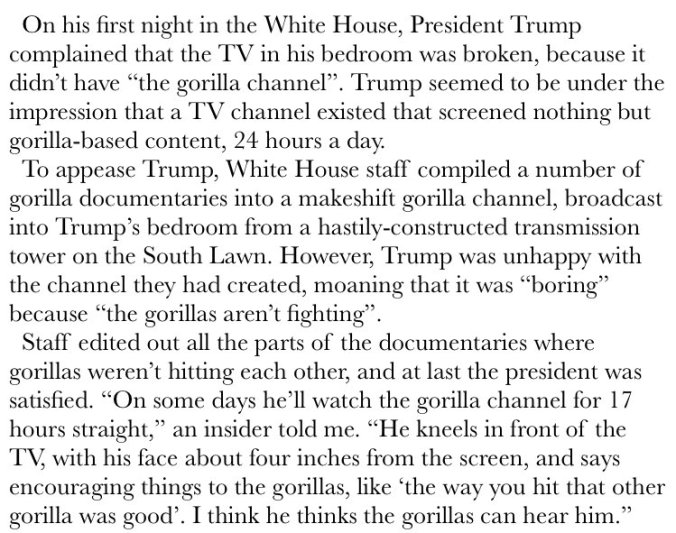
A twitterer with six-figures of followers sent this parody of Wolff’s book into social media:

Continue reading →

Grace In Disaster: Daniel Bard, Ethics Hero

It’s freezing, and I’m sick, so naturally my thoughts travel to warm summer nights at Fenway Park. Daniel Bard just retired. It gives me something different, and inspiring, to think about.

If you’re not a Red Sox fan or a dedicated baseball follower, you have no idea who Bard is. He was a relief pitcher, a set-up man, who could throw nearly 100 mph in the days, not long ago, when almost no pitchers did. Through August of 2011, his third major league season with Boston, Bard had appeared in 181 games with  a 2.42 ERA, and .186 batting average against him. The Red Sox went 123-58 in the games in which he pitched. In 186 innings, Bard struck out 202 of the batters he faced. A young man in his mid-20s, Daniel Bard could look forward to stardom, glory, celebrity, and millions and millions of dollars.  Then, suddenly in September of that year, he lost it all.

Nobody took special note, even though his ineffectiveness down the stretch was major reason for the epic Red Sox collapse that shook the franchise and led to the exodus of the team’s popular manager Terry Francona (now the very successful manager of the Cleveland Indians) and its boy genius GM, Theo Epstein, now the architect of the suddenly championship caliber Chicago Cubs. Bard was just tired, everyone assumed. There was no apparent injury; nothing had changed. But the next season, Daniel Bard couldn’t throw as hard consistently as before, and more alarming still, he couldn’t get the ball over the plate. Suddenly, he wasn’t a good or even a barely acceptable major league pitcher any more; indeed, he was a dangerous one, hitting a batter or two almost every inning, along with lots of wild pitches and walks.  By June, he was back in the minor leagues. Bard’s control got worse, and he sunk lower and lower into the low minors. Boston papers would report outings with unbelievable line scores: 2 innings, eight walks, four hit batters, five wild pitches, or worse. Bard tried surgery, meditation, mental coaches,, psychologists, changing his delivery.  He was still young, so team after team gambled that they could get him back to his All-Star form–Texas, the Mets, Pittsburgh, St. Louis and the Cubs. Bard kept trying, and failing. Continue reading →

The Democratic Leadership Apparently Endorses Beating Up People Whose Opinions They Object To. Good To Know!

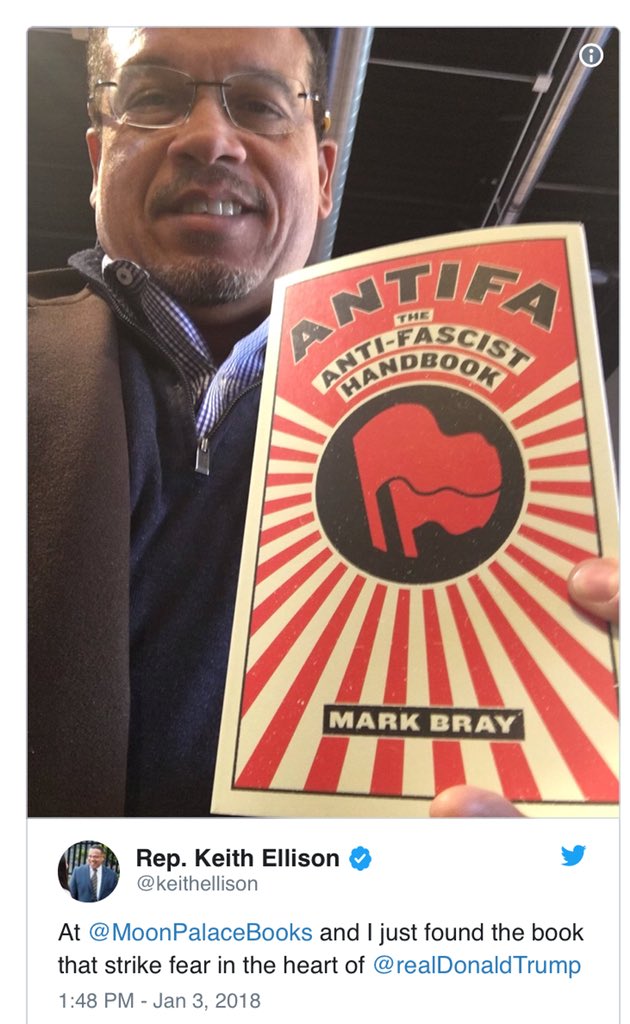
Rep. Keith Ellison (D-Minn) posted a photo of himself on Twitter  posing with the book “Antifa: The Anti-Fascist Handbook.” The book calls for violence as a tool of political advocacy. Ellison’s post said the book should “strike fear into the heart” of President Donald Trump. This guy, the only Muslim in Congress,  is the deputy chair of the Democratic National Committee. It drew pushback from Republicans who have criticized the movement’s at-times violent disruptions of speaking engagements and white supremacist rallies. After receiving well-deserved criticism, Ellison’s spokesman Karthik Ganapathy said that Ellison has not read the book, and has espoused nonviolence throughout his career. Do you believe that? Why would he appear to endorse a book he hadn’t read? Surely he knows what the antifa is and what they do.

The CBS outlet in Ellison’s home state wrote that the tweeted endorsement “drew pushback from Republicans who have criticized the movement’s at-times violent disruptions of speaking engagements and white supremacist rallies.” No Democrats think that their party’s leadership endorsing a group that wears masks and acts like brown shirts deserves criticism?

Stop me if you’ve heard this before, but most of the news outlets reporting that a high ranking official of the Democratic Party advocated violence and a domestic terrorist group were among the so-called conservative press. The New York Times, for example,  did not view this as news fit to print, since, I surmise, it might tip off the public prior to the 2018 elections that there is, in John Dean’s words, a cancer growing on the Democratic Party. One of many, in fact. Continue reading →

Morning Ethics Warm-Up, 1/5/2018: Brrrrrrr!… “Hey!”… Duh!… And “WHAT?”

G-g-g-good M-m-m-morning!

1 Enforcing societal standards in the cold. Today, as we ran errands in 13 degree weather and gusting winds to fetch my sick son some chicken soup and DayQuil, my wife witnessed the following episode at the 7-11. With a long line behind him, a man stood at the register meticulously picking lottery numbers. A woman in line confronted him directly, saying, “You came out in this cold just to waste your money on the lottery? You’re sick. Save your money. Be responsible. Get help”

Brava.

Driving home, we saw many parents walking their children to Alexandria schools (which delayed their opening here two hours.) At an intersection near the school across a parking lot from our home, my wife and I saw a young girl, maybe seven or eight, with her father, about to cross the street. The girl had a winter jacket on and a hat, but only thin leggings and—get this—sneakers with no socks. The wind chill outside here is estimated at -4.

We didn’t say anything to the father. Should we have? I think so.

2. More state lottery ethics. Speaking of unethical state lotteries, which could only become ethical if the states eliminated them, you will recall Item #4 in the 12/28/17 warm-up, about how South Carolina had bollixed up its lottery and is deciding whether to stiff the winners, since there were far too many of them thanks to computer programming error. That state needs to follow the ethical example of Connecticut.

After an error was discovered in how the drawing was handled—involving 100,000 tickets—the lottery posted a notice on its official website saying there was indeed a problem with the drawing, and that “due to an error in the range of tickets eligible for the Super Draw drawing, a second drawing will take place shortly. HOLD ALL TICKETS.” Later it announced,  through this statement from Interim Lottery President & CEO Chelsea Turner: Continue reading →

Great, Now I Have To Defend Bill Maher…

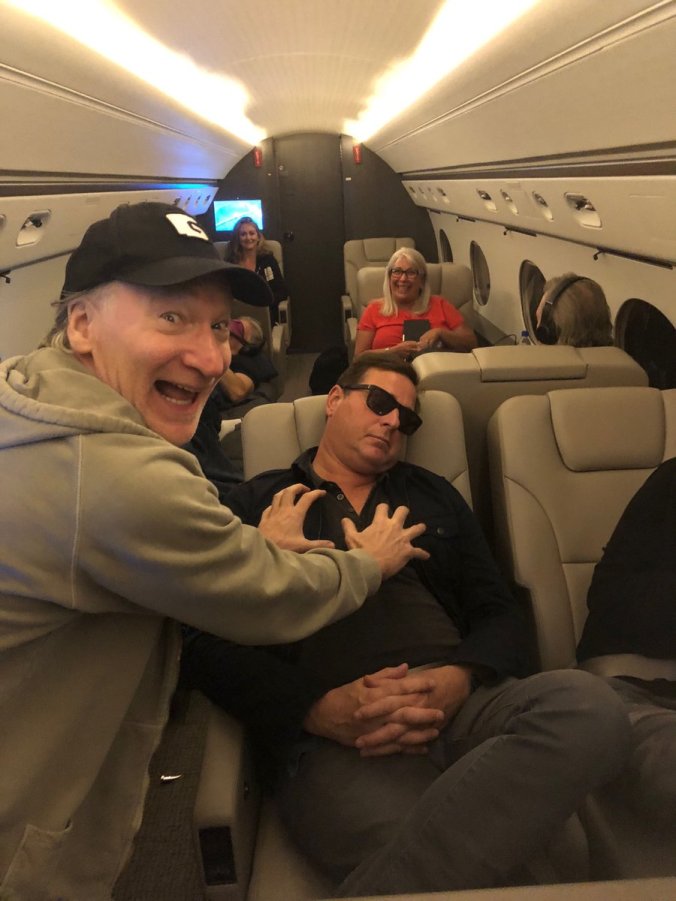
Bill Maher (that’s alleged comic Bob Saget as his “victim”) tweeted out a perfect parody of the infamous photo that triggered the demise of Al Franken, because his own party was fully committed to a sexual misconduct witch hunt, and they thought it might even lead to a successful execution of Plan J, to cancel out the election of President Trump.

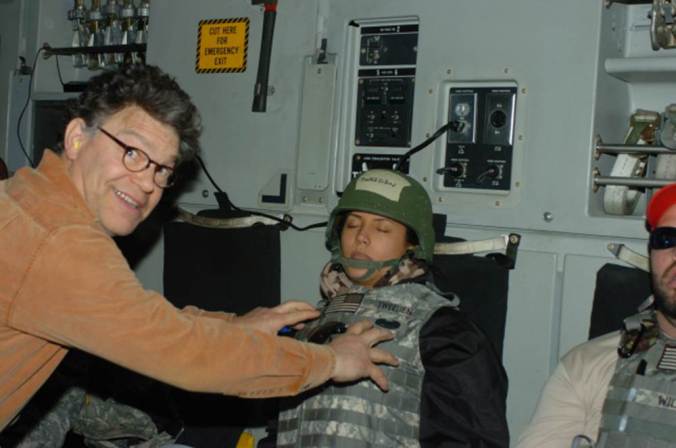
Surely you remember the photo…

If there ever was a photograph and a situation begging for satire, this was it. The original photo was a gag that unethically used a sleeping young woman as a prop. Franken handled his apology badly. Then he set himself up as fair game for mockery by weasel-wording his way through the subsequent accusations of sexual harassment and groping, some of which occurred while he was Senator. Finally, he capitulated to a due-process-defying mob led by feminist vigilante Kirsten Gillibrand, and resigned his Senate seat in a snit. Later, Democratic Senators expressed doubts about their knee-jerk attack on Franken, but it was too late. The whole scenario was ludicrous. Ludicrous public events deserve mockery. [ The original version of this sentence read “pubic.” It was a typo, I swear. Thanks to reader crella for the heads up.]

Yet Maher’s tweeted gag is being widely condemned on social media, on a variety of theories, all bad. It’s “too soon,” some say.  Maher is a current events satirist: it’s never too soon. It’s wrong to joke about sexual harassment, others say. Who makes these rules? If the target is President Trump, about seven TV comics feel that they can joke about harassment, senility, nuclear war and incest. Then the ultimate declaration: It’s not funny. No, it’s not funny to those who don’t think it’s funny. It IS funny to those who do think it’s funny, and that’s all a comic cares about. For the record, and I loathe Bill Maher, I laughed out loud. Continue reading →

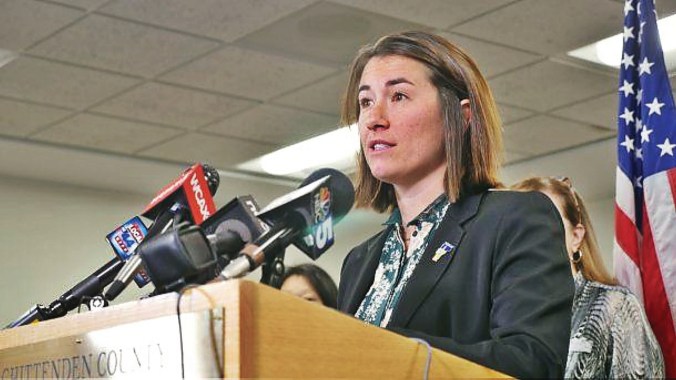
A Vermont State’s Attorney Prosecuted A College Student For An Overheard Phone Call. Why Is She Still Employed?

In October of last year, police charged Wesley Richter, a University of Vermont continuing education student, with disorderly conduct after university officials said he used “explicitly racist and threatening language” against black students and diversity initiatives on campus. Richter was overheard in a phone call with his mother, though exactly what Richter allegedly said has not been made public.unknown. Of course, what he said doesn’t matter, unless he was planning a crime, which he was not. He was talking to his mother, and a student who overheard the discussion took offense at what was said. Richter, through his lawyer, denied saying anything racist, but again, it doesn’t matter. Saying racist things in a phone conversation cannot be a crime. It’s bad manners. It’s disrespectful to those listening. A school may be able to justly find some kind of violation to a reasonable and neutral civility code involving words but not content. But an overheard phone conversation cannot be a crime. It is mere words.

Nevertheless, the University of Vermont, the University of Vermont Police Department and the Chittenden (County) state’s attorney’s office in the person of Sarah George, the State’s Attorney, prosecuted the case against Richter. George is a graduate of the University of Vermont Law School, where presumably they taught constitutional law. There is no excuse for this.

Richter’s lawyer, Ben Luna, argued that George didn’t have probable cause to bring the misdemeanor charge, and Superior Court Judge David Fenster agreed. In a statement, Luna called the dismissal a victory for free speech and the First Amendment. “The court’s ruling reinforces my opinion that this matter should never have been brought,” he said.

The court’s ruling also reinforces my opinion that Sarah George should be disciplined by the bar and fired.

Right at the start, Vermont’s Rule 3.8, as in every other state, makes it clear that prosecutors must not charge anyone with a crime without probable cause:

Rule 3.8. SPECIAL RESPONSIBILITIES OF A PROSECUTOR

The prosecutor in a criminal case shall:

(a) refrain from prosecuting a charge that the prosecutor knows is not supported by probable cause;

The Comments to the rule say in part,

[1] A prosecutor has the responsibility of a minister of justice and not simply that of an advocate. This responsibility carries with it specific obligations to see that the defendant is accorded procedural justice and that guilt is decided upon the basis of sufficient evidence.

The First Amendment makes it beyond argument that the government may not punish or seek to punish citizens for the content of their speech. Since the only evidence that George had that a misdemeanor had been committed was a third party complaint about the content of Richter’s speech in a conversation over the phone with his mother, she did not have legal or sufficient evidence to charge or prosecute Richter. As a lawyer and a prosecutor she had to know that. If she knew it, she was knowingly abusing her power, and should be suspended from the practice of law.

If she didn’t know it, then she is incompetent and not fit to practice. She should be fired.

Incredibly, George said she thought the case was strong, but that it was also “a learning experience.” “It’s disappointing, but it’s also good for us to know. It’s a really great decision for us in terms of case law and reasoning, so we know now what this court expects of us,” George said.

Yeah, the court expects you to follow the Constitution. If you have to learn that at this late stage in your legal career, Sarah, you need to go back to the drawing board. Maybe you can sell maple syrup.

She wasn’t through. “What we allege he did, we still allege he did,” she continued.  “It just didn’t rise to the level of a hate crime.”

A phone conversation cannot be a “hate crime.” Speech cannot be a hate crime. “Hate speech” is not a legal designation.

Why is this woman a state prosecutor? Fire her.

If she is not fired, then this totalitarian, illegal, abusive and intimidating prosecution chills free speech, not just on the University of Vermont campus, but in the whole state. A citizen should not have to wait two months, as Richter did, for a judge to declare that the state cannot persecute him for what he is overheard saying, whatever it is.

Fire

Her. Continue reading →

Museum Ethics: The Rape Of The La Salle University Art Museum

“This old thing alone will fetch enough to fund that Klingon language course!”

Among its other tenets, the Code of Ethics For Museums followed by The American Alliance of Museums requires that member organizations ensure that:

  • collections in its custody are lawfully held, protected, secure, unencumbered, cared for and preserved
  • acquisition, disposal, and loan activities conform to its mission and public trust responsibilities, and
  • disposal of collections through sale, trade or research activities is solely for the advancement of the museum’s mission. Proceeds from the sale of nonliving collections are to be used consistent with the established standards of the museum’s discipline, but in no event shall they be used for anything other than acquisition or direct care of collections.

In other words,  museums cannot ethically sell off  their collections to finance or benefit non-museum goals and objectives.

Never mind. La Salle University’s trustees announced that the university planned to sell 46 paintings, sculptures, and drawings selected by Christie’s auction house and use the expected profits of $4.8 -$7.3 million into teaching and courses. That means that the University will be using the art as investments and assets rather than art.

Unethical.

“I feel as though the place has been raped,” said Caroline P. Wistar, a longtime curator of the museum who retired about a decade ago. “They’re selling all of the very best things — a Degas drawing, a Vuillard. This is major. I feel like they’ve killed the museum.” Timothy Rub, head of the Philadelphia Museum of Art and past president of the Association of Art Museum Directors,  said, Continue reading →

Wait, WHAT? NOW They Tell There Are “Two Big Flaws” in Every Computer?

(That’s Meltdown on the left, Spectre on the right.)

From the New York Times:

Computer security experts have discovered two major security flaws in the microprocessors inside nearly all of the world’s computers. The two problems, called Meltdown and Spectre, could allow hackers to steal the entire memory contents of computers, including mobile devices, personal computers and servers running in so-called cloud computer networks.

There is no easy fix for Spectre, which could require redesigning the processors, according to researchers. As for Meltdown, the software patch needed to fix the issue could slow down computers by as much as 30 percent — an ugly situation for people used to fast downloads from their favorite online services. “What actually happens with these flaws is different and what you do about them is different,” said Paul Kocher, a researcher who was an integral member of a team of researchers at big tech companies like Google and Rambus and in academia that discovered the flaws.

Meltdown is a particular problem for the cloud computing services run by the likes of Amazon, Google and Microsoft. By Wednesday evening, Google and Microsoft said they had updated their systems to deal with the flaw.

Here’s the best part:

“Amazon told customers of its Amazon Web Services cloud service that the vulnerability “has existed for more than 20 years in modern processor architectures.”

We trust the tech giants and computer manufacturers to give us secure devices. We then entrust our businesses and lives to these devices.

That there were such massive “flaws” in every computer, and that it took 20 years for those whom we trusted to discover them, is an unprecedented breach of competence, trust and and responsibility. Imagine auto manufacturers announcing that every car in the world had a “flaw” that might cause a fatal crash. I see no difference ethically.

And why is this story buried in the Times’ Business Section, and not on the front page, not just of the Times, but of every newspaper?