Wait: Why Did It Take A Congressional Commission To Point Out That A KKK Plaque Wasn’t Appropriate At West Point?

[NOTICE: This post was materially wrong, based as it was on bad and incomplete information. An UPDATE is here]

This does not give me great faith in the military’s powers of observation and urgency.

That bronze panel above is one of three mounted at the entrance of Bartlett Hall Science Center U.S. Military Academy at West Point in New York. It’s unclear how long it has been there (I bet Woodrow Wilson had something to do with it, KKK fanboy that he was) but it wasn’t exactly hidden from view for the decades cadets passed under it. Yes somehow, it wasn’t until the report released by a congressional panel this week pointed out the damn thing that West Point was moved to do something.

The panel, called the Naming Commission, was created by Congress to provide recommendations for the removal or renaming of Defense Department places, decorations and things that commemorate the Confederacy, including those that appear at the military academies. The commission flagged the KKK plaque but said that recommending the its removal fell outside of its scope because the Ku Klux Klan, though founded by former Confederate soldiers, doesn’t technically relate to the Civil War, but rather to Southern resistance to post-war Reconstruction. That still doesn’t explain why the plaque was still up at West Point. One can argue about the effort to erase Confederacy figures from the nation’s honors and memorials (although the military has the strongest argument for doing so: the other two bronze plaques honor Robert E. Lee and J.E.B. Stuart, who fought against the U.S. military), but the Klan is irredeemable, and has been an unambiguous symbol of hate, racism and evil at least since the 1950s. Finding out that a Klan plaque was on display all this time at West Point is like discovering that St. Paul’s Cathedral had a statue of Satan hanging around for centuries without anyone objecting.
Continue reading →

Prof. Volokh Demonstrates How University “Diversity Statements” Are Unconstitutional

They are, of course, also unethical unless you are a nascent totalitarian who believes that WrongThink should disqualify citizens for employment and influence.

Universities are increasingly requiring so-called “diversity statements”‘ from those seeking positions on their faculty. They are particularly crucial to white scholars, since potential “faculty of color” are diversity. The statements describing the hopeful instructor’s contributions to diversity, equity, and inclusion are however, being challenged, as well they should be. Apparently having faculties that usually have 5% or fewer members who confess to being conservative isn’t enough, so the requirements of what are essentially loyalty oaths to the Great Woke are being seen for what they are: efforts to eliminate diversity of thought on campus—all the better to ensure the effective indoctrination of students whose minds are properly vulnerable. . Criticisms first made in tweets and blog posts have expanded into prominent opinion pieces and, more recently, law review articles. These attacks are having an effect. There are now faculty-wide resolutions against (and for) mandatory diversity statements. Lawyers are recruiting plaintiffs to challenge diversity statement requirements in court.

Good.

The Federalist-Society recently held a webinar on the topic. Prof. Eugene Volokh, one of the panel participants, offered a “thought experiment” to demonstrate just how noxious “diversity statements” are.

Here it is:

Continue reading →

Case Study: Prof. William MacAskill Proves Once Again Why Philosophers Are Useless And Untrustworthy

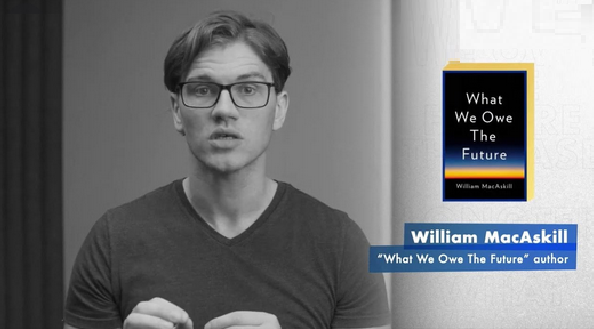
 William MacAskill is a philosopher, a professor at Oxford who has a new book out for the riff-raff, “What We Owe the Future.” MacAskill is a key spokesman for the so-called “effective altruism” movement which advocates “longtermism,” a an ethical position prioritizes the moral worth of future generations and obligation of present society to protect their interests. You know where this goes, right? “Longtermists argue that humanity should be investing far more resources into mitigating the risk of future catastrophes in general and extinction events in particular,” writes New York Magazine. Got it. This is a another climate change activist group shill trying to get civilization to shut down based on speculation, scaremongering and dubious science.

Ann Althouse, who has the time on her hands to read the increasingly leftist New York Magazine so I don’t have to, flagged an interview with MacAskill, and had the wit and integrity to note that the philosopher so focused on the value of future lives never mentioned abortion nor was asked about it. Ann, who initially pronounced the Dobbs decision monstrous, does have integrity, and tracked down another recent book-promotion interview  where abortion was raised. Asked whether his movement should be anti-abortion, MacAskill says no, and when pressed on his reasons (admittedly lamely), resorts to pure jargon and doubletalk, ducking the issue: Continue reading →

Comment Of The Day: “Ethics Quiz: Censorship At Northwest High”

Frequent commenter Here’s Johnny thanked me for choosing his analysis of the recent ethics quiz on school paper censorship as a Comment of the Day. Truly, the thanks goes in the other direction. Comments like his, which dig deeper into a story than my initial post has is a gift to Ethics Alarms and its readers. On the blog’s predecessor, The Ethics Scoreboard, I would generally post only a couple of times a week. Often that meant I could thoroughly research a topic before publishing (it also meant fewer typos, and almost no readers comments). I decided that a blog format that permitted covering more of the ethics landscape, which was (and is) vast and expanding, more quickly if less thoroughly was better suited to my mission. Nonetheless, as in this case, many of the ethics tales require more research, context and nuance than I have time to apply.

This commentariat is superb at filling the blanks. Indeed, for every Comment of the Day I post there are probably five that I could have posted. It is not so much of an honor for the commenter as a rescue for the blog. Most readers, I have found, don’t read comments to posts, for the same reason I usually don’t: on most sites the comments are useless, depressing, and horrifying. Ethics Alarms comments are, in contrast to all but a few other sites (Althouse comes to mind), are important supplements to the main essay, offering not merely a different perspective, but additional information as well

Heeeeeeeeere’s Here’s Johnny’s Comment of the Day on “Ethics Quiz: Censorship At Northwest High”…

***

As is often the case, we are getting just part of the story and being asked to render an opinion based on incomplete information. Unless we dig a bit further, our decision would be either: it never is okay to shut down a high school newspaper, or, it is okay for administrators to shut down a high school newspaper.

In this case, one reason we are lacking information is that school and district officials seem unwilling to even talk about it. A columnist for “The Grand Island Independent” says he was hung up on by someone at the district about as soon as he said who he was. A couple of officials have commented, but they essentially are non-comments. Zach Mader, Northwest Public Schools board vice president, told “The Independent” he remembers talks of shutting down the student paper should the school district lose the ability to control what they find to be “inappropriate content.” The district superintendent would only say that it was an administrative decision. Continue reading →

“Dear Pronoun Problems”…Here Is How I Would Answer The Lament Of A Teacher Whose Attempt to “Create An Inclusive Environment” In Her Class Went Horribly Wrong

Slate, the pioneering web magazine that once had an interesting balance of commentary, jumped the woke shark long ago; I almost never bother with it any more. It carries an especially annoying Social Justice Warrior family advice column, “Care and Feeding,” whose writer, Doyin Richards, founder of the Anti-Racism Fight Club, is obsessed with “diversity, equity and inclusion.”

A teacher calling herself “Pronoun Problems” wrote in part,

On my first day, in an attempt to create an inclusive learning environment, I passed out an icebreaker worksheet that asked several questions, including preferred pronouns. This ended up backfiring. I live in a blue state, but in a suburban area with plenty of conservatives. It’s not uncommon to see a house with a Trump sign right next to a house with a Black Lives Matter sign. Consequently, while I had plenty of students who answered the question honestly, I also had lots of students who wrote their pronouns as “nor/mal” or “attack helicopter.” I feel like it started things off on the wrong foot. It gave me a negative first impression about some of the students, which I don’t think is a healthy mindset for a teacher. Worst of all, I’m afraid I ended up only creating a more hostile learning environment for my trans and non-binary students. The students didn’t necessarily see each other’s answers, but I basically gave some students a platform to express their transphobic views. After my contract ended, I got hired by a different school district, this time teaching eighth grade. I’m worried that if I give out the same icebreaker worksheet, even more of the students will write transphobic “joke” answers. At the same time, I’m glad I was able to learn the correct pronouns for my students and avoid misgendering them in class. How should I go about this in the future? Should I scold them or call them out? Or should I just grin and bear it for the sake of the students who take pronouns seriously?

The reply from Doyin is what you would expect (it begins, You absolutely did the right thing by creating the icebreaker activity; your only errors were not setting ground rules and not explaining why this is important…”). If you want to read it, it’s here.

My answer would be the following:

Continue reading →

Comment Of The Day: “Verdict: ‘Quiet Quitting’ Is Unethical. Next Question?”

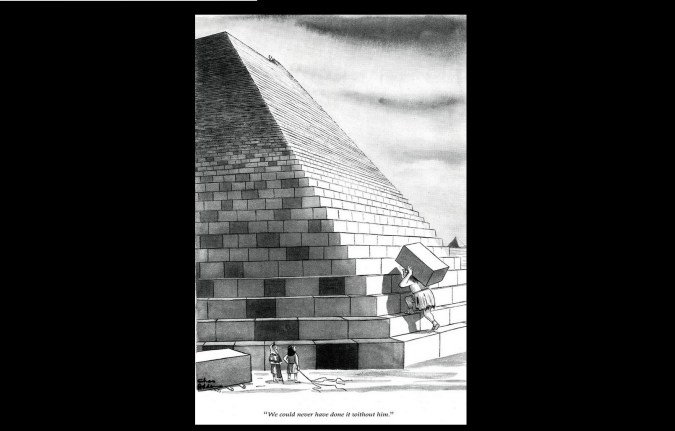
[The caption on perhaps my favorite Charles Addams cartoon reads, “We never could have done it without him.”]

I thought that the essay on “quiet quitting” would spark a good discussion, and when I think that, I’m usually wrong. This time I was right, and among the excellent comments was this Comment of the Day by Tim Hayes, who focuses on the crucial aspect of the issue that I barely touched on at all: the responsibilities of management.

Here is Tim’s Comment of the Day on the post, “Verdict: “Quiet Quitting” Is Unethical. Next Question?”…

***

So, full disclosure, I hate the terminology and discussions around “quiet quitting”, both as a manager, and as an employee. Part of this is because it is unethical – but also part of it is because a lot of current discussions seem to be about deflections and doublespeak, and they just frankly aren’t doing anyone any good.

Some instances of quiet quitting are simply laziness on the part of the employee – this shouldn’t surprise us (I can make a strong argument that laziness when possible is actually a biological predisposition, and furthermore beneficial to societies when channeled appropriately), and while performing excellently is a virtue, and should be a path to success, it is not a necessity in all things. The American experiment, and indeed all civilizations (Western and Eastern), have gotten along just fine with the majority of individuals being mediocre – the trick has historically lay in defining mediocre as still sufficiently productive to support a society when the majority of its members are at that level, while allowing those who wish to perform exceptionally to do so. So, in the situation where quiet quitting is about laziness, the only major question to be answered is what constitutes acceptable levels of performance in the role at hand, and have those been adequately defined and communicated to the person in that role.

This is why I hate hearing the discussions as a manager – they almost always ignore that there is a failure of leadership/management in these cases. If I have someone who is performing the job as I’ve described it to them, and is actually meeting my set standards for acceptable levels of performance, yet their performance of their responsibilities is insufficient in some way, then it is axiomatic that I have failed to define as acceptable the levels of performance that are sufficient to fulfill my need. If, conversely, I have described acceptable levels of performance and the person is not meeting them, and so my business needs are not being met, than I am failing to hold this person to the standards I have set. Continue reading →

The Tuition Debt Forgiveness Fiasco So Far…

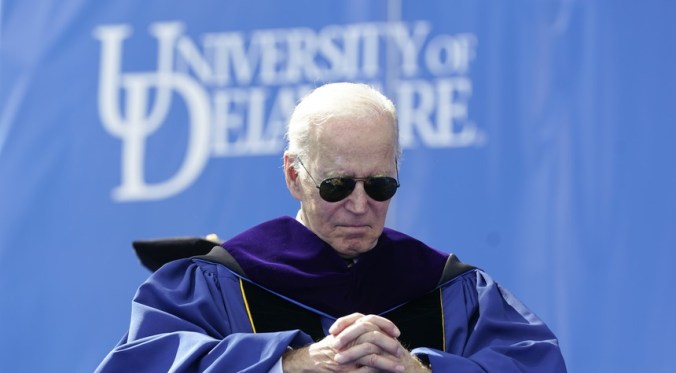
President Biden announced last week that he will unilaterally forgive $10,000 in student debt for those making less than $125,000 annually. Pell Grant recipients will receive $20,000 in debt repayment funds if their income is below the $125,000 threshold. Administration officials claim that no individual or household in the top 5% of earners get any financial assistance from the program.

Well….

1. As we have learned to expect from the administration that was supposed to be a breath of fresh air after all those Trump lies, we cannot get an honest statement of what the Biden loan forgiveness vote-buying scheme will really cost. The official number has been $300 billion. The National Taxpayers Union Foundation issued an analysis earlier this week estimating that the student loan erasure will add nearly $330 billion to the deficit over the next decade. The Committee for a Responsible Budget puts the cost of the handouts at between $440 billion and $600 billion. The University of Pennsylvania’s Wharton School of Business estimates that the program will cost up to $1 trillion. Biden’s paid liar and unofficial village idiot (but she’s the first village idiot to be “of color, female, and a lesbian, and that’s what counts), White House Press Secretary Jean-Pierre, explains with her typical precision, “All of this as when it comes to costs will also depend on how many of the loans canceled were actually expected to be repaid.”

What do we call organizations that commit to a huge expense without knowing what it will cost…

2. …Or how it will be paid for? Administration officials say the program is “fully paid for” through “deficit reduction,” as the government will be spending less money that it did when it was leaking trillions in ad hoc federal spending to combat the Wuhan virus. Thus we are hearing doubletalk like this, from Bharat Ramamurti, the deputy director of the National Economic Council (and he is, I believe, the first deputy director of the National Economic Council of Indian descent!):

Continue reading →

Ethics Quiz: Censorship At Northwest High

I wrote editorials for my high school newspaper. The administration got quite annoyed with me for several of them, particularly the one that exposed the fact that the students in the “accelerated learning” program were often not disciplined for the same offenses that got other students suspended. (Also annoyed with me was my best friend at the time, who almost immediately got suspended as the school decided to prove there was no favoritism to the the best students (though, of course, there was). Still, nobody ever threatened to shut down the paper based on its content.

Then again, our paper never published anything about sex….

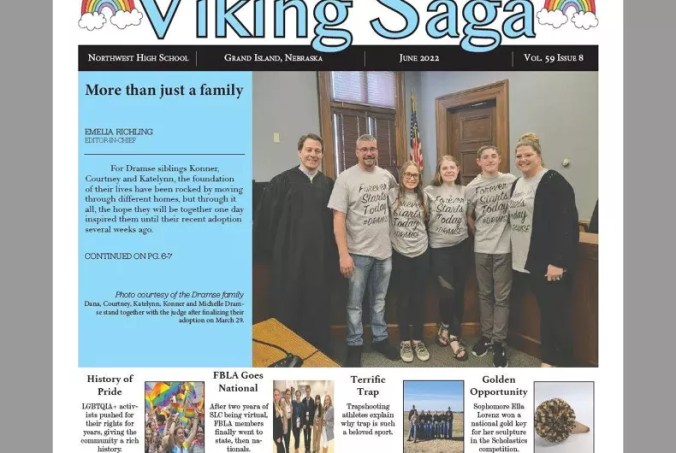
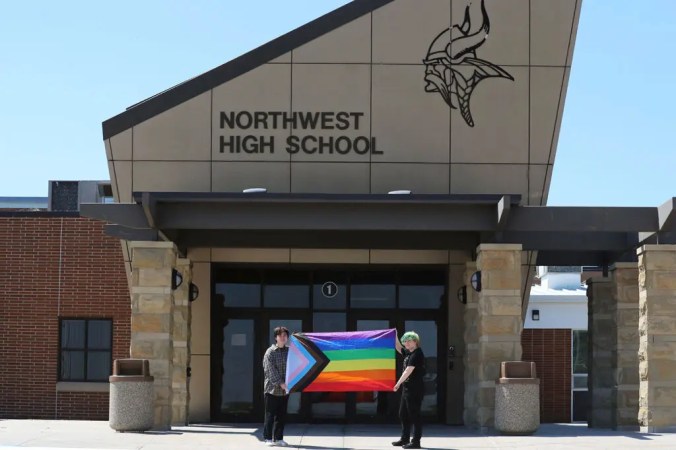
The students on the staff of the school paper at Northwest High School in Grand Island, Nebraska were ordered by administrators to use the names they were given at birth for their bylines because using their “preferred names”—apparently three of the students were transgender, whatever that means now— was too controversial.  In defiance, the student journalists dedicated an  issue to LGBTQ. issues, with two columns on the topic and a news article about the origins of Pride Month. The school responded by ending the newspaper entirely. The paper had been in print for 54 years at Northwest High, which has about 700 students and is the only high school in Grand Island, a small city about 95 miles west of Lincoln, the state capital.

Your Ethics Alarms Ethics Quiz of the Day:

Was shutting down the newspaper an ethical move by school administrators?

Continue reading →

Verdict: “Quiet Quitting” Is Unethical. Next Question?

I had happily never heard of the term “quiet quitting” until last week, and now it is supposedly a hotly-debated ethics topic. There’s nothing to debate about. “Quiet quitting” is not new (the term may be new), nor is there any defense for it. It is un-American to its core. But as so many American values are being eroded by revolutionary fervor of people who simply don’t like the unique history, culture and principles that make the nation the unique entity that it is, it figures that slacking at one’s job and being self-righteous about it would be on the rise.

It is, there is little doubt about that. Ethics Alarms has mentioned the trend of increasingly poor and unaccommodating service in every sector. The usual explanation is the under-staffing that the destructive pandemic lockdown facilitated, but it’s good that focus is falling on the declining belief in seeking excellence in all one does, and putting out one’s best effort at all times. The death throes of American dedication to excellence as a cultural value is what has been newly christened “quiet quitting,” the many ways in which workers reduce the time, energy, and care they commit to their jobs.

Continue reading →

New Week Dawning Ethics Warm-Up, 8/29/2022: It’s Bernie Sanders Appreciation Day!

Before it is too far back in the rear view mirror, I must mention yesterday’s place among ethically momentous dates for both good and ill.

Most significantly, the ill comes to mind: it was on August 28 in 1955—the same date represented in “Back to the Future” as a time of innocence and naivete—that Emmett Till, a Black teen , was abducted from his uncle’s home in Money, Mississippi, by two white men after a white woman told her husband that he had whistled at her and brushed against her. The boy was brutally murdered, and his death has remained an iconic symbol of Jim Crow and American racism to this day. Also on the dark side of ethics, in 1968, police and anti-war demonstrators battled on the 28th in the streets of Chicago as the Democratic National Convention nominated Hubert H. Humphrey for President despite a popular upheaval seeking a peace-seeking alternative to the Lyndon Johnson administration. In my assessment, that rioting was far, far more threatening to the U.S.’s confidence in the health of its democracy than the antics of the middle-aged clowns who swarmed over the Capitol on January 6, 2020. Less earth-shattering but still the culmination of an ethics train wreck, on yesterday’s date in 1996 the 15-year marriage of Britain’s Prince Charles and Princess Diana officially ended. The ethics lesson is how important it is for leaders and admired role models to live up to the best standards of conduct, and when they don’t, the institutions they represent suffer, sometimes irreparably.

There is at least one shining ethics milestone to salvage August 28: in 1963, more than 200,000 people heard the Rev. Martin Luther King Jr. deliver his “I Have a Dream” speech in front of the Lincoln Memorial in Washington, D.C., which includes the perplexing statement his followers today want to wish away: “I have a dream that my four little children will one day live in a nation where they will not be judged by the color of their skin but by the content of their character.”

1. Wait; corporal punishment is still allowed in public schools? Tell me again: why do we have a Department of Education? About 70,000 public schoolchildren were abused with corporal punishment in the 2017-18 school year, which is the most recent year for which federal data is available. Nearly 4,000 schools reported using corporal punishment during that school year, and as children head back to classrooms, some teachers are dusting off their paddles. So I guess there were some positive aspects to remote schooling.

No wonder school boards assumed that parents would be supine in the face of critical race theory and transsexual propaganda, if they allow teachers to beat their children.

2. For today’s depressing example of the quality of reason, rhetoric and argument employed by high elected officials, I give you…Senator Bernie Sanders of Vermont! Asked by ABC “This Week” anchor George Stephanopoulos about complaints that Biden’s $300 billion giveaway to students owing payment on their student loans, Sanders’ replied, “I don’t hear any of these Republicans squawking when we give massive tax breaks to billionaires!” Yeah, and they don’t complain about the designated hitter, either!

Continue reading →