Ugh. I have about seven half-finished posts, and today was only saved by having some excellent Comments of the Day on the runway. I spent most of it alternating between walking Spuds and working out a fascinating but difficult legal ethics question from a client, in one of a surprising number of areas where the legal profession hasn’t decided what’s ethical yet.
1. Was this really necessary? Turkey, showing no respect whatsoever for geography books, mapmakers, poor spellers and English speakers, decided to change its name from Turkey to Türkiye, which is the English spelling, believe it or not. “The phrase Türkiye represents and expresses the culture, civilization and values of the Turkish nation in the best way,” an announcement explained. Wait, it’s a phrase?
2. Hey! A new kind of discrimination! Over at Practical Ethics, Charles Foster complains about “the bias in favour of consciousness, and the consequent denigration of the unconscious.” Here is a sample:
“…we see it supremely (and supremely self-servingly) in philosophy, because philosophy is all about the exercise of those ‘higher cognitive functions’. When modern philosophers agree with Socrates that the unexamined life is not worth living, they really mean that if you can’t think in the focused, highly cognitive way that they do, you might as well bow out – a conclusion on all fours with the decisions of the judges in PVS cases. Lay people might think that philosophy is a no-holds-barred search for the truth about the universe: it’s not; it’s based on the assumption that the universe perceived and perceivable by our quotidian consciousness is all that there is, and that that consciousness is therefore the only tool available for probing the universe….
3. A scandal? A smoking gun? Maybe…In newly obtained emails between National School Boards Association board members Marnie Maldonado and Kristi Swett dated October 5-6, 2021, Ms. Swett, who is an officer of the NSBA, seems to say that Biden’s Secretary of Education, Miguel Cardona, solicited the association’s infamous letter asking the Justice Department to sic its agents on CRT-protesting parents as “domestic terrorists.” Justice then relied on the NSBA letter to send out its own threatening memo directing the FBI to mobilize in support of local education officials who had to deal with these citizens who insisted that they should have a say in what their children were being taught. Continue reading
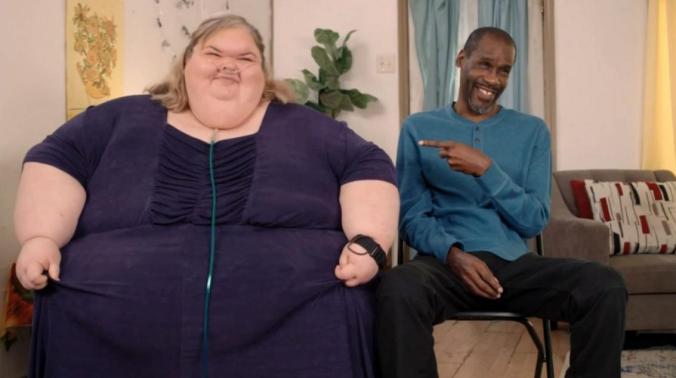
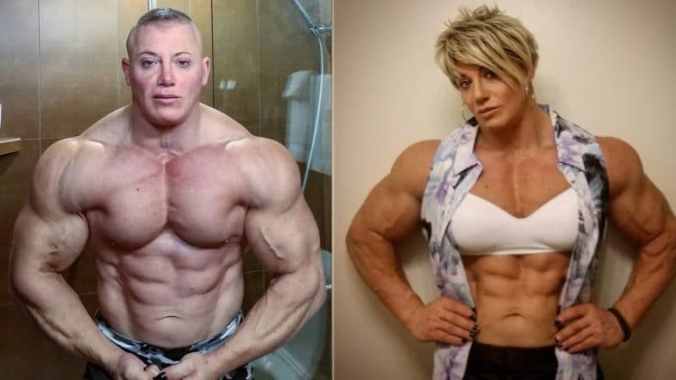



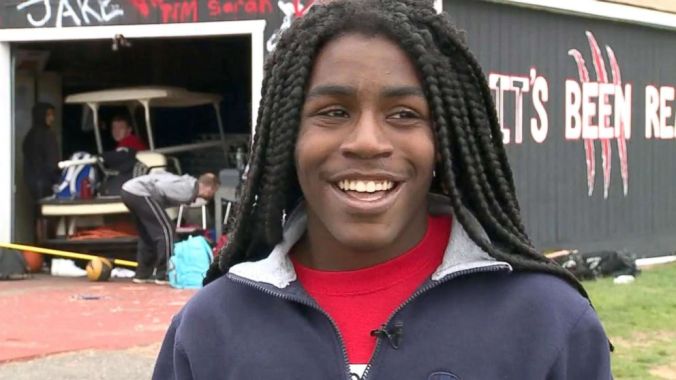


This part is unforgivable and exposes a tainted, delusional worldview:
“patriarchal forces — the forces that tell girls and women in particular to be small, meek, slight, slim and quiet…”
Let’s break down what the “patriarchy” is supposedly demanding of girls, according to the lens through which people indoctrinated like this see the world:
1. “Small” – Women are smaller than men, across the board. Is biology a patriarchal system? Is she saying that by ballooning out into an obese woman, she will achieve equality with taller men and their more dense body structures? Or is she just saying that the patriarchy demands healthy women? (Historically, that’s not even true, if old European paintings have taught me anything.) But even if it were true that the patriarchy desires fit women, survival in a state of nature also demands a healthy body. If anything, “patriarchal” structures (like agriculture and cities) have made it possible for obese people to even exist in the first place. In some utopian feminist treehouse-jungle, fat women would just be eaten by tigers.
This is even dumber when you consider that NOBODY likes, wants, or respects a fat man. As if the patriarchy loves fat dudes but not fat women. She’s already veered into insanity, and it’s just getting started.
2. “Meek” – This is also a product of biology, not culture. Men have higher levels of testosterone, which means they generally take more risks, are louder, more aggressive, and act out more physically, compared to women. If women were as aggressive as men but with otherwise the same biology, they would be getting themselves killed in violent confrontations with men at obscene rates throughout history. It’s not likely that the demographic balance between men and women would even be sustainable that way, which means over time women would just go back to being largely “meek” again, as less aggressive women would outlast more aggressive ones. Instead of celebrating the unique qualities of women, this philosopher thinks that it’s unfair that women aren’t just…men.
Continue reading →