Brian Dennehy Has Died, And Attention Should Be Paid (Corrected)

This would normally be in the Warm-Up, but I left it out, and I want to make sure it is seen. I have written about this pet peeve of mine before, but I see that it was on the old Ethics Scoreboard in 2005, before Ethics Alarms. (ARGGH! I have GOT to get that site back on-line!)

Here is a typical headline I am seeing on the web:

Veteran Actor And ‘Tommy Boy’ Star Brian Dennehy Dead At 81

“Tommy Boy.”

For the love of God…

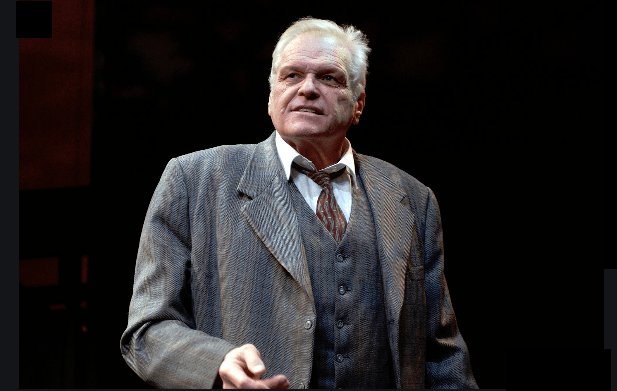
Brian Dennehy, who  died this week, was one of our finest, most versatile and most enjoyable character actors. His performance as Willy Loman in Arthur Miller’s “Death of  Salesman” on Broadway is considered by critics as one of the very best interpretations of that classic role in what has been called the Great American Tragedy. The performance won him a Tony, as did his turn as Hickey in the other contender for the Great American Tragedy, O’Neill’s “The Ice Man Cometh.” (That one would get my vote.)

Dennehy’s brawny, square-headed Irish bartender looks limited him to supporting roles in films (In “Silverado,” He’s one of my two all-time favorite Western bad guys,  evil and so, so engaging!) and while he had many TV roles, Dennehy never found a long-running hit that would make him a household name ( and a gazillion dollars) like so many lesser actors. But Dennehy considered himself a stage actor, and there he excelled.

“Tommy Boy” is a sophomoric gross-out comedy that starred the late Chris Farley. Dennehy was terrific as Farley’s father, but the movie was the kind of throw-away that actors like him do to buy new pools. Citing that as Dennehy’s claim to fame is more than misleading, it’s an insult. Continue reading

The Man Who Coarsened America

He didn’t set out to, of course. Like most figures in cultural history who leave the culture a little (or a lot) worse than they found it, Craig Gilbert, who died this week, just wanted to try something new he thought might work, and, of course, to make a buck. He was successful on both counts, but unfortunately, the law of unanticipated consequences took over.

What he wanted to try was the reality TV show, though he didn’t call it that. In the early 1970’s, Gilbert was an established documentary-maker of note and  a producer at WNET, the New York PBS station. He had the inspiration of  having a camera crew follow a real, ostensibly typical American family as it went about living for months, to let the public see what happens behind the closed doors of their neighbor’s homes.

WNET agreed to spend $1.2 million to finance the project), and Gilbert set about seeking an appropriate family for the venture.

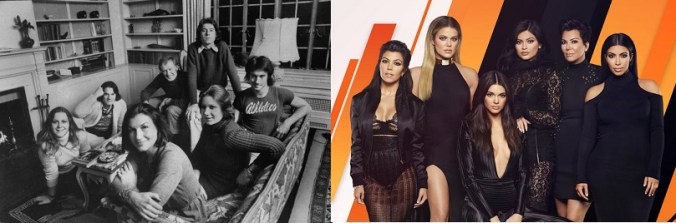
Gilbert searched for a family that was ostentatiously middle class with a lot of kids spanning different age groups. He settled on the the Loud family, Bill and Pat, with  their five children, Lance, Kevin, Grant, Delilah and Michele. The Louds didn’t know what they were getting into, because it was something no family had ever gotten into before. Over 300 hours of filming over seven months in 1971, they were recorded in increasingly intrusive ways, creating scenes that made the Louds into national soap opera stars, except that it was their real life being watched and talked about. “An American Family” was broadcast two years later as a 12-part series, and gradually took over the lives of the family members. Continue reading

Perspective From Michael Crichton On Experts And Predicting Crises

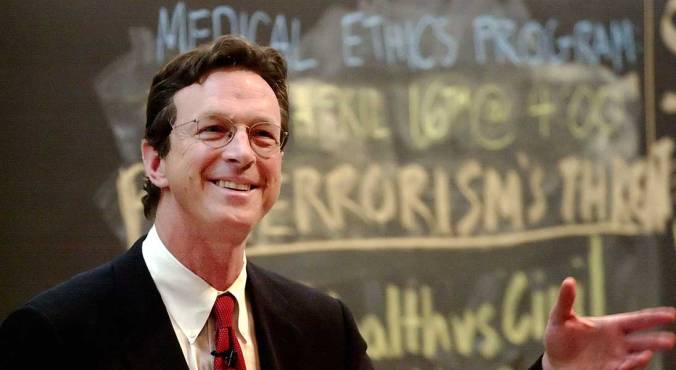
Michael Chrichton was a unique and relentlessly positive influence on our culture, popular and otherwise, before his death in 2008 at the age of 66.  Trained as a doctor and scientist, he applied his knowledge, his brilliance, and more importantly, his remarkable powers of lateral thinking and unbiased analysis, to myriad  fields, always aimed at a form of public education that was fueled by entertainment.  He taught, he wrote best-selling novels, he was a futurist, he directed movies, he created TV shows.   Mostly he thought, and through the fruits of his thought, made ordinary people smarter, at least those smart enough to pay attention. Yes, he thought a lot about ethics. You can learn more about his career and interests at his website, here.

Michael Crichton was especially interested in threats and crises, how they happen and our reactions to them. His first hit novel, “The Andromeda Strain” was about a deadly virus. He would have been very helpful right now. Though he was himself an expert on many topics, he was wary of the abuse of expertise; though he was a visionary, he was was a vocal skeptic of predictions and assumptions. Crichton, I think, would have found the current weaponizing of hindsight bias to find a new way to demonize President Trump as revolting and dishonest as I do.

In this 2002 lecture, Crichton discussed the media’s obsession with speculation, and society’s unwarranted confidence that the future is predictable, especially when experts are doing the predicting. Some selections: Continue reading

Fredo Snaps

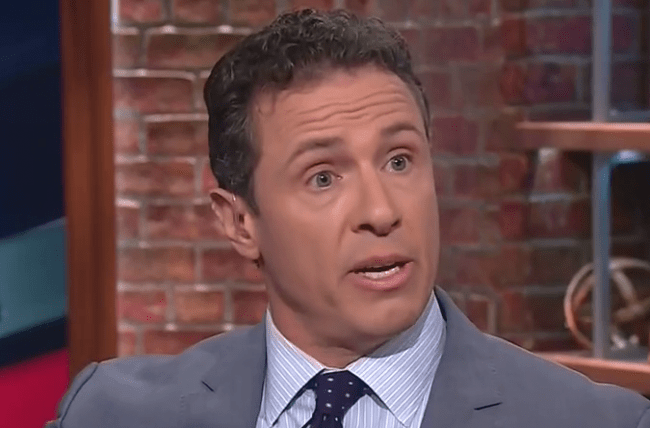
Chris Cuomo is a fascinating case. Maybe someone will write an opera about him.

He’s the younger, less ambitious, less accomplished son of a popular and (in some circles) revered governor of New York. If the term privileged has any meaning at all, it applies to him. He graduated from elite schools, including law school, but as he has proven again and again, he neither acquired any skill at critical thinking, nor at legal reasoning and the basic principles of law. He’s emotional, and not very bright. The younger Cuomo was blessed with good looks, a usually amiable nature, and charisma, and these, along with some excellent contacts, were enough to get him an anchor’s position on CNN. In this position he has embarrassed himself repeatedly; fortunately for him, the news organization he works for has become immune from embarrassment, as evidenced by the fact that it also  employs Brian Stelter and Don Lemon, among others.

Every now and then his amiability is cracked open to reveal the traditional frustration and anger of the lesser son. Cuomo erupted a while back when he was first referred to as “Fredo,” alluding to the elder but mentally deficient son of Vito Corleone in the “Godfather” saga. The nickname is mean but apt, and frankly, as long as CNN allows someone of Chris Cuomo’s limitations to pretend to inform its audience, it is also useful. Cuomo is a fraud, and by presenting him as a trustworthy journalist, CNN is mistreating its audience. Yes, I’m sure Cuomo does the best he can, but then, so did Fredo Corleone.

Cuomo is ill with the Wuhan virus, and quarantined. I’m sure this is hard for him, but his stresses are still less than those of most Americans. He’s broadcasting (and making a fool of himself) from home; he’s getting a 7-figure salary; his ordeal is relatively minor.

Apparently a confrontation with  someone Cuomo considers one of the little people  on Easter Sunday caused the CNN anchor to snap and reveal the turmoil within, much like Fredo in his famous lament to Michael in “Godfather II.” On his Sirius-XM  satellite radio show, Cuomo vented about the incident, in which a stranger on a bicycle confronted him on Easter Sunday for being outside his Southampton home with his family despite the positive Wuhan virus diagnosis. Continue reading

Ethics Dunces: The U.S. Congress. Again

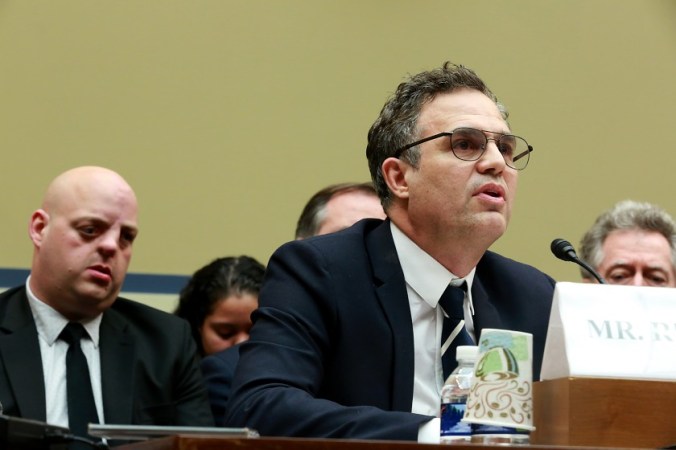
Actor Mark Ruffalo (he plays the Hulk in The Avengers  movies, but it wasn’t because of that role) was invited to testify before Congress last year on public policy involving  public health, chemistry, toxicology, and epidemiology. He has no expertise in these areas at all. The reason was that he starred in “Dark Waters,” which I wrote about here.

Ruffalo is a 9/11 truther, believing  that the U.S. government helped destroy the World Trade Center. That would be enough for me to ding him as an authority on anything, but he has embraced other conspiracy theories as well, like this one.

Never mind: he was presented to the public as an authority on pollution whose opinions on environmental matters have weight. The don’t, and they shouldn’t.

This is a repeat offense. Members of Congress are addicted to the unprofessional and insulting stunt of inviting actors and performers to testify as substantive witnesses on topics that they acted about in movies. As a professional director, I can state with absolute certainty that if an actor is really an expert in something their character was supposed to experience or know something about, 1) that actor is very unusual, and 2) there will still be thousands of real authorities who know a lot more.

Nevertheless, Congress keeps doing this, apparently believing that the public is so naive and gullible that they really believe that because a performer credibly pretends to know what a script-writer prepares to make them sound like the know, they really are experts. Sadly, a lot of the public does believe that. (More sadly, a lot of actors do too) Continue reading

I Have To Defend Bill Maher Again. Life Is Cruel.

Although to be fair, I should have seen this line coming. His old show was called “Politically Incorrect,” after all.

As he does periodically, the generally despicable HBO clown nose on-clown nose off  pseudopundit, whom left-wing pundits and politicians grovel to in order to be cheered by his studio audience of  ex-Occupy Wall Street campers, Bernie bros and you know, morons, bucked a progressive talking-point by saying, essentially, that it was stupid.

This one was particularly low-hanging fruit for Maher, as it should be for anyone: he said, admittedly in the most vulgar and tasteless way  imaginable, that the Virus That Came From China should be called a Chinese virus (or variations thereof, like the Wuhan virus name I use on Ethics Alarms and explained why here) and that saying it is racist to do so is cretinous. In Bill’s words,

“Scientists, who are generally pretty liberal, have been naming diseases after the places they came from for a very long time. Zika is from the Zika Forest, Ebola from the Ebola River, hantavirus the Hantan River.There’s the West Nile virus and Guinea worm and Rocky Mountain spotted fever and, of course, the Spanish flu. MERS stands for Middle East respiratory syndrome. It’s plastered all over airports, and no one blogs about it. So why should China get a pass?”

Then Maher did a nice takedown of a characteristic tweet by Rep. Ted Lieu, who embarrasses the U.S. Congress, his state (California), his party (Democrats) and his district roughly every time he says anything. He had tweeted on this issue,

Calling #COVIDー19 the Wuhan Virus is an example of the myopia that allowed it to spread in the US. The virus is not constrained by country or race. Be just as stupid to call it the Milan Virus.

One would think that one of the few things Lieu could speak authoritatively about is being stupid, but no, not even that. Maher correctly reacted,

No, that would be way stupider because it didn’t come from Milan! And if it did, I guarantee we’d be calling it the Milan virus. Jesus fucking Christ!  Can’t we even have a pandemic without getting offended? When they name Lyme Disease after a town in Connecticut the locals didn’t get all ticked off …It scares me that there are people out there who would rather die of the virus than call it by the wrong name.

It scares me that someone like Ted Lieu is in Congress, or, for that matter, walking the streets without a harness and a keeper. Maher continued on his rant,

This isn’t about vilifying a culture. This is about facts. It’s about life and death. We’re barely four months into this pandemic, and the wet markets in China — the ones where exotic animals are sold and consumed — are already starting to reopen.

Sorry, Americans. We’re going to have to ask you to keep two ideas in your head at the same time: This has nothing to do with Asian Americans, and it has everything to do with China .We can’t afford the luxury anymore of nonjudginess towards a country with habits that kill millions of people everywhere because this isn’t the first time. SARS came from China and the bird flu and the Hong Kong flu, the Asian flu. Viruses come from China just like shortstops come from the Dominican Republic. If they were selling nuclear suitcases at these wet markets, would we be so nonjudgmental?”

Naturally, Maher is now being called a racist. The argument that it is racist to call something from China Chinese is itself a miracle, like one of those bacteria that can survive without oxygen or water. There is nothing supporting this argument, yet people still make it, because crying “Racism!” is supposed to stop free expression like holy water stops vampires. Confront someone with a functioning brain with the fact that, as Maher explains, the claim makes no sense whatsoever, you will be told that the real problem is that it gives actual racists an excuse to beat up Asians. With this they are advocating a thug’s veto, or a moron’s veto, or something like that, that just happens to bolster Chinese Communist propaganda.

Even a knee-jerk anti-American like Maher is too smart for be part of that.
Morning Ethics Warm-Up, 4/13/2020: The Muppets And The Sausage King, Covidiots In A Drive-By, And Trump Still Isn’t Hitler

Good morning!

The nice thing about a miserable rainy day like the one we’re getting in Alexandria is that it makes one glad to be stuck at home…

1. Book reviews I didn’t finish reading…In fact, I never got past the first sentence of the review of “Hitler’s First 100 Days” by Peter Fritzke. The title of the review is “How Hitler Transformed a Democracy Into a Tyranny,” so I suspected this would be in the metaphorical wind” the review begins, “How does the rise of Hitler look since the rise of Donald Trump?”

The Times book reviewer is an Oxford professor of history.  This is a particularly asinine opening for a book review now, when the President is being regularly criticized for not being autocratic enough. One would think that of all the Big Lies the news media has been broadcasting since November 2016, “Trump is Hitler” would have  revealed itself as the most contrived. The “resistance,” however, is at war with reality as well as democracy.

I’ve got the online version of the review right here—let me skim it quickly to see if the actual book contains any discussion of the Trump administration at all. Let’s see…apparently not, which isn’t surprising since this is a book entirely about Germany. Nonetheless, the reviewer—what happened to the British?—makes this observation toward the end:

“This use of theatrical choruses was innovative 90 years ago, but making such agitprop sound snappy to a contemporary ear is tricky. As Fritzsche describes a rally where the speaker railed against the Weimar system and its politicians, he translates the audience’s chorus as “Hang them up! Bust their ass!” The pre-echo of “Lock her up!” is audible.”

Audible to you, perhaps, you jackass. First, the use of crowd chants in political rallies and during speeches was ancient and a standard device when the Nazis employed it. Second, there is no similarity at all between the ominous Nazi chant and “Lock her up!” The Nazis were advocating executing and beating up those who opposed them, and they did just that.  “Lock her up!,” while still ugly, was a direct reference to that fact that Hillary Clinton had deliberately broken national security policies for her own benefit, and was counting on, as usual, skating clear of punishment—which, in fact, is exactly what happened. Continue reading

Movies To Keep You Happy, Inspired And Optimistic, Part II

Another boring weekend approaches, so it’s time to finish this project.

Some further clarifications on this continuing list: it’s not a list of my favorite films by any means. The criteria is, as the title above would suggest, the emotions the film leaves you with, or that well up inside your earthly vessel during the film. One reader reacted to the first list by dissing “Rocky,” but here’s the point: when I first saw that film in a stuffed theater, and the movie reached the part in the climactic fight when, after seemingly being out-boxed and outclassed by the champion Apollo Creed, Rocky sees Creed lets his guard down for an instant and , dazed and bleeding, suddenly hits him with a series of the body blows we had seen him practicing on sides of beef . The crowd in a Philly bar goes bananas, and the audience in the theater went bananas too, only louder, cheering and applauding. I’ve seen a lot of movies, and I can count on the fingers of one hand the times I’ve witnessed that kind of spontaneous eruption of excitement and elation from an audience.

I also have to explain why what anyone here knows are my four  favorite comedies don’t appear. They just don’t fit the theme, that’s all. They make me laugh, pretty much every time, but they can’t be called inspiring by any normal definition of the word.

Here’s the second half of the list:

Sea Biscuit (2003)

I’m not a horse enthusiast,nor a fan of the sport of kings, but this is a wonderful story, and mostly true.

Star Wars (1977)

Oh, all right..

Sleepless in Seattle (1993)

And so much better than the stupid movie it evokes, “An Affair To Remember.”

Angels With Dirty Faces (1938)

The only movie ever where a guy’s walk to the electric chair makes you smile..

Spartacus (1960)

Maybe my favorite story out of history ever, plus Cory Booker’s favorite scene…

The Wizard of Oz (1939)

Obligatory.

To Sir With Love (1967)

The list needs an inspirational teacher movie (and only one) so I pick this one. Lulu’s song scene makes the difference.

Bells Are Ringing (1960)

Probably the least seen or appreciated film on the list. But Judy Holiday radiates the joy of performing and the genius of a comic pro here like few others, and attention must be paid. Forget that it was her last movie…

As Good As It Gets

One of the best romantic comedies ever, and one of the strangest. Plus an incredibly cute dog… Continue reading

Morning Ethics Warm-Up, 4/7/2020: Is It Just Me, Or Does Anyone Else Feel Like They Are In A “Twilight Zone” Episode?

A really boring one.

Zombies would be an improvement…

1. More on my mask photo ethics conflict...I wrote about this in a comment on the post last night about Rep. Lee, but I’m still obsessing about it because I still don’t know what the ethical course is. When I saw that photo of Rep. Lee wearing her mask with her nose exposed (this makes her a nose-breathing idiot rather than a mouth-breathing idiot; it was also upside down), I was going to post it with two other photos showing elected officials doing the same thing. At literally the last second, an ethics alarm sounded. The other two officials, a city mayor and a member of Congress known to be, shall we say, an unlikely “Jeopardy!” contestant, were both black. In the case of Lee, who is the chair of a task force on the national response to the epidemic,the validity of pointing out the visual evidence that she’s an epic boob (we knew that, but still) is unassailable, perhaps even by the race-baiting standards of the Congresswoman herself, who  repeatedly attributed any criticism of Barack Obama to racism.

Objectively, however, when accompanied by two other photos of African-American political figures making fools of themselves, would not the array appear to be a racist “dog whistle”? I don’t need to be tarred as a racist—I already have lost considerable income because I dare to oppose the anti-Trump mobs—and this would invite that result. Moreover, as I also commented last night, conservative sites were stinking with racist comments about the Lee photo. (“If you let blacks vote, you get blacks in power over you. This applies to every other non-American race and culture too,” wrote one commenter on Instapundit.) Thus the Second Niggardly Principle seemed to be triggered:

“When an individual or group can accomplish its legitimate objectives without engaging in speech or conduct that will offend individuals whose basis for the supposed offense is emotional, mistaken or ignorant, but is not malicious and is based on well-established impulses of human nature, it is unethical to intentionally engage in such speech or conduct.”

In the narrow context of my post, I’m confident that this is the right call. In a larger context, however, the Third Niggardly Principle seems to apply:

When, however, suppressing speech and conduct based on an individual’s or a group’s sincere claim that such speech or conduct is offensive, however understandable and reasonable this claim may be, creates or threatens to create a powerful precedent that will undermine freedom of speech, expression or political opinion elsewhere, calls to suppress the speech or conduct must be opposed and rejected.”

Indeed Ethics Alarms has made a recent Third Niggardly Principle stand, refusing to accept the widespread ban on any designation of the virus that references its origins and the Chinese government’s role in turning it into a pandemic. I have done this even though the Chinese connection has led some thugs to attack Asian-Americans. I believe the principle that facts and words must not be suppressed because some may misconstrue them or react irrationally is a crucial one, and a principle that the totalitarian Left is working hard to deconstruct.

So in light of all the factors, what was, or is, the ethical way to handle this conflict?

2. Speaking of polls, here’s where the last one sits. Polling is still open, and you can vote as many times as you want, for different candidates. The poll asks you to choose which Democratic Presidential candidates would endorse withholding online classes from all public school students because poor students didn’t have WiFi access:

3. And speaking of masks, here’s what NBC Washington tweeted along with a photo of Virginia Governor Ralph Northam demonstrating the right way to wear a mask: Continue reading

Baseball Movie Ethics:The New York Times Comes Up With A Perfect List

There are three reasons for this post:

#1 is that I criticize New York Times reporters and writers so often for bias and incompetence that it is only fair that I give credit when one of them does something not only right, but exactly as I would have done it.

#2 is that the “something” is a list of the best baseball movies to watch while trying to endure both the anxieties of the Wuhan virus disruption and the delay of the baseball season.

#3 is that I am trying to scale down Part 2 of the Ethics Alarms inspirational films list (Part I is here), and this helps: I can remove the baseball movies now.

Times film critic Bruce Fretts picked what he called the ten best baseball films of the last 50 years. I would call them the best baseball films of all time. The one borderline pick he left out would be “The Lou Gehrig Story,” which is more a biography than a true baseball movie, and it’s also sad. Only two films on Fretts’ list are sad. Baseball movies shouldn’t be sad, though I agree with him on the exceptions.

I would add two more baseball movies if it was a Top 12: “The Sandlot” (1993), which brings back memories of my own pick-up baseball gang (and my late English Mastiff, Patience) and “Fever Pitch” (2005), which perhaps is more of a Red Sox movie than a baseball movie. (It had me from the moment Jimmy Fallon kissed his hand and deposited the love on a picture of Tony Conigliaro.) These, however really are the ten best.  Fretts listed them alphabetically, and I wouldn’t try to rank them. Continue reading