“Melanie Wilkes” Loses Her Defamation Lawsuit…But Was She Right?

A California appellate court yesterday dismissed a defamation lawsuit brought Dame Olivia de Havilland against FX Networks. De Havilland, now 101, is one of the last surviving—and lucid—members of Golden Age Hollywood royalty. Those who are culturally literate know her as Melanie Wilkes, Scarlet’s angelic sister-in-law, in “Gone With The Wind,” Maid Marion in MGM’s definitive “Robin Hood” with Errol Flynn (de Havilland’s most frequent leading man),  my personal favorite, poor Bette Davis’s evil tormentor in “Hush, Hush, Sweet Charlotte,”  and many other roles in an epic career that won her two Academy Awards. (If you don’t know her, get cracking! What’s the matter with you?)

De Havilland had  sued for damages, claiming her portrayal in the Ryan Murphy-produced 2017 docuseries, “Feud: Bette and Joan” about the feud between Davis and Joan Crawford, misappropriated de Havilland carefully nurtured image without her consent, and harmed her reputation by portraying her inaccurately, especially a scene where she is shown referring to her sister, actress Joan Fontaine (“Rebecca,” “Jane Eyre,” “Suspicion”—What is the matter with you?), as a “bitch.”

“When ‘Feud’ was first being publicized, but before it went on the air, I was interested to see how it would portray my dear friend Bette Davis,” de Havilland wrote the New York Times, explaining the suit. “Then friends and family started getting in touch with me, informing me that my identity was actually being represented on the program. No one from Fox had contacted me about this to ask my permission, to request my input, or to see how I felt about it. When I then learned that the Olivia de Havilland character called my sister Joan ‘a bitch’ and gossiped about Bette Davis and Joan Crawford’s personal and private relationship, I was deeply offended.”

“Feud,” she said, represented itself as historically accurate fiction, but falsely portrayed her as a hypocrite “with a public image of being a lady and a private one as a vulgarity-using gossip,” undermining what de Havilland  described as a hard-earned reputation for “honesty, integrity and good manners.” Continue reading →

Morning Ethics Warm-Up, 3/27/18: Redux And Déjà Vu!

Good Morning.

1 Yes, “enemy of the people” is accurate. I searched all over cable and network news this morning to find an outlet that wasn’t dominated by the breaking news that a President-to-be had an adulterous affair with a porn star 12 years ago. I couldn’t find one. The media-wide effort to undermine an elected President and his respect in the nation and the world at a time of great challenges and peril on all fronts is irresponsible, destructive, and demonstrates the collapse of journalism as a bulwark of American democracy.

Journalists don’t have to behave like this: they have chosen to, because they discern that a critical mass of citizens–bad ones–would rather see the President of the United States humiliated and weakened nationally and internationally based on his past than to permit him the same crucial advantage  that every other President since George Washington has been conceded and used. That is the inherent dignity and honor of the office itself. As I wrote here before, almost every President could have been embarrassed in this way, and some far more.  In the past, the public wouldn’t have tolerated it. A full year of “the resistance” and non-stop media attacks made this President uniquely vulnerable to ad hominem attacks, and the only protection left intact between sensational smears and responsible journalism were ethical standards, which is to say, with today’s journalism, nothing at all.

This is no less than a ruthless, ratings- and bias-driven attack on American institutions, and every future President, and the nation, and our democracy, and the world itself, will suffer for it. Ironically, Trump may suffer from it least of all, since no one who supported his candidacy cared about traditional standards regarding who was fit to inherit the legacy of Washington, Lincoln and the rest. Still, this concerted effort to reduce his tenure to endless character assassination does undermine him, and us.

I don’t know what the President meant when he dubbed the news media the “enemy of the people;” he does not use words with anything approaching precision or consistency. I do know what I mean by the phrase, however: an institution that exists to strengthen American democracy has been deliberately engaging in conduct designed to weaken it. That is the conduct of enemies of the people, and that is what the mainstream news media has become.

2. The next Black Lives Matter bandwagon. The news media was also playing tabloid in the Stephon Clark shooting controversy this morning, showing the dead man’s grandmother weeping, asking why he had to die, and asking why the officers couldn’t have shot him “in the arm.” We won’t see a resolution of this case for a long time, but that hasn’t stopped the NAACP, Al Sharpton, Clark’s family and the large number of police-haters on the left from concluding, before any investigation, that he was “murdered.” The family has also hired the same lawyer, Ben Crump, who represented the families of Trayvon Martin and Michael Brown, neither of whom were murdered, and both of whom are still referred to a murder victims on the Black Lives Matter website.

Déjà vu.

In Sacramento, California, on March 18, two officers responded to a radio call regarding a man who was breaking car windows.  The uniformed officers were checking the area on foot when a Sacramento County Sheriff’s Department helicopter pointed them in the direction of a possible suspect, Clark.

He was seen running through a back yard, jumping over a fence, then looking into a car parked in the driveway of what was later revealed to be his grandmother’s house. The officers approached Clark, guns drawn, and ordered him to show them his hands,  a standard command.  Instead Clark ran, with the officers in pursuit. They ordered  Clark to stop, but he ran around the corner of the house and out of the officers’ view. Again the officers followed, then ducked back behind the house, shouting “Show me your hands! Gun!”, then “Show me your hands!” followed immediately by “Gun, gun, gun!” Both officers opened fire, emptying their guns, killing Clark.

Clark had no gun, just a cell phone. The video is inconclusive. Continue reading →

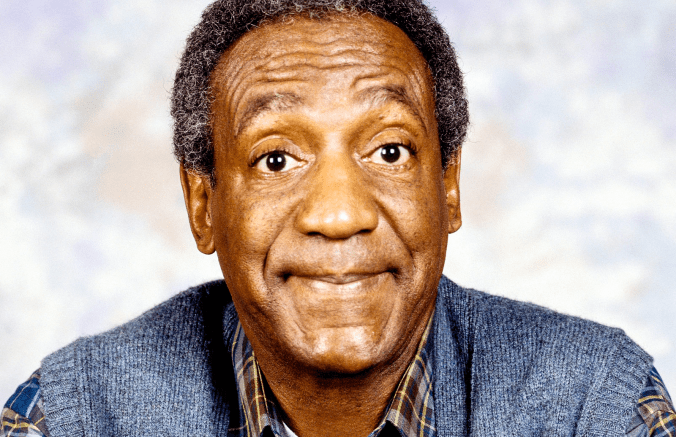
Ethics Quiz: Bill Cosby’s Bias Argument

As Bill Cosby’s latest trial gets underway, “the Cos” and his lawyers contend that the presiding judge should recuse himself because the judge’s wife is an advocate for sexual assault victims. Judge Steven O’Neill’s wife, Deborah O’Neill, is a social worker on a University of Pennsylvania special staff that advocates for students who are alleged victims of sexual assault. According to the motion for the judge to recuse, she has donated money to a victims advocacy group that plans an anti-Cosby rally outside the courthouse during Cosby’s trial.


Your Ethics Alarms Ethics Quiz of the Day:

Should the political activities, public statements or occupation of a spouse be considered a sufficient conflict of interest to mandate judge’s recusal?

Continue reading →

Morning Ethics Warm-Up, 3/24/18: Ethics Musings While Not Marching [UPDATED]

A Good Saturday Morning To All!

[If you had a speech impediment and lisped your “s’s”, would you choose this song as your only solo among the repertoire of your singing group? Why didn’t Karen tell her bother? This has mystified me for decades…]

1  It’s irrational and pointless fury day in D.C. Today hundreds of thousands of intellectually dishonest, ignorant or purely emotional citizens will be doing the equivalent of screaming at the sky to call for “something” to be done about gun violence., because “think of the children.” Yes, I think that’s a fair characterization.

Given the chance to suggest actual measures that would stop the equivalent of the Parkland shooting, one of my usually rational but currently virtue-signalling-to beat-the-band friends really made this pathetic argument in response to a Facebook post that was a shorter, gentler version of what I just posted on Ethics Alarms: ‘Where is your empathy? Would you feel this way if your son had been killed in the Parkland shooting?”

Can you believe that? “How would you feel if you were so emotionally ruined, angry and despairing that you couldn’t think straight?” Why, I believe that I would be so emotionally ruined, angry and despairing that I couldn’t think straight—and thus useless to any serious and objective public policy discussion. As I told my friend, when “Why can’t you be irrationally and emotionally biased like the rest of us?” is your reflex rebuttal, you’ve got nothin.

2. Related: YouTube is banning gun instructional videos. This a part of a growing trend in the online platform world to attempt to constrict information and discourse according to ideology and partisan preferences. There is no more justification for banning how-to videos about guns than there is for banning how-to videos for chain-saws. The social media companies are going to have to be regulated as common carriers, or the right of free speech and access to information will be slowly strangled by these left-wing, high-tech, useful idiots.

3. From the ” Tragic Misunderstandings of the Cognitive Dissonance Scale” files. Lindsay Lohan is the new spokesperson for Lawyer.com. What, O.J. wasn’t available? Continue reading →

Morning Ethics Warm-Up, 3/22/18: Nanoo Nanoo, And The Oxford Comma

Good Morning!

1 . From the “Oh, Come on!” files. As I have mentioned here several times, Georgetown Law professor Professor Paul Butler decided to ambush me with a cheap shot on NPR last year, interjecting “Oh come on!” as I was explaining how a celebrity or prominent man’s inappropriate sexual advances could be initially welcome to a female subordinate, and then later, after, say, the same celebrity is regarded as toxic by that woman’s peer group, what were originally “welcome” (or not unwelcome) attentions could become retroactively unwelcome, prompting an accusation of sexual harassment. I was 100% correct. Last month, in an email exchange on ten topic with the NPR host, I was told that both she and the professor thought I was making excuses for Donald Trump.

Thus does Trump hate and bias make intelligent discourse increasingly difficult. If I had used Al Franken as my example instead of the President, I presume my commentary would not have been kneecapped. But I digress…

In jaw-dropping revelations in a new book coming out in May, actress Pam Dawber and others describe how co-star Robin Williams often treated her and other actresses on the set of “Mork and Mindy.” The book discusses Williams’ “improvisations”…

[M]any of these additions were sexual and directed at the women in the cast, such as when he goosed the actress who played Mindy’s grandmother with a cane.

[Director Howard] Storm said: ‘I’m standing there watching this and I’m thinking, “oh my god” and I just laughed. I thought she was going to turn and say: “How dare you stick a cane in a woman’s ass?” That sweet old lady.’There was nothing lascivious about it, in his mind. It was just Robin being Robin, and he thought it would be funny. He could get away with murder.’

Other times Williams would grab Dawber’s bottom or her breasts simply because he was ‘bored.’ 

‘He’d be doing a paragraph and in the middle of it he would just turn and grab her ass. Or grab a breast. And we’d start again. I’d say, “Robin, there’s nothing in the script that says you grab Pam’s ass.” And he’d say: “Oh, ok,”‘ Storm added.  

Garry Marshall, the producer of the show, said: ‘He would take all his clothes off, he would be standing there totally naked and she was trying to act. His aim in life was to make Pam Dawber blush.’

But Dawber remained unfazed, she admits: ‘I had the grossest things done to me – by him. And I never took offense. I mean I was flashed, humped, bumped, grabbed. I think he probably did it to a lot of people…but it was so much fun.

‘Somehow he had that magic. If you put it on paper you would be appalled. But somehow he had this guileless little thing that he would do – those sparkly eyes. He’d look at you, really playful, like a puppy, all of a sudden. And then he’d grab your tits and then run away. And somehow he could get away with it. It was the Seventies, after all’.

Wait: if it was the 70’s, does that mean that in the parallel universe where Robin Williams has conquered his demons and is running for the U.S. Senate as a Republican (those parallel universes are funky, let me tell you), Dawber couldn’t come out and destroy his candidacy by describing his outrageous behavior? Does it mean everyone would say that she was being unfair, and that she wouldn’t be lionized as another #MeToo hero?

Continue reading →

Comment Of The Day: “When Ethics Alarms Don’t Ring: Snapchat Approves A Domestic Abuse Game Ad”

Video games and their effect on societal violence have been mentioned in the comment threads of several recent posts of late, so Michael West’s essay on the topic is especially timely (even if my posting of it is tardy). I am dubious about claims that forms of entertainment warp healthy minds, as I am old enough to have seen a series of modes and genres be condemned from various sides of the political spectrum as turning children into violence-prone monsters. Even the Three Stooges once were fingered as making kids unfeeling sociopaths. I’m also historically astute enough to know dime-novels about bloody Wild Bill Hickock shootouts, pulp novels with half-naked blondes on the cover and  EC comics about shambling, face-eating corpses were similarly accused. My son played “The Godfather” video game, and five earlier versions of the “10 Violent Video Games” the Parenting website says to avoid, all with my blessing.

When my son was 18, he bought a gun, too. I’m not worried. He has many friends, a strong peer group, he has strong ethical values and character, and is kind and thoughtful. That is not to say that every new social influence is different, and that attention must be paid.

Here is Michael West’s Comment of the Day on the post, When Ethics Alarms Don’t Ring: Snapchat Approves A Domestic Abuse Game Ad

Video games have been out nationally for quite a while. Even video games that have abstract versions of violence…like Mario Brothers or Donkey Kong…and I mean old school versions of those games like I used to play on Apple IIe. But for us to seriously contemplate capital V, capital G, capital V Video Game Violence as a force affecting the acculturation of our youths, we ought to fast forward in time specifically to “realistic” video game violence. An estimate that will be off plus or minus a few years, the *mid* 1990s is when our culture saw First Person Shooters enter the market, with early favorites like “Doom” and “Wolfenstein 3D” for desktop computers and ultimately entering the console market. In other words, Video Game Violence is still a young force in our society. This makes measuring its effects a bit problematic.

As we raise our young, they are acculturated through several INPUTS…all of which communicate to some level or another the values that the culture espouses OR worse, inadvertently communicates values the culture notionally DOES NOT espouse, but accidentally promote. In a manner of speaking, “we are what we eat”. My personal take up front is that YES, video game violence, as a subset of ALL informational inputs DOES affect each individual’s acculturation. The real questions are, “how much” and “are it’s effects mitigated by other inputs”?

I would think that for video game violence to start acculturating the young towards violence, they would need to be inundated by it and have few effective counter-acculturating forces in their lives teaching them that wanton and purposeless violence is bad. For the first 20 years of video game violence, my gut tells me we can explain away its effects as having been minimally noticeable without deeply searching each individual or practically non-existent. Children of the early years of video games had plenty of other inputs in their lives as well as outlets for their minds at a vastly greater ratio than the violence int he games…first and foremost active and attentive parents.

That leaves us really with only about 15 years of any generation that could be said to be inundated by truly graphic depictions of limitless violence…most of those age cohorts are still too young to see how they turn out as adults. Again, my gut says that you’d see actual correlations, if they exist, in about another decade. And even then, I don’t think we’ll find a direct causal effect between video game violence and individuals acting on violent tendencies *except in marginal cases*. Continue reading →

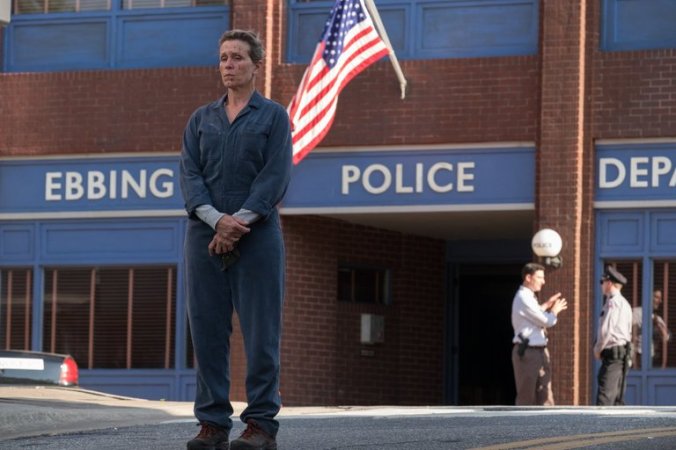
Ethics Review: “Three Billboards Outside Ebbing, Missouri”

I watched last year’s “Three Billboards Outside Ebbing, Missouri,” twice, just to make sure it was the profound ethics movie I thought it was. It is. None of the reviews described it that way, of course. Here is the New York Times:

“The movie opens on low boil with Mildred behind the wheel of her station wagon near three derelict billboards…she uses the billboards to announce her crusade … a way to get things jumping (the investigators, the tale) and splash some foreboding on an outwardly pacific scene. Much of the story involves the ripples of outrage, confusion and buffoonery that the billboards inspire and that soon envelop almost everyone Mildred knows. Months after her daughter’s death, grief has walled her in; isolating and seemingly impenetrable, it is inscribed in the hardness of her gaze and in her grim new identity as a mother of a dead girl. The billboards turn that grief into a weapon, a means of taking on the law and assorted men — a threatening stranger, a vigilante dentist and an abusive ex (John Hawkes) — who collectively suggest another wall that has closed Mildred in….”

None of which addresses what is remarkable about the film, which is that it shows what causes our ethics alarms not to ring—Frances McDormand as Mildred and Sam Rockwell as Dixon, a racist and vicious deputy, in particular demonstrate  what it is like to be driven by non-ethical considerations of the darkest and most passionate sort—and more important, what causes them to start ringing again. Most reviewers described this as a dark and depressing film. The ethics alarms are mostly off again as the film ends, and that is ominous, but its main ethics message is uplifting in many ways. “Three Billboards” teaches us that even broken, ignorant, alienated human beings have the capacity to access their innate instincts for compassion, justice, forgiveness, selflessness and kindness, and even when our ethical selves seem permanently overcome and decisively defeated, they can burst out again, in control, salvaging what’s best about the species.

There is a moment early in “Three Billboards” that signals that it is not only going to show us what monsters anger and grief can transform us into, but also that what George Washington’s list of 110 Rules called “that little spark of celestial fire called conscience” is remarkably resilient.  A sheriff—the ethics compass of the story, played by Woody Harrelson— visits Mildred after her billboard messages embarrass him and roil the town. She is hard and cold as marble as he tries to explain his failure to find her daughter’s rapist/killer, even after he reminds her that he is dying of cancer. Suddenly the sheriff has a violent  spasm: he coughs up blood on himself and Mildred. And we see her fury evaporate in an instant. The compassionate and caring mother she once was emerges, if only for a few moments. ( McDormand is such a superb actress that she pulls off the sudden transition convincingly and movingly: you believe it, though it is like watching Mr. Hyde turn into Dr. Jekyll in the snap of a finger.) Later, when again her fury has been aroused, we see the same woman firebomb the police station and watch implacably as her nemesis deputy burns. A warning: just because the ethics alarms can ring doesn’t mean they are working well enough.

Sam Rockwell’s character also reveals surprisingly that his ethics spark has not been entirely extinguished, again thanks to a catalyst supplied by the sheriff. This transformation caused considerable  criticism of the film among critics and artists in Hollywood, and some attribute the film’s failure to win the Best Picture Oscar to the fact that a racist is redeemed and revealed to have an ethical core. But except for the sociopaths and psychopaths among us, admittedly a disturbingly large group, we all have that ethical core. We have the ethics alarms too, ready to be re-activated, even if they aren’t in perfect working order. Yes, this is  even true of racists. So much of our current political discourse is driven by the false construct that a single belief or a single lapse of reason marks an individual as irredeemable. Its easier to marginalize and demonize them that way. But it isn’t true.

Indeed Ethics Alarms often declares certain conduct and words as signature significance, proving that an individual is unethical because such actions and thoughts are alien to ethical human beings. “Three Billboards Outside Ebbing, Missouri” reminded me that people may be unethical–Mildred and Dixon, the deputy, could never be called ethical, for ethical people don’t set police stations on fire or throw young men out of second story windows, as Dixon does—but that even unethical individuals can find their ethics if you give them a chance.

And if they can find their ethics, so can all of us, and so can society. There is hope.

________________________

Addendum: I cannot leave “Three Billboards” without a salute to one of its most powerful scenes, when Mildred tells a priest why she doesn’t care what he has to say when he comes to her home to admonish her for the messages on the billboards:

Bingo.

Comment Of The Day: “Morning Ethics Warm-Up, 3/6/ 2018: “Remember the Alamo” Edition” (#2: “The Option”))

Commenter Zanshin returned to expand on his answer to the hypothetical I offered a Boy Scout troop based on one of my late, lamented professional theater company’s many dilemmas over the years. Here is the situation again…

The Option

Your professional theater company has limited funds, so it offers its actors an option. They may choose a flat fee for their roles, or get a percentage of the show’s profits, if there are any, on top of a much smaller base fee.

The company just completed an extremely profitable production, the biggest hit your theater has ever had. Nine of the show’s ten cast members chose the percentage of profits option, a gamble, because most of the shows lose money. One, the star, who you know could not afford to gamble, took the flat fee for the role. After the accounting for the production is complete, you realize that every member of the cast will make $1000 more than the star, because of the show’s profits.

Question 1: What do you do?

  1. Give him the extra $1000. It’s only fair.
  2. Pay him the flat fee. A deal’s a deal.

Question 2: You remount the production, and the exact same thing happens. The actor chooses the flat fee, the show is again a huge money-maker,,and the rest of the cast will make much more than him because they chose the percentage. Do you give him the extra amount again?

  1. No. Now he’s taking advantage of me.
  2. Yes. Nothing has changed.

You can read the initial responses here, and check the poll results.

And here is Zanshin’s Comment of the Day, on the post Morning Ethics Warm-Up, 3/6/ 2018: “Remember the Alamo” Edition:

Here are my reflections on this ethical (hypothetical) issue.

Question 1: Some personal background influencing my thinking: In the early years of my career I worked at a small company (about 40 employees). After having worked there for 2 years the owners sold the company, probably for a very good price, because they decided to give every employee about $ 200 for each year that he had worked with the company. Some of my colleagues worked with them for 15 years and more.

For me it would be a nice $ 400 but to my surprise I received $ 1.000 with a handwritten note which stated something like, “We’ll give you $600 extra because we are very pleased with your performance with us. Please do not discuss this with your colleagues.”

Back to the question.

I would go for a third option. First, Pay him the flat fee. A deal’s a deal.

But at the same time, give him in some personalized way, about $500 extra.With personalized I mean, fitting the situation. Why couldn’t he gamble with his reward? For instance, his car is broke, he needs it very bad for whatever reason. Offer to pay a part of the bill, etc.

Question 2: In my opinion the set-up of the first situation (question 1) was already tainted. Just as we expect of journalists that they don’t “interview people who are drunk, drugged, impaired, or not in a mentally or emotionally stable state.” one should also not ask an employee who you know could not afford to gamble to just do that, gamble with his income. Continue reading →

Morning Ethics Warm-Up, 3/16/2018: First They Came For Wonder Woman….[CORRECTED and UPDATED]

Good Morning

… to end a frantic ethics week…

(An unusual number of the items this morning deserve a free-standing post. I’m not sure what to do about that; it’s been happening a lot lately.)

1 Not fake news, just a false news story that everyone ran with...Oops. All the angry condemnations of new CIA director designate Gina Haspel and President Trump (for nominating her, along with existing) were based on a mistake. From ProPublica:

On Feb. 22, 2017, ProPublica published a story that inaccurately described Gina Haspel’s role in the treatment of Abu Zubaydah, a suspected al-Qaida leader who was imprisoned by the CIA at a secret “black site” in Thailand in 2002. The story said that Haspel, a career CIA officer who President Trump has nominated to be the next director of central intelligence, oversaw the clandestine base where Zubaydah was subjected to waterboarding and other coercive interrogation methods that are widely seen as torture. The story also said she mocked the prisoner’s suffering in a private conversation. Neither of these assertions is correct and we retract them. It is now clear that Haspel did not take charge of the base until after the interrogation of Zubaydah ended.

ProPublica, unlike, say, CNN, knows how to accept responsibility for a bad journalism botch. Stephen Engelberg, editor-in-chief, sums up the episode after explaining how the story was misreported:

A few reflections on what went wrong in our reporting and editing process.

The awkward communications between officials barred from disclosing classified information and reporters trying to reveal secrets in which there is legitimate public interest can sometimes end in miscommunication. In this instance, we failed to understand the message the CIA’s press office was trying to convey in its statement.

None of this in any way excuses our mistakes. We at ProPublica hold government officials responsible for their missteps, and we must be equally accountable. This error was particularly unfortunate because it muddied an important national debate about Haspel and the CIA’s recent history. To her, and to our readers, we can only apologize, correct the record and make certain that we do better in the future.

Perfect. This is a news source we can trust.

2. That was ProPublica. This is CNN (The Chris Cuomo post was here originally, but it got so long I posted it separately.) Continue reading →

When Ethics Alarms Don’t Ring: Snapchat Approves A Domestic Abuse Game Ad

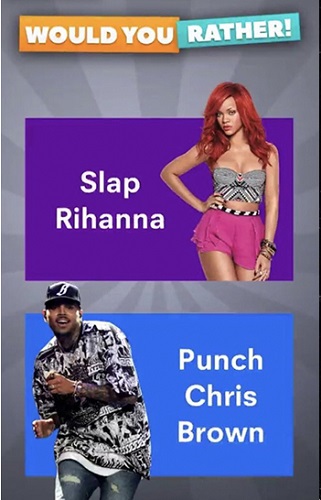
On February 8, 2009, Chris Brown beat up pop megastar and then-girlfriend Rihanna. Five months later, Brown pleaded guilty to a felony assault and was sentenced to community labor, five years probation, and domestic violence counseling. Naturally, someone looking to make a buck off of the millions of ethics dunces who use social media recognized this as an appropriate basis for a game, and paid Snapchat to run their ad, which you can see above.

The “Would You Rather” ad was removed earlier this week, and Snapchat released an apology, saying “The advert was reviewed and approved in error, as it violates our advertising guidelines.” What does “in error” mean in such a case, though? It means “we have erroneously been hiring people at high levels with the ethical sensitivity of mollusks, and upon reflection, this was a miscalculation.” What  deadness of soul and mind could ever ever explain someone, indeed a chain of employees, seeing an ad mocking domestic abuse and reacting by saying, “Great! Put it up and bill ’em!”

Advertising on Snapchat is purchased through a self-serve advertising platform and subject to review,  the company says. Review by incompetents,  creeps and fools, apparently. Unfortunately, they are far from unique.

Rihanna posted a rebuke to Snapchat on Instagram, writing in part, Continue reading →