Reflections On The Ethical Holiday

Christmas


“Christmas is built upon a beautiful and intentional paradox; that the birth of the homeless should be celebrated in every home.”

—G.K. Chesterton.

“It’s Christmas Eve. It’s the one night of the year when we all act a little nicer, we smile a little easier, we cheer a little more. For a couple of hours out of the whole year we are the people that we always hoped we would be.”

— Frank Cross (Bill Murray) in “Scrooged”

CHARLIE BROWN: I guess you were right, Linus. I shouldn’t have picked this little tree. Everything I do turns into a disaster. I guess I really don’t know what Christmas is all about. Isn’t there anyone who knows what Christmas is all about?

LINUS: Sure, Charlie Brown. I can tell you what Christmas is all about.  Lights, please?

“And there were in the same country shepherds abiding in the field, keeping watch over their flocks by night. And lo, the angel of the Lord came upon them, and the glory of the Lord shone round about them. And they were sore afraid. And the angel said unto them, ‘Fear not, for behold, I bring you tidings of great joy which shall be to all people. For unto you is born this day in the City of David a savior, which is Christ the Lord.’ And suddenly there was with the angel a multitude of the heavenly host, saying, ‘Glory to God in the highest, and on Earth peace, goodwill toward men.’”

That’s what Christmas is all about, Charlie Brown.

—Charles M. Schulz

“Our hearts grow tender with childhood memories and love of kindred, and we are better throughout the year for having, in spirit, become a child again at Christmas-time.”

― Laura Ingalls Wilder

“Then the Grinch thought of something he hadn’t before! What if Christmas, he thought, doesn’t come from a store. What if Christmas…perhaps…means a little bit more!”

― Dr. Seuss, “How the Grinch Stole Christmas”

“Want to keep Christ in Christmas? Feed the hungry, clothe the naked, forgive the guilty, welcome the unwanted, care for the ill, love your enemies, and do unto others as you would have done unto you.”

― Steve Maraboli, in “Unapologetically You: Reflections on Life and the Human Experience”

“My idea of Christmas, whether old-fashioned or modern, is very simple: loving others. Come to think of it, why do we have to wait for Christmas to do that?”

― Bob Hope

“I heard the bells on Christmas Day
Their old, familiar carols play,
And wild and sweet
The words repeat
Of peace on earth, good-will to men!”

― Henry Wadsworth Longfellow

“There are many things from which I might have derived good, by which I have not profited, I dare say,’ returned the nephew. ‘Christmas among the rest. But I am sure I have always thought of Christmas time, when it has come round—apart from the veneration due to its sacred name and origin, if anything belonging to it can be apart from that—as a good time; a kind, forgiving, charitable, pleasant time; the only time I know of, in the long calendar of the year, when men and women seem by one consent to open their shut-up hearts freely, and to think of people below them as if they really were fellow-passengers to the grave, and not another race of creatures bound on other journeys. And therefore, uncle, though it has never put a scrap of gold or silver in my pocket, I believe that it has done me good, and will do me good; and I say, God bless it!”

― Fred, Scrooge’s Nephew, in Charles Dickens’ “A Christmas Carol” Continue reading →

Ethics Observations On The Washington Post’s “Ted Cruz’s Kids Are Monkeys” Cartoon Uproar

ted-cruz-monkey-cartoon

Here’s what you need to know: Ted Cruz launched a political ad  that features the Texas Republican reading parody Christmas fare to his two young daughters, Caroline and Catherine, stuff like “The Grinch Who Lost Her Emails.”  Washington Post political cartoonist Ann Telnaes reacted with the drawing above, titled “Ted Cruz uses his kids as political props.” The children are portrayed as monkeys. Telnaes clearly knew she was on thin ice, and accompanied the cartoon with a justification (now pulled: if anyone has the whole text, I’d like to see it) saying in part,

“But when a politician uses his children as political props, as Ted Cruz recently did in his Christmas parody video in which his eldest daughter read (with her father’s dramatic flourish) a passage of an edited Christmas classic, then I figure they are fair game.”

Note: the daughters are 7 and 4.

Cruz cried foul in a tweet, and the news media and internet was beginning to tilt hard against the Post, when editor Fred Hiatt pulled the cartoon, writing,

“It’s generally been the policy of our editorial section to leave children out of it. I failed to look at this cartoon before it was published. I understand why Ann thought an exception to the policy was warranted in this case, but I do not agree.”

And here we are.

Observations: Continue reading →

Christmas Music Blues

Who are those guys?

Who are those guys?

At the rate things are going, I am certain that before long no pop vocal interpretations of traditional Christmas music will be easily accessible on the radio. This is a cultural loss—it’s a large body of beautiful and evocative music—and someone should have, one would think, the obligation of preventing it. But I have no idea who.

I realized this when I felt myself getting nostalgic and sad as I listened to a series of “Christmas classics.” For one thing, they all reminded me of my parents, whose absence beginning in 2011 permanently kicked my enjoyment of the season in the groin. For another, all the artists were dead. Bing: dead. Frank: dead. Andy Williams, Nat King Cole, Dean Martin, Judy Garland, Burl Ives, Gene Autry, The Andrews Sisters, Perry Como, Elvis, John Denver–dead. Long dead, in most cases. Christmas has become a serenade of dead artists. Except for the narrow range of country music stars for those who enjoy “O Holy Night” with a twang, living pop artists don’t sing these songs. OK, Mariah Carey and Michael Buble. Not many others. Sirius-AM was desperate to find living artists that it has been playing the Seth McFarland Christmas album. Seth can sing, but I’m sorry, but it’s hard to enjoy “Silent Night” while picturing “The Family Guy.”

Current pop stars are, understandably, looking for new Christmas hits that will be identified with them, and those have always been hard to come by. Bing Crosby made annual recordings of terrible entries in the Christmas song market—I just heard a station play a few of them. Gene Autry too: many of his efforts were bombs, though I rather like this weird one:

Continue reading →

“The Affair” Smears An American War Hero

The General and friend.

                             The General and friend.

“The Affair,” Showtime’s much lauded soap opera, wrapped up its season yesterday, without me. There are some things I won’t forgive, and sliming the legacy and reputation of long dead individuals of character and accomplishment is one of them.”The Affair” was guilty of that the previous week. It is dead to me.

The background: General Omar Bradley is increasingly accorded credit for planning D-Day, and thus is owed a large share of the world’s gratitude for winning World War II. He was not flamboyant like Patton or MacArthur, and had no political aspirations, so despite his remarkable life in service of the United States, Omar Bradley is an undeservedly obscure historical figure. He is, also, beyond any controversy, an American hero.

He also was an especially ethical one, as indicated by three of his better known quotes:

“It is time that we steered by the stars, not by the lights of each passing ship.”

“We have grasped the mystery of the atom and rejected the Sermon on the Mount. The world has achieved brilliance without conscience. Ours is a world of nuclear giants and ethical infants. We know more about war than we know about peace, more about killing than we know about living.”

“Dependability, integrity, the characteristic of never knowingly doing anything wrong, that you would never cheat anyone, that you would give everybody a fair deal. Character is a sort of an all-inclusive thing. If a man has character, everyone has confidence in him. Soldiers must have confidence in their leader.”

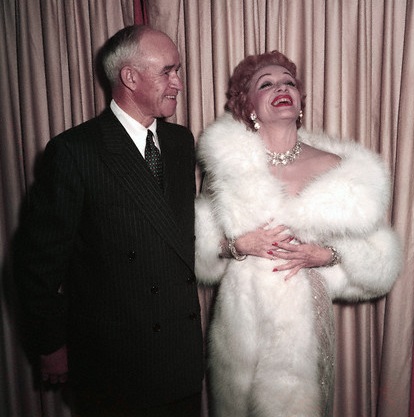
Why the writers of “The Affair” decided smear Bradley, I cannot fathom. Nonetheless, any viewers of the show that watched the penultimate episode and who didn’t know who Bradley was, and many who did, left it with the belief that Bradley, a who by all accounts was faithfully and lovingly married to the his first wife throughout the war and until her death, had an affair with actress Marlene Dietrich, who traveled with the U.S. Army for nearly two years at the end of the war. “The Affair’s” self-obsessed and perpetually horny protagonist, a successful novelist, told his therapist—and boy, does he need one–that his new book would be a historical novel about Omar Bradley. Then he said that he was tempted to skip the affair with Marlene Dietrich, but then that was the most interesting thing about Bradley to him. Continue reading →

CORRECTION! GEICO Ethics Dunce RETRACTED! It’s All Frank Sinatra’s Fault!

Emily Litella1There is apparently a diabolical law regarding Ethics Alarms that the more trivial a subject is, the more likely I will screw it up, or it will be a hoax, or something else. The previous post, chiding GEICO for allowing the lyrics of “You Make Me Feel So Young” to be massacred by Peter Pan in its current TV ad is an epic example.

First, I posted a video of Sinatra singing the song as an example of the right way. It is hard to find a video of anyone BUT Sinatra singing it, for he made it one of his standards. Then LoSonnambulo, a frequent commenter here, properly chides me for using a crooner who regularly changed lyrics as the paragon of lyrical certitude. Yes, that’s pretty stupid. Thus I resolve to change the embedded video, and what do I find? I find that the non-English, slangy abomination, “You make me feel so young, You make me feel so spring has sprung” did not originate with GEICO, or Peter Pan, but Frank Sinatra, who sang the polluted lyric in the earliest recording I could find. It appears to be his invention.

It gets worse. Because Frank sung it like that, everybody started doing it: Ella Fitzgerald, Rosemary Clooney, Jack Jones, everybody.  It’s the wrong lyric, damn it!

But I can hardly blame GEICO for not fixing the version in its ad when most who are familiar with the Sinatra version think those are the lyrics.

Never Mind.

UPDATE (4:00 AM): ARRGH! I just woke up with the song in my head, and realized what Frank was doing, or thought he was doing, with this lyric change. Since I know the correct lyric, I assumed that substituting “so” for “as though” or “like” meant that “so” was supposed to mean “as though” or “like” and so doesn’t mean “as though” or “like,” which is why I also assumed this was some kind of Jersey slang. But no! Frank altered the lyrics more than I realized. What his version is, is a parallel construction comparison:

You make me feel so young,

You make me feel so “Spring has sprung!”

In Frank’s version, “Spring has sprung” is presented as a synonym for “young,” as it replaces “young.” In the original, “You make me feel as though Spring has sprung” is a related but separate thought, as it should be, because feeling young and feeling like it’s Spring are not the same thing. If they were, then so would make lyrical sense. For example, if I write the a song that goes,

You make me feel so old,

You make me feel so Spanish gold…

That works, because Spanish gold is old. But Spring springing isn’t young. It’s a bad lyric change. It makes the song worse.

Nonetheless, I suppose that a singer who didn’t know the real lyrics, and maybe even a listener, would hear the song as making sense, sort of.

There.

Maybe I can get back to sleep now.

Trivial Ethics Dunce That Is Driving Me Crazy Anyway So I Have To Mention It: GEICO

The current GEICO ad campaign, “It’s what you do,” has already scored an ethics foul; the latest one is less substantive. Nonetheless, it is in the increasingly common category of “They just didn’t care,” which is a subset of disrespect and lack of diligence. Besides, it involves a great American song.

In the GEICO ad featuring Peter Pan annoying former classmates at a high school reunion ( the kid playing Peter is terrific), the spot concludes with Peter entertaining the class while flying over their heads with a mike and singing, “You Make Me Feel So Young,” a 1946 classic composed by Josef Myrow, with lyrics written by Mack Gordon. It begins,

You make me feel so young.
You make me feel as though (alt. “like”) spring has sprung.
And every time I see you grin,
I’m such a happy individual.

But for some damn reason, Peter sings,

You make me feel so young.
You make me feel so spring has sprung..

..which isn’t even English, and definitely isn’t the lyric. How hard would it have been to fix this? GEICO just couldn’t be bothered, so the song is misrepresented in its first widespread media us in decades.

Here’s the song sung the right way, Peter, you little snot:

UPDATE: See here.

Sign Language Interpreter Ethics Epilogue: “A Christmas Carol”

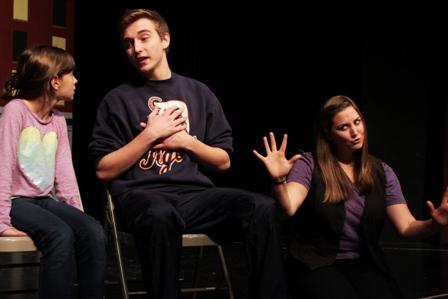
Gavin Alvedy rehearses a scene from the Downriver Youth Performing Arts Center's "Miracle on 34th Street" as DYPAC alum Emily Zaleski signs alongside him. Zaleski, who grew up performing on DYPAC’s stage, now is a certified American Sign Language interpreter with Synergy on Stage and will interpret during the Dec. 8 performance.

Sign language interpreters and their advocates descended on Ethics Alarms in indignation aftert  my March post about “showboating sign language interpreters for deaf audience members.” It took until December for my commentary to reach this passionate interest group, but when it did, I was called many names, including “ablist,” and had to put up with comments like this one from the ironically named “Danny Who Knows About Stuff”:

I would take this “ethics” person seriously if he/she seemed to know anything about the ethics that guide sign language interpreting. And, I suppose it would be helpful if the person understood anything about linguistics, sign language, Deaf culture, or audience response theory. This article is more about the individual than than the issue. In short, this person is no more an ethicist that is Donald Trump.

How I love the quote around “ethics.”

Danny was pretty typical. See, I don’t need to know about any of Danny’s “stuff” as a director of a play or musical. All I need to know is whether a feature of the performance detracts from it by foiling the focus that the staging was designed to facilitate. Every competent director knows that. The needs of the signer and the signer’s much, much smaller audience cannot be permitted to wag the dog, or make the dog trip on its tongue.  or perish of neglect.

“Danny Who Knows About Stuff” became “Danny Who Is Banned From Ethics Alarms,” in case you didn’t guess.

If I had already experienced what I experienced yesterday with a “professional” signer, that March post would have been much tougher. I directed an staged reading of “A Christmas Carol” with a cast of 30 terrific actors for a single free performance for D.C.’s Martin Luther King Library, and was told that the library would be sending a signer. Now, a signer for your usual staged reading is like having a signer for an oil painting. It makes no sense. In readings, the actors mostly read. Presumably the deaf can read “A Christmas Carol” themselves. You could say they would want to see the performers, but  in readings the performers’ acting mostly consists of vocal expression, which the deaf audience can’t hear, and facial expressions, which they won’t see if they are watching the signer. As it happens, I don’t do staged readings like that; there is a lot of movement and staging, so a signer makes some sense.

But they didn’t know how I would stage it.

By the time we got to the final rehearsal, I had forgotten about the alleged signer, who was supposed to at least attend one rehearsal so I could fit her onto the stage where she would be seen and not get in the way. She arrived, for the first time, 15 minutes before the performance, and immediately announced that she didn’t know whether she would be signing or not.  That’s helpful. She also complained that the script was very well adapted for signing (Why, thank-you!) and that the show, at 90 minutes, was impossibly long for a single signer to do: she was waiting to see if a second signer was coming, as she had assumed. Now, nobody warned me that I had to make room for two signers in the small performing space, neither of whom would deign to attend a rehearsal. ( Her complaint about length was also nonsense. I have had single signers for many shows longer than 90 minutes, and they didn’t collapse from exhaustion or finger cramps.) Continue reading →

Comment of the Day: “Comment of the Day: ‘On the Importance Of Christmas To The Culture And Our Nation : An Ethics Alarms Guide'”

Scrooge9

Nesting Comments of the Day again, as Belle’s reflections on how the cultural celebrations of Christmas made her feel “othered” as a child was met with many excellent responses and a lively thread. Pennagain’s (that is to say, the Commenter Previously Known As Penn) comment, however, surpassed tough competition, and thus we have the Comment of the Day on the post, Comment of the Day: “On the Importance Of Christmas To The Culture And Our Nation : An Ethics Alarms Guide”:

First impressions aren’t that easy to shrug off. Belle’s comment that she “was always sure that Ebenezer Scrooge was a commentary on the Jews” reawakened a long dormant spectre of mine. So, Google to the rescue, I went searching for the 65-year-old source and damned if I didn’t find it: My oldest Scrooge image is not from Dickens; it’s from the Rackham illustration of Shylock from Charles and Mary Lamb’s incomparable childrens’ (anyone’s!) introduction to Tales from Shakespeare:

ShylockFiction abounds with misers, a sub-category of villains (often semi-comical: to jeer at), a stock character from Medieval times, especially in children’s stories, who are often more memorable — and way more fun to act out — than are heroes. Miserly villains tend to have the same features and characteristics: mean, suspicious, hoarding good will as well as gold, stooped, narrow-shouldered, and “clay-faced” life-denying penny-pinchers … as is another “Ebenezer” in Stevenson’s “Kidnapped” whose miserliness is ethically and morally beyond villainhood (he changes sides in the middle of a battle), or a father-and-son pair of Chuzzlewits in another Dicken’s classic, or Shylock himself — who has by the end of Scene 1, before he lends the money and (jokingly) adds the “interest” that is the basis of the tragedy, chosen love of money over love of his daughter.

Continue reading →

Comment of the Day: “On the Importance Of Christmas To The Culture And Our Nation : An Ethics Alarms Guide”


Belle is a Jewish reader of the recent Ethics Alarms Christmas post who sent  her comment to me off-site, then agreed to have it posted as the Comment of the Day after I requested permission.

She describes a real dilemma that I am very aware of, and thus am grateful for her raising it clearly and directly. I’ll be back with a bit more at the end, but here is Belle’s Comment of the Day on the post, On the Importance Of Christmas To The Culture And Our Nation : An Ethics Alarms Guide: 

I would like to try to make you understand at least a little why I am SO heartened that my children are growing up with “Happy Holidays” and Chanukah menorahs along with Christmas trees in public places, and how difficult it was for those of us non-Christians who didn’t. I sense that you were so antagonized by your colleague’s aggressiveness and different world view that you couldn’t hear what might have been behind the aggressiveness. You write that “Jews, Muslims, atheists and Mayans who take part in a secular Christmas and all of its traditions—including the Christmas carols and the Christian traditions of the star, the manger and the rest, lose nothing, and gain a great deal. Christmas is supposed to bring everyone in a society together after the conflicts of the past years have pulled them apart, What could possibly be objectionable to that? What could be more important than that, especially in these especially divisive times? How could it possibly be responsible, sensible or ethical to try to sabotage such a benign, healing, joyful tradition and weaken it in our culture, when we need it most?” Continue reading →

Pop Ethics: The Drifters And Musical Self-Plagiarism

Does the song “Sand in My Shoes” sound familiar? It should: it’s an embarrassing 1964 rip-off by the Drifters of the Drifters, written and recorded immediately after their previous song, 1963’s “Under the Boardwalk,” was a big hit. Here, notice the resemblance?

Of course you do; that was the idea. Continue reading →