Ethics Musings Sparked By The Passing Of Ken Beatrice, D.C. Sports Talk Legend

kbeatrice2

If you did not live in the D.C. area in the Eighties, you probably never heard of Ken Beatrice, who just died in a hospice at the age of 72. There was a time when Beatrice was the radio sports authority in pro football crazy Washington D.C., and star of the most popular and talked about call-in show of any kind on the local radio. He deserved his popularity, for Beatrice was smart, hard-working, knowledgeable, professional, and nice. His career, its rise and fall, was also a hard ethics lesson, for anyone paying attention, on why it is that good people do unethical things that hurt themselves more than anyone else.

Beatrice’s acclaim arose out of his astounding knowledge of football at all levels, from the pros to high school. I’ve never cared about football, but I listened to Ken’s show just because he was amazing. From his Washington Post obituary:

“His knowledge of pro football players, current and potential, was nonpareil. Call in to ask about the third-string quarterback at a second-tier college, and Mr. Beatrice could tell you the player’s height, weight and 40-yard dash time.He was so attentive to the game, a sportscaster once told The Washington Post, that he was able to recite a team’s depth chart off the top of his head, naming both the starters and the second- and third-stringers who would eventually replace them.”

This doesn’t even do Beatrice justice: you had to hear him. It was like a Las Vegas magic act. A caller would say, “I graduated from Madison High in Rexburg, Idaho, and I hear they have a running back on the football team that may have pro potential…I can’t think of his name..” Continue reading →

“Chicago Med’s” Stupid Gun Tricks

leafblower

Dick Wolf’ (Law and Order) has a new NBC show, “Chicago Med” (one of a series, including “Chicago Fire,” “Chicago Pet Shop,” or something: I can’t keep track). Tonight, the liberal activist’s hospital drama gave its audience a plot involving an NRA member’s wet dream gone horribly wrong. A man with an assault-type weapon bursts into a movie theater, sparking a mass panic and stampede and causing many injuries and at least one death. A mild-mannered, bespectacled young man in the audience (think Bernard Goetz, because that’s who the series wants you to think of) pulls out his pistol and shoots the gunman. He’s interviewed on the scene by an eager news media, and hailed as a fast-thinking hero.

Ah, but all is not what it seemed, or did seem. The “gunman” was a teen prankster with a website, who was filming material, and carrying not a weapon, but a leafblower. The hero, who had a concealed carry permit (he had been mugged in the past), wasn’t a hero at all, but the shooter of an unarmed kid—you know, just like all these trigger-happy cops. (The Mad Leaf Blower almost dies, but is saved by a liver transplant from a woman who died in the panic he started. Give-me-a-break. ). Now everyone at the hospital is looking at the one-time hero like he smells bad. He is overcome with remorse, and being relentlessly attacked on social media.

So he steps in front of a car, and is killed. Continue reading →

More “Blue Bloods” Ethics

Blue Bloods 2

Tom Selleck’s “Blue Bloods,” or “The Conflict of Interest Family” as we call it around our house, continues to explore difficult unethical dilemmas for an all-law enforcement family. Its latest episode’s message, however, was troubling.

Forget the secondary plot of Police Chief Frank Reagan’s staff squabbles. The meat of this installment was police detective Danny Reagan’s discovery that the well-oiled bank robbery he was on the scene to witness (it’s amazing how often the main characters in procedurals  just happen to be in banks when they are robbed) has been carried out by a group of three military combat veterans—just like Danny!. They have banded together to raise $100,000 so the female member of the trio can pay for expensive medical treatment for her wounded veteran husband. He lost his legs and sustained brain damage in Iraq.

Danny is seething at the injustice of the wounded hero being in an endless line writing for help from the Veterans Administration, and perplexed that the three perps who he has personally identified from his observations of them during the robbery—the loving spouse’s voice, one of the men’s scarred wrists, a neck tattoo on the other—are acting out love and loyalty, not greed. Continue reading →

Just To Wash The Nasty Residue Of Those Absurd Pilgrim-Syrian Refugee Analogies Out Of Your Brain, Here are Some Useful And Informative Silly Refugee Discourses

Go ahead, tell us how you'd keep THESE refugees out, Donald...

Go ahead, tell us how you’d keep THESE refugees out, Donald…

By the time Thanksgiving arrived, the social media memes pronouncing that for anyone who believes accepting Syrian refugees into the U.S. is less than wise policy it was rank hypocrisy to celebrate the holiday had become too much to bear. Granted, this stupid analogy was marginally less stupid than the “Jesus was a refugee so what kind of Christian are you?” stuff put out by OccupyDemocrats, but it was still pure debate pollution. Did the Native Americans know that the Europeans were refugees? Uh, no. Did they have a refugee policy? Nooooo. Was the territory that became the United States being targeting by terrorists? No. Had there been any previous terrorist attacks on Native Americans in North America? No. If the Indians had known about what the Spanish had already been doing to indigenous people, would they have been so welcoming? I think not. If Native Americans today could go back in time and decide all over again whether to allow the “refugees” to settle here, what would they decide?

You betcha.

Are the beneficiaries of a terrible decision ethically obligated to risk their own destruction by making the same mistake?I guess that’s the theory. Pardon me if I’m not persuaded, but you wouldn’t believe the “likes” this argument got on Facebook in its various forms.

Well, President Obama used this same illicit analogy before Thanksgiving, and the progressives and pundits nodded their heads furiously, like turkeys. Oh, snap, Mr. President! You really stuck it to those xenophobes!

President Obama obviously doesn’t care about his rhetoric any more, or think about it, either. He’s not as flagrant as Donald Trump in spewing irresponsible nonsense, but no ethical President should even spark the comparison.

Well, over at Law and the Multiverse, which is another neat website in the Ethics Alarms links, there is a very informative discussion of the refugee status of Superman, an environmental refugee (a planet exploding qualifies its residents) and Supergirl, another Krypton refugee whose status is a bit more complex. Law and the Multiverse features serious legal discussions of the legal issues that would be raised by the conduct and existence of superheroes in the real world. Here’s a sample, from author Kean Zimmerman’s discussion of Supergirl’s status: Continue reading →

Ethics Film of the Year: “Spotlight”

No spoiler alerts necessary; I’m not going to say much about the film’s plot. Just go see it.

Sure, I was predisposed to like “Spotlight.” It’s about Boston, my home town; Fenway Park even appears in it, Red Sox and all.  I had also followed the unfolding Catholic Church sexual molestation scandal there that the Boston Globe broke in 2002. This was the Globe’s momentous investigative journalism series which showed the extent to which high-ranking Church officials allowed child predator priests to continue harming trusting kids, as the Church paid for confidential settlements to victims and transferred the criminal priests to other parishes, where they could, and did, strike again. “Spotlight” tells the story of how a group of Globe editors and reporters finally exposed a local conspiracy of corruption that spread across institutions and professions, and that pointed to a world-wide scandal that still haunts the Catholic Church today.

It’s a better ethics movie than “All The President’s Men,” to which it will inevitably be compared. Whether it’s a better movie or not is a matter of taste. (I liked it better.) Where the movie really shines, however, is how it raises so many of the ethics issues we routinely cover here, such as…

  • Legal ethics: the duty of lawyers to represent clients, confidentiality, and when, if ever, human ethics require the breaching of professional ethics.
  • Ethics corruptors, and what happens when admired, trusted and powerful people and institutions require their followers to show their loyalty by ignoring, rationalizing or covering up wrongful acts.
  • Journalism ethics: the business of journalism’s conflict with the duty of journalists to find and publicize the truth; how ambition, personal biases and non-professional concerns can warp perspective and performance
  • Ethics and religion, hypocrisy, and the institutional utilitarian choice to protect the whole when it means sacrificing individuals
  • Rationalizations, including the Saint’s Excuse and the King’s Pass, in which prominence and “good deeds” seem to justify double standards.
  • Hindsight bias, Moral luck, and more.

Continue reading →

Ethics Quiz: Ann Rice O’Hanlon’s Fresco

Fresco

In 1934, under the auspices of the New Deal’s Public Works of Art program, artist Ann Rice O’Hanlon painted a fresco (the largest ever painted by a woman up to that time) in the University of Kentucky’s Memorial Hall. It has become famous and is much admired by art historians, and thousands of Kentucky students have walked past it through the decades. The large, six section artwork depicts many events, industries, traditions and activities that were significant to the state, invented in Kentucky or by Kentuckians, as well as historical events. Among the scenes shown are black slaves picking tobacco and black musicians serenading whites.

Ann Rice O’Hanlon’s masterpiece became the target of choice at Kentucky as the University ‘s black students were seeking to emulate the power plays by their equivalents at the University of Missouri, Yale, Amherst, Harvard Law, Dartmouth and other institutions. The Kentucky students held a meeting with president Eli Capilouto and argued that the fresco was offensive, as it relegated black people to roles as slaves or servants, and did not portray the cruelty of slavery and the later Jim Crow culture that existed in the state.  Capilouto capitulated, agreeing to move the work to “a more appropriate location.” In the meantime, Kentucky will cover up the 45-by-8-foot fresco while adding a sign explaining why the mural is obscured.

Your Ethics Alarms Ethics Quiz of the Day is this:

Should a university remove works of art on campus because particular groups of students or individual members of such groups find the artwork upsetting, offensive, or a negative influence on their experience?

Continue reading →

Special Post Thanksgiving Food Feature: Store Brand Ethics

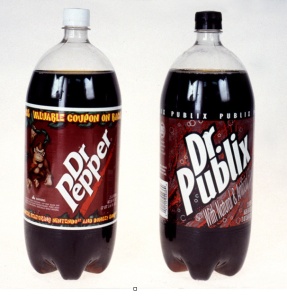
Dr-PublixI may be the only person who cares (other than the company’s that are losing sales to the tactic), but look-alike labeling, branding and packaging are ethicly objectionable if not flat-out fraudulent, and if it isn’t that, it’s a insult to shoppers’ intelligence. I particularly detest kids DVDs with the same titles and similar graphics as Disney DVDs, but containing cheap knock-offs that look like Hanna Barbara cartoons when the cartoonists were having a bad day. Now that my kids video purchasing days are over, it’s over-the-counter drugs and food packaging that trick me when I’m not paying attention and in a hurry, and with me its one or the other, often both. I got caught Wednesday, in fact, buying a Safeway knock-off that had the same colors as the real McCoy.

Thus I’m grateful to Consumerist, which recently asked for readers’ to send in photos of the most ridiculous examples of store brand imitations. With these, it’s not the lame attempts to fool consumers that’s annoying so much as the laziness and the pure lack of respect and creativity involved in the effort or lack of it.

There was a theme on the late, lamented film satire show Mystery Science Theater 3000 when the special effects or other aspects of the cheesy science fiction and horror movies they mocked were particularly ridiculous: “They just didn’t care.”

That’s what’s going on with this Hamberger Helper rip-off…

panburger

and this pathetic “I Can’t Believe It’s Not Butter” clone… Continue reading →

“White Christmas” Ethics (UPDATED)

White-Christmas

I just watched“White Christmas” again when my wife wasn’t around (she hates it), and was again struck by how entertaining it manages to be while making no sense at all and containing one ethics breach or gaffe after another. Ethics Alarms did an ethics review of the film in 2012, and reading it now, I realize I was too kind. This is an update.

Yes, I still get a lump in my throat when the old general, played by Dean Jagger, gets saluted by his reunited army unit, which has gathered at his struggling, snowless, Vermont inn on Christmas Eve to remind him that he is still remembered and loved. Nonetheless, it is by far the strangest of the Christmas movies, and also the most unethical. Though everything works out in the end, the characters in the sloppy plot spend the whole movie lying, extorting, betraying, manipulating and generally mistreating each other, always with no recriminations at all, and usually with no consequences either.

The movie starts out with guilt extortion. Army private Phil Davis (Danny Kaye) rescues his smooth-singing captain, Bob Wallace (Bing Crosby) from being crushed by a falling wall in a World War II bombing raid. (It’s not a plot feature, but the battlefield set for the entire opening sequence is itself unethical by being chintzy even by musical standards: it looks like they are filming a skit for a Bob Hope Christmas Special.  I thought it was lousy when I saw it as a kid.) Phil then uses Wallace’s debt of gratitude to coerce him into accepting the aspiring comic as a partner in Wallace’s already successful civilian act. This is obviously unfair and exploitative, but Bing accepts the ploy with good spirits, and the next we see  the new team of Wallace and Davis knocking ’em dead and rising in the ranks of stage stars. Now they have a show on Broadway, and as a favor to a mutual army buddy, they agree to watch the boonies nightclub act of “The Haynes Sisters” (Rosemary Clooney as Betty. and Vera-Ellen, of wasp-waist fame, as kid sister Judy. Did you know that in the “Sisters” number, Clooney sang both parts? ). Bing is immediately smitten with older sister Rosemary, but there is a tiff over the fact that younger sister Judy fooled them into seeing their act: she, not her brother, had sent the letter asking for a “favor.”

This is the first revealed of many lies woven into the script. This one is a double beach of ethics: Judy uses her brother’s name and contacts without his permission or knowledge, and lures Wallace and Davis to the night club under false pretenses.

Bing dismisses Judy’s cheat by noting that everyone “has an angle” in show business, so he’s not angry. Rosemary is, though, and reprimands Bing for being cynical. That’s right: Vera/Judy uses their brother’s name to trick two Broadway stars into watching their little act, and Rosemary/ Betty is annoyed because Bing/Bob (Bing’s bandleader, look-alike, sound-alike brother was also named Bob) shrugs off the lie as show business as usual. True, Betty is technically correct to flag the Everybody Does It rationalization, but shouldn’t she be grateful that Bob isn’t reaming out the Haynes sisters and leaving the club in a huff? OK, nice and uncynical is better than nice and cynical, but Bob is still giving her and Judy a break.

As we soon find out, however, Betty is prone to flying off the handle.

Continue reading →

Ethics Musings On An Open Letter From A Rejected Son

Patrick Bradley is a New York-based food columnist and founder of TheGayFoodie.com. I’ve never heard of him, which doesn’t matter; somebody does need to explain to me why a writer’s sexual orientation has anything to do with food, and why this isn’t just blatant group identification tribal exploitation of the kind that is dividing this country and culture. But I digress…this stuff annoys me, but I digress.

Bradley sent to the gay website Out an open letter he wrote (and sent? Let’s hope so) to his parents, who refused to attend his wedding to his same sex partner more than two years ago, and who have been estranged from him ever since. I would call the letter an ethics bomb, an action that hurls ethical dilemmas and problems in all directions, for good or ill. I’m publishing it in its entirety, and will have comments afterward.


Dear Mom and Dad,

It’s been 890 days since the day that you both decided not to partake in my wedding. I don’t know why it’s taken me this long to say anything about it. Perhaps I’ve been afraid of what the family will think, what the family might say. Or perhaps I’ve been afraid of losing even more of my wonderful, beautiful family, whom I think about day and night.

But the time is now because I’ve finally grown too tired of the 890 days and nights of being haunted by your presence—by your lack of presence, to be more precise. I’m tired of night after night of dreaming of you. And tonight, I had the most unpleasant of dreams—one that jolted me from my sleep and disallowed me to return to it. So at 6:22 a.m., after little more than three hours of sleep, I’m writing this letter to you—knowing that it is taking from my opportunity of getting a full night’s rest before work; but I’d rather work on little sleep than on little dignity.

As not to keep anyone in the family excluded (any longer), I’m sending this letter to everyone involved. I want everyone to know what had happened on my last visit to you, before my beautiful, wonderful wedding. I’m not writing this letter in an act of vengeance (even though it feels like it is), but rather, I’m doing it because I’m tired of walking on eggshells around my siblings, godchildren, nephews and nieces. I’m tired of having to be “civil” with both of you, “for the sake of the family.” I’m also tired of the unwanted holiday and birthday gifts, and I’m tired of you having the audacity to speak to my husband (and myself) as if nothing has happened. Have you no shame?

Continue reading →

Ethics Dunces: “The Walking Dead”

Fool me once, shame on you...

Fool me once, shame on you…

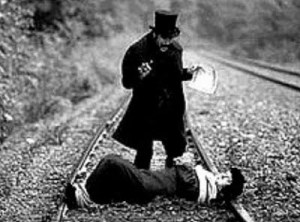
The producers and writers of  AMC’s “The Walking Dead” must be all puffed up with pride, squeezing three weeks of artificially-goosed ratings by faking the death of a major character and then bringing him back safe and sound tonight as blithely as they used to do with Pearl White in the old “Perils of Pauline” serials after the previous episode ended with a buzz-saw  inches from bisecting her, or with a speeding locamotive yards away with Pearl lashed to the tracks. (No, damn you, I’m not THAT old!)

Well, they can be proud without me. I don’t appreciated any show treating me like a fool, and that’s exactly what “The Walking Dead” did with this cheapest of cheap stunts. This is drama, not “Die Hard,” not “Days of Our Lives,” and not Gilbert and Sullivan. Silly resolutions of crises are expected in those and other genres, and an audience is forewarned and consents to the absurdities to come; it’s part of the fun. “The Walking Dead,” in contrast, has presented itself as an uncompromising, raw, nihilistic survivalist study of a hopeless and deadly world where death is lurking everywhere, and even heroes (who are barely heroes anyway) aren’t safe. It is the constant threat of a horrible death that give the show its legitimacy and its characters weight.

Take that away, and the the show is pointless gore, just a special effects exhibition with a repetitious plot attached. I know most people don’t demand integrity from their elected leaders or their entertainment, but I do. The producers and writers of “The Walking Dead” think lying is cute and profitable. I supposed its ovine fans will prove them right.

I say its unethical, and I say to hell with them.

Update: Actor Steven Yuen, who plays the now miraculously alive character, said after the show aired:

“I think it proves that this world still can take that story of the good guy winning sometimes. I really like the fact that it’s not this bent of always seeking out something miserable happening on television or something terrible and sulking on that and rather just really accepting the fact that sometimes good guys survive.”

Baloney. What this proves is that this world, which knows that good guys die all the time, can be gulled into caring about the demise of a fictional character as if that character is worth caring about, when it is is in fact just a tool of commerce and emotional manipulation by a creative force that has no interest in any artistic or philosphicaltruths, only a cynical commercial one.