“CSI” Ethics: Now THAT Was An Unethical Fictional Lawyer…

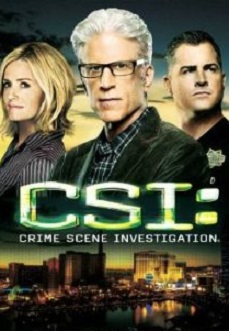
CSIWow. That was one unethical lawyer on CBS’s “CSI” last night, and I mean even before we found out that he had stolen a vile of an Ebola-like virus and used it to murder a doctor, almost setting off a viral epidemic in Las Vegas. (Gee, I wonder where the writers got the idea for that story? See, we don’t have to argue about politicians causing panic over Ebola: the entertainment media is way, way ahead of them.) Among the lawyer’s ethical transgressions:

1. He set out to use his law degree to gain access, through employment, to a company he blamed for allowing a deadly virus to wipe out his family in South America. Needless to say, this is a blatant conflict of interest, indeed, the worst one for a lawyer I have ever heard of in fact or fiction. He wanted to represent a corporate client so he could destroy it.  This is a clear breach of Model Rule 1.7:

(b), a lawyer shall not represent a client if the representation involves a concurrent conflict of interest. A concurrent conflict of interest exists if:

(2) there is a significant risk that the representation of one or more clients will be materially limited by… a personal interest of the lawyer.

Now, that conflict could be waived if the client were fully informed of the fact that its lawyer wanted to destroy it, and the client didn’t mind. That seems unlikely to me.

2. When it looked like his murder was going to set off a deadly epidemic, the lawyer decided to let CSI know that his client the biotech firm had lied about none of its supply of the virus being missing. He knew it was missing, because he had stolen it. The failure of a lawyer to remedy a client’s lie to police about a crime isn’t unethical in a criminal defense setting, but it is unethical if the lawyer would be aiding in another crime by doing so, which was the case here. Moreover, he is involved in the crime, unknown to his client. This would be a disqualifying conflict even if the one described above didn’t exist.

3, He also has an obligation under the ethics rules (Model Rule 1.4) to inform his client about matters relevant to the representation that the client needs to know, like “By the way, about that missing vial of deadly hemorrhagic virus you don’t want to tell the police about? I took it.”

4. THEN, he surreptitiously taped an employee and representative of the company who thought he was also representing her (if he wasn’t, he has an ethical obligation to make that clear—it’s called a “corporate Miranda warning.”) While it is legal in Nevada to secretly tape a conversation you are participating in, it is virtually never ethical for  a lawyer to do this with a client (That’s misrepresentation, violating Rule 8.4 in Nevada) , who is assured that her communications with her lawyer will be privileged, and held in strictest confidence under the attorney-client relationship.

5. Now, if the reason for the lawyer making the recording and handing it over to Ted Danson had been what CSI first assumed it was—that he was trying to save lives in imminent danger and deemed the revelation of a client confidence the only way to prevent it—he would have some support in the ethics rules, for there is an exception to the duty of confidentiality that can justify that.*  That wasn’t his motive, however, at least not all of it. He was also trying to make sure that the company—his client, which he was trying to destroy in revenge for his family’s deaths—was blamed for the virus that he had released. He had no justification for violating Rule 1.6, which says that a lawyer must keep client confidences.

6. Also, since he was representing both the employee he secretly taped and the company itself, he would have been obligated to report what she told him—evidence of a crime implicating the company–to his corporate client before reporting it to authorities, so the corporate client could report the lost vial itself, or at least have that option. If the attorney was going to exercise the “death or serious bodily injury” exception, he needed to tell the client that, too.

Yes, this was a very unethical lawyer.

Then there was that killing part…

* There was no reason to make the recording at all. This was a lame plot manipulation by “CSI.” Danson and his team used the biological residue on the recorder to prove that the same person who made the recording also stole the vial. But the lawyer could have just told the police about what his client admitted regarding the missing vial. No recording was necessary.

Ethics Hero Emeritus: Edna Gladney (1888-1961)

Edna Gladney

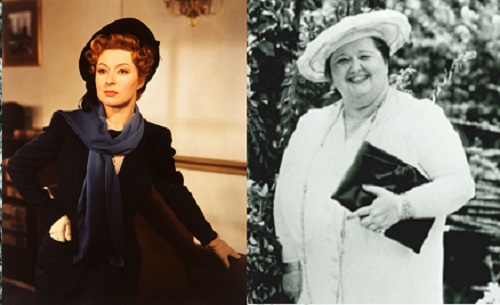
I am ashamed to admit that I never heard of Edna Gladney before I chanced upon a late night Turner Movie Classics showing of the 1941 biopic “Blossoms in the Dust,” which earned the great Greer Garson one of her many Academy Award nominations for her portrayal of Gladney (that’s Greer as Edna on the left). I was unaware of Gladney’s amazing life, legacy and contributions to society because 1) I’m not from Texas; 2) it is hard to learn about great people that society forgets about, and 3) feminists aren’t doing their job, perhaps because a strong and indomitable woman whose life was devoted to saving unwanted children rather than preventing their existence doesn’t interest them as much as it should.

Yet Gladney is exactly the kind of woman whose life should inspire young girls today, and young men too, for that matter. Still,  I recently asked 18 randomly chosen friends and acquaintances who Edna Gladney was, and not one of them knew.

And most of them didn’t know who Greer Garson was, either.

Sigh. Continue reading →

A Young Ex-Actress Is In Crisis: Is The Media Capable Of Kindness? Are We?

Yesterday I flagged an independent film, a black satire, that tells the tale of a decent man who is sent into a homicidal rampage when the cruelty of the culture and especially the media overcomes him. I’m not to that point—yet—but the callousness of the national media in response to what it feels is consumer demand is oppressive.

I am going to omit names, graphics or links here, because I do not want to feed the phenomenon I am decrying. Continue reading →

When A Reality Show And A Self-Promoting Billionaire Are More Trustworthy Than TIME, American Journalism Is Seriously Ill

astrology

This week’s print TIME and the magazine’s website has a story titled “Astrologer Susan Miller On Why You Should Pay Attention to the Lunar Eclipse.” The TIME writer, Laura Stampler,  promotes the astrologer as if she was Nate Silver,  a reliable, respectable expert in a legitimate field  who has something to teach us. Susan Miller is not a reliable, respectable expert. She is an astrologer, meaning that she is as legitimate as a palm reader, a douser, or the Amazing Kreskin. She is a fraud, in a fraudulent field, however ancient or popular. There is no scholarly controversy about this. There is more evidence of the existence of Bigfoot, Nessie, ghosts and flying saucers than there is that astrology is more than pseudo-scientific claptrap. Continue reading →

Ethics Quiz: “God Bless America”

To take this quiz, you have to go to Netflix and watch “God Bless America,” a 2011 black comedy, written and directed by Bobcat Goldthwaite,  that is a strange hybrid of “Network,” “Falling Down” and “Harold and Maude.” Unless, of course, yo9u have already seen it. (For a hint regarding its content and thrust, check the tags, as well as the clip above.)

And your Ethics Alarms Ethics Quiz question is...

Is this an ethical movie?

You might also want to read this related post, from The Ethics Scoreboard in 2004.

Enjoy!

Or not…

Ethics Hero: Mark Cuban

This is really stupid, but imagine if there's  a watch on it! Useful AND stupid at the same time! What a concept!

This is really stupid, but imagine if there’s a watch on it! Useful AND stupid at the same time! What a concept!

Billionaire Mark Cuban is an entrepreneur, investor, and owner of the NBA’s Dallas Mavericks, but in one of his more trivial enterprises (sometimes it appears that he is aspiring to be the next Donald Trump—now why would anyone do that?), he serves as a “shark” investor on the ABC TV reality show “Shark Tank.” There investors and nascent entrepreneurs compete to justify their brilliant new ideas to investors, and there Cuban recently distinguished himself as well as served as a much-needed cultural role model by calling out a fraudulent product while attempting to educate a stubbornly ignorant public.

One contestant, Ryan Naylor, hoped to succeed with what he called “a fashion accessory with health benefits.” Esso Watches, he said, restore the body’s “energy field” and improve sense of balance. You’ve seen the bracelets and necklaces that athletes wear and that work on the same theory, the theory being magic, or, if you will “negative ion technology.” When Naylor handed out samples of his product to the judges, Cuban refused to even take one, saying, “No, I’m allergic to scams. Seriously, this is not new. It’s been disproven. What you saw is the placebo effect. There’s athletes that wear it. It’s a joke. It’s a scam. It’s not real. I’m out. Okay. Thank you.”  Then, having been emboldened, the rest of the judges piled on: there was blood in the water, and you know how sharks are.

In one of the filmed asides to the camera, a discouraged and bitter Naylor blamed his failure on Cuban, who, he suggested, was so emphatic about the fact that his watch’s health claims were nonsense that nobody would challenge him.

Good. Continue reading →

Geoffrey Holder Died, And Most Americans Don’t Care. There Is A Problem.

Does the name Geoffrey Holder mean anything to you? It probably doesn’t. He died this week, at the age of 84, and his passing received less media attention than the death of Paul Revere, of the cheesy Rolling Stones-lite 60’s rock band Paul Revere and the Raiders, and wasn’t within light years of the orgies of sorrow lavished on the passing of Joan Rivers and Robin Williams. hundreds of thousands of Americans, especially African-Americans, wear jerseys honoring NFL wife beaters and child-batterers, who would have crossed the street to shake Geoffrey Holder’s hand or get his autograph.

Boy, are American values screwed up.

Let me tell you about Geoffrey Holder, one of my heroes. Continue reading →

Note To Ethics Dunce Norman Lear: That’s Not “Reverse Racism,” Norman. That’s Just Racism.

Norman Lear, Ethics Meathead..

Norman Lear, Ethics Meathead…

On what has become racism Friday for some reason, I read with annoyance excerpts from Norman Lear‘s new autobiography. The relentlessly liberal ( and smugly so) TV writer, producer/director and liberal activist who created “All in the Family,” “Maude,” Sanford and Son,” and People for the American Way, tells this tale:

“Mike Evans, the actor who played Lionel, the son of George Jefferson on All in the Family, wanted to write as well as act, and I suggested he take a crack at the Good Times pilot script. He brought in Eric Monte, a black writer he wished to team up with. Eric (who later sued me, Jerry Perenchio, Tandem and CBS for something like $185 million) came from the Cabrini-Green housing project in Chicago, so we settled the James and Florida Evans family there. [Editor’s note: The suit was settled for $1 million.] I was charmed by Eric Monte and, having worked for years with Mike, liked him a lot, too. A number of black writers worked with us through the years, but thus far none had created a show. Mike and Eric now had the opportunity to be the first.

They blew it creatively with a poor copycat of a script. But even though what they wrote was a far cry from what we shot, we did not seek to change their credit as the sole co-creators. I could be confessing to a bit of inverse racism here when I admit that it even pleased me to see them credited and paid. That would not have happened, at least not gratuitously, if they were white.”

I have news for Lear: that’s straight up racial bias, also known as racism. He is admitting that he gave excessive credit to two writers for a subpar script because they were black. Continue reading →

Of Black Lungs and Concussions: How Can An Ethical Person Be A Football Fan?

So now you know. And,,,?

So now you know. And…?

The worst thing about pro football is not its wife-beating, gun-toting, child-beating players, or that the league happily has been willing to ignore these little flaws while promoting such flawed men as heroes to America’s young. Nor is the worst thing about pro football the fact that one of its teams has a politically incorrect nickname. No, the worst thing about pro football is that it makes billions from inducing young men to cripple their cognition long before nature would even consider doing it to them, and corrupts its huge national audience by inducing it to not only cheer this process, but pay for it.

Sally Jenkins, in a frank, stark column for the Washington Post, compared the NFL to the coal industry of yore, when minors were dying of black lung and terrible working conditions, and the government had to step in:

Since the NFL insists on behaving like the coal industry circa 1969, the only solution to its problems is for Congress to step in and regulate the business of these 32 billionaire plunderers. This week, the Department of Veterans Affairs brain bank announced that 76 out of 79 deceased NFL players had chronic traumatic encephalopathy, a degenerative brain disease. The price for owning a team just went up. Jerry Jones, Bob Kraft, Dan Snyder, Steve Bisciotti and all the rest, if you want to enrich yourselves at the expense of the ravaged health of others, be prepared to pay for it. Your future is endless litigation and government interference.

The CTE thunderbolt follows closely on the league’s callous handling of domestic violence cases. A new raft of medical investigations and lawsuits say that CTE caused some of these devastating domestic explosions, such as Jovan Belcher’s 2013 murder-suicide. CTE leads to aggression, paranoia, impaired judgment and depression….Here’s the deal: Concussions are the black lung of the NFL. And the league knows it.

Sure it does, but my problem is, so do its fans. The nation needed coal, still needs it in fact, so regulating that industry was reasonable, imperative, and practical. The country doesn’t need to have a deadly sport to watch every Sunday (Thursday, Monday…). Once it could claim that it was innocent, that helmeted players were protected, and that the tragically crippled were aberrations. Not any more. Continue reading →

Comment of the Day: “9 Observations On The Boston Herald’s ‘Racist’ Cartoon”

cartooning

In my post on the matter, I called out to Barry Deutsch, a.k.a. Ampersand, an accomplished political cartoonist and blogger who has graced this space in the past, for his professional reaction to the controversy over the Boston Herald’s Jerry Holbert suggesting, in a cartoon about the recent Secret Service debacles, that President Obama would use watermelon-flavored tooth paste. He was kind enough to register a rapid, and typically thoughtful, response.

Here is his Comment of the Day on my post, “9 Observations On The Boston Herald’s “Racist” Cartoon”: Continue reading →