Caring Letter From A Child Star

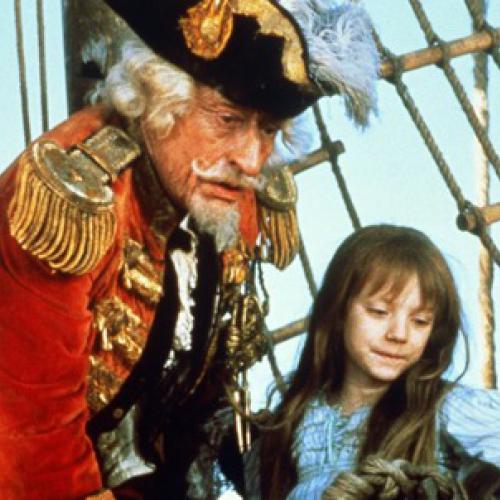
Sarah and the Baron.

Sarah and the Baron.

This remarkable letter is old—2005—but I just became aware of it, and it is an important document in the ongoing problem of the mistreatment of child performers.

I am a fan of film director (and Monty Python member) Terry Gilliam, and a great admirer of Canadian actress/director/political activist Sarah Polley. So naturally I love “The Adventures Baron Munchausen,” Gilliam’s epic fantasy that starred Polley when she was the tender age of 9, and gave one of the most impressive performances of any juvenile actress, ever. In 2005, Gilliam was filming another movie with a young star, and 17 years after working with him, Polley felt obligated to write this letter, which speaks for itself, and eloquently too:

Hi there, Terry.

Continue reading →

Who’s That Woman On The Cover of “O” Magazine?

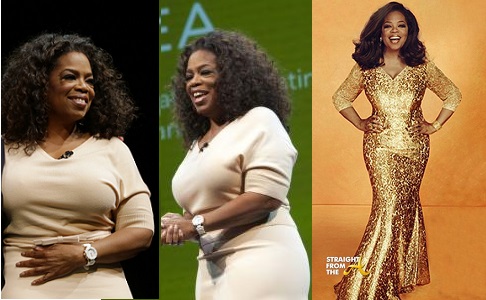
l, c: O yesterday; r: Cover O.

l, c: O yesterday; r: Cover O.

By purest coincidence, I was looking through a magazine rack at CVS yesterday and taking notice of how well Oprah Winfrey has been keeping the pounds off lately. Then, this morning, I saw footage of her walking across a stage to announce her latest venture, something to do with chai tea. Mama mia! The woman I saw smiling and waving, presumably the real Oprah, was easily 50 pounds heavier than the look-alike who has been gracing the cover of recent O’s, though I will say, as mitigation, that the strategically shot March cover has a graphic over OW’s gut.

I could not care less how much Oprah weighs or what she looks like. However, an ethical narcissistic—and what else can you call a woman who publishes a magazine named after herself that has her as the cover model for every single issue?—has limited choices:

  • Keep yourself in fabulous shape, so you are fit to be a cover girl (by your own standards)
  • Don’t put yourself on the cover when you don’t feel cover-worthy
  • Use cartoons, or
  • Let it all hang out.

Not an ethical option: showing your loyal, trusting readers that you look one way, when in fact you look a whole lot fatter.

Yes, yes, I know—photoshopping, airbrushing, make-up, glamor photos, “it’s done all the time.” This is Oprah’s magazine, her image and her body, and pictures communicate. Her covers say “This is what I look like, be like me.” If she doesn’t look like her covers or even close, that’s an outright, calculated lie. It’s really as simple as that.


Ethics Quote of the Day: Composer Mitch Leigh, 1928-2014

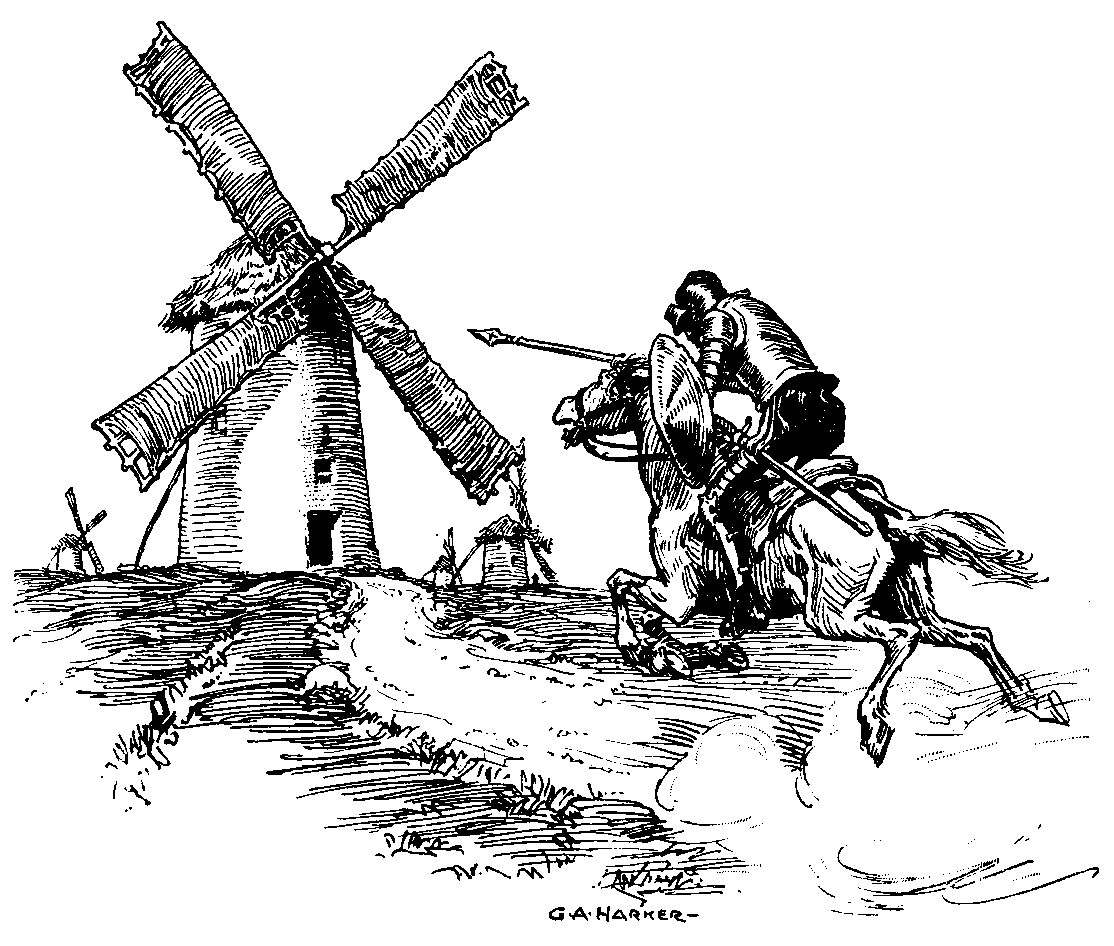
DQWindmill

“I think if you see that no one is going to laugh at you for it, I think the concept of living nicely will be infectious. I believe there is room for the absence of cynicism. This is my final dream before I take the last cab.”

— Mitch Leigh, Broadway composer best knows for the music of “Man of La Mancha”-–and “The Impossible Dream,” of course,  in an interview with the New York Times last year, quoted by the Washington Post in the obituary today for Leigh, who finally caught that cab.

The context of the quote was Leigh’s ad for a residential community he tried to launch on land he had bought in New Jersey. His ads seeking businesses and suburbanites requested that only nice people move in.

Leigh didn’t write the famous lyrics of “The Impossible Dream”—-Joe Darion did. He was clearly influenced by the song, however, beyond the fact that it made him rich. Maybe a society with less cynicism where people put a premium on being nice is an impossible dream; certainly the United States has been treavelling in the opposite direction. As an “unreachable star” to reach for, however, it’s not a bad one at all. In the Sixties, people were inspired by “The Impossible Dream.” Now pretty much everyone snickers at them.

You can’t convince me that’s progress.

“

Comment of the Day: “Noah” Ethics

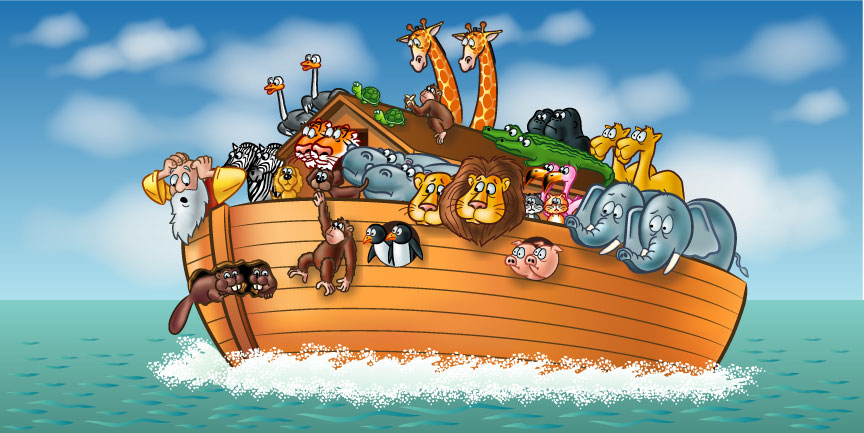
noahs-beaver-problem

Patrice, the Ethics Alarms resident Catholic theologian (and a dear friend), weighs in on the “Noah” controversy, in the this Comment of the Day on the post, “Noah” Ethics:

My undergraduate theology degree is indisputably from a Catholic perspective, although many of the scholars we studied were not Catholic, nor even Christian. I was required to take only 4 semesters of biblical literature, but even those few academic hours of biblical studies taught me enough about biblical analysis to understand how “The Bible” (which, as I’m sure you know, is just a mutually-agreed upon canon of literature which omits as much as it includes) came to be. I often think that it is a shame that true knowledge about biblical literature mostly seems to reside only in academia. Unfortunately, most of the zealots out there would and probably do regard biblical scholarship as an attack on God. The battles over the centuries over biblical inerrancy/infallibility/literalism are merely unread footnotes to most people. Continue reading →

“Noah” Ethics

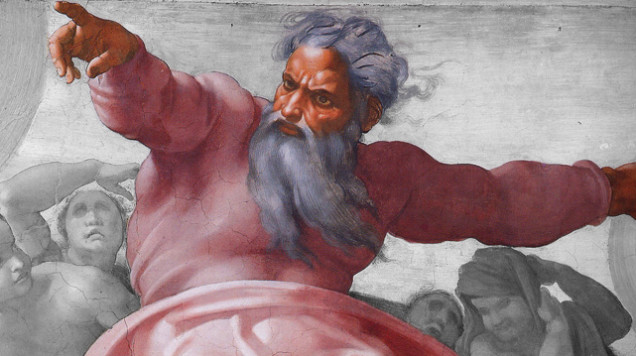
God

There is nothing unethical about “Noah,” the biblical spectacular that harkens back to the grand old days when Cecil B. DeMille reigned supreme. I haven’t seen the movie, and yet I can say that with absolute certainty. The reason I can say it that there is no way on earth that a movie about Noah and the Ark, in this day and age, could possibly be unethical. Even if the Old Testament were literal fact, which it is not, cannot be and in all likelihood was never intended to be, “Noah” couldn’t possibly be unethical, because it is a movie.

Never mind that of all the Biblical fables, with the possible exception of Adam and Eve, the tale of Noah is perhaps the most obviously impossible. The movie is art—of one kind or another—and does not represent itself as a documentary or make any factual assertions whatsoever. Thus it can be distinguished from a truly unethical film like Oliver Stone’s “JFK,” which intentionally misrepresented recent historical facts to “prove” a theory of the Kennedy assassination that was irresponsible and almost certainly false. Is “Noah” dishonest? It is impossible to be dishonest about a presumptively non-historical event about which there is no direct evidence whatsoever, and when there is no intention to deceive. Is it disrespectful? Art has no duty to be respectful. Is it fair? Fair to who? An artist’s stakeholders are those who appreciate his or her art. Does it do harm, or intend to? No. Continue reading →

“My Little Pony” Ethics, Blaming the Victim, and the Dilemma Of The Bully Magnet

Rainbow Dash...awwww!

Rainbow Dash…awwww!

Nine-year-old Grayson Bruce likes “My Little Pony,” a long-running animated children’s TV show that has a cult following in the gay community. He decided to show his affection for the show by carrying his lunch in a “Rainbow Dash” themed bag featuring a popular equine character. Now some of Grayson’s fellow male students at the Buncombe County (North Carolina) elementary school he attends have stepped up their harassment of the boy as a reaction to his tastes in entertainment and accessories.

“They’re taking it a little too far, with punching me, pushing me down, calling me horrible names, stuff that really shouldn’t happen,” Grayson says. It’s not like he doesn’t understand why. “Most of the characters in the show are girls, and most of the people put it toward girls,” he notes. His mother complained to the school, and it says it is taking appropriate measures to deal with the bullies and bullying in general. It also told Grayson to leave Rainbow Dash at home, caliming that it is a “trigger for bullying” and a distraction. Mom, Noreen Bruce, objects. Continue reading →

Ethics Observations On The President’s “Funny or Die” Appearance.

You should watch the entire “Funny or Die” bit here.

1. As has been obvious from the beginning of his administration, President Obama has retained the most incompetent, tone-deaf, leadership-ignorant and inept advisors in recent history, and those advising his predecessors were nothing to be proud of. This means that President Obama has tolerated, and worse, followed the advice of such incompetent advisors. He also selected them. He is accountable.

2. For the President of the United States, in the middle of an international crisis in which his authority, power and stature is central, to submit himself as a prop in a comedy video is irresponsible, reckless, and shows abysmal priorities and judgment. Continue reading →

Ethics Take-Down Of The Year: UCLA Law Professor Eugene Volokh

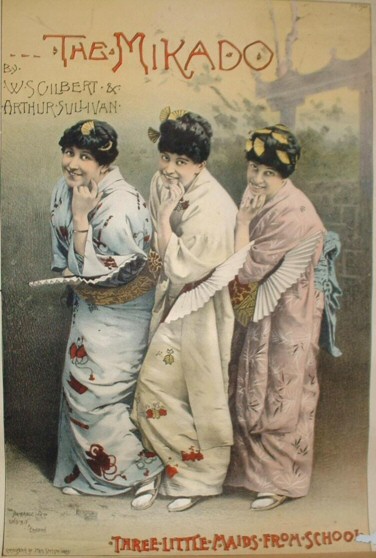
Wait, wait---I think I have it. A Japanese production of "The Mikado" would be a racist appropriation of  a racist appropriation, right?

Wait, wait—I think I have it. A Japanese production of “The Mikado” would be a racist appropriation of a racist appropriation, right?

Here is a 2014 year-end Ethics Alarms Award I’m giving out now, with no worries that I will regret it later.

Salon, the online progressive magazine, published a classic in the revolting genre of self-righteous anti-white racism, a pathological screed titled “Why I Can’t Stand White Belly-Dancers.” (Full disclosure: I can’t stand any belly-dancers). If that per se title doesn’t set off a liberal editor’s ethics alarms, something is seriously wrong, but then, this Salon, a where the literate deranged of the Left hang out to plot the Socialist Revival. The foolish author devotes her article to the crackpot theory that in a pluralistic, free society, it is unethical “appropriation” for whites to engage in art that arose out of a non-white culture:

“Women I have confronted about this have said, “But I have been dancing for 15 years! This is something I have built a huge community on.” These women are more interested in their investment in belly dancing than in questioning and examining how their appropriation of the art causes others harm. To them, I can only say, I’m sure there are people who have been unwittingly racist for 15 years. It’s not too late. Find another form of self-expression. Make sure you’re not appropriating someone else’s.”

Had I encountered this cold, I would have taken it as a conservative parody of minority race-bullying. But I have to restrain my impulse to heap abuse on the author, Randa Jarrar, “a feminist of color,” because Prof. Volokh slices her and her idiocy into tiny, delicious shreds as well or better than I ever could. Here’ s yummy sample (read it all here): Continue reading →

Darling Ellen’s Deceptive Tweet For Samsung

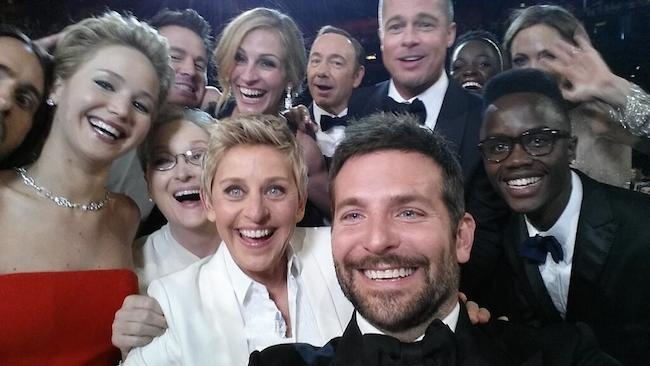
Taken completely spontaneously using a

Taken completely spontaneously using a Galaxy S5 by Samsung. Get yours today!

Ellen DeGeneris is adorable, and as ideal a public face to place on the image of gay acceptance and same-sex marriage as you could concoct in a marketing strategy meeting. She’s funny, she’s friendly, she’s nice: to be threatened in any way by Ellen is to be the epitome of an irrational homophobe.. Her accumulated good  largely insulated her from the negative criticism she earned with a shockingly inept performance as this year’s host of the Academy Awards ceremony. She didn’t exactly make one long for Seth (“We saw your boobs!”) McFarland, last year’s oppressive MC,but watching her—any experienced performer could see the signs of a comic who knew she was bombing and had no idea what to do about it—was uncomfortable when it wasn’t deadly boring.

The one routine that seemed successful was DeGeneris’s successful effort to create the “most re-tweeted tweet of all time,” which she accomplished by dragooning Bradley Cooper, Julia Roberts, Meryl Streep, Angelina Jolie, Brad Pitt, Jennifer Lawrence  Lupita Nyong’o, Kevin Spacey and Jared Leto in to take a selfie with her. It garnered over 3 million retweets at last count. But it was a set-up. This was not just a fun party stunt with friends, which is how it was represented to the audience and indeed to the stars themselves. No, the selfie was part of a very pricey deal between the Academy and Samsung, which sells the recently enhanced Galaxy S5 Ellen used to take the picture.

From the Wall Street Journal: Continue reading →

Being Fair To College Student Ideological Idiocy

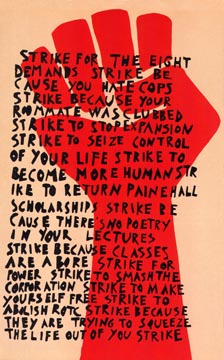
Luckily for him, the bank president who wrote this foolishness in 1969 didn't sign his name to it...

Luckily for him, the bank president who wrote this foolishness in 1969 didn’t sign his name to it…Ah, my old college days!

My attention has been drawn recently to two essays by college students, both presumably sent to me on the theory (or hope) that reading them would kill me. The first, published in the Drexel Triangle (the student paper), argues that stage directors should be prevented from casting actors who look the way the playwright envisioned them. The second, published in the Harvard Crimson, makes an even more disturbing assertion: its author asserts that Harvard should stop guaranteeing professors and students the right to advocate controversial views or pursue research that challenges liberal views and assumptions.

I don’t want to devote the bulk of this post to rebutting these two essays, which are, I think self-rebutting. In the theatrical essay, student actress Alyssa Stover argues that a stage director shouldn’t have the right to decide that, say, casting an Asian dwarf as black boxer Jack Johnson in “The Great White Hope” would lead to a less effective production (that is my example, not hers—she objects to a director of “Cabaret” refusing to cast African-Americans as a matter of historical accuracy):

“These arguments are fundamentally flawed. What the audience wants is almost impossible to measure because the “audience” is composed of anyone who can get a ticket. A director or producer’s right to deny someone a role due to their appearance is debatable because this is a judgment based on one person’s preferences and may not actually create something that is stage worthy. The current status quo allows people to be barred from the stage due to physical “flaws,” as determined by the direction. These judgments are not harmless, and when the issue of race is involved, the problem only gets bigger.” Continue reading →