A Batboy Sells Out His Heroes

Don't trust him, Roy...he's doing research for a book!

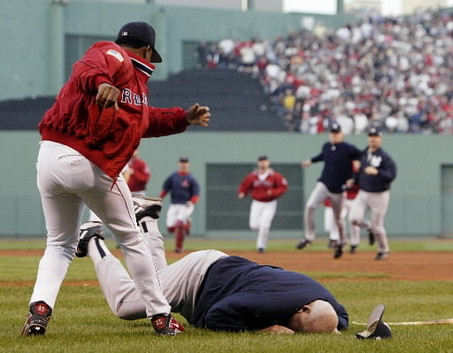
Luis Castillo became a batboy for the New York Yankees at the age of 15, and for eight baseball seasons shared the clubhouse with his hometown heroes. Now he’s cashing in, having written a tell-all memoir of his experiences  that dishes on Derek Jeter, Alex Rodriguez, Roger Clemens and others, all of whom trusted him to be fair, respectful, and discreet.

The recurrent theme from the media’s commentators, which I heard repeated on CNN this morning as it hosted Castillo in his book-hawking efforts (in this case he told an embarrassing anecdote about Yankee catcher Jose Posada) is that “Castillo is able to divulge Yankee secrets in his new memoir because he was part of the last group of batboys who did not have to sign confidentiality agreements.”

This is accurate, but wrong. It is also typical of what passed today as journalistic ethics. Continue reading →

Ethics Dunce: Christine O’Donnell

Like ham and eggs, Abbott and Costello, or motherhood and apple pie, “dunce” and Christine O’Donnell will forever be paired. Why her embarrassing run for the U.S. Senate didn’t consign her to permanent obscurity I do not know, but she was back in the public eye again tonight, on an apparently slow day for getting guests for Piers Morgan, to talk about her new book. When the host dared to stray into subject matter O’Donnell didn’t want to talk about, however, she quit the interview, leaving Morgan with dead time and an empty chair.

There is no excuse for this abominable behavior. Morgan was not being rude, nor was he straying from ethical interview practices. An interviewee does not have the right to control an interview, and a public figure who is asked about public statements and the contents of a book bearing her name may not call “foul” with any justification. As for walking out in the middle of a televised interview, O’Donnell conduct is indefensible–unfair to her host, disrespectful of her audience,  uncivil, and cowardly

Morgan deserves some of the blame for agreeing to waste airtime on someone who has proven beyond any question that she possesses neither the skills, talent, intelligence, character or judgment to even qualify for D -list celebrity status, much less to be taken seriously as a political figure.

She is, in short, a dunce–ethically, socially, and intellectually. After this performance, anyone who books her for anything other than a “Dunk the Witch” carnival attraction deserves whatever they get.

Would Dennis Rodman Qualify for the Baseball Hall of Fame?

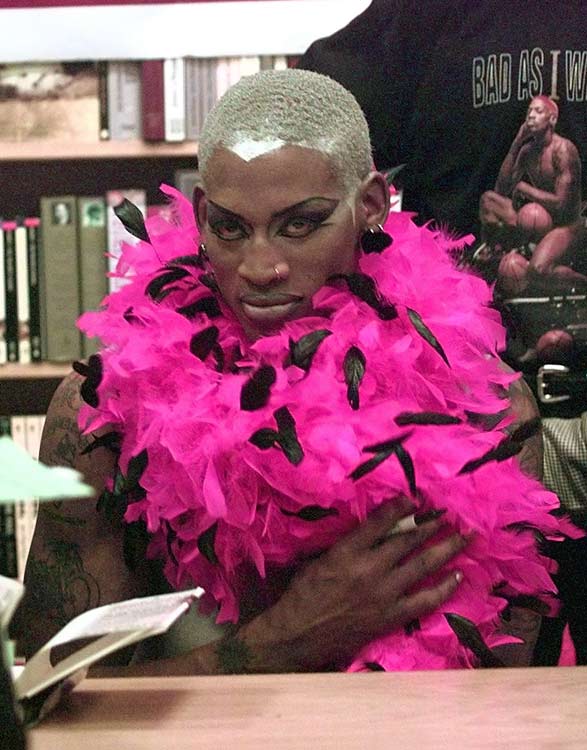
Dennis Rodman, out of uniform

Of course not. Dennis Rodman didn’t play baseball. He was a pro basketball player, and as of yesterday, an inductee into the NBA Hall of Fame for his exploits on a basketball court. There is no question that he is eminently qualified for admission to the NBA Hall of Fame, because the NBA Hall of Fame doesn’t care if players are thugs, drunks, scofflaws, deadbeat dads and couldn’t define sportsmanship with a dictionary as long as they can shoot, score, pass, dribble and block shots.

The Major League Baseball Hall of Fame at Cooperstown, however, requires that its members demonstrate “integrity, sportsmanship, (and) character,” in addition to outstanding achievements and a remarkable career record.  Because of the steroid era that has rendered a whole generation of players suspect for cheating, an expanding number of baseball greats face being excluded from the Hall because cheating by using substances that are illegal and banned in the sport while implicitly deceiving the public about the use is, by any rational definition, a material breach of integrity and sportsmanship.  The natural reaction by many sportswriters, as in other fields when reasonable standards are routinely violated, is to attack the standards. Why should a sport care about matters like integrity and character? Isn’t it the performance that counts, and winning? Continue reading →

Corey Feldman’s Frightening, Important, Unethical Revelations

Corey Feldman in his prime

Corey Feldman could be the poster boy for troubled ex-child stars. The quirky, funny kid who had major roles in “Stand By Me,” “The Goonies,” and “The Lost Boys” was exploited by his parents, damaged by the industry, and left with an addiction to attention and fame. Feldman, like many other child stars, was never able to transition into adult parts, and now he is 40, still with the hunger for attention and validation that characterizes the breed. He has tried reality shows and low-budget films, and now he is trying to get himself back in the news by making sensational accusations.

In an interview on ABC’s Nightline, Feldman dropped a genuine bombshell, saying…

“I can tell you that the No. 1 problem in Hollywood was and is and always will be pedophilia. That’s the biggest problem for children in this industry. … It’s the big secret.” Continue reading →

Ethics Hero and Artistic Champion: Stephen Sondheim, Defending “Porgy and Bess”

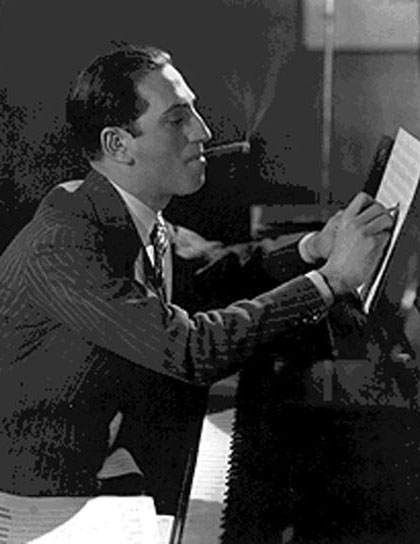
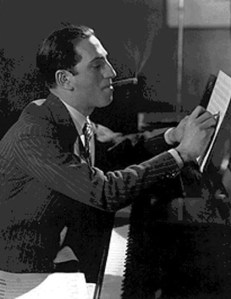
Steve has your back, George.

I read with horror last week that the Gershwin estate, lured by the temptation of an increased revenue stream from the works of their more talented forebears, have agreed to allow director Diane Paulus and the playwright Suzan-Lori Parks to mess with ( that is, “improve”) “Porgy and Bess,” the classic 1935 opera that is one of the towering works in the history of American musical theater. This is, of course, vandalism in the name of ego and commerce, and a full-fledged assault on the masterpiece of not one but four great artists: the Gershwins, George and Ira, and the Heywards, Dorothy and DuBose, who wrote the novel and the play the opera was based on.  It is also stunning disrespect and abuse of power, with the living director and adapter wielding the power of celebrity and influence, and the dead artists retaining no power at all (being dead), having unwisely entrusted the protection of their legacies to greedy and tasteless relatives all too willing to sell out their kin for thirty pieces of silver.  Now, as the New York Times reported, the creators of the New Improved Porgy and Bess are readying new scenes, jazzed up dialogue, back-stories for the characters and an upbeat ending.    

This, as you might imagine, struck to the core of my work as an ethicist and in my position as the co-founder and artistic director of a  professional theater devoted to classic 20th Century stage works. I began to prepare a post on the rape of “Porgy and Bess,” but was distracted by other matters, and didn’t get the piece finished.

That was lucky. I should have remembered that Stephen Sondheim, the only musical theater artist alive who can claim the right to be mentioned in the same breath as George Gershwin, had extolled “Porgy and Bess” as the very greatest American musical in his autobiographical work, “Finishing the Hat.”  Needless to say, Sondheim is an authority on these matters, and also an artist who can appreciate what Paulus and Parks are doing to his colleague, peer and fellow geniuses, the Gershwins. On top of that, he has the wit and rhetorical skills to defend the rights of artists and dissect the rationalizations of vandals like few others.

And he did. John Glass of Drama Urge kindly alerted me that Sondheim has written a letter to the New York Times explaining…not arguing, because there is no argument…why the new “Porgy and Bess” is wrong.  Here it is; you just can’t do it better than this: Continue reading →
Welcome to Carlos Zambrano’s Ethics Fun House!

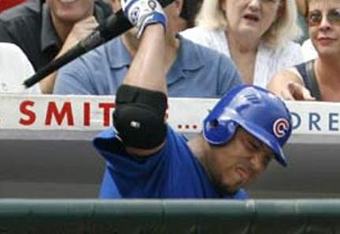
Carlos Zambrano, bludgeoning his career into submission

Carlos Zambrano is the supposed pitching ace of the Chicago Cubs, though after signing a monster multi-year contract for millions, he has shown himself to be inconsistent, over-rated, and nuts. Yesterday the flamboyant hurler gave up five home runs, seemingly attempted to bisect the Braves’ Chipper Jones with a fast ball, and got ejected from the game. Then the ethics fun started:

Ethics Fun #1: Carlos cleaned out his locker, told a Cubs trainer that he was retiring, and left the premises before the game was over. A Major League ethics whiff. Continue reading →

Comment of the Day #2, On the Pointless Marriage of Bert and Ernie

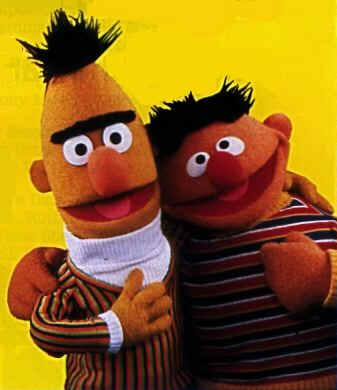
Marrying a puppet is illegal in all 50 states, plus the Dictrict of Columbia.

This is where maintaining integrity and consistency becomes tricky.

Obviously the Comment of the Day suggests only one, yet for some reason this particular day has generated an unusual number of contenders, all deserving. If I refuse to highlight any of these because a Comment of the Day was already posted, I am obscuring important content to maintain a rule, in a situation where the rule doesn’t have any benefits.

But if I have more than one “Comment of the Day,” that creates a precedent and suggests that the designation is more of a formal verdict on comment quality than it is meant to be.  I simply do not, and do not have the time to, give Comment of the Day status to every deserving post. One is usually plenty, and will remain so. But it is foolish, and a contradiction of the principles I argue for on Ethics Alarms, to withhold recognizing a valuable comment for no reason other than an admittedly arbitrary limit.

So here is Comment of the Day #2, on what I will, for this time only, designate as Comment of the Day Friday, as Jeff is inspired by the discussion of bigotry in the continuing discussion generated by Enzo and the Contessa, to weigh in on a particularly stupid news story, the appeal by some gay marriage advocacy groups to have Bert and Ernie, of Sesame Street, tie the knot…if gay marriage is legal on Sesame Street.

(Yes, I know: this is a Comment of the Day on a Comment of the Day on a Comment of the Day. Curse you, Jeff!) Continue reading →

Comment of the Day: “The Barefoot Contessa and the Compassion Bullies”

He's young, sick, and poor. His mother must be right, then.

Gary, an occasional commenter, grabs the Comment of the Day with a provocative one on a post from quite a while back. To refresh your memory, a sick child named Enzo Pereda asked the Make-A-Wish Foundation to get him a one-on-one cooking experience with “The Barefoot Contessa,” Ina Garten. Garten refused, and the boy’s mother led an online shaming exercise, condemning Garten, encouraging boycotts of her Food Channel show, and launching other bloggers and media on an anti-Ina rampage. Ethics Alarms’ verdict was that the boy’s mother was engaged in compassion bullying, demanding that this cable celebrity do her child’s bidding, alter her own schedule and priorities, and grant her son’s arbitrary “wish” because he happened to be ill. Garten had no obligation whatsoever to do what someone, or even everyone, might consider a kind act, and the one who was acting unethically was Enzo’s mother.

Gary’s comment goes to the heart of what Ethics Alarms is all about. Here is his Comment of the Day on “The Barefoot Contessa and the Compassion Bullies.”  I’ll have some additional comments at the end: Continue reading →

Comment of the Day: “The Provocative T-Shirt Problem:

"Oh yeah? Well, your good manners and dignity offend ME!"

Sometimes I receive terrific comments to posts via e-mail, and sometimes I decide to make them Comments of the Day. And sometimes I decide to do that and forget, like I did with this comment, from Neil Penny, in response to my July 26 post about Dollywood forcing a patron to cover the mild political message on her T-shirt that “might offend some.” Neil’s comment was about the anecdote included in my post, relating how the dress code at my college was brought down by a concerted effort to comply with its letter rather than its spirit, and how the subsequent loss of decorum in the dining hall was regarded my many students, including me, as a diminishment of the experience.  Here is that lost “Comment of the Day”—my apologies to Neil for the delay: Continue reading →

Major League Baseball, Forgivability, and List Ethics

Unforgivable?*

Bleacher Reports is an enjoyable sports website, and it gives opportunities to aspiring writers and bloggers, some of whom are quite talented.  In addition to typical opinion pieces and reporting, the site has a fondness for lists, often trivial to the extreme, like “The 50 Ugliest Athletes of All Time.” The titles are all misnomers, because there is almost never any criteria given for the choices or their relative ranking. An accurate title would be, “The Fifty Athletes I Think Are The Ugliest.”  And of course, who cares? (Don Mossi, by the way, was the ugliest athlete ever, no matter what anybody says.)

A recent list, however did bother me. It is called “The Fifty Most Unforgivable Acts in Baseball History,“ and much of the problem with it lies in the title itself. If you are going to write about history, there is a duty perform diligent research, even for a silly online list. Misrepresentations online have a large probability of misleading people.  The title is a misrepresentation, like “The 50 Ugliest Athletes,” but unlike that list, there is some harm done. The list isn’t close to complete; it isn’t consistent; it isn’t well-researched. I’d bet that the author, Robert Knapel, wrote it off the top of his head.  Anyone who looked at the list and assumed, as the author represents, that these are truly the low points—“the dark side,” as the author puts it—of major league baseball would be seriously misinformed.

There are unequivocally, probably universally recognized incidents and events that are infinitely worse that most of the items on the list.  Just a  few samples: Continue reading →