Partisan Opportunism: The Media and the Arizona Massacre:

The shooting of Rep. Gabrielle Giffords, a Federal judge, and 18 others yesterday has exposed media bias and unfairness at its despicable worst. That so many reporters, commentators and bloggers learned of  Arizona parking lot carnage and immediately thought, “Wow, what a chance this is to pin everything on Sarah Palin and the Tea Party!” speaks volumes about the ethics and integrity of America’s journalists. The Daily Beast, for example, began a column this way:

“No motives have emerged from today’s senseless shooting in Tucson, but Democratic Rep. Gabrielle Giffords has a long history of being targeted by the Tea Party—sometimes in violent terms.”

Is there a shred, an inkling, a hint or a clue anywhere that the man who did the shooting had anything whatsoever to do with the Tea Party? No. Is there anything at all linking Tea Party rhetoric to his motives for the shooting? No. So how can this paragraph be explained? Easy. The Daily Beast doesn’t like the Tea Party movement, and saw this horrific shooting as an opportunity to discredit it. Continue reading →
Mr. Friedkin? Mr. Hawks? Meet Mr. Madison and Mr. Twain

It was Saturday Censorship at the Movies last night in Cable Land.

First, I got to watch that manly channel, Spike, blanch at showing a possessed 12-year-old girl use the work “fuck”, which, as you horror devotees know, is a word rather central to showing how she has been taken over, like Helen Thomas, by the demon Pazuzu. There was Linda Blair, as the suddenly possessed Regan O’Neill, bouncing rhythmically on her bed as her horrified mother and physician looked on, shouting “—Me!—Me!—Me!”, apparently horrifying them with a noisy outbreak of egocentricity. The later scene in which the Demon Child is found masturbating with a crucifix was also clumsily chopped up so it was impossible to figure out what was going on. Continue reading →

Comment of the Day: The Tide Mini-skirt Commercial

Ethics Alarms has been getting some excellently written and reasoned comments lately, and it is time to institute a feature I have enjoyed on other blogs, and that is especially appropriate for this one: “The Comment of the Day.”

There won’t be one every day, of course, and the criteria is variable. In general, a Comment of the Day is one that I feel is especially well-stated rather than one I necessarily agree with—like the first entry, in fact. As I have stated elsewhere on the site, I don’t find the Tide mini-skirt commercial unethical, and would not have featured it on Ethics Alarms had readers not brought it into the discussion. I think it is culturally wrong-headed; I think it is obnoxious; I think the choice of song is in poor taste. Still, if Proctor and Gamble thinks it can sell more Tide by attaching its pitch to the assertion that fathers are boobs to question overtly sexual fashion choices by teenagers, and that mothers who encourage underage daughters (Yes, yes, we don’t know that the “daughter” isn’t 25, but the actress sure is doing her best giggly teen impression. We don’t know the “father” isn’t really the next door neighbor, either.) to wear skirts the size of dinner napkins sure to expose the Britney Zone every time the daughter sits down are being responsible parents, I wish them luck. I buy the detergent in our house, by the way; the commercial is sexist by its assumptions.

Here is the comment… Continue reading →

The Ethics of “Improving” Mark Twain

From Publishers Weekly:

“Mark Twain …defined a “classic” as “a book which people praise and don’t read.” Rather than see Twain’s most important work succumb to that fate, Twain scholar Alan Gribben and NewSouth Books plan to release a version of Huckleberry Finn, in a single volume with The Adventures of Tom Sawyer, that does away with the “n” word (as well as the “in” word, “Injun”) by replacing it with the word “slave.”

“This is not an effort to render Tom Sawyer and Huckleberry Finn colorblind,” said Gribben, speaking from his office at Auburn University at Montgomery, where he’s spent most of the past 20 years heading the English department. “Race matters in these books. It’s a matter of how you express that in the 21st century.”

No law can stop Gribben and NewSouth from doing this vandalism to Twain’s classics. The two books are firmly ensconced in the realm of the public domain: no longer subject to copyright,  Huckleberry Finn and The Adventures of Tom Sawyer can be published in Pig Latin or with all the characters transformed into Martians. Still, it is wrong, obviously wrong and inexcusably wrong, and the most responsible thing any of us can do in the name of respect for literature, authors, American history, and education is to say so as vociferously as possible in as many ways and media as possible, so no misguided, politically correct fool will ever be tempted to do anything like this again. Continue reading →

Mailbag: Why Different Ethical Standards for Food and Theater Critics?

“Dear Mr. Marshall: Don’t you find it odd that in one post you condemn theater critics for coming to review a play uninvited, yet slam a restaurant owner who exposes the identity of a restaurant critic trying to review his establishment surreptitiously? Why are consumers served by secret food reviews, but not by secret show reviews? This is why people hate people like you.” Continue reading →

Tide Commercial Reflections–with Acti-Lift!

This post isn’t going to have any additional ethical musings on the Tide commercials themselves, for I am sick to death of them, and almost as sick of arguing about them. What I have been thinking about instead is what to glean from the fact that an ethics critique of a 30 second laundry soap commercial has become the most viewed post on Ethics Alarms after fourteen months and about 1,100 posts, and has generated more debate than all but a few other issues.

Not that I much mind becoming the apparent ethics authority on Tide (with Acti-Lift!).  It’s a small niche, but at least it’s a niche. If you Google almost anything about the original commercial—“green shirt” and Tide, for example—Ethics Alarms is the first non-Tide site that gets listed. Still, with carefully considered ( and occasionally proofed) posts on politics, immigration, global warming, education, sex, law enforcement competing with it for attention, my ethics review of a TV commercial has attracted far more interest than any one of them.

Why? My thoughts: Continue reading →

The Second Annual Ethics Alarms Awards: The BEST of Ethics 2010

The Best in Ethics 2010. Not nearly long enough…but still a lot of men, women and deeds worth celebrating.

Most Important Ethical Act of the Year: Continue reading →

Ethics Dunce: Red Medicine Owner Noah Ellis

Red Medicine is a Beverley Hills restaurant; Noah Ellis is the owner. S. Irene Virbila is the Los Angeles Times restaurant critic, who, like most U.S. food critics, works at staying anonymous, which she had successfully done for sixteen years. Not being recognized served the needs of diners, who want to know what the food and service is likely to be at an eating establishment when the customer isn’t preparing to write a critique that can make the difference between a restaurant’s long-term success or failure.

Last week, Noah Ellis intentionally destroyed Virbila’s ability to perform this service, or at least made it more difficult. Continue reading →

The Second Annual Ethics Alarms Awards: The Worst of Ethics 2010 (Part 2)

The final categories in the Worst of Ethics 2010. Coming up: The Best of Ethics, 2010.

(If you missed Part 1 of the Worst, go here.)

Worst Ethics Presentation: “Ethics in Politics: An evening with Former Governor Rod Blagojevich” (Presented to its students by Northwestern University) Continue reading →

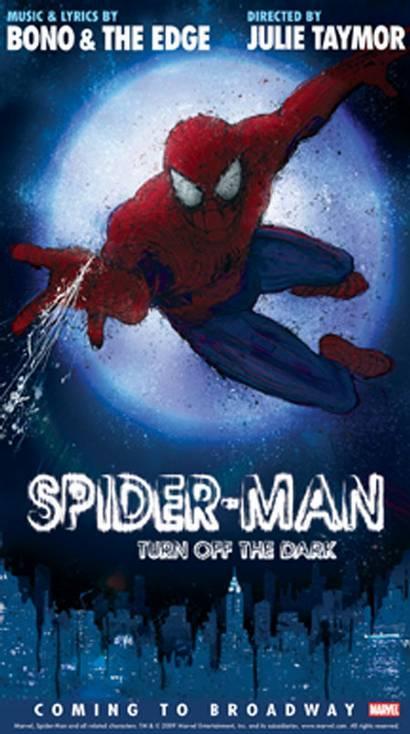
The Ethics of Reviewing “Spiderman: Turn Off The Dark” During Previews

John Simon, long the toughest of American theater critics and undeniably the most erudite and eloquent writer among them, has launched a blog. His very first post is on an ethical issue: is it ever appropriate for a critic to review a Broadway show that is still in previews?

The issue has emerged because the much-anticipated and incredibly expensive Spiderman musical, Spiderman: Turn Off The Dark, has been engulfed in all kinds of intrigue since the very first preview: falling actors, injuries, malfunctioning sets and special effects, and most recently the surprise withdrawal of the show’s leading lady. A couple of critics, Jeremy Gerard of Bloomberg News and Linda Winer of Newsday could not resist paying for tickets and coming uninvited to performances, resulting in one diagnostic feature story on the production’s progress (by Winer) and one full, and not very complimentary, review by Gerard. Simon properly calls foul, describing the act of reviewing a show before its official opening as the equivalent “grabbing a dish from a restaurant kitchen before it is fully cooked, and then judging the meal by it.”

Exactly. The critics have their rationalizations ready, naturally. The musical is the most expensive in Broadway history. Is that a reason to suspend critical fairness? There is unusual interest in the show and its pre-opening travails. Should the degree of interest suspend long-standing critical standards? The usual excuse, also trotted out in this case, is that preview audiences are paying regular show prices—up to $300 a seat—to see the production right now. Isn’t this a case of “the public has a right to know” if the show is a stinker or not?

No, it isn’t. Broadway audiences know that previews are early glimpses of works in progress, and that is part of their appeal. The audiences for previews are part of the creative process, for how they react to a performance will help decide what stays and what gets cut. The prices they pay for the privilege of being Broadway guinea pigs are fair if they choose to pay them. Continue reading →