It will be interesting to see if the movie and theater industries, both reeling from declining audiences for management, artistic, financial and cultural reasons, will continue to ride the runaway political correctness train off the metaphorical bridge and into the river. “Go woke, get broke” is not just a partisan taunt: there is a lot of evidence that it is very frequently true.
I had started a new file just this week on the now totally incoherent casting “rules” being inflicted on productions and audiences in the U.S., determined to post on them when the file was sufficiently thick. First into the fresh file—the older ones were stuffed and substantially covered in prior EA commentray–was this post, a paean to the recently deceased comic Louis Anderson for his portrayal of Christine Baskets, “the doting but demanding mother of Zach Galifianakis’s depressive clown in the brilliant, bone-dry comedy “Baskets,” which ran on FX from 2016-19.”
Huh? We have been told that actresses have been robbed of the opportunity to play rich and serious roles in films and television. We have watched iconic characters undergo gender change so women could have more opportunities. Meanwhile, Scarlett Johansson was forced to withdraw from the lead role in “Rub & Tug,” about a transsexual male because she wasn’t a transsexual male. As a result, the movie never got made. But the Times, which along with most of the media has cheered on these bonkers and restrictive new “rules” (Maybe my favorite was rule the that Dwayne Johnson, a Samoan-Black Nova Scotian- American, wasn’t black enough to play the fictional “steel-driving” John Henry), celebrates a white, middle-aged comedian’s portrayal of a mother.
Explain, please. No, never mind: I get it: this is Calvinball, run by the corrupt and manipulative tribes and groups who benefit from it.
Next came Peter Dinklage, apparently feeling his oats now that his star turn on “Game of Thrones” has made him the entertainment industry’s biggest “little person.” Dinklage, who is 4’5″, is preparing to play Cyrano in a musical adaptation of Cyrano de Bergerac. I love that casting idea; that’s non-traditional casting at its best, assuming Dinklage can sing. Substituting a height disadvantage for Cyrano’s freakish nose should work wonderfully. However, having found that he can now get performing jobs that were once closed to him because of his height, he has decided to object to Disney making an un-animated version of “Snow White and the Seven Dwarfs,” complaining on a podcast,
They were very, very proud to cast a Latino actress as Snow White, but you’re still telling the story of “Snow White and the Seven Dwarfs” You’re progressive in one way … but you’re still making that … backward story about seven dwarfs living in a cave. What … are you doing, man?
What are you talking about, man? They didn’t live in a cave: has Dinklage even seen the original movie? They lived in a nice cottage in the forest, and worked in a mine. And what’s “progressive” about casting a Latino actress as “Snow White” when you are trying to evoke the original film, and wouldn’t dare cast a white actress to play “Snow Brown”? Disney, which has become so “woke” that it is ridiculous, instantly groveled to Dinklage’s ignorant complaint, saying, incomprehensibly,
To avoid reinforcing stereotypes from the original animated film, we are taking a different approach with these seven characters and have been consulting with members of the dwarfism community. We look forward to sharing more as the film heads into production after a lengthy development period.
That’s “Huh?” #2. Is it a “stereotype” for dwarfs to be small, like Dinklage? Is it the term “dwarf” that he’s bitching about? The story is hundreds of years old: is Disney supposed to call it “Snow White and the Seven Little People”? It already has a movie in the vault called “Darby O’Gill and the Little People,” but those little people are leprechauns. In fact, at last report, Dinklage is going to star in the American comedy “O Lucky Day” playing a con-man who pretends to be a leprechaun. I assume he’ll be saying things like “Begosh and begorrah!” and “I see ye’ve come to steal me gold! Catch me if you can!” No stereotypes there!
Or will Disney really cave, and call the thing “Snow White and the Seven Variably-Sized Miners”?
Maybe the problem is that the characters in the original film had names like Dopey, Sleepy, and Grumpy and personalities to match. I’m sure the “dwarfism community’ wants them renamed Empathy, Smarty, Healthy, Lively, Friendly, Bravely and Doc, with at least three female dwarfs, two dwarfs of color, a transsexual dwarf, and one with hooks or diverticulitis or something. Sounds terrific: another success like “West Side Story.
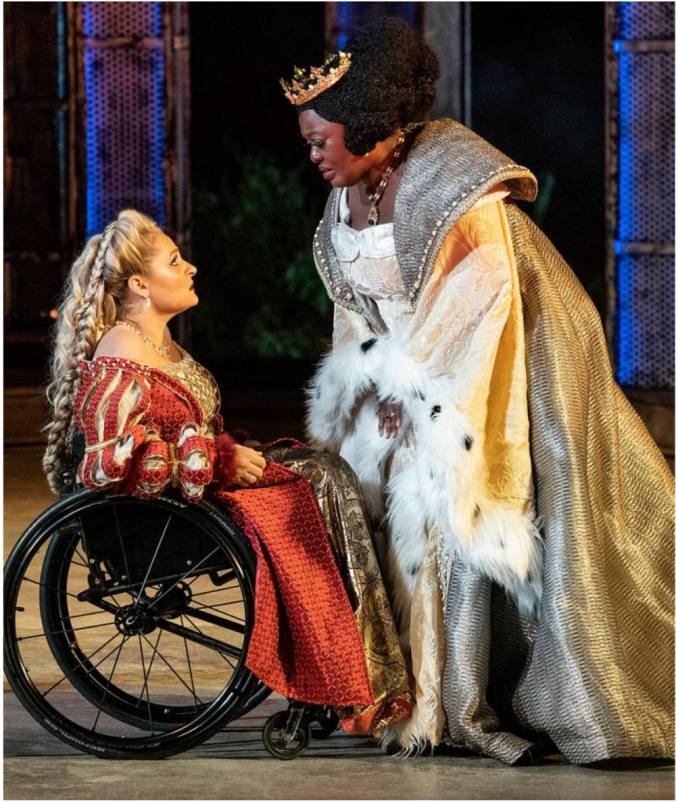
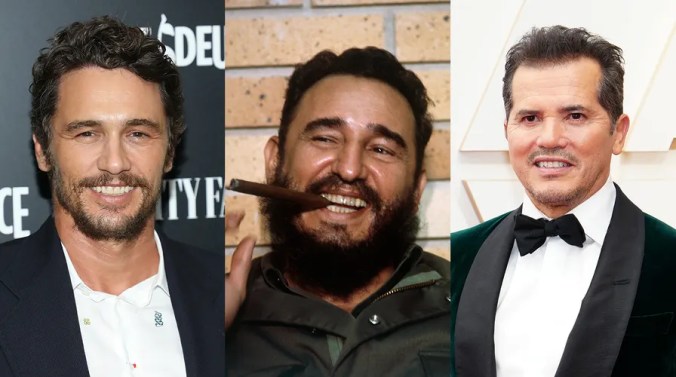
Today came the trigger for the post: a review of the new Off-Broadway production of Eugene O’Neill’s “Long Day’s Journey Into Night,” generally regarded as America’s greatest playwright’s greatest play. (I vote “The Iceman Cometh” myself). I won’t get into the issue of the “reimagined” version of the four-act drama being cut to less than two, except to say that such a production is no more O’Neill than the Cliff Notes “Moby-Dick” is Melville. However, this is a family drama; indeed an autobiographical family drama, indeed THE autobiographical family drama of the American stage repertoire. There’s the “family” above.
The two white actors, representing O’Neill’s parents, have two black sons, and the Times reviewer thinks this is just swell, it’s “colorblind casting.” Yet he would not—trust me on this—celebrate colorblind casting in Lorraine Hansberry’s black family drama “Raisin in the Sun,” which would 1) be absurd and 2) would steal acting jobs from black actors. Colorblind casting is destructive in dramas that are about the dynamics of a family, because the audience cannot suspend its disbelief, even if critics with an agenda pretend they can.
I suppose one defense for this production would be that since it’s not even half of what O’Neill wrote and littered with such distractions as pandemic face masks, it might as well pander to “Inclusivity and Diversity.” (Hey! Those could be dwarf names!)
OK. I think I’ll wait for the real thing before I shell out any of my increasingly hard earned cash, though.
Matthew B. scored a Comment of the Day by raising an issue I had never thought about before: how the misapplication of PowerPoint leads to inadequate training and information dissemination within organizations and bureaucracies. He also references the reluctance of managers to know when to hand over decision-making to subordinates. That is something I have thought about, a great deal.
Two of my favorite movies illustrate how competent leaders and managers know when to delegate a crucial decision down. “Topsy-Turvy,” the superb 1999 film depicting the creation of “The Mikado” by Gilbert and Sullivan, accurately depicts the real incident when, after the final rehearsal, W.S. Gilbert told the “Mikado” cast that he was cutting “My Object All Sublime,” also known as “The Mikado’s Song.” Gilbert was a tyrannical director, and the cast was terrified of incurring his wrath. This time, however, they stood up to him. The cast as one told him that he was making a mistake. The soloist, Richard Temple, they told their shocked and steaming director who also had conceived of the song, should have the chance to perform it in front of an audience. His fellow cast members were certain it would be a hit. Gilbert, recognizing the certitude the cast must have had to risk his fury at being contradicted, decided that his performers might have a clearer understanding of the show even that he had, and relented. Temple would sing about letting “the punishment fit the crime” on opening night.
The song was an instant sensation, like “The Mikado” itself, and is still one of the most quoted of all G&S songs.
The other example is at the climax of “Hoosiers,” the great basketball film based on the true story of the miraculous Indiana state championship won by a tiny school from Milan, Ind. in 1954. During the last time-out before the team’s last chance to score, which would, if successful, give the team a one-point victory over their greatly favored competition in the championship game, the coach (Gene Hackman), who has led the ragtag group this far by emphasizing teamwork over individual achievement, lays out a play in which the team’s superstar, Jimmy Chitwood will be a decoy. He plans for another player to take the final shot, but the team doesn’t move. “What’s the matter with you?” he shouts as his players just stare, looking hesitant. “If I get the shot, I’ll make it,” Jimmy says, after a long pause. So the coach, who has insisted all season that his word was law, makes the same decision Gilbert did. When your subordinates are that sure, trust them. They know better than you.
Jimmy shoots and scores the winning basket as time runs out.
Here is Matthew B.’s Comment of the Day on “Comment Of The Day: ‘Catching Up: Professional Ethics And The Challenger Disaster’”:
Continue reading →