If you read Ethics Alarms often, you know about my objections to euphemisms, which I also call “cover words” since their intent is to deceive readers and listeners about the real nature of what is being discussed. My ethical objections to using “cover words” for words that are considered taboo in various settings follows similar lines, except those cover words don’t fool anyone, and thus are not just efforts to deceive, but silly and insulting efforts. If “f-word means “fuck” and everyone knows it means “fuck,” then it’s ridiculous not to just say “fuck.” The same, of course, goes for “n-word.” When we discuss that word here, we use the word. There are no “banned words” under the First Amendment, and I don’t grant anyone the right to tell me what words I can use to express what I want to express when those are the best words to express them..
Civility is, as a cornerstone of the ethical value of respect, important to societal comity. In dramatic works and literature, however, civility isn’t the issue: ideas, emotion and expression are. The bleeping out of “bad words” or shoving mild substitutes into the actors’ mouths on television constitute artistic vandalism; it’s less common now, but still happens too often. The archaic practice is offensive and insults the audience’s intelligence: the first time I hear a character in a film say “Forget you!,” I turn the channel.
Movies, we all know, stopped worrying about such delicate matters decades ago, and let TV stations worry about their language (and sex scenes, and graphic violence) later. Imagine my surprise, then, to hear Steven Spielberg’s redo of the 1961 “West Side Story” movie begin with the same version of “The Jets Song” that was required by the prevailing stage language requirements of the 1950s. The new, updated, woke-minded, spruced up musical with re-written dialogue still starts with the teen-aged, switchblade-carrying gang of punks singing,
Michael West’s thorough exposition of the wartime military weirdness that begins the film in Part I explains why my WWII vet and retired combat officer father, a big a fan of Bing and Danny as he was, disliked “White Christmas.”
Now where were we? Oh, right, “The First Scene”.…
The movie moves into its funny guilt extortion phase when Phil Davis rescues his smooth-singing captain from being crushed by a falling wall in a World War II bombing raid, and injures his arm in the process. (It’s not a plot feature, but the battlefield set for the entire opening sequence is itself unethically unprofessional by being chintzy even by movie musical standards: it looks like they are filming a skit for a Bob Hope Christmas Special. I thought it was lousy when I saw it as a kid. Michael Curtiz deserved better; the man directed “Casablanca.” Show some respect.) Phil then uses Wallace’s debt of gratitude to coerce him into accepting the aspiring comic as a partner in Wallace’s already successful civilian act. This is obviously unfair and exploitative, but Bing accepts the ploy with good spirits, and the next we see of the new team of Wallace and Davis, it is knocking ’em dead and rising in the ranks of stage stars.
2. Wallace and Davis
The act looks terrible. Bing was never much of a dancer, a game hoofer at best, and you don’t feature the greatest voice in the history of American popular music by having him sing exclusively duets. Nevertheless, all we see of the team’s rise is both of them singing and corny dancing inferior to what Bing did with Bob Hope in the “Road” movies.
Never mind. They have a show on Broadway, and as a favor to a mutual army buddy, they agree to watch the boonies nightclub act of “The Haynes Sisters” (Rosemary Clooney as Betty, and Vera-Ellen, of wasp-waist and “On the Town” fame, as kid sister Judy. Did you know that in the “Sisters” number, Clooney sang both parts? And that Vera-Ellen’s real singing voice is never heard in the entire film?). Bing is immediately smitten with older sister Rosemary, but there is a tiff over the fact that younger sister Judy fooled them into seeing their act: she, not her brother, had sent the letter asking for a “favor.”
This is the first revealed of many lies woven into the script. This one is a double beach of ethics: Judy uses her brother’s name and contacts without his permission or knowledge, and lures Wallace and Davis to the night club under false pretenses.
Bing dismisses Judy’s cheat by noting that everyone “has an angle” in show business (“Everybody Does It”) , so he’s not angry. Rosemary is, though, and reprimands Bing for being cynical. That’s right: Vera/Judy use their brother’s name to trick two Broadway stars into watching their little act, and Rosemary/ Betty is annoyed because Bing/Bob (Bing’s bandleader, look-alike, sound-alike brother was also named Bob) shrugs off the lie as show business as usual. True, Betty is technically correct to flag the “Everybody Does It” rationalization, but shouldn’t she be grateful that Bob isn’t reaming out the Haynes sisters and leaving the club in a huff? OK, nice and uncynical is better than nice and cynical, but Bob is still giving her and Judy a break. As the beneficiary of Judy’s angle, Betty is ethically estopped from complaining that Bing/Bob’s reaction was “I don’t expect any better.” I can, she can’t. He should expect better: accepting unethical conduct allows it to thrive. But Betty criticizing Bob is like Bill Cosby reprimanding a rapist.
As we soon find out, however, Betty often flies off the handle.
3. Sisters
It seems that the Haynes Sisters are about to be arrested because they skipped out of their hotel room without paying, because, they say, the owner wanted to charge them for a burnt hole in their room’s carpet. Phil assumes, without confirming it, that this is an attempted scam by the hotel, though Judy, who relates the circumstances, is already established as a con-artist. I wouldn’t be surprised if she was smoking a joint and set the carpet on fire. In either event, they still owe for the bill. This happens in old movies all the time ( and in the real life adventures of Judy Garland): the heroes stiff landlords what they are owed, and the landlords are the villains. Whole generations were raised to believe that skipping out on the rent was the kind of thing good people did.
How many liberals got started with this concept, I wonder? No wonder socialism isn’t dead.
Phil arranges to let the sisters escape (thus abetting theft) to the train, which will take the girls to a gig at a Vermont inn. Wallace and Davis stall the fuzz by doing the sisters’ final number (and apparently the act’s only number) in drag. This is aiding and abetting a breach of contract and theft. Nice.
The boys barely escape arrest themselves after their spoof and jump on the same train. (The number was largely improvised by Bing and Danny, and the take used in the film by Curtiz was supposed to be ditched. The famously unflappable Crosby was cracked up by Kaye’s clowning, and reportedly was angry that an “unprofessional” moment made it into the film. Not unethical by Curtiz, though, unless he promised Bing he wouldn’t use the take. (Like, for example, John Landis, who lied to Donald Sutherland and used his gag bare-butt take in “Animal House” after promising not to.) The director’s duty is to the film, not the star. It’s also one of the few moments in the film allowing Kaye to be Kaye.
The lovely sisters are going to Vermont, so Danny and Bing, who gave the entire cast the holidays off with full pay (I doubt that Broadway ever shut down shows over the holidays, which is a prime tourist period, before the Wuhan Virus struck.) What is the Radio City Music Hall Christmas show for? But this is a necessary plot contrivance.) .
Surprise #1 when they get to the inn: no snow. Surprise #2: the inn is owned by none other than General Waverly, Bob and Phil’s much-admired commander during the war, now retired and going broke running a ski lodge where nobody can ski. The general the closest thing to consistently ethical character in this movie, and he, against all self-interest, says that he will pay the Haynes Sisters full salary to play to crickets, though he had an out in their contract that could have saved him half their fees.
If Bob, Phil, Judy and Betty had any honor, they wouldn’t accept it. The Haynes sisters are cashing in, clearly, on sexist male bias. Then again, this is how the Betty and Judy—especially Judy– roll. It’s how all gorgeous women roll in Hollywood films (and, I daresay, in Hollywood to the day.) Is it unethical for women to appeal to men’s brain-numbing hormones with faint suggestions of potential lust and love that the women know is a fantasy, because they also know many men fall for it no many how many times experience proves them to be saps?
It will be interesting to see if the 1954 Christmas movie musical “White Christmas” experiences a major drop-off in TV showings this year, as a victim of the anti-whaite racism going viral during The Great Stupid.” It would not surprise me. Not only is the title a problem for the George Floyd Freakout-deranged, but the film is about as white as a movie can be. No inter-racial couples! Last time I watched the movie I wasn’t searching for Extras of Color, and maybe there are a couple dark faces in General Waverley’s troops and a even an African American dancer in there somewhere, but the movie definitely wouldn’t do well by current Oscar check-box standards.
Stipulated: this is an entertaining movie with an effectively sentimental and moving climax. That should be enough, and in 1954 it definitely was enough: the movie was a critical and box office hit. There are good reasons to be grateful for it today, too, provided “White Christmas” isn’t “canceled.”
Most importantly, it has been the most visible yearly reminder of the talents of Bing Crosby, by any measure one of the most important cultural figures and remarkable performing artists in U.S. history. The film also is, a bit perversely, the only easily accessible clue to alert younger generations that Danny Kaye was a unique and impressive performer as well—I say perversely because this is neither a typical Kaye movie nor one that reveals most of the qualities that made him a star. (Watch “The Court Jester” hans “Hans Christian Anderson”.)
Then there is Rosemary Clooney. Without “White Christmas” Bing’s romantic interest in the film would be almost totally forgotten, yet she was one of the greatest of all female popular vocal stars. Clooney joined Dinah Shore, Patti Paige, Doris Day and Peggy Lee in the dominant all-blonde singing quintette during the Fifties. Dinah lasted the longest, reinventing herself repeatedly despite the least impressive voice of the five; Patti Paige had the biggest selling records; Doris became an iconic movie star, and Peggy Lee, who was also a successful songwriter, had the reputation of being the genius in the group, but Rosemary could sing them all under the carpet. Unfortunately, she also suffered from emotional and substance abuse problems, had a breakdown, battled with weight gain, and disappeared from the scenes for more than a decade until she reemerged, older, saner, fatter and with a diminished voice, to star again on the night club circuit. That is the Clooney most people remember now, but that’s unfair to her legacy. In “White Christmas,” she’s in top form.
So why does Ethics Alarms dump on “White Christmas” every year? It comes down to what I wrote in last year’s intro: if you are going to make an ethics movie, someone involved ought to have functioning ethics alarms. I was gratified when I watched the PBS documentary about Bing Crosby and learned that he was critical of “White Christmas” despite its success because he felt the movie should have and could have been much better with a more carefully constructed story, as in “one that made sense.” The heartwarming ending when the old general played by Dean Jagger, gets saluted and serenaded by his reunited army unit doesn’t make up for all the gratuitous lying and betraying, not to mention the mind-blowing leaps of logic and assaults on common sense, required to get there.
The most ethical feature of the movie was an ethical act that allowed it to be made, performed by one of the most unlikely people imaginable, Danny Kaye. I credit Kaye with my interest in performing, musicals, and comedy, but my research into the real man, when I was in the process of collaborating on a musical about his relationship with his wife and muse, songwriter Sylvia Fine, revealed that in stark contrast to his persona and his public image, Danny was a miserable, paranoid, selfish, mean and insecure sociopath when he wasn’t playing “Danny Kaye,” which could be on stage or off it. “White Christmas” had been conceived as a re-make of “Holiday Inn” with the same cast as that black and white musical, Bing Crosby and Fred Astaire. Fred couldn’t do the project, so his part was re-written for Donald O’Connor, who became ill so close to shooting that there was no time to retool the script and have the film ready for its target holiday release. In desperation, the producers asked Kaye if he would play Bing’s side-kick even though it meant 1) playing a support, which he had never done in a movie since becoming a star 2) playing a role that couldn’t highlight his special talents 3) subordinate himself to Bing Crosby, who was indeed the bigger star and box office draw, and most daring of all, expose his own limitations by doing dance numbers created for Donald O’Connor. Kaye was not a trained dancer, just a gifted mimic and athlete who could do almost anything well. Danny demanded $200,000 and 10% of the gross, to rescue the project, but he still was doing so at considerable personal risk…and he didn’t need the money.
Everyone around Danny Kaye was shocked that he agreed to all of this. Not only did he agree, he also amazed everyone by not playing the under-appreciated star on set, by doing O’Connor’s choreography as well as he did, and by knowing how not to steal focus from the star, something he infamously refused to do when he was in “Lady in the Dark” with Gertrude Lawrence. The movie was the top grossing film of 1954, and the most successful movie musical up to that time.
I have been punished by writing this critique: I used to enjoy the film despite its annoyances, and now those are all I see. But it really is an ethics mess, and as bing sensed, perhaps, it didn’t have to be.
“White Christmas” is offered by Netflix year-round.
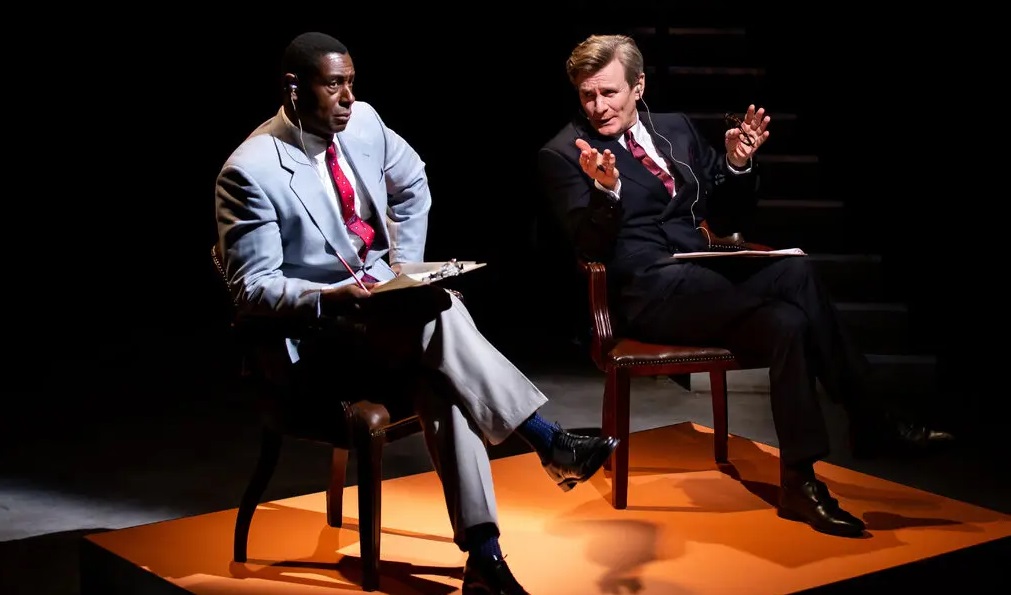
“The Best of Enemies” is a stage adaptation of the film about the 1968 TV face-offs between arch-conservative pundit William F. Buckley and acerbic liberal author and wit Gore Vidal that climaxed with Buckley threatening to punch Vidal is the face. I haven’t seen it (which is now playing in London’s West End) or the film: I was lucky enough to see the original, live. Buckley was fascinating (and often hilarious); Vidal was the perfect iconoclast (I even had a correspondence with him briefly!), so I assume both play and film are at least entertaining. That’s not the issue at hand, however.
The issue is casting ethics. My position as a director and also from the ethics perspective is that a production’s obligations are to the audience and the work being presented, and everything else is subordinate at best. That does not mean that I am opposed to so-called “non-traditional casting;” indeed, I support it (and have done a lot of it as a director) when it benefits the play or musical. When funky casting accomplishes nothing but making activists happy or ticking off woke boxes at the expense of the show’s effectiveness, that’s unethical, plain and simple.
Burl Ives is one of those long dead artists of yore who would be nearly completely forgotten were it not for an annual revival every Christmas season. He had popular recordings of “Frosty…” and “Rudolph…,” and was featured in one of the Rankin-Bass animated Christmas shows as a singing snowman. The one Christmas song he made his own was “Have A Holly Jolly Christmas, and it’s a pretty annoying one at that. Ives was a fascinating character, a burly ex-NFL player who profitably turned to folksinging in the Thirties. He became famous doing that until he was the definitive Big Daddy on Broadway and on film in Tennessee Williams’s classic drama “Cat on a Hot Tin Roof” (Williams wrote the part with Ives in mind), leading to a long acting career.
He was blacklisted during the Red Scare, named names for HUAC and alienated the folksinging crowd. Ives had such a pure, light voice that he had great success with children’s songs (like “I Know An Old Lady Who Swallowed A Fly”), yet on screen and stage he was usually a menacing presence. I always found the image of “Big Daddy” singing “Holly Jolly Christmas” bizarre.
December 13 is one of those banner days for ethics, good and bad. In 2000, Al Gore gave an admirable speech abandoning his efforts to flip the results of the too-close-to-call (literally) Presidential election, the ethics high water mark in his otherwise sketchy career. TIME disgraced itself on this date in 2019 by naming exploited teen mouthpiece for the climate change lobby Greta Thunberg as its “Person of the Year.
When I first posted this, I reported that the festive scene was from Hamilton, Ontario, and current. I had two sources for that, and this wasn’t exactly worth my time to do a full-fledged investigation, especially since the ethical issues are identical whether the locale is Canada or Krakow. Commenter Edward, below, traced the photo to Tyumen, Siberia, and at least six years ago.
It is still more puzzling than the usual Christmas decorations gaffe. One could imagine a single sleepy city bureaucrat missing the obvious phallic nature of the design, but how many city employees had to pass on the lights to get them to the street?
Was that design really innocent, as some wags are questioning? It’s another Hanlon’s Razor situation, no? Yet wouldn’t a diabolical sex-obsessed designer assume that the attempt at subversion would be caught long before his joke, or whatever it is, ever reached execution? Was this a case of someone deciding, “Hell, we paid for the damn things, let’s just use them”? Or “Maybe nobody will notice!”?
[The previous post reminded me of this one, from 2015. Here it is again, slightly updated and edited. It’s as accurate now as it was then, unfortunately.]
At the rate things are going, I am certain that before long no pop vocal interpretations of traditional Christmas music will be easily accessible on the radio. This is a cultural loss—it’s a large body of beautiful and evocative music—and someone should have, one would think, the obligation of preventing it. But I have no idea who.
I realized this when I felt myself getting nostalgic and sad as I listened to a series of “Christmas classics.” For one thing, they all reminded me of my parents, whose absence beginning in 2011 permanently kicked my enjoyment of the season in the groin. For another, all the artists were dead. Bing: dead. Frank: dead. Elvis: probably dead. Andy Williams, Nat King Cole, Dean Martin, Judy Garland, Burl Ives, Gene Autry, The Andrews Sisters, Perry Como, Elvis, Karen Carpenter, John Denver–dead. Long dead, in most cases. Christmas has become a serenade of dead artists. Except for the narrow range of country music stars for those who enjoy “O Holy Night” with a twang, living pop artists don’t sing these songs. OK, Mariah Carey, Josh Groban and Michael Bublé. Not many others. A few years ago, Sirius-XM was so desperate to find living artists that it was playing the Seth McFarland Christmas album. Seth can sing, but I’m sorry, but it’s hard to enjoy “Silent Night” while picturing “The Family Guy.”
[Nat King Cole’s rendition of this song always makes me smile: his German is so dreadful. But what a voice! It’s like hot cocoa with a marshmallow melting in it.]
Well, the 8-foot Concolor fir tree goes up today, meaning about four hours of prickles and dead light strands lie ahead. Can’t wait!
I have a Christmas ethics dilemma on which advice would be appreciated. As I think I mentioned, Spuds, who is a canine battering ram, was romping at night in the field behind our house with a group of dog pals when one of the owners, a next door neighbor of thirty years, zigged when she should have zagged and Spuds ran right into her. Her leg was broken in two places, and now her 71-year-old husband is facing caring for her for at least several months, also taking care of their two large Belgian Shepherds, as well as a disabled family member who lives a few houses down the street. Lots of the dog-owners have dropped off holiday food for the couple, and we want to send a nice Harry and David package. How do we frame the gift in a way that sends the implied message we want to convey (“We’re thinking of you, and hope you can enjoy the Christmas in spite of everything”) and not “Please don’t sue us!” ? (I am not at all concerned on that score, for reasons social and legal.) Should Spuds sign the card, along with us?
I’ll be damned before I ask “The Ethicist,” or worse still, “Social Qs”…
1. Look! A competent list for a change! The Independent issued a list of “The Magnificent 20: the Top 2O Westerns of All Time.” I’ve lectured and written about this most ethics-minded and American of film genres, and I was pleasantly surprised that almost all of the Westerns I regard as essential made the list. Graeme Ross, the author, knows his stuff. That doesn’t mean I agree with all of it. I am not a Sergio Leone fan, and consider all of the spaghetti westerns as anti-Westerns at heart, so those are two slots I’d fill differently. As usual “The Searchers” is too high (it’s #1), and “Unforgiven” made the list, a film that I thought was over-rated from the second it came out (Sorry Clint.)
Still, only one of the Westerns included is affirmatively dreadful (Brando’s misbegotten “One-Eyed Jacks”) and an unforgivable choice. On my list (which is longer), “Lonesome Dove” is #1 (“Shane” is #2) but it’s not technically a movie, I guess. I also would include “Silverado” in the top 20. “The Man Who Shot Liberty Valence” is an essential inclusion on such a list; I don’t know how it was missed. Still, a responsible, respectful and fair effort—and John Wayne has more movies on the list than anyone else, even without “The Man Who Shot Liberty Valance.” Good.
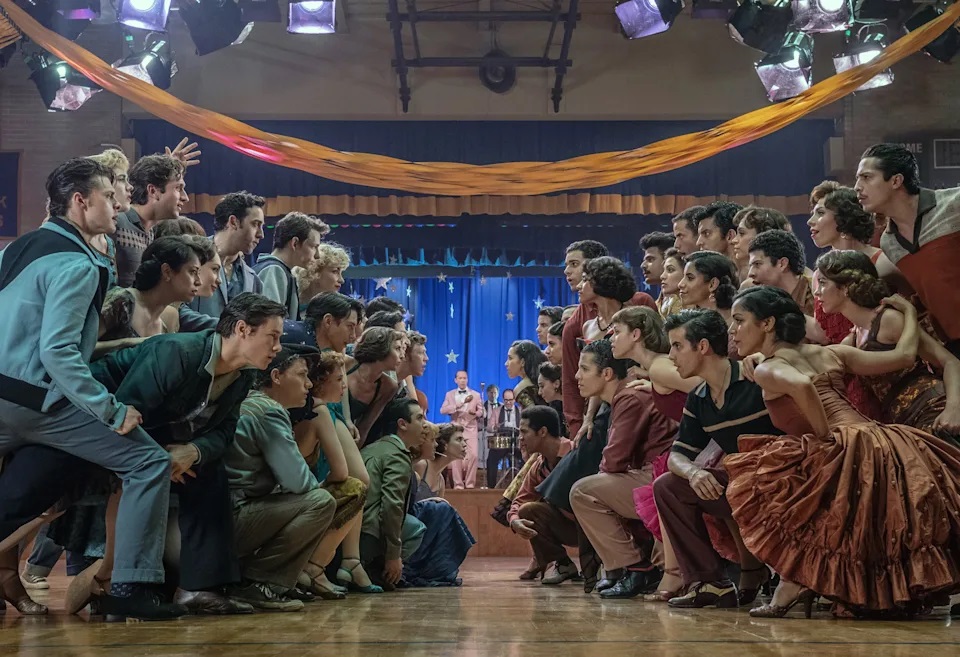
There is going to be a new film version of “West Side Story,” apparently to have one that doesn’t involve casting Russian-Americans (Natalie Wood) and Greek-Americans (George Chakiris) as Puerto Ricans. Of course, it’s OK for a white character to undergo a gender and nationality change because shut-up. This is, I believe, a doomed project, much as the remakes of “Ben-Hur” and “The Ten Commandments” were doomed. Remaking a film that won ten Oscars is a fool’s errand. So is making any movie musical in an era when the genre is seen as silly and nerdy by a large proportion of the movie-going audience, especially one that requires watching ballet-dancing street gangs without giggling. Steven Spielberg, who accepted this challenge, must have lost his mind.
Ah, but apparently wokeness, not art or profit, is the main goal.
I am so glad that, based partially on this, I turned down an invitation to do a lecture right about now for the Smithsonian on the evolution of “West Side Story” through the years. For here comes the news that Stephen Spielberg, who has never directed a musical in his life on stage or screen, has completed his “improved” version with this considerate feature:
[T]o lend the movie an extra touch of authenticity, Spielberg, and screenwriter Tony Kushner, made the choice not to subtitle any of the Spanish dialogue that’s regularly heard throughout the film. Instead, multiple scenes in West Side Story take place entirely in Spanish — or with a pronounced mixture of English and Spanish — and there’s no onscreen text to fill in the gaps for non-Spanish speaking viewers.
“Extra touch of authenticity”?!! Characters are singing their feelings in the film! I assume that, as in the first film version, they are also doing ballet in the streets. Musicals have no “authenticity.” But aside from that asinine statement from Yahoo! reporter Ethan Alter, the decision to frustrate non-Spanish speaking audience members by making dialogue from the book incomprehensible cannot be defended logically or artistically. What is the objection to sub-titles? It is not only beneficial to the movie to make certain all of the audience knows what’s being said, it is basic courtesy to the original author of the book (Arthur Laurents). What is the objective of this choice?
Divisiveness and to stick it to English-speaking Americans, it seems.
Here’s one contemptuous tweeter: “Steven Spielberg a king for not including subtitles in the Spanish dialogue for his West Side Story…very bold and non-compromising. Make these losers try and decipher what the boricuas are saying along with the rest of the Latinx.” Here’s another: “”Much to love about the new West Side Story, but Steven Spielberg’s deliberate choice not to subtitle any Spanish dialogue was his most brilliant decision. Cops and Jets gang members screaming, “speak English!” The real-world parallels to the American experience of today run deep.”
One choose not to speak English, or not to learn to speak it intelligibly. And then has chosen not to be hired for any job requiring clear and effective communication with the majority of Americans. “Speak English”? Damn right. If the new film’s objective is to discredit that basic obligation of citizenship, it doesn’t just deserve to fail, it deserves to be condemned.
Yet another tweet: “Also I like there are not subtitles when they spoke Spanish. The back and fourth between English and Spanish was so familiar ( in my house Portuguese) but you get the idea. That’s how it should be.”
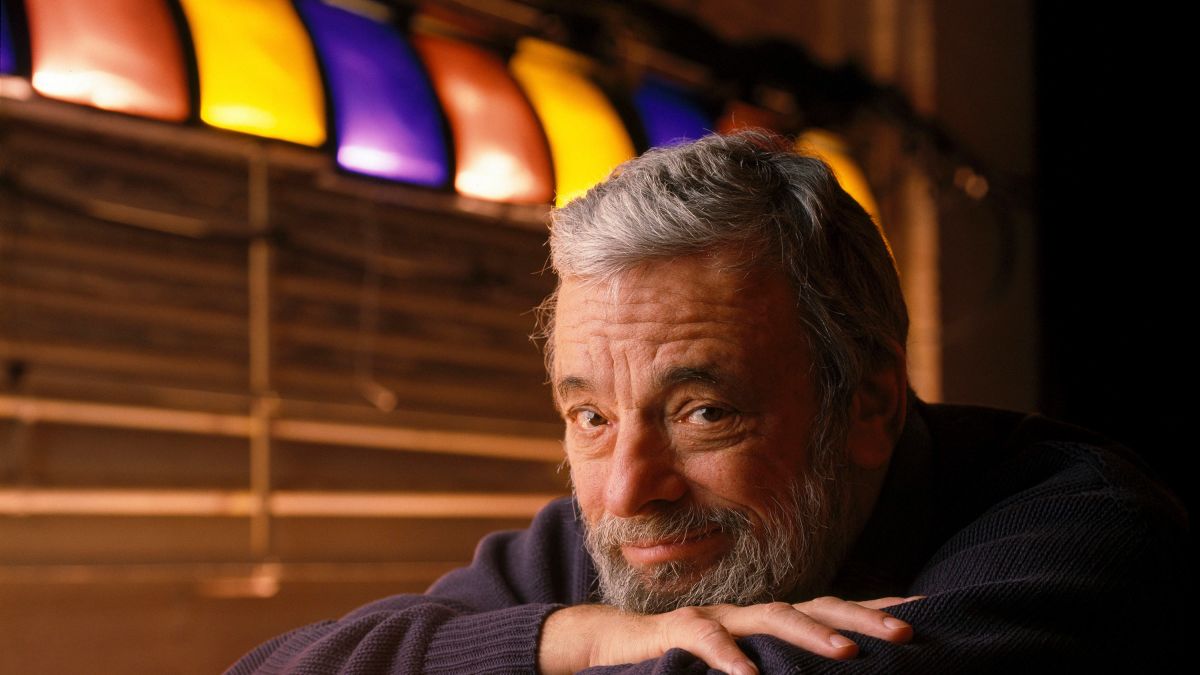
There’s not too much I can add to the many tributes and essays about Stephen Sondheim, who died yesterday at the age of 91, but I feel I owe him a special salute for his ethics. Ethics is not a common trait in theater, or in show business generally. Sondheim, one could argue (and I will) built his career on ethical values.
The Times has three excellent pieces: a front page obituary, a report on a final interview, and an appreciation by critic Jesse Green. I don’t disagree with any of them, nor do I dispute Sondheim’s importance to musical theater and the culture, which justifies his superstar send-off. None of them come right out and say what I believe to be obvious, if inconvenient: for all his influence, Sondheim represented a fascinating, elitist, dead-end for musical theater, which he was determined to elevate whether it was healthy for the genre or not.
Musical theater arose from humble, populist origins like the British music hall, and it was generally accepted to be a way for ordinary people to have a good time without having to think too much. That model served the genre, and the industry, well until Sondheim’s mentor, Oscar Hammerstein II took off from where only scattered experiments like “Lady in the Dark” and “Pal Joey” had previously ventured to bring serious topics and dilemmas into song while still sending the crowd home humming. Sondheim, once he had freed himself from writing words to established composers’ tunes in “West Side Story” and “Gypsy,” deliberately sought darker, more complex stories to musicalize than even Oscar would dare attempt.


 Ethics Alarms