Comment Of The Day: “Casting Ethics: ‘Anne Boleyn’ And Discriminatory Double Standards”

Oh, I just love this Comment of the Day by Curmie, who was AWOL from the ethics comment wars for far too long, and whose return recently has made my heart soar like a hawk. I love it for many reasons, including, of course, the fact that it is well written and enlightening, far more so than my post that prompted it, which focused narrowly on the double standard of applauding the having a performer of one race portray another, but only when it’s the “right” races involved.

As with my posts about ethics issues in another lifetime passion, baseball, I know that many readers nod off when the framework is theater. But the conceit of Ethics Alarms is that the ethics issues and process of analysis are often universal regardless of where the dilemmas and conflicts pop up. As it happens, baseball and theater happen to be two realms that I know a lot about.

But not as much as Curmie, at least as far as theater is concerned. I had hoped that he would weigh in on the casting of a black actress as Anne Boleyn, and he did.

Here is Curmie’s Comment of the Day on the post, Casting Ethics: “Anne Boleyn” And Discriminatory Double Standards.

***

Literally two minutes after reading this post, I saw that Katori Hall had been awarded the Pulitzer Prize for Drama for her play The Hot Wing King. I don’t know the play—its Off-Broadway run was cut short by COVID, and as far as I can tell it hasn’t been published.

I do, however, recognize her name as the playwright of The Mountaintop, in which the two characters are Martin Luther King, Jr. and an employee of the Memphis hotel in which he is spending what he doesn’t know is his last night on earth. (Spoiler alert: she’s really an angel preparing him for what is to come.) It is a good, borderline great, play: by turns moving, humorous, and incisive. But what comes immediately to mind is the production by a student group at Kent State University, in which a white actor was cast as King. The director, of course, claimed the casting decision wasn’t a gimmick. (Newsflash: it was a gimmick.)

The original idea was to alternate the role between a white and a black actor to be, in the director’s words, “a true exploration of King’s wish that we all be judged by the content of our character and not the color of our skin.” The black actor had to drop out of the production, and the white one played the role throughout the run.

Continue reading

Casting Ethics: “Anne Boleyn” And Discriminatory Double Standards

Ann Boleyn series

That’s Anne Boleyn on the photo above. No, really, it is. Well, okay, it’s really British actress Jodie Turner-Smith portraying King Henry the VIII’s doomed second wife, whom most people don’t realize was black. That is, of course, because she wasn’t black, just like Martin Luther King wasn’t Chinese and Genghis Kahn wasn’t a Hassidic Jew. However, a new TV mini-series, which premiered last week in Great Britain, cast Turner-Smith because no white actresses were available to play the role. No, that can’t be right. No white British actress were qualified to play an English historical figure? That can’t be true either. What’s going on here?

“It is the first time a Black actress has portrayed the Tudor queen onscreen,” the New York Times helpfully informs us. Really! The factoids we get from the Times! Why not, I wonder? Wait, wait, don’t tell me: has a man ever played Anne Boleyn in a serious historical drama? How about an octogenarian? An actress in a wheelchair? A dwarf? How about a moose? A block of cheese?

“We wanted to find someone who could really inhabit her but also be surprising to an audience,” Faye Ward, one of the show’s executive producers, said in an interview. Surprising, or confusing? Surprising is a piece of cake, as another doomed queen, but from France, would have said. Casting Woody Allen as Anne would be surprising. What’s the objective here?

The Times feature rapidly descends into a hybrid of Authentic Frontier Gibberish crossed with Wokish.

Continue reading

Friday Ethics Dry-Off, 6/11/2021: Apple Pie, The Duke, “Lillibet,” The “Only If You’re The Right Kind Of Black Caucus” And Shut Up, Donald

It’s raining like crazy here, so…

1. And now for something completely stupid…Poe’s Law is getting a workout as The Great Stupid heads into its final stage, and I have to discipline myself not to write about too many episodes like this one, which once would have been regarded as parody because it would have been parody. Raj Patel, an apparent communist, explains in this unhinged piece by The Guardian about “food injustice,” that the apple pie is a symbol of American imperialism and white supremacy, like this…

Not that apples are particularly American….Apples traveled to the western hemisphere with Spanish colonists in the 1500s in what.. is now better understood as a vast and ongoing genocide of Indigenous people….

Not that the recipe for apple pie is uniquely American….By the time the English colonized the new world, apple trees had become markers of civilization, which is to say property….John Chapman, better known as Johnny Appleseed, took these markers of colonized property to the frontiers of US expansion where his trees stood as symbols that Indigenous communities had been extirpated.

Not that the gingham on which our apple pie rests is uniquely American….this war capitalism enslaved and committed acts of genocide against millions of Indigenous people in North America, and millions of Africans and their descendants through the transatlantic slave trade. In the process, cotton laid the basis of finance, police and government that made the United States.

Since this is quite a lot to acknowledge, it is easier to misremember. In the drama of nationalist culture, the bloody and international origins of the apple pie are subject to a collective amnesia.

This, though extreme, is the weaponization of the cognitive dissonance scale that has become a prime part of the strategy to unmake the United States, cancel its freedoms, and turn its values inside out. Consistent with Critical Race Theory, literally everything in our culture, including the best and most innocent of it, must be traced to something evil.

Even apple pie. Conservative websites are having fun mocking this article. They are foolish. Patel is deadly serious, and our children will be taught this perspective unless there is relentless resistance.

2. John Wayne died on this date in 1979. “The Duke” had the biggest impact on American culture and ethics of any performer; there really isn’t anyone close. And it was a positive impact; John Wayne (really Marion Morrison) the man is an interesting subject, but what mattered was his art. He dedicated his career to portraying the independent American male individualist with all his virtues and flaws, aided by some of the greatest film-makers in Hollywood history, notably John Ford and Howard Hawks. Even before Hollywood took its disastrous turn to the hard Left, Wayne suffered because of the enmity liberals and the academic elite held (and hold) toward the core American values that Wayne’s characters, often incompletely, tried to embody. Pauline Kael, much idolized as a film critic (I detested her), refused to do anything but ridicule Wayne’s performances out of pure political bias. For me, especially as I became more experienced as a stage director, Wayne’s acting impressed me more the more I watched him, and I have watched him more than I have watched anyone.

There has been an effort of late to “cancel” the Duke, but they’ll have more luck with apple pie. The John Wayne character remains strong, inspiring, and complex. Over 40 years after his death, Wayne’s movies are still featured on TV regularly; no actor made more great ones, and the good ones are still entertaining. My favorites? “Stagecoach” (of course), “Red River,” “Rio Bravo”, “She Wore A Yellow Ribbon,” “The Searchers,” “Hondo,” “True Grit”, “The Quiet Man,” and “The Man Who Shot Liberty Valence,” with Hawks’ “Hatari!” as a special guilty pleasure.

I miss him. America misses him.

Continue reading

Ethics Observations On A Forgotten Singing Sensation

Jill corey

For all my (self-) vaunted dedication to popular culture, I had no idea who Jill Corey, pictured above, was. When I glanced at the New York Times obituary feature about her last month, it didn’t ring enough of a bell for me to read it. But I left the section lying around for some reason, and finally read it last night. Her life is a story filled with ethics enlightenment about life, luck, and priorities.

On Nov. 9, 1953, when she was only 17, Norma Jean Speranza of Avonmore, Westmoreland County, a coal miner’s daughter just like Loretta Lynn, was featured in a Life Magazine cover story called “Small Town Girl Gets New Name And a New Career.” She became a true overnight sensation, recording hundreds of songs for Columbia Records, including “Love Me to Pieces,” “I Love My Baby,” “Let It Be Me” (which the Everly Brothers covered memorably) and “Sometimes I’m Happy,” the featured single on her career-defining album, “Sometimes I’m Happy, Sometimes I’m Blue.” Corey, it is fair to say, had one of those rare female voices that are instantly appealing, like Judy Garland and Karen Carpenter. Listen…

Those low notes!

Critics and audiences loved her. Silver Screen magazine said she had a “voice as lovely as a glass slipper, and a personality to match,” and that was typical. Corey was a regular on the television variety programs “Robert Q’s Matinee” (1950–1956) “The Dave Garroway Show” (1953–1954), the 1958–1959 version of the iconic “Your Hit Parade,” and on Johnny Carson’s CBS comedy-variety show before he took over “Tonight.” She also had her own syndicated radio and television shows. In 1958 she starred in a feature-length musical film, “Senior Prom” (co-produced by Moe Howard!)

So why doesn’t (almost) anyone remember her today?

In 1961, she married Don Hoak. He’s remembered now more than Corey is thanks to “City Slickers”: in a scene on a dude ranch, the one woman in the group complains to Billy Crystal and his two friends that she doesn’t understand men’s obsession with baseball. Who cares who played third base for the 1960 Pittsburgh Pirates, she asks hypothetically, and the words are barely out of her mouth before the three guys blurt out, “Don Hoak!”

Corey stopped performing and recording to raise a family; she and Hoak had a daughter. He dropped dead of a heart attack in 1969 at the age of 41 while chasing a thief who had stolen his brother’s car. Unexpectedly, Jill Corey had to return to singing. But her moment had passed. She was no longer famous or in demand, and popular music, the culture and public tastes had moved at supersonic speed in the eight years between 1961 and 1969. Once seemingly everywhere in magazines, TV and the radio and seemingly headed to a long career, she was back to being an unknown. When she died in May at the age of 85, few noticed.

Observations:

Continue reading

Ethics Catch-Up, 6/10/2021 (But I Keep Falling Further Behind!)

Hamster wheel

That’s not me, by the way. I would never wear a shirt like that…

1. Not substantiated, but worth mentioning: Fulton County, Georgia, poll manager Suzi Voyles says that when she sorted through a stack of mail-in ballots last November, she noticed strange uniformity in the markings on ballots favoring Joe. Biden. All the absentee votes contained perfectly filled-in ovals for Biden, except that each of the darkened bubbles featured an identical white space inside them in the shape of a tiny crescent, indicating they had been marked with toner ink instead of a pen or pencil. All of these ballots were printed on different stock paper than the others she handled as part of a statewide hand recount of the 2020 Presidential election, and none were folded or creased, as mail-in ballots usually are. To her, the Biden votes looked like they’d been duplicated by a copying machine. At least three other poll workers observed the same thing in stacks of absentee ballots for Biden they handled, have joined Voyles in swearing under penalty of perjury that they something was—is—seriously amiss. A state judge has ordered that all of the 147,000 mail-in ballots counted in Fulton be unsealed to allow a closer inspection of the Biden ballots for evidence of counterfeiting. Observations:

  • Why is this only happening now, rather than before the results were certified?
  • Even if the audit show that Trump “won” Georgia, indeed even if similar audits show that he should have won the election, nothing will change as far as the current government is concerned. You can’t unring that bell. Congratulate the Democrats: it worked!
  • Even the Georgia audit alone, if it turned up sufficient counterfeit ballots, would still force some accountability on the news media and progressive pundits, who have rather too vigorously insisted that the election was as pure as the driven snow.
  • So far, the mainstream media has ignored this story, and will continue to if it comes to nothing. Right now, it’s officially just more conservative conspiracy theory.
  • I am certain that there are many in authority who believe that even if there was widespread fraud in 2020, it shouldn’t be revealed because that knowledge would cause civil unrest. I almost feel that way myself, except that Democrats and news media have been shouting from the rafters that complaints about the loose controls on mail-in ballots are fanciful, and that Trump is “lying” when he says the election was stolen. Now the truth has to be determined, so that highly dubious narrative doesn’t prevent essential reforms.
  • If the Xeroxed ballot accusation turns out to be legitimate, things will get ugly. At that point, maybe they have to.

2. Accountability Ethics, Baseball Division. The last two nights, the Houston Astros were booed lustily in Boston by fans indignant about that team’s cheating in 2017, including during a close play-off series with the Red Sox on the way to the Astros’ World Championship. There’s a disconnect here: the primary villain in the cheating scandal is the current Red Sox manager, Alex Cora, who engineered the sign-stealing scheme the team used to help it’s hitters all season. Cora, of course, hasn’t bee jeered at all. Alex said that the booing of his former team made him uncomfortable. Good! He told the press after the game in part,

“Tough to hear it. Because at the end, I was part of that. I was part of the 2017 Astros, and I was part of the whole sign-stealing situation and them being booed and screamed at … I was part of that, too. I know there’s a lot of people in this town who are fans of the Boston Red Sox that don’t agree that I’m the manager [Note: Like me…] There’s others that yeah, they’re OK with it and others, they’re just happy that we have this [winning] record. But that was something I was wondering for a while — how people were going to treat them — because at the end, we were part of it. [Clarification: Not “part of it,” Alex. You were the instigator of it.] Me and [current Red Sox player] Marwin [Gonzalez] were part of that, and it was a tough one last night. When I got home, I thought about it. I was like, ‘Wow.’ It was tough. It was a tough night.”

Not tough enough. I also liked how he threw his own player under the metaphorical bus. Most Boston fans had forgotten that Gonzales, now with the Sox , was one of the Astros’ sign-stealing cheats. I’m sure he was happy to hear his manager remind everyone in his new city.

Continue reading

Tuesday Afternoon Ethics Tunes, 6/8/21: The Mean Fundraiser, And More

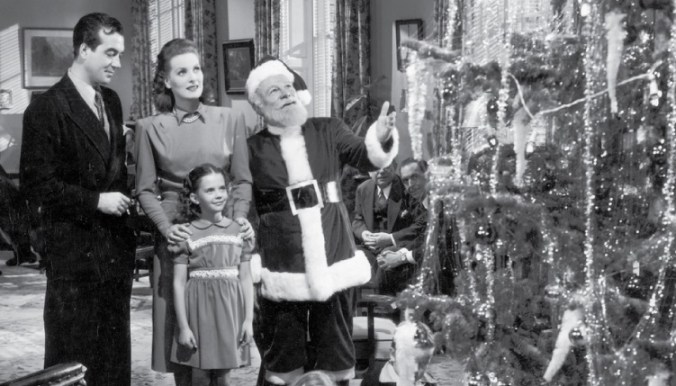
Quite a while ago—I’m afraid to check—I asked readers to submit nominees for popular songs with an ethics theme or lesson. Lorne Greene’s one hit recording ( his vocal version of the “Bonanza” song did not fly off the shelves) was “Ringo,” a pretty blatant rip-off of Jimmy Dean’s “Big John,” was one of the first on the list. I received quite a few suggested songs but events overtook me, and I never finished the project. It is in a growing list of promised future content that I have yet to deliver, including missing parts to multi-part posts. I apologize to readers for all of them, but I also intend to make good on all of them, though the ethics songs compilation is understandably low priority. I was happy to finally finish the Ethics Guide to “Miracle on 34th Street” after it languished for a year. The top priorities on the catch-up list right now are Part II of Three Ethics Metaphors: The Rise, The Presidency And The Fall Of Donald J. Trump—that will be on the “Animal House” parade plot metaphor for Trump’s election—and, of course, the long-delayed Part III of The Pandemic Creates A Classic And Difficult Ethics Conflict, But The Resolution Is Clear.

Back to Lorne: I met him once, on a Santa Monica beach. He was in swimming trunks, and with his family, extremely friendly, tanned and wearing his hairpiece, which was fantastic. Like several other stars I have met in person, Greene was so strikingly attractive that he would make anyone turn their heads on a street even if you had no idea who he was. Unlike most of the others, he appeared to be a genuinely nice guy.

1. Proud to be off Twitter, Reason #569: After Twitter received notice of its noncompliance with India’s information technology laws, demanding that the company remove content critical of the government’s handling of the pandemic and about farmers’ protests, including tweets by journalists, activists and politicians, Twitter pulled itself up to its full metaphorical height, puffed itself up like blowfish, and protested in part, “We are concerned by recent events regarding our employees in India and the potential threat to freedom of expression for the people we serve.”

Twitter actually said that it cares about freedom of expression! Then, last week, after Nigeria blocked Twitter, it had the gall to tweet…

Twitter Nigeria

This, from the platform that censored the Hunter Biden laptop story and banned President Trump. The Hanlon’s Razor question of whether these are bad people or just stupid people now becomes irrelevant. It’s unethical to operate a powerful communications platform when you are so stupid.

Continue reading

Comment Of The Day: “The Classical Music Critic Of The New York Times Thinks That Symphony Orchestras Should Choose Members According To Race, Gender, And ‘Other Factors’ That Have Nothing To Do With Music”

The Comment of the Day that follows by David Rohde is welcome for many reasons. First, he is a professional musician, and a skilled one. Second, he defends the author of piece I criticized vociferously (and will continue to). Third, I think this is an important issue. Fourth,, a new voice here is always welcome, and we haven’t been getting as many as I would like of late. Finally,, as required for COTD, it is well written and worthy of considerations and debate.

Not that I agree with it, but that has never been a criteria for Comment of the Day honors. Here’s David Rohde’s Comment of the Day. on the post,The Classical Music Critic Of The New York Times Thinks That Symphony Orchestras Should Choose Members According To Race, Gender, And “Other Factors” That Have Nothing To Do With Music.”(I’ll be back with my reaction at the end.)

***

It may be that using blind auditions has elevated the performance level of symphony orchestras. Or it may be serious overkill in an era of a supply-demand imbalance for classical musical talent. But either way, simply rolling this issue into what I know is this blog’s current obsession with – in other words, against – identity issues misses a lot that’s going on here.

First of all, you have to admit that hiring people without knowing who they are in ANY field is kind of strange. In particular, you certainly wouldn’t use blind auditions to cast people in a show, now would you? I know I know, different genres, different requirements. Roles in theater are individual, while 30 or 40 violinists in a symphony orchestra are doing much the same thing.

But I would argue that live classical music IS showbiz, and the sooner that people in that field realize it, the better. If the product is just “the music,” and many people assert that the overall technical performance level is higher than ever, then why is classical music struggling at all?

Second, I think you have to remember what the main impetus of blind auditions was in the first place. While I’m oversimplifying, the essential problem was (or shortly became) the inability of women to secure places in symphony orchestras. A quick check on YouTube of recent orchestra performances now versus 30 or 40 years ago will demonstrate the resulting change. Part of Tommasini’s argument is not to let solutions to problems become so institutionalized that they run past their sell-by date while different problems fester.

Continue reading

The Classical Music Critic Of The New York Times Thinks That Symphony Orchestras Should Choose Members According To Race, Gender, And “Other Factors” That Have Nothing To Do With Music

Just what we need: another area of society where progressives are clamoring for illegal discrimination.

Anthony Tommasini, the New York Times senior classical music critic, argues in an essay whose thesis would have been laughed out of the paper just a few years ago—you know, before the dawn of the Great Stupid—that…

“…ensembles must be able to take proactive steps to address the appalling racial imbalance that remains in their ranks. Blind auditions are no longer tenable….now more than ever, the spectacle of a lone Black musician on a huge, packed stage at Lincoln Center is unbearably depressing. Slow and steady change is no longer fast enough.”

Orchestras now have blind auditions, with those seeking employment playing behind a screen. In the epitome of results-based reasoning, Tommasini believes that auditions must allow unscreened auditions so “diversity” can be achieved, and ensembles “reflect the communities they serve.” In other words, quotas. In other words, hiring lesser musicians because they are the “right” color or gender. This, in an institution that has only one goal and aspiration: to play beautiful music as well as possible. The clear meaning of Tommasini’s conclusion is that it is more important that an ensemble be made up of the right kind of people than it be able to serve the function for which it was created. It is better to have a worse orchestra that ticks off the right EEOC boxes than to have one that sounds good.

Oddly, nobody has ever made this argument regarding, say, NBA basketball teams. Hop-hop music groups. Heart surgery teams. In fact, if I had to pick the perfect example of a field in which requiring racial and gender diversity is self-evidently bats, a symphony orchestra might be it.

Continue reading

A Deeper Dive Into The Western Washington University “No Exit” Protest

empty seast

Guest Post by Rick Jones

[Before I turn the floor over to Rick, also known here as “Curmie,” a couple of comments are in order. I had hoped that the post yesterday about the Western Washington University student protest over the decision to produce “No Exit,” the 1944 existential drama by Jean-Paul Sartre, would generate commentary from Rick, for several reasons. First, he is one of my favorite bloggers on his own, the proprietor of Curmudgeon Central, which has a new post up right now regarding the George Floyd incident one year mark. More relevant to our topic right here and now, Rick is a distinguished college professor, drama teacher and stage director, who has special insight into university students and live theater. As he reveals in the article to come, he also is better qualified to discuss “No Exit” than I; indeed, he has now convinced me to give the work another chance, since it has been decades since I read or saw it.

I also was thrilled to receive this submission from Rick because I feel very strongly that live theater is imperiled in the U.S. I know most readers here do not share my dedication to theater; few Americans do, and fewer all the time. But I have lived a double life (as a character in Tom Stoppard’s “The Real Inspector Hound” adds “At least!”), spending  as much of my passions and energies on theater as any other pursuit from high school until to five years ago, when I ended the 20-year run of my small, maverick, professional theater company. My timing was excellent, because the panic-driven lockdown has killed many of The American Century Theater’s competitors here in the D.C. area, maybe most of them, and a year of using Zoom and streaming services has undoubtedly convinced many one time audience members that live theater isn’t worth the time, inconvenience or expense. In the same period, toxic political correctness, political obsession and woke fanaticism has grown exponentially, and these were existential threats to theater already.

The “No Exit” controversy is a symptom of a very serious threat to live performance art, which has been a force for uniting societies and enlightening the public for centuries. We need it more than ever now. A lot is at stake. JM]

***

My department has produced “No Exit”(which, by the way, I like a lot more than you do, Jack) twice in the last decade.  The first of these was directed by a talented and intelligent female student (an ardent feminist, by the way) who went on to earn a Master’s from a prestigious university overseas.  And we also did an online-only production last fall, directed by a colleague who’s one of the smartest people I’ve ever known, with a PhD in Theatre from arguably the best doctoral program in the country.  Oh, did I mention that she’s a lesbian? 

And, of course, the sense of isolation in the play was a major reason the play was chosen: because we all have a greater understanding of that phenomenon now than even the most creative thinkers could have managed a year earlier.  Moreover, please forgive me if I think that perhaps my colleague, who has published and taught courses on Queer Theatre, might have a more sophisticated understanding of the concepts at play in that particular theoretical framework than would a gaggle of pretentiously woke undergrads.

I am apparently lucky not to be at WWU.  When I announced my show for this spring as Jean Genet’s “The Maids”and described the two central characters as “would-be murderers who engage in sado-masochistic lesbian incest,” it generated interest on the part of most of our best actresses; if there was any dissent—from either very liberal students or a very conservative larger community—I never heard about it.  (Side note: although it wasn’t produced until later, “The Maids” was chosen and announced prior to”No Exit” which was a late substitution for a play we were unable to do.  I wouldn’t have chosen to do two existential French dramas from the 1940s in the same season, but that’s what we ended up with.)

But revenons à nos moutons.  When I started this response, I intended to go point by point through the students’ commentary, but that got really long, as virtually everything they say is nonsense.  So: a few general points:

Continue reading

Morning Ethics Warm-Up, 5/29/2021…Down The Rabbit Hole! An Unethical Ghost, A Stupid Newsreader, And A White-Hating Dean Walk Into A Bar….

Rabbit

Ghost Ethics! I just watched an Amanda Seyfried Netflix movie called “Things Heard And Seen,” which I recommend neither seeing nor hearing. What I got out of it—spoiler alert, if indeed a crummy movie can be spoiled—is that ghost ethics are a little bit “problematic” as Prof. Turley would say. The spooks don’t quite get the “Fix the problem before it’s too late” obligation. In this movie, the benign ghost of a murdered woman who had been the original owner of an old house bought by an ambitious, sociopathic college professor takes the professor’s victimized wife under her spectral wing, knows that the husband is up to no good, but only does anything proactive to get rid of the husband after the monster has killed F. Murray Abraham (who still looks like Salieri!), run a woman who was on to him off the road, putting her in a coma, and finally chopped up lovely Amanda, who plays the wife, with an ax. THEN the ghost drags the husband to Hell, which we know the ghost knew was going to be his fate before Amanda got the Lizzy Borden treatment.

Talk about locking the barn door after the horse is gone…

1. Isn’t it good to know that news readers all over the world are just as ignorant and incompetent as ours are? Bill Shakespeare, the first man to get a pandemic vaccine, died last week of non-virus causes. A Spanish newscaster, Noelia Novillo, as photos of the Bard’s namesake flashed on the screen, announced the story this way:

‘We’ve got news that has stunned all of us given the greatness of this man. We’re talking about William Shakespeare and his death. We’ll let you know how and why it happened.As we all know, he’s one of the most important writers in the English language – for me the master. Here he is. He was the first man to get the coronavirus vaccine. He’s died in England at the age of 81.”

No word yet regarding whether the station fired this ignoramus. Why bother? She’ll just get a job at CNN…

2. Speaking of locking barn doors…actually more like locking the cellar door after the horse has escaped from the barn…Southwest Airlines announced yesterday that it will not resume alcohol service in June as previously announced, because a woman attacked a flight attendant on a recent Southwest flight in an incident that had nothing to do with alcohol consumption.

Ethics Alarms is so fond of the practice of punishing innocent members of the public for the isolated conduct of a single wrong-doer (Should I call it “The Chauvin Solution”?) and this is even worse. There is no nexus between the incident and Southwest’s response at all, except the unproven theory that if passengers have become unusually cranky during the pandemic (with Southwest insisting that passengers re-mask between sips of Coke), they’ll be even crankier once they’ve had a few little bottles.

Continue reading