If you need another bit of evidence about how social media wastes our time—and why would you?—consider the uproar over the search for a replacement for Alex Trebek. The original “Jeopardy!” host, Art Fleming, was popular too, and he hung around for 11 years. That was sufficiently long to be briefly legendary; the “Jeopardy!” announcer, Don Pardo, was familiar enough that Saturday Night Live! used him and his unique voice as a running joke for decades. But when Fleming retired, there was no controversy over his replacement, because, seriously, who cares who reads the questions and answers in a quiz show, unless they have a speech impediment or sexually harass the contestants, like Richard Dawson on “Family Feud”? But in the Age of The Great Stupid, everything is a big deal.
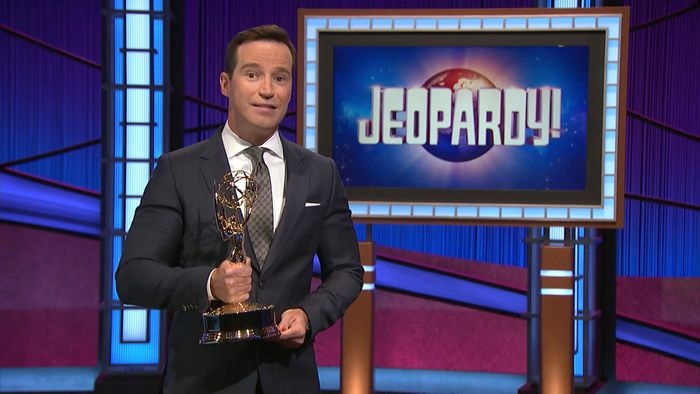
After months of celebrity tryouts, kind of like Presidential primary debates, “Jeopardy!” has finally chosen two replacements for the late Alex Trebek. The actress formerly known as “Blossom” and later as Sheldon’s girlfriend on “Big Bang Theory,” Mayim Bialik, will host the prime time version and its spinoffs. Can’t wait for those spin-offs! Bialik is legitimately smart and knowledgeable, and not just compared to other performers: she has a PhD in neuroscience from UCLA. She also, like most successful TV actors, projects a likable personality. And, of course, she’s a woman. I assumed a black host would be found, but Steve Harvey’s already taken.
The kerfuffle is over Trebek’s replacement for the main, daily syndicated edition, which has been around since 1984. The show’s current executive producer, Mike Richards got the job. Richards was not one of the more popular auditioners, but he had one thing the rest didn’t have: the power to choose who got hired. He thought, and thought, and chose…himself! This suggests that the process was rigged.
I owe Ann Althouse for finding this; I never would have, especially since I’m disgusted with YouTube.
Above is a montage of all of the TV series offered to the public by ABC in the Fall of 1961. It’s worth noting that in 1961 the Fifties culture was still going strong, though JFK had replaced Ike as President. What we think of as the cultural Sixties didn’t really start until after Kennedy’s assassination in November of 1963. Also worth noting: ABC was the perennial least watched network on 1961. That meant they took the most risks, but ’61 was not a good year for ABC.
What can we learn from the montage? Culture is ethics and ethics is culture; this is a snapshot that shows what a large percentage of Americans watched at night, and what contributed to their worldview. It is fair to say, I think, that nothing in popular culture today influences an many people as even ABC’s prime time schedule did. The snap shot reveals where the nation has progressed, and what it has lost. In 60 years, there is a lot to consider.
Ethics Alarms’ resident musician has a fascinating Comment of the Day humming with informative observations, and best of all, it has nothing to do with the Wuhan Virus vaccine
Jack, it makes perfect sense that you bring Heather Mac Donald’s very long, two-part screed to your readers’ attention. It’s gotten a lot of notice in the music world. Personally I respect Ms. Mac Donald’s place in the overall cultural and political discussion, whether I agree with her writings or not. I’ve noted either her research or simply her references to the variables of two-parent families and basic levels of educational attainment as fundamental explainers of personal achievement, independent of ethnic background. Her views are part of the overall discussion in America today, or should be.
All that said, her big article about classical music is flawed in at least three ways. Here are those issues:
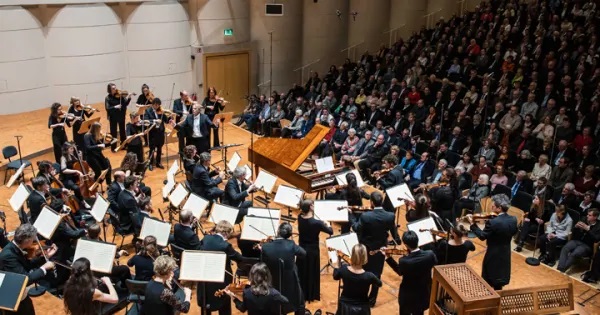
1. A lot of the article confuses music with musicology. The latter field has been kind of nuts for a while, extending way back before last year. The principal educators of today’s and tomorrow’s performing artists are not theoretical musicologists. They’re a combination of distinguished performers themselves and effective pedagogues, often combined in the same person. I’m not going to excuse some of the crazier things that have recently come out of Juilliard and elsewhere, but conservatory education remains very rigorous and performance-focused, indeed arguably too much so given the supply-demand imbalance for classical music talent.
2. The article is not really fair to the Sphinx Organization. One of the things that Sphinx does is to deal with the same overwhelming problem of expenses for families of limited means that you see in sports such as baseball and soccer. This time of year they bring in, for example, string players – yes “black and brown” ones – to top schools and institutions for intensive education and opportunity for rehearsal and performance experience. An example of someone who came out of the Sphinx Organization is the fantastic violinist Melissa White – yes that’s her name. Melissa has performed in our region at the Phillips Collection in D.C. and the Richmond Symphony, and she has numerous recordings to her name with the Harlem Quartet (which actually performs a huge range of traditional classical and other, adventurous music). And as you know, I believe it is completely valid to assert that, just as in other fields of employment, classical music employers should assess the whole person and what they can bring to an institution, even if their performance chops are obviously the primary criterion.
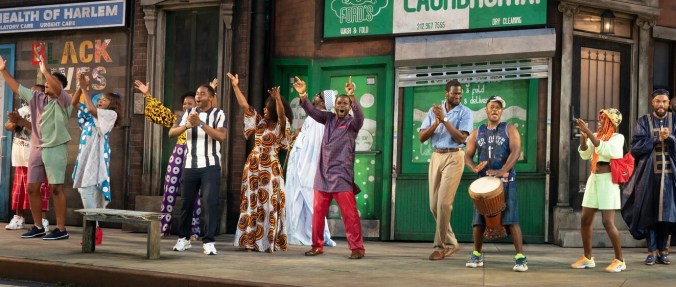
“The Merry Wives of Windsor” in Central Park is a “Critic’s Pick” by the Times theater reviewer Jesse Green. We learn that William Shakespeare’s “comedy of clever women, frail men and harsh revenge” has been “shaped” into one of “love and forgiveness.” We are informed that a drummer from Zimbabwe leads the audience in a call and response chorus of vernacular African salutations: “Asé” (Nigeria), “Yebo” (South Africa) and “Wau-Wau” (Senegal) among them. We are informed that the adapter has cut the number of characters in “The Merry Wives of Windsor” nearly in half, and that the running time is more than a third shorter than the Bard’s 1597 comedy.
Yes, and the “adaptation” apparently eliminates much of Shakespeare’s wordplay, including politically incorrect words like “master” and “mistress,” which Green says have “buzzkill implications.” Gone too are “misogynist references.” Predictably the setting is no longer England, or Windsor, but Harlem: it is difficult to find a a production of any Shakespeare play today that has any connection to the original in time or space.
The director and adapter have also “made several adjustments to embrace queerness where the original used it merely for humor.” Of course.
I hate to inflict that song on you (the singer/composer was the late Jess Cain, once the most popular disc jockey in Boston) but I have limited options. The 2021 Red Sox, who were sailing all season to what looked like a certain play-off slot , are suddenly in freefall, with the hitters not hitting and the pitchers not pitching. They face a double-header today, and a double loss would be disastrous. After the 1967 Red Sox “Impossible Dream” season, the best summer of my life, when a team of virtual kids won the closest pennant race in baseball history by a single game after finishing in a tie for last place the year before, WHDH, which then carried Boston’s games, put out the cheesy but wonderful commemorative album above, containing clips from broadcasts of the most memorable games and Cain’s song, tied together by Sox play-by-play announcer Ken Coleman reciting one of the worst pieces of doggerel ever heard by human ears. At one point, Ken recounted a desperate point in the team’s underdog quest, and, having set up the rhyme with “zero,’ intoned, “We have to have a hero.” Cue the Yaz song!
I’ve been thinking about the need for a hero, indeed more than one, quite a bit lately, in matters more consequential than the Red Sox season (well, for normal people anyway.) The Sox sure need one today. If he shows up, maybe it will be an omen…
Incidentally, Yaz deserved the song. Modern metrics show that his Triple Crown, Gold Glove, MVP 1967 season was the second best of all time. (Babe Ruth had #1, naturally.) Anyone who followed that 1967 season knew it before the numbers were crunched.
1. More free speech threats in the Biden Era, but Donald Trump was a threat to democracy…The Baltimore Symphony fired Emily Skala, 59, the orchestra’s principal flutist for more than three decades, because she shared social media posts expressing doubt on the efficacy of vaccines and facemasks. Fellow musicians, audience members and donors complained, so it was bye-bye Emily. Skala, no weenie she, will challenge her dismissal, and accuses the orchestra of creating a hostile environment where she was being attacked for expressing unpopular views. I’d say that is likely. Musicians as a group are about as progressive and open to conservative views as college professors.
Skala angered many of her colleagues for sharing posts questioning the results of the 2020 presidential election—Oooh, can’t have that! She was also criticized for saying that black families needed to do more to support their children’s classical music studies. Wow, this woman is a veritable Nazi! Amusingly, the New York Times cites as among the examples of social media “disinformation” that got her fired were “false theories suggesting that the coronavirus was created in a laboratory in North Carolina” and posts “raising concerns about the safety of vaccines.”
That’s funny: it wasn’t too long ago that suggesting that the virus originated in a Wuhan lab was considered disinformation. And didn’t Joe Biden and other prominent Democrats raise “concerns” about any vaccine produced under the Trump Administration?
I’m just spitballing here, but if only we had some heroic organization that defended free speech, regardless of what side of the political spectrum it came from. It could call itself…let’s see…the National Civil Liberty Protection Alliance, or something like that…
2. Believe it or not, this Russian lawsuit isn’t frivolous, just mind-meltingly stupid. Thanks to Curmie for passing along the saga of Ksenia Ovchinnikova, an Orthodox Christian in Omsk, Russia, who is suing McDonald’s on the theory that its ads made burgers seem so yummy and irresistible that they made her break her fast for Lent in 2019 after years of successfully avoiding meat. She wants 1,000 rubles ($14) as damages for “sustained moral damage.”
The reason this isn’t frivolous (at least not in the US) is because a lawsuit clears the bar if it seeks a new interpretation of existing law, no matter how wacky. Of course, a heroic lawyer would tell the woman, no matter what she offered to pay, “You’re out of your mind, and I’d rather eat my foot than disgrace my profession by taking such a ridiculous case. By the way, would you like this corndog?” Continue reading →
I often feel like issues and discussions fly by too quickly on Ethics Alarms, as trivial matters like an old Star Wars fanatic’s vulgar window sign and the desperate efforts to frame a celebrity gymnast’s ill-timed choke blot out the ethical controversies that are most important to ponder and understand. Fortunately the commenters here often take steps to ameliorate that flaw, as veteran reader Dwayne N. Zechman does here. His Comment of the Day amplifies a post from a week ago that came in the middle of the earth-shattering question of Simone Biles’ “twisties” and only inspired 22 comments other than mine (my replies to comments don’t count). This, despite the fact that, to evoke Ben Bradlee (Jason Robards) at the end of “All the President’s Men,” nothing’s riding on what a Federal Appeals Court ruled in the case at issue “except the First amendment to the Constitution…and maybe the future of the country.”
August 6, 1945 is one of the most important ethics days of all, and among the most controversial. The United States bomber Enola Gay—now on exhibit in a hangar near Dulles Airport, dropped the first atomic bomb on the Japanese city of Hiroshima. Approximately 80,000 people were killed in seconds, and another 35,000 were injured. More than 60,000 would be dead by the end of the year from the effects of the fallout. Was the launching of the nuclear age by the United States ethically justified to save American lives (an invasion of the Japanese mainland had been estimated to risk a million U.S. casualties) and end the war? Was President Harry Truman guilty of a war crime, as non-combatants, including children, constituted most of the deaths? Did the horrible results of the new weapon prevent World War III, or make it more likely? These are still intensely debated questions by scholars, historians, theologians, military strategists, philosophers and peace activists.
1. Well, I’ve been spoiling for a fight, shopping around Northern Virginia and fining myself one of the few unmasked. So far, nobody’s said a word, but anyone who does is in for it. I’ve been vaccinated twice and probably had a mild, symptom-free infection before that. I have always been unusually resistant to viruses. Mask fog up my glasses and make me miserable. If you have chosen not to get your shots, swell, that’s your choice, but your exercise of personal liberty is not going to restrict mine without a fight. And don’t tell me I have to wear a mask so phobics feel “safe.” That’s not my problem either. I am not inclined to “social distance,” either. The mask fetish is going to strangle community, society and the joy of life unless we draw some hard lines. I’m drawing.
David Rohde, a talented theater profession in the Washington, D.C. area and one of the smart ones too, has some thoughtful observations on the performing arts world’s adjustment to the Wuhan virus. Here is his Comment of the Day on Item #2 in “Sunday Ethics Warm-Up, 8/1/2021: Simone Biles-Free Zone Edition!”
I’ll be back at the end to return is volley on the future of live theater…
***
I agree with you that the universal masking requirement at Broadway theaters is likely to depress sales, even among those patrons who don’t yet think it matters. When they actually decide whether to go or not, hesitation is likely to creep in. I’ve been to several masked (and, in these cases, distanced) performances of things during the pandemic, and a universal feeling among the performers – who, yes, sense the audience even if there’s a “fourth wall” involved – is that it’s an odd atmosphere because they can’t read facial reactions.
It appears that performing arts presenters in general are trying to get “through the moment” by issuing clear, simple rules to get their institutions reopened. But if you really want to see a furious reaction, check out what happened after the Metropolitan Opera followed up its earlier announcement of required proof of vaccination with an edict that all children under 12 would simply be banned from the building. (As opposed to Broadway’s approach that families can bring proof of a negative test for their kids who are not yet eligible for vaccination.)
You can argue that fewer operas are geared toward attendance by children of those ages than musicals. But the Met’s announcement appeared to touch several cultural third rails, from an accusation that the opera company was acting in almost a Salem Witch Trials manner to a reaction that the Met was killing all global efforts to prove that opera isn’t only for old people. People posted photos on Twitter (I know I know, Twitter) of having taken 10-year-olds to the Met to introduce them to opera, and numerous people pointed out that actually quite a number of famous operas feature children’s choirs somewhere within their plots. The Met actually has a number of distinct challenges in opening its season on time, and this reaction, even leaving aside the obvious trolls and Twitter fakers who are reacting on that platform, is yet one more hurdle.
I have now read many articles, almost all of them from pundits who for five years heaped the most abusive rhetoric on the previous President of the United States that any POTUS has had to endure, that Donald Trump should join President Biden, or Barack Obama, or even George W. Bush for a national, joint appeal to the vaccinated to do the right thing for their nation, swallow their fears, and get their shots. Writes one Trump-detesting letter writer to the Times this morning (well, the odds are high that anyone who writes to the Times is Trump-detesting”) who imagines an Obama-Trump Kumbaya PSA spot where a smiling Trump sits next to Barack and says, “We hardly agree on anything , but we do agree on one thing: You should get the Covid vaccine now!” “It just takes two grown men to do it!” the saddened patriot concludes.
Sure, in a vacuum, this fantasy seems reasonable. In reality, it can never happen, and I find myself gravitating to an unethical position that says that if Democrats like Biden and Obama, or Bush, really want Trump to join with them on anything but especially this, they should have to pay a large, painful and probably unpalatable price.
In Roadrunner: A Film About Anthony Bourdain, filmaker Morgan Neville,examines the life and death of the famous TV chef Bourdain. In the process of doing so, he introduced a new documentary device: using Artificial Intelligence to simulate Bourdain’s voice.
In a recent interview with the New Yorker, Neville explained that he used AI to synthetically create a voiceover reading of a Bourdain email that sounded like Bourdain was the reader. He engaged a software company and provided about a dozen hours of recordings, allowing them to create a convincing electronic version model of Bourdain’s voice. That voice reads three lines in the film, including an email sent to a friend by Bourdain: “My life is sort of shit now. You are successful, and I am successful, and I’m wondering: Are you happy?” But Bourdain, of course, never read that or any of the other three lines, to which Neville’s message to viewers is “Nyah, nyah, nyah!” “If you watch the film … you probably don’t know what the other lines are that were spoken by the AI, and you’re not going to know,” he said.
Well, critics, including Ottavia Bourdain, the chef’s former wife, objected to the ethics of an unannounced use of a “deepfake” voice to say sentences that Bourdain never spoke.
I was going to make this an Ethics Quiz, and then after thinking about for a few seconds, decided that the issue doesn’t rate a quiz, because I’m not in nay doubt over the answer. Is what Neville did unethical?
Yes, of course it is. It is unethical because it deliberately deceives listeners into believing that they are hearing the man talking when he never said the words they are hearing. It doesn’t mitigate the deception, as Neville and his defenders seem to think, that Fake Bourdain is reading the actual unspoken words in an email. It’s still deception. Is the creation and use of a zombie voice for this purpose also unethical, like the creation of CGO versions of famous actors to manipulate in movies they never made, discussed (and condemned) here?
That’s a tougher call, but I come down on the side of the dead celebrity who is being made into an unwilling ventriloquist’s dummy by emerging technology.
This would be a propitious time to point out what is ethical and what isn’t when it comes to using a dead celebrity’s voice, real or fake, in various forms of communications and education:



 Ethics Alarms