Morning Ethics Warm-Up, 1/30/2021: Oh, The Usual…Race-Baiting, The Pandemic, Betrayals, Journalism

SCOTUS Morning

Late reflections on this morning’s first post:

  • The story of how the only official to be referred for criminal prosecution as a result of the illegal Justice Department machinations to cripple the Trump administration was reported on page A20 of the New York Times front page this morning. Thirty stories were considered more important for Times readers to know about, including the discovery of  200-year-old fort built by indigenous Alaskans.
  • From the Times report: “The Justice Department has said it no longer believes the full range of evidence available to it by the final two extensions met legal standards to invade Mr. Page’s privacy.” This is deceptive: the purpose of the FISA warrant was to surveil the Trump campaign. meaning that the surveillance was illegal. Page was a means to an end, and the end being sought was redolent of the Nixon dirty tricks that spawned Watergate. The Times is burying the significance of what Clinesmith did. Similarly, the headline “Ex-F.B.I. Lawyer Who Altered Email in Russia Case Is Sentenced to Probation” is deliberately deceptive. The objective of the “collusion” claims were to sink the Trump Presidency, not to punish Russia.
  • A single day’s riot that breached the Capitol and had no tangible effects of the government at all is being routinely labelled an “insurrection,” while a two year effort to cripple a Presidential administration using false evidence and involving the Justice Department, the FBI and news media  is reported as an inconsequential legal matter.

1. Finding systemic racism where it wasn’t. Cicely Tyson died at the age of 96. Like Charlton Heston, the African-American actress became an icon by playing iconic roles. She had by any standards an acting career an actress should be proud of, and most performers would envy: she appeared in 29 films; at least 68 television series, mini-series and single episodes; and 15 productions on and off Broadway.  She  was honored with an Oscar, three Emmys, many Emmy nominations, a Screen Actors Guild Award and a Tony, and accomplished it all while being a non-beautiful woman in a profession that values beauty above all, mostly limiting her to character and historical roles.

Yet Times critic Wesley Morris, an African-American who  has a narrative to advance, writes in an appreciation, “Let’s face it: the great parts were always headed to someone whiter anyway… Consider the parts she could have played if the movies were fairer.” This is approximately equivalent to saying, “Imagine the parts Mickey Rooney could have played if the movies were fairer.” Tyson was unique and talented, and the movies were sufficiently fair for her to play major roles in major projects throughout a long career. There are undoubtedly African American actresses who consider it unfair that when a black female character was being cast in a hsitorical film, Tyson was ha the right of first refusal.

Might she have been cast in “The Jagged Edge” in place of Glenn Close? Sure—so could Faye Dunaway. Or Ellen Burstyn. The difference is that those actresses can’t use racism as the reason they weren’t cast.

In addition to her stellar career and reputation, Tyson died with an estate worth at least 10 million dollars. Hollywood has been racially biased for decades, but Cicely Tyson shouldn’t be cited as a victim. Like so many of the individuals she played, she rose above racism by strength of character and ability. Continue reading

Ethics Cleansing, 1/27/2021: I’m Afraid This Edition Exceeds The Limit For Disturbing Stories…

Horrible text message

As a prelude, I don’t know why some commenters are arguing that the 1876 William Belknap impeachment trial is a valid precedent for trying a private citizen no longer in office on a charge that has no other purpose but to remove that individual from his or her federal office. It’s just a bad argument, which is why Belknap has only been raised by desperate anti-Trump zealots. As I pointed out in the comments, an unconstitutional act doesn’t change the Constitution. There have been many, many unconstitutional actions by our government that were allowed to occur in the past (President Jackson’s defiance of the U.S. Supreme Court to forec the Trail of Tears is an especially egregious one.\); they still can’t be cited as proof that the actions were Constitutional, or precedent for violating the Constitution again. Balknap, who had resigned as Grant’s Secretary of War just as he was about to be impeached by the House, submitted to the Senate’s unconstitutional trial. I have always assumed this was because he was certain that he would be acquitted, so he could later claim innocence. (He was incredibly guilty.) Since he was acquitted, there was no occasion to challenge the trial, the issue being moot.

The entire system was in chaos in 1876; if the Belknap trial is binding precedent that a private citizen can be tried by the Senate to remove him from office when he isn’t in that office, why not make the same claim about the unconstitutional deal between Republicans and Democrats to install the loser of the 1876 Presidential election (Hayes) in the White House in exchange for removing federal troops from the former Confederate states?

1. An example of ethical trolling, I think:

Ironic Tweet

Miller is getting all sorts of outraged responses from critics online who seem to have missed the critical fact that he was just quoting Maxine Waters’ call for harassment of Trump administration officials. Normally I regard deliberate posting of positions one doesn’t believe as unethical unless the poster makes the sarcasm or irony obvious. This one is obvious, unless the reader wasn’t paying attention to how irresponsible and vicious Democrats were in the past four years, and if the such a reader was that ignorant, he shouldn’t be involved in the discussion at all.

Continue reading

End Of Day Ethics Sighs 1/21/2021: Here’s Kamala! Here’s Batwoman! Here’s Your Newsmedia! And “Heeeere’s Johnny!”

sigh

A very good friend who is married to another very good friend posted yesterday that Kamala Harris’s swearing in as Vice-President moved him to tears, and the Facebook post instantly harvested about a hundred “likes” and “loves.” As God is my witness, as Scarlett used to say, I had to fight to restrain my self from writing on his page (since there is no “What the FUCK is the matter with you?” icon to click on), “Why, because she’s a woman with no qualifications to be President or Vice-President? Because she’s the first Indian-Jamaican VP, and you’ve always wanted one of those? Because she’s just the right skin-shade to pretend to be an African-American, when she’s not? Does it choke you up because she slept her way to political power, then locked up a lot of black men for drug crimes, then accused the U.S. of being racist because of “over-incarceration”? Or does any Democrat, even phonies and rank incompetents, getting power make you feel all misty inside and out? Really, I’m curious.”

Well, he’s a nice, good-hearted guy who has the political sophistication of a cheese, so I just shut up. However, his reaction is just incomprehensible to me.

1. Oh, look, now there’s black Batwoman. Yay. Isn’t this a little cliched and formulaic by now? Will every fictional character eventually have to be made black or have his or her race switched, and every male character get virtual transexual transitioning, to satisfy the Woke and Wonderful? Mikey (who liked Life cereal), is now a girl. Jake from State Farm is now black. Perry Mason’s Paul Drake in the new reboot is black. Inspection Lestrade, Sherlock Holmes’ ally, is black on the Netflix Holmes spin-off. (Watson became female in the TV show “Elementary.” And Asian!) A really bad movie made Ralph Kramden from “The Honeymooners” black; Norton too. On Broadway, when there was a Broadway, Alexander Hamilton and Aaron Burr were black, and they aren’t even fictional. Of course.The whole Ghostbusters team was turned female for the reboot (but still had only one black member). There is much, much more. Isn’t this lazy? Isn’t this boring? Don’t women, blacks and other minorities want to have their own popular and iconic characters rather than just taking over white or male ones? Why isn’t such fake “diversity” an insult? Aren’t hand-me-down characters like hand-me-down clothes?

Continue reading

The Supreme Court And Taylor Swift Ethics

It is generally regarded as a sign of ethics, courage and character to take action “on principle.” In theory, this means that non-ethical considerations (like enrichment, power and popularity) are not the actor’s goals; making a statement for the enlightenment of society is. However, actions on principle can often be quixotic and even silly, causing greater damage, as well as wasting time and money, “on principle” than the message is worth. The folly was nicely illustrated in the ancient burlesque skit above known as “Pay the Two Dollars.”

The issue of how far it was reasonable to go “on principle” was recently explored, of all places, in the U.S. Supreme Court in the oral argument of the case Uzuegbunam v. Preczewski.

Chike Uzuegbunam, a student at Georgia’s Gwinnett College in Lawrenceville, was threatened with discipline under the school’s speech code that violated his and other student’s First Amendment rights. He sued the college but it quickly backed down, eliminating its speech restrictions and replacing them with one that allows students to “speak anywhere on campus and at any time without having to first obtain a permit.” State officials said the change made the case moot. A trial judge agreed, and the United States Court of Appeals for the 11th Circuit, in Atlanta, affirmed her ruling.

Uzuegbunam and his student supporters, however, felt strongly that an official declaration that their rights had been violated was important, and they appealed on the grounds that they should be able to pursue their case for nominal damages. This was the issue that got the case before SCOTUS.

Continue reading

Ethics Footnotes, 1/17/21:Well, I’M Reading, Anyway…

Boy, only diehards are on Ethics Alarms today, yesterday too. I don’t get it; it’s a long weekend, but so what? It’s not like everyone is traveling on long weekends while American are still trembling in terror over the Wuhan virus. Must ethics take a holiday? Apparently so...

1. How can anyone have sympathy for New Yorkers? The city is falling apart. Crime is up, the wealthy are fleeing, corporations are fleeing, the mayor has eliminated admission tests for much of the public school system and stated that his goal is to redistribute wealth, Times Square has returned to pre-Rudy squalor, and tourism was falling like a rock even before the pandemic. They voted for a confessed socialist as mayor (and for his communist, conflict-of-interest flaunting wife)—perhaps acceptable as a novelty—then re-elected him after a disastrous first term. Now, six months ahead of this year’s Democratic mayoral primary that will decide who the next mayor will be because the city’s minorities wouldn’t vote for a Republican if he was running against Nero, the natives are getting restless. Polls show that New Yorkers regard de Blasio’s pet issues of combating climate change and pollution on the bottom of their priority list, but only 56% of respondents said they hold a “very or somewhat unfavorable” view of the guy that was the architect of the city’s collapse. Why isn’t it more like 90%? I suppose for the same reason they elected him twice. In democracy, you get what you deserve. Civic literacy is the individual’s ethical responsibility, nobody else’s.

2. Now THIS is an incompetent elected official…Pennsylvania Lt. Gov. John Fetterman (D) actually said in a video posted last week—I wouldn’t kid you!-–“This idea that saying that Pennsylvania was ‘rigged’ or that we were ‘trying to steal the election,’ that’s a lie. And you do not have the right, that is not protected speech.” Fetterman goes on to say that Twitter should have immediately removed any tweet from President Donald Trump that questioned the integrity of the election, and, in the immortal mark of someone who doesn’t know the First Amendment from a Yorkshire Terrier, compared Trump’s claims to “yelling fire in a crowded theater when there is none.”

This idiot is reportedly considering a run for the U.S. Senate in 2022.

To be fair, Fetterman’s view of the free speech,which is to say “there is none unless progressives approve,” appears to be on the way to becoming the predominant one in the Democratic Party.

Don’t blame me, I voted for Kodos…

Continue reading

Saturday Ethics Alerts, 1/16/21: “Nevermore!” If Only…

Raven Addams

The 18th Amendment to the U.S. Constitution, prohibiting the “manufacture, sale, or transportation of intoxicating liquors for beverage purposes,” was ratified by the requisite number of states on this date in, 1919. It was a great, botched, ethics experiment. Alcohol was too far embedded in the culture for too long and in too many ways, and the laws prohibiting alcohol were badly drafted and engendered public resentment and contempt. Still, as the Ken Burns documentary on the topic made clear, the damage being caused by alcohol abuse before Prohibition was permanently slowed down and reversed by the ban, though the ban itself was doomed from the start.

1. Quote of the Day: I just finished watching “We Bought A Zoo” again, and it reminded me of the quote, alluded to in the film, by the real life English man who did buy a zoo, and whose story was transferred to America in the film staring Matt Damon. Benjamin Mee said in his book (with the same title as the film) about the adventure, “You know, sometimes all you need is twenty seconds of insane courage. Just literally twenty seconds of just embarrassing bravery. And I promise you, something great will come of it.”

He’s absolutely right, and this principle has enriched my own life too many times to count.

Continue reading

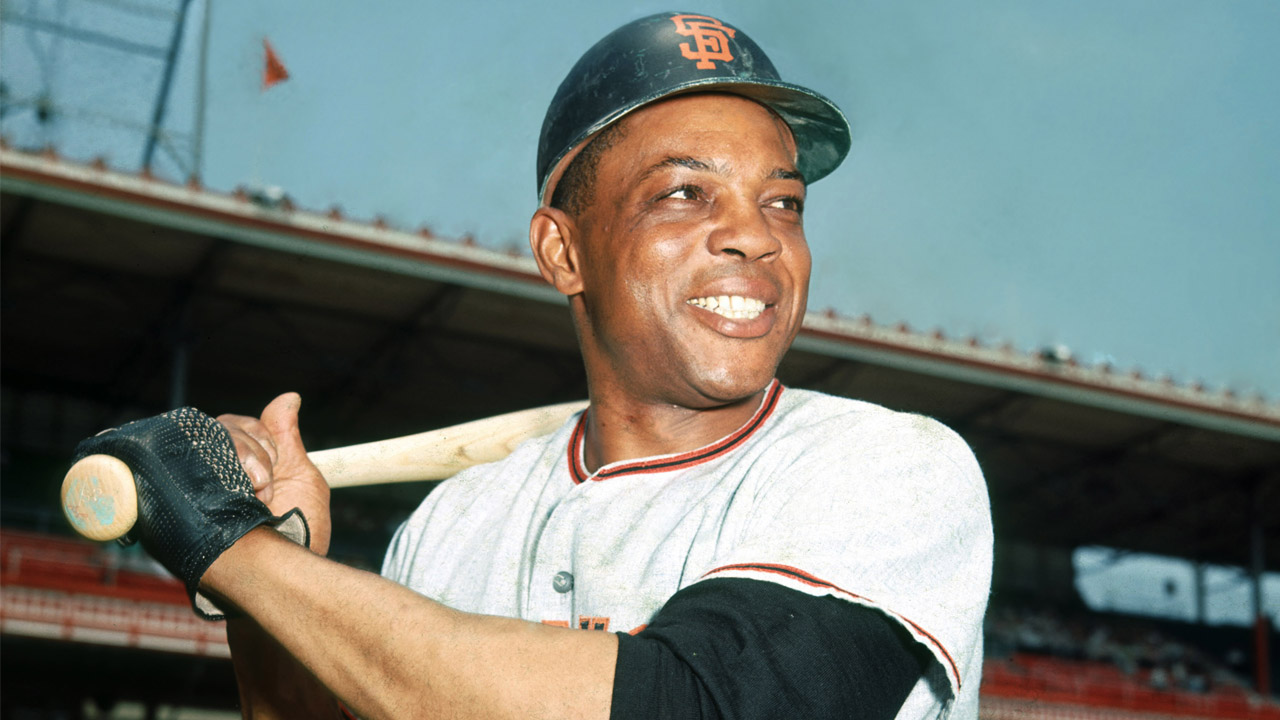
When Tommy Lasorda Coached “Danny Kaye”: An Ethics Tale

Brian and Tommy

I wrote about my friend Brian Childers, a brilliant actor, singer, and all-around great guy, in this post, “An Act Of Kindness, Danny Kaye And Me : An Ethics Case Study,” from five years ago. It’s worth reading, if you haven’t already or don’t remember it. Brian continues to have a thriving career in New York City, with a successful album, roles in plays and musicals, and periodically, thrilling audiences with his dynamic recreation of Danny Kaye’s legendary one-man performances, the legacy of an adventure he and I set out upon over two decades ago.

I was recently tagged in a Facebook post by Brian, who related for the first time a revealing encounter he had with Tommy Lasorda, the Hall of Fame manager of the LA Dodgers for many years and legendary for his leadership abilities, lovable personality and positive attitude. Tommy died recently at the age of 93, and baseball fan that I am, I had been trying to justify mentioning him in an ethics post. Well, Brian took care of that with his usual flare.

He wrote in part,

I had the enormous privilege to meet this sports legend while performing at the Hollywood Bowl for 3 nights in 2008. The event was called “A Ball at the Bowl” and it was celebrating 50 years of the Dodgers in LA. I was there to sing Danny Kaye’s “D-O-D-G-E-R-S” song and one other with the LA Philharmonic.

Tommy’s dressing room was right across the hall from mine. On the first night, Tommy, whom I had never met, surprised me by knocking on my dressing room door. He introduced himself and was incredibly friendly. When he asked what I was doing in the event, I said I would be singing Danny Kaye’s Dodgers song with the orchestra.

He was ecstatic, but IMMEDIATELY put on his coach’s hat. “ You gotta go out there and you gotta sing great! You gotta go out there and knock em dead, Just focus on the song and you are gonna knock it out of the park,” he said, just like I was a rookie getting ready to play my first game. I thanked him for his encouragement.

While I was performing, I could hear Tommy in the wings yelling and clapping. When I walked off stage, he pounded me on the back, shouting, “Great job! You hit a home run buddy!”

Continue reading

Art Ethics: The South Carolina Toilet Brush Flag

SC flag design

You would think it’s such an easy principle to understand and execute. In art, as with all products and services, it is the quality of the work that matters, not the artist, creator or provider. But in the era of The Great Stupid, where woke sensibilities routinely turn logic and wisdom on their heads and inside out, something as intrinsically sensible as this suddenly becomes hard to grasp.

Take, for example, the new South Carolina flag design, as fine an example of “bias makes you stupid” as one could imagine. You see, the South Carolina flag has long consisted of a crescent moon and a palmetto tree, but designs varied. Why a palmetto tree? Also known as the Sabal palmetto, cabbage-palm, cabbage palmetto, blue palmetto, Carolina palmetto, common palmetto, swamp cabbage and sabal palm…

Palmetto

…the tree is native to the southern United States, as well as Cuba and the Bahamas. In the Revolutionary War, South Carolina palmettos played a key role in the defeat of the British fleet at Fort Moultrie on Sullivan’s Island. The fort was constructed out of palmetto logs, which efficiently absorbed the impact of cannon balls, according to the State Legislature’s website. Col. William Moultrie’s 2nd South Carolina Regiment wore uniforms of deep indigo, so Moultrie used the color as the background for the moon and the tree when he designed the first South Carolina flag. Since 1940, however, South Carolina has had no required design for its state flag, leading to an infinite number of variations on flags, logos, posters, mugs, T-shirts, and other merchandise. See?

Continue reading

Mid-Day Ethics Warm-Up, 1/5/2021: Zombie Lawyers! Imaginary News! Dead Ethics Alarms! Wrong Numbers!

zombie-hand

1. The Florida Bar, protecting us all against unethical zombie lawyers...Last month, the Florida Supreme Court approved that Florida Bar’s decision to disbar Sabrina Starr Spradley, a 41-year-old attorney in private practice in Delray Beach, Florida. She died more than a year ago. The rules do not require another attorney or family member to tell the bar when a lawyer being disciplined has died, so poor Sabrina had to suffer the post mortem indignity of being labeled an unethical lawyer.

“We do have 108,000 lawyers in Florida,” a Florida Bar spokesperson explained. “There are a lot of individuals that we regulate. We rely on people to inform us.”

Why? How hard is it to routinely check the obituaries before wasting the Supreme Court’s time?

2. For the fake news Hall of Fame. Because President Trump is “reportedly” (whatever that means) “considering” flying to Scotland instead of attending Joe Biden’s inauguration on January 20, the Independent reports that Scotland won’t allow him in, because it wouldn’t be “essential” travel. Can a news headline (“Trump not allowed into Scotland to escape Biden inauguration, Sturgeon warns” ) be built on fewer facts than this?

Incidentally, there’s no law requiring an outgoing President to attend the inauguration of a President, and if Trump declines to do so, he would not be the first. He’d be the fourth, following John Adams, John Quincy Adams, and Andrew Johnson. A gracious transfer of power is always in the best interest of the nation, and Trump would do himself a favor if he just sucked it up and pretended to be a statesman. I doubt that he will.

Continue reading

From The Law Vs. Ethics Files: This Controversy Has Everything—Fine Art, Nazis, Lawsuits, Sheep…

stolen painting

The painting above is “La Bergère,” or “Shepherdess Bringing in Sheep,” by Camille Pissarro, a renowned French Impressionist. The 1886 painting, like so many other priceless works of art, was stolen by the Nazis in 1941, when they looted the French bank where the Jewish family who owned, the Meyers, it had placed the painting for safe-keeping. Dr. Léone Meyer, whose mother, grandmother, uncle and brother died in Auschwitz, searched for her family heirloom ever since the end of World War II. Finally, in 2012, she traced the painting to the Fred Jones Jr. Museum of Art at the University of Oklahoma.

In 2016, she negotiated a compromise to trade the painting back and forth between the university and a French museum, but the controversy was re-opened when Dr. Meyer decided that she wants the painting permanently dispalyed in France. Now the courts are involved, on two continents. A judicial tribunal in Paris is deciding whether to block the work from being shipped out of France, and ordered Dr. Meyer and the university to meet with mediators. A federal judge in Oklahoma, meanwhile, has threatened to hold Dr. Meyer in contempt if she continued to pursue litigation in France. A trial is scheduled for January 19 in Paris to hear Dr. Meyer’s arguments for keeping the work there, and a second hearing is set for March on whether to prohibit the painting’s trip back to where the the wind comes sweeping down the plain.

Continue reading