The Corruption Problem

“Maybe, just maybe, the legislative and judicial systems have been corrupted, by, dare I say it, corporations?”

—Ethics Alarms commenter and OWS warrior Jeff Field, in his comment regarding the weekend post, The Marianne Gingrich Ethics Train Wreck

I don’t know how Jeff reaches the conclusion that the judicial system has been corrupted by corporations. Judges, unlike legislators, do not grow rich as a result of their inside knowledge and corporate connections. Judges, unlike revolving-door Congressional staffers and lawyers, do not generally come from corporate backgrounds. The fact that a judicial decision benefits the interests of some corporations, and many do not, does not mean that the decision was not just or was influenced by more than persuasive legal arguments. Those who believe that begin with the biased and untenable position that any decision that benefits a corporation must be, by definition, wrong.

So let me put that dubious assertion aside as the result of excessive reformer’s zeal and crusader’s license, and deal with the general proposition that corporations corrupt the legislative system, and society generally. Well, sure they do, but the statement is misleading, and, I would argue, meaningless because it places disproportional importance on the corrupting influence of this one, admittedly important, societal force.

Yes, corporations can be corrupting influences. So can government, and the lure of public office. The news media is a corrupting influence on the legislature, and upon society generally. Religion corrupts; as does popular culture, with its celebration of empty celebrity, glamor and wealth. Non-profits and charities are corrupted by their tunnel vision of specific worthy objectives to the neglect of others; the civil rights movement corrupts, as does feminism and all other advocacy efforts, which often, if not usually, succumb to an “ends justify the means” ethic, which is unethical. Indeed, freedom corrupts, as does dependence. Cynicism corrupts, and corrupts with a vengeance. Ignorance corrupts; so does the belief, however well-supported, that one knows it all. Ideological certitude and inflexibility corrupts.

Education, and the cost of it, corrupts. Sports, both professional and collegiate, corrupt people, students, and institutions. Science corrupts; technology corrupts. Heaven knows, the internet corrupts. Leisure and success; triumph and defeat; wealth and poverty, love and hate, desperation, patriotism; kindness, loyalty, sex, lust; intellectual superiority, beauty, physical prowess, passion. Talent corrupts. Kindness and sympathy too.

Self-righteousness. Fear. Worry. Envy. Stupidity. Zealotry.

And, as we all know, power and the love of money.

All of these and more corrupt human beings and the institutions, organizations and governments that they make up. If individuals are corruptible, something will corrupt them, as sure as the sun rises and the quinces ripen. To focus upon any one of the limitless and abundant sources of corruption and to say, “This, above all, is the cause of our problems” is naive and unfair. By all means, we must seek ways to limit the opportunities for corruption and the damage it can do, but we must also recognize that the ability to corrupt does not mean that something or someone does not or cannot contribute much good to society as well. Heroes can corrupt, as we saw in the tragedy of Joe Paterno, but we need heroes. Leaders can corrupt, and often do, but we still need leaders.

Ultimately,  the best way to stop people and things from corrupting us is to understand what corruption is and how easy it is to be corrupted. Our inoculation is ethics, understanding right and wrong and how to recognize both, and learning to recognize when we are biased, conflicted, or being guided by non-ethical or unethical motivations. Shifting the blame for corruption away from ourselves is comforting, but intimately counter-productive. We have the power to resist corruption, just as it is within out power to select public servants who are not likely to be corrupted. It is our responsibility to do so.

 

Poll: 84% Don’t Have a Clue What “Ethical” Means

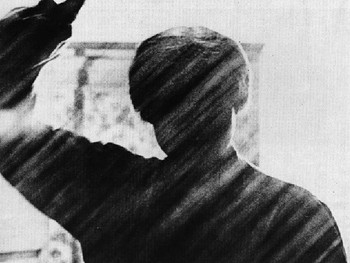
Was Norman Bates unethical or sentimental? Well..wait, WHAT?

OK, that was a somewhat misleading headline. According to a poll run by ABC News, 84% of the public thinks that cloning dead pets is unethical. But since there is absolutely nothing unethical about cloning dead pets, I think the headline above is accurate. Well, maybe 84% accurate.

The story is over at Sodahead, which is dedicated to dumb polls. The analysis of the poll, if one can call it analysis, is almost totally bereft of anything remotely connected with ethics or ethical theory. In a previous poll on the subject, Sodahead asked those polled to choose whether the practice was “unethical” or “sentimental”, which is a choice akin to, “Do you like baseball, or can you swim?” Of course cloning a pet is sentimental—why else would someone do it? Who came up with the boneheaded idea that sentimental and unethical were mutually exclusive? Norman Bates dressing up as his beloved mother and killing people was sentimental, but I’d also say it was less than ethical. Continue reading →

The Third Annual Ethics Alarms Awards: The Worst of Ethics 2011 (Part 2)

The 2011 Ethics Alarms Awards for the worst in ethics continues (you can catch up with Part I here) with the large and depressing…

 Shameless Bad Character Division

Jerk (defined as an individual who habitually places his personal benefit and ego gratification above the welfare of everyone and everything else) of the Year: Donald Trump

The Dennis Rodman Award, (Awarded to a professional athlete for a career and lifetime of  behaving like a jerk): Jose Canseco. Jose’s done it all, from being baseball’s Typhoid Mary of steroids, to getting arrested for various assaults, to writing a series of tell-all books designed to rat out the very players he corrupted, not as a service to his sport, but as revenge for it rejecting him. In 2011, he hit a new low, accepting money to appear in a celebrity boxing match (the 21st Century version of becoming a circus geek to pay the bills) and sending his less-talented, equally dim-witted, identical twin brother Ozzie to perform instead, hoping to fool the fools who hired him. This, of course, was fraud. It takes quite a jerk to take this award from Manny Ramirez, who became eligible in 2011, but Jose was up to the task.

Asshole (defined as an individual who intentionally and maliciously causes pain and harm to others because he can) of the Year: Rev. Terry Jones, the publicity-seeking leader of a tiny rural church, who caused riots and deaths abroad and ramped up political tensions between America and Muslim nations by threatening to burn, and finally burning, the Koran as a demonstration of contempt for Muslims and the Islamic faith. Continue reading →

Ethics Dunce: Libertarian Andrew Cohen

The ethical virtue at issue is integrity.

On the other hand, some times you just have to say, "oh, the hell with it" and stomp on the damn snake...

Those who oppose abortion as the taking of innocent human life may not, consistent with integrity (forget about logic) also say that abortion is a personal choice. Those who oppose capital punishment as a matter of principle (rather than as a problem of fair application) may not, consistent with integrity, announce that of course they would make exceptions in the cases of Hitler, Bin Laden, and Ted Bundy. A pacifist who won’t explain why the U.S. shouldn’t have fought World War II isn’t a pacifist at all, but a poseur.

Now Andrew Cohen, a self-declared libertarian blogger, has written a defense of the state determining whether or not potential parents may have children.  He writes: Continue reading →

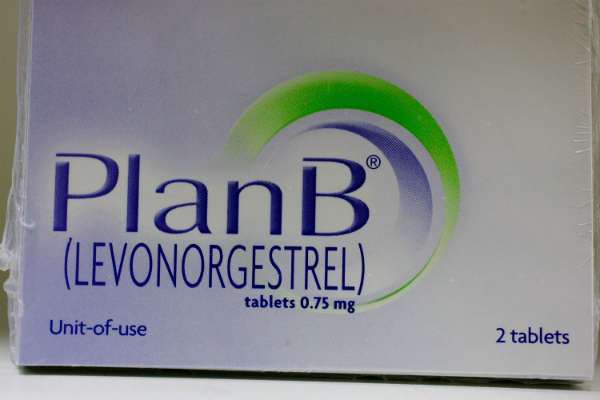
Obama, Sibelius and Plan B: Bad Science, Bad Ethics, Bad Policy

After FDA Commissioner Margaret Hamburg advocated that all women of child-bearing age be allowed to buy Plan B, the so-called “morning after pill,” without a prescription, Health and Human Services (HHS) Secretary Kathleen Sibelius overruled the FDA with President Obama’s imprimatur. Sibelius said..

“After careful consideration of the FDA Summary Review, I have concluded that the data, submitted by Teva [the Plan B manufacturer], do not conclusively establish that Plan B One-Step should be made available over the counter for all girls of reproductive age. The average age of the onset of menstruation for girls in the United States is 12.4 years. However, about ten percent of girls are physically capable of bearing children by 11.1 years of age. It is common knowledge that there are significant cognitive and behavioral differences between older adolescent girls and the youngest girls of reproductive age. If the application were approved, the product would be available, without prescription, for all girls of reproductive age.”

What’s going on here? What’s going on here is that the Administration wants to avoid a direct clash with those who regard human life as being created from the moment of conception. Sibelius’s implies without saying that a pill that ends an unwarranted pregnancy within 72 hours is an abortion pill, or at least she is crafting HHS policy for the pleasure of those who believe this. No science supports the contention that a fertilized egg that has yet to travel to the uterus—what Plan B prevents— is a human being; the position is a moral/religious one that exists independently of science. Continue reading →

The Fat Kid, the Slippery Slope, and the Cliff

"Bill! They're putting me in foster care! How will you make THAT funny?"

Several recent ethics issues have raised the slippery slope question, which is itself a slippery slope. The rationale for any reasonable principle or act can usually be ratcheted forward in degrees until it becomes malevolent, dangerous or repugnant, including freedom, trust, loyalty, charity and honesty. Thus the easiest argument, at least for the mentally dexterous, that anything is unethical is the dreaded slippery slope.

The simple rebuttal to this is usually “let’s wait and see.” To claim that conduct is unethical for what it might lead to rather than for what it actually does is often, perhaps even usually, based on an unwarranted assumption, or a worst case scenario specifically concocted to foil otherwise unobjectionable conduct. When it is not based on an unwarranted assumption, however, is when proposed conduct or a new policy permitting it shatters a social norm or cultural standard that had previously been considered sacrosanct. In these cases, the slope isn’t merely slippery—which suggests “Be careful where you step next!”—but greased, meaning there is no longer any traction at all to stop a rapid slide to the bottom. A better cliché to use in such cases is “opening the floodgates.” Or perhaps “off a cliff.”

The recent post about the Dartmouth researchers who suggested that all manipulations of graphic images of celebrities be labeled as such is, I would argue, more floodgates than slippery slope. There is no obvious delineation point to stop the principle behind this oppressive constraint on illusion from spreading far beyond its origin. Similarly, the argument being made by the family of the mother with Stage 4 cancer that US Air is ethically obligated to refund the non-refundable tickets they could not use because of her terminal illness has no clear limits or coherent application. Are the refunds required because the mother is terminal? If she goes into remission, would the family be obligated to give the money back? What if she was only paralyzed? If the whole family was squashed by a boulder, would the airline be obligated to refund the money to their next of kin? What if the mother wounded herself terminally in a suicide attempt—would that change US Air’s supposed obligation of compassion? If so, would that mean that if the mother’s Stage 4 breast cancer occurred because she neglected to follow a physician’s recommended treatment, US Air could then refuse to refund the money without being pilloried for it? Sometimes that greased slope carries us into a swamp.

Now from Cleveland comes the story of the 200 lbs. + 8-year-old Cleveland Heights boy who has been taken from his family and placed in foster care because county case workers decided that his mother wasn’t doing enough to control his weight.  Continue reading →

“Walking Dead” Ethics

American Movie Classics’ excellent, if harrowing, zombie apocalypse drama “the Walking Dead” finally raised the ethical issue looming like a zombie Woolly Mammoth over all zombie films: Is it ethical to kill zombies? Are they still human beings?

Nobody seriously disputes that killing a zombie who is about to eat you or your compatriots is self-defense, justifying deadly force. But what about the common practice in every George Romero-inspired zombie epic: shooting the shambling things (or the sprinting variety, as featured in the re-make of “Dawn of the Dead”) on sight—in the head, naturally? Is it murder? Euthanasia?

The issue was raised in this Sunday’s episode of “The Walking Dead,” as it was revealed that the prickly doctor who presides over the remote farm where our zombie-fleeing heroes are currently taking refuge keeps a batch of captive “walkers,” including his rotting wife, locked in a barn. He feeds them chickens, which are presumably finger-lickin’ good. The doctor regards zombie killing as an atrocity, the equivalent of killing a sick person. “They are humans,” he says. Continue reading →

Slaves, Whales, Humphrey the Hippo, and Captive Animal Ethics

The beginning of the end for this barbaric practice began with the publication of "Uncle Shamu's Cabin"...

Whether or not it is excessively cruel to killer whales to keep them at Sea World and train them to do tricks is an interesting ethical issue that turns on utilitarian principles: are whales as a species better served by the public learning to appreciate them through close contact in zoos than by having them be accessible only in the wild, and does this result justify keeping some whales in captivity, performing like seals? Good question. What isn’t a good question is posed by People for the Ethical Treatment of Animal’s lawsuit against Sea World, suggesting that it violates the Thirteenth Amendment to keep performing whales, because the practice constitutes slavery.

It’s a stupid question. It’s a silly question. It’s an offensive question, equating aquatic mammals with African-Americans. Continue reading →

Herman Cain’s Unethical Abortion Doubletalk

Republican presidential contender Herman Cain’s explanation of his position on abortion while chatting with CNN’s Piers Morgan is causing his growing legion of fans and supporters discomfort, and with good reason. It was ethically incoherent at best, unethical at worst. In either case, his comments show that he hasn’t devoted sufficient serious analysis to the issue to allow him to have a responsible and consistent approach. That is status quo for most Americans. It is not acceptable for a President of the United States.

Here is the relevant section of the interview (emphasis mine):

PIERS MORGAN: Abortion. What’s your view of abortion?

CAIN: I believe that life begins at conception. And abortion under no circumstances. And here’s why —

MORGAN: No circumstances?

CAIN: No circumstances. Continue reading →

Genome Sequences, Consent, and Scientist Ethics

What...you don't trust this guy???

Few things are scarier than when scientists start debating ethics.

A current debate in the scientific community involves whether it is ethical to publish your genome sequence without asking permission from family members. It is increasingly common for people to pay to have their genome scanned for the presence of traits, including genetic diseases. Scientists agree that releasing this information without the permission of the individual whose genes are described would be a clear ethical breach. The controversy involves whether an individual is ethically obligated to get consent from family members before publishing his or her own genome sequence, since to some extent that means publishing theirs as well.

The argument proceeds from the unauthorized release of someone’s genome sequence by a third party to the plight of an identical twin whose sibling wants to publish his own sequence, which, of course, also describes his twin’s.  This is ethically clear too: it would be wrong not to seek permission. But what about the rest of the family? Continue reading →