Comment of the Day (1), on Surrogate Ethics: “The Strange Case Of The Unwanted Triplet”

surrogate-motherIt’s very thoughtful of Ethics Alarms readers to provide such high level content so I have a chance of completing the 2015 Ethics Alarms Awards before March. I am awash in potential Comments of the Day all of a sudden, and this is the first of nesting COTDs, both inspired by the recent post on the surrogate with gestating triplets who is blocking the attempt of the biological father to abort Eenie, Meenie, or Miney, he doesn’t care which.

New commenter J. Jonah Jameson—presumably not really Peter Parker’s employer—submitted a helpful personal story that puts much of that drama in perspective. Here is his Comment of the Day on the post, The Strange Case Of The Unwanted Triplet:

I am the biological father of a child born of a surrogate mother. I’m sure ResurrectedToday is correct that the father fully knew that there was a chance of triplets. But the surrogate knew the same thing, and I’m almost 100% certain that she agreed in advance that she would have an abortion if the father requested it. (If not, then there are a lot of lawyers, doctors and other professionals who did not do their job.) Either she changed her mind, or she never really intended to abide by that agreement.

I can say a few things about my own experience:

1. There were a lot of people involved in the process: me, the surrogate, the donor, the three lawyers representing us, the doctors, and the psychologists and social workers at the lawyers’ and doctors’ offices. In almost every conversation that I had with any of these people, the subject of multiple births was discussed. Everybody involved understood clearly that there was a very high possibility of twins, triplets or even more.

Continue reading

The Strange Case Of The Unwanted Triplet

I want to hear the ethical analysis of this messy situation from abortion advocates/apologists/activists/feminists. In fact, I can hardly wait.

Melissa Cook is a surrogate mother whom a man paid $33,000 to have  his child by in vitro fertilization, using his sperm and the eggs of a 20-year-old donor. The 47-year-old California woman was implanted with three embryos, a not infrequent approach, but when all three developed normally and apparently healthily,  the birth father began to freak out. He didn’t want three kids, only two at most, and directed Cook to have one aborted. When she refused, he began threatening her  with threats of financial penalties if she did not comply with his demands that she undergo a one-third abortion. Continue reading

The Seventh Annual Ethics Alarms Awards: The Best of Ethics 2015, Part I

Sweet Briar montage

Welcome to the Seventh Annual Ethics Alarms Awards, our blog’s retrospective of the best and worst in ethics over the past year, 2015.

It was a rotten year in ethics again, it’s fair to say, and Ethics Alarms, which by its nature and mission must concentrate on episodes that have lessons to convey and cautionary tales to consider probably made it seem even more rotten that it was. Even with that admission, I didn’t come close to covering the field. My scouts, who I will honor anon, sent me many more wonderfully disturbing news stories than I could post on, and there were many more beyond them. I did not write about the drug company CEO, for example, who suddenly raised the price of an anti-AIDS drug to obscene levels, in part, it seems, to keep an investment fraud scheme afloat. (He’ll get his prize anyway.)

What was really best about 2o15 on Ethics Alarms was the commentary. I always envisioned the site as a cyber-symposium where interested, articulate and analytical readers could discuss current events and issues in an ethics context. Every year since the blog was launched has brought us closer to that goal. Commenters come and go, unfortunately (I take it personally when they go, which is silly), but the quality of commentary continues to be outstanding. It is also gratifying to check posts from 2010 and see such stalwarts who check in still, like Tim Levier, Neil Dorr, Julian Hung, Michael R, and King Kool.  There are a few blogs that have as consistently substantive, passionate and informative commenters as Ethics Alarms, but not many. Very frequently the comments materially enhance and expand on the original post. That was my hope and objective. Thank you.

The Best of Ethics 2015 is going to be a bit more self-congratulatory this year, beginning with the very first category. Among other virtues, this approach has the advantage of closing the gap in volume between the Best and the Worst, which last year was depressing. I’m also going to post the awards in more installments, to help me get them out faster. With that said….

Here are the 2015 Ethics Alarms Awards

For the Best in Ethics:

Most Encouraging Sign That Enough People Pay Attention For Ethics Alarms To Occasionally Have Some Impact…

The Sweet Briar College Rescue. In March, I read the shocking story of how Sweet Briar College, a remarkable and storied all-women’s college in Virginia, had been closed by a craven and duplicitous board that never informed alums or students that such action was imminent. I responded with a tough post titled “The Sweet Briar Betrayal,” and some passionate alumnae determined to fight for the school’s survival used it to inform others about the issues involved and to build support. Through the ensuing months before the school’s ultimate reversal of the closing and the triumph of its supporters, I was honored to exchange many e-mails with Sweet Briar grads, and gratified by their insistence that Ethics Alarms played a significant role in turning the tide. You can follow the saga in my posts, here.

Ethics Heroes Of The Year

Dog Train

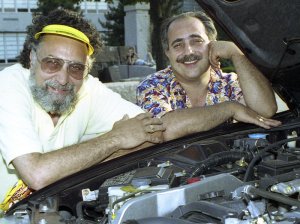
Eugene and Corky Bostick, Dog Train Proprietors. OK, maybe this is just my favorite Ethics Hero story of the year, about two retired seniors who decided to adopt old  dogs abandoned on their property to die, and came up with the wacky idea of giving them regular rides on a ‘dog train” of their own design.

Ethical Mayor Of The Year

Thomas F. Williams. When the Ferguson-driven attacks on police as racist killers was at its peak (though it’s not far from that peak now) the mayor of Norwood, Ohio, Thomas F. Williams, did exactly the opposite of New York Mayor Bill de Blasio in response to activist attacks on the integrity of his police department. He released a letter supporting his police department without qualification. At the time, I criticized him for his simultaneously attacking activists as “race-baiters.” In the perspective of the year past, I hereby withdraw that criticism.

Most Ethical Celebrity

Actor Tom Selleck. In a terrible year for this category, Selleck wins for bravely pushing his TV show “Blue Bloods” into politically incorrect territory, examining issues like racial profiling and police shootings with surprising even-handedness. The show also has maintained its openly Catholic, pro-religion perspective. Yes, this is a redundant award, as “Blue Bloods” is also a winner, but the alternative in this horrific year when an unethical celebrity is threatening to be a major party’s nominee for the presidency is not to give the award at all.

Most Ethical Talk Show Host

Stephen Colbert, who, while maintaining most of his progressive bias from his previous Comedy Central show as the successor to David Letterman, set a high standard of fairness and civility, notably when he admonished his knee-jerk liberal audience for booing  Senator Ted Cruz

Sportsman of the Year

CC Sabathia

New York Yankee pitcher C.C. Sabathia, who courageously checked himself into rehab for alcohol abuse just as baseball’s play-offs were beginning, saying in part,

“Being an adult means being accountable. Being a baseball player means that others look up to you. I want my kids — and others who may have become fans of mine over the years — to know that I am not too big of a man to ask for help. I want to hold my head up high, have a full heart and be the type of person again that I can be proud of. And that’s exactly what I am going to do.”

Runner-up: MLB Commissioner Rob Manfred, who dismissed the ethically-addled arguments of Pete Rose fans to reject his appeal to be have his lifetime ban for gambling lifted.  For those who wonder why football never seems to figure in this category: You’ve got to be kidding.

Ethics Movie of the Year

SpotlightTIFF2015

“Spotlight”

Runner-up: “Concussion”

Most Ethical Corporation

Tesla Motors, the anti-GM, which recalled all of its models with a particular seatbelt because one belt had failed and they couldn’t determine why. Continue reading

Ethics Quiz: The Uncast Star

WSS dancer

Northern Virginia’s most acclaimed and honored musical theater, Signature Theater (not to be confused with also well-honored NYC regional theater of the same name) is currently presenting “West Side Story.” A feature article about the sold-out production noted the fact that the show’s marketing prominently features  dancer Gustavo Ribeiro, a former member of the Washington Ballet’s Studio Company, whose career has been soaring of late, just like the photo of him mid-air that has appeared in Signature’s season announcement, show posters, program covers and in “West Side Story” reviews and features.

In addition to inducing potential audience members to believe this superb dancer is featured in the show, the fact that he is apparently Latino creates the assumption, suggests the article’s author, that members of the Puerto Rican gang, the Sharks, are played by Hispanic actors.

They are not. Neither is Ribeiro in the show his image advertises. Nor, I strongly suspect, are any dancers of his caliber.

For your first Ethics Alarms Ethics Quiz of 2016, I ask you:

Is this ethical advertising?

Continue reading

Comment of the Day: “The Washington Post Drops Its Resident Op-Ed Socialist. Good.”

Post paper

The honor of the first Comment of the Day in 2016 goes to pennagain, previously penn, who assesses the forces turning our journalistic establishment to ethics mush. It is not a pretty scenario, but well worth thinking about. He was inspired by my article about the Washington Post dropping socialist pundit Harold Meyerson in part because he wasn’t getting enough clicks. Where it stops, nobody knows.

Here’s pennagain:

Twelve [delivered Washington Post daily print editions in another commenter’s apartment building] down to two is about what the trend is for paper subscriptions running out, and free internet use taking over. In the short run, probably, the metro papers will all go behind the paywall while smaller ones hold out for local advertisers, but for now there is a steady drop in print and a rise in online subscriptions, with a (temporary) small increase in access to both. All news media — newspapers, television and radio — are losing ground to the fragmentation of the internet universe as it “narrowcasts” to further and further special interests. The long run is not a pleasant prospect.

In the meantime, the born-to-the-web generation has been raised on free news, as have a majority of the current readers who lost their home-delivered (now less than 400) newspapers.

My concern is that perception of news is probably down about the same (12:2) — the smaller the screen, the poorer the perception. Internet pages are awash with advertisements up and down the sides and through the middles, flashing and flickering, sounding out automatically (this is fairly recent distraction and, I think, a true impingement on privacy), not to mention the seductive invitations between paragraphs to links that frequently cut into the text itself.

In a medium where the whole story could be presented as such on one “page,” it is cut into pieces and continued-on other screens, each of which takes more and more time to load its own load of ads. More incentive for those not desperately hooked to the story to check out one of the links or the next site down the line instead of getting all the information saved for more advertising. Click.

Continue reading

Most Unethical Year End Awards, Theater Division

the-best-2015A local theater website in Washington D.C. gathers up its reviewers and staff, and announces year end awards, “The Best of 2015”  in several categories, including the best professional theater productions of a play. I was alerted, with the usual fanfare, that my company’s farewell production of “Twelve Angry Men” made the esteemed list. Several friends sent me the link, with congratulations.

Guess how many plays made the “Best” list.

Go ahead–guess.

Did you guess 138?

That’s right: this site, which is run by a friend, had 138 productions named as “best.” When my reaction to this on Facebook was the same as it was last year, only a bit more pointed—I asked where I could buy one of those “We’re Number 138!” giant foam fingers, I was chided by one of my cast members for not being properly “gracious.” That really ticked me off. Being gracious in response to a cynical exercise that is phony to its core just encourages more of the same.

What’s wrong with naming 138 “best” professional dramatic productions? Everything: Continue reading

Signature Significance: Bernie Sanders’ Ignorant Tweet

Bernie tweet

Yesterday, the Democratic candidate for President of the United States, a long-time member of the United States Senate, tweeted this message to his “followers,” and also, given the nature of Twitter, the nation:

“You have families out there paying 6, 8, 10 percent on student debt but you can refinance your homes at 3 percent. What sense is that?”

Now, if you don’t instantly recognize why this is an astoundingly ignorant statement, especially for a Presidential candidate running on a platform of economic restructuring, that’s okay. Don’t feel badly. It’s a weekend, you’re probably groggy from all the holiday cheer, and most important of all, you aren’t presuming to hold yourself out as qualified to be President, or constantly lecturing about the evils of capitalism. Sanders is, however, and this cretinous statement is signature significance. Nobody who understands loans, interest, collateral, banking, or economics would say, write or publish such a fatuous statement, even once. This is signature significance: an informed, logical, attentive, competent individual will not make such a bone-headed mistake…never. Sanders, however, has said this at least twice; in October, he tweeted a variation on the same economically ignorant theme:

“It makes no sense that students and their parents pay higher interest rates for college than they pay for car loans or housing mortgages.”

Actually, it does, Senator; it makes perfect sense, unless you are twelve. The concept is called “collateral.” That is something of value that  a lender can take if a borrower defaults on the loan. The deal is interest, plus security, the collateral. A house or a car are tangible collateral, so the interest rate can be lower. When the loan is for college tuition, however, there is no collateral. If the borrower defaults on the loan, the bank can’t take the student’s diploma, or education, or download all of the alleged knowledge the loan paid for from brain to laptop. Of course the interest rate is higher. That is, “of course” if you know anything at all about finance.

The unavoidable and shocking conclusion: Sanders is holding himself out as the leader to revolutionize how the U.S. economy works, stimulate growth and jobs, and show the way to a fairer and more just financial system, yet he is stunningly uninformed about the basics of finance, hasn’t learned a thing in all his years in the Senate, and worse, lacks the diligence to learn what he has an obligation to understand in order to justify having a vote on economic matters in the U.S. Senate, never mind setting policy as President.

This is bad.

Is there any excuse or defense for that tweet? No. Should anyone trust an elected official this ignorant and so lazy and arrogant that he makes no effort to disabuse himself of financial illiteracy? No. Does such a bone-brained misunderstanding mean that no intelligent person should listen to or take seriously any of his pronouncements about the economy? Yes.

To be fair to the Senator, let’s try to find some explanation for this that doesn’t prove that he couldn’t pass Economics 101 at a community college: Continue reading

Dear Linda: There Is Nothing Racist, Biased, Disrespectful, Harmful, Wrong Or Unethical About This Drawing. Get Help. Quickly. And Not To Lay A Guilt Trip On You Or Anything, But It’s People Like You Who Make Donald Trump Popular

office party

The Washington Post recently accompanied a feature about office Christmas parties with the above illustration. Sharp-eyed reader Linda Franklin thuse felt that she had to lambaste the paper for its diversity blindness in today’s “Free For All” extension to the usual Letters to the Editor section. Admittedly, “Free For All” is where the Post stows its pedants and cranks. There was a letter today complaining that a penguin story had a photo of the wrong species of penguin. Another guy, who just missed having a post written here about him, chided the Post for letting “global-warming deniers” off as  being called mere “skeptics,” because according to Skeptical Inquirer magazine,  “skeptic is an honored term that should be reserved for those who are guided by scientific evidence,” and the Associated Press “will no longer use the term skeptics for those who reject the findings of climate science.” That’s right, you ass, tar with the equivalent of Holocaust denial those who reasonably and properly cry foul at those who claim certainty in the notoriously speculative climate science field and who don’t believe current research on the subject justifies such nonsensical and self-destructive policy decisions as blocking the Keystone Pipeline.

But I digress. Franklin’s letter is a societal warning that the obsession with group identification, quotas and diversity can lead to societal insanity. in other words, Linda is contagious.

“There was a significant fault in the illustration accompanying “Significant bother,” Linda began.

Having seen the drawing and immediately gone to work with her abacus, she determined that that 20 people who have some skin color indicated (on their faces, hands or back of their necks) and four in the foreground who are bluish. (“That’s funny, they don’t look Bluish!” I thought that joke was funny when I saw “Yellow Submarine,” and I still do. No, I never grew up. Linda, I’m sure, thinks this means I’m an anti-Semite.) Of the 24 people who are meant to be at an office party, she calculated, “only two men are obviously African American, one blue woman might be African-American, one woman is probably Asian and one person has gray hair.”

Linda is outraged, and probably wrote her missive with tears streaming down her cheeks. “Is this really a fair way to depict the employees of an office?” she cries. Continue reading

A Merry Christmas For The Washington Redskins, “The Slants,” And The First Amendment

Yes, The Slants were apparently, disparaging. themselves.

Yes, The Slants were apparently disparaging. themselves.

The political-correctness obsessed Democratic component of our government has decided that forcing Dan Snyder to change the name of his football team due to its alleged offensiveness to people who don’t care about football is a legitimate government function, or so they would have us believe. Actually, they believe it is a legitimate political function to lick the moccasins of progressive activist groups who thrive on opportunities to tell others what they can safely say.

After Senate Democrats signed an unethical  missive threatening the Washington Redskins if the team wasn’t renamed something that an enterprising race-baiter wouldn’t find offensive—not as easy as it may seem— the Patent and Trademark Office canceled the registration of “Redskins” using the excuse that Federal trademark law excludes the registration of “scandalous, immoral, or disparaging marks” as well as trademarks that a “substantial composite of the referenced group” perceives as disparaging to a religion, nation, ethnic group, or  belief system. [ You can read my opinion on this ruling here. I’d quote from it, but it’s Christmas Eve.]

The ruling was upheld in the Fourth Circuit, despite the fact that it seem to be fairly blatant viewpoint-based restriction of speech, or in other words, unconstitutional. To his credit, Snyder is not allowing the Democrats to bully him or illegally try to control his speech either, and has the resources to fight. The betting is that the Supreme Court will tell the Trademark Office to stop playing politics.

The Patent and Trademark Office also barred the registration of “The Slants,” the trademarked name of Simon Tam’s Asian-American band. Now the U.S. Court of Appeals for the Federal Circuit just held, in the case of In re Tam, by a 9-to-3 vote, that this exclusion of “disparaging” trademarks, and, by extension, the Redskins ban as well, violates the First Amendment.  This means that the Redskins case is likely to go to the Supreme Court if the government doesn’t agree to let people trademark whatever the want to, regardless of who or what it might “disparage.” Continue reading

Trivial Ethics Dunce That Is Driving Me Crazy Anyway So I Have To Mention It: GEICO

The current GEICO ad campaign, “It’s what you do,” has already scored an ethics foul; the latest one is less substantive. Nonetheless, it is in the increasingly common category of “They just didn’t care,” which is a subset of disrespect and lack of diligence. Besides, it involves a great American song.

In the GEICO ad featuring Peter Pan annoying former classmates at a high school reunion ( the kid playing Peter is terrific), the spot concludes with Peter entertaining the class while flying over their heads with a mike and singing, “You Make Me Feel So Young,” a 1946 classic composed by Josef Myrow, with lyrics written by Mack Gordon. It begins,

You make me feel so young.
You make me feel as though (alt. “like”) spring has sprung.
And every time I see you grin,
I’m such a happy individual.

But for some damn reason, Peter sings,

You make me feel so young.
You make me feel so spring has sprung..

..which isn’t even English, and definitely isn’t the lyric. How hard would it have been to fix this? GEICO just couldn’t be bothered, so the song is misrepresented in its first widespread media us in decades.

Here’s the song sung the right way, Peter, you little snot:

UPDATE: See here.