The President And The Redskins: Learning Curve Flat As Ever

An updated graph of President Obama's learning curve on his practice of gratuitous commentary on the jobs, businesses, and duties of others. Oddly, it looks exactly like the last such graph, and the graph before that...

The  updated graph of President Obama’s learning curve regarding the Presidential practice of gratuitous commentary on the jobs, businesses, and duties of others. Oddly, it looks exactly like the last such graph, and the graph before that…

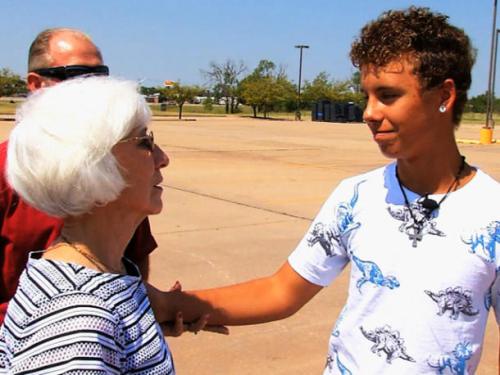
In the long list of example of President Obama interfering with private decisions, court cases and local matters that the occupant of highest office in the land has an obligation not to meddle in, his comments on the Washington Redskins are among the least annoying. It was a wishy-washy statement, all in all, that he gave to the AP:

“If I were the owner of the team and I knew that there was a name of my team — even if it had a storied history — that was offending a sizable group of people, I’d think about changing it.”

Does anyone doubt that owner of the Washington Redskins, Dan Snyder, hasn’t thought about it? On its face, the statement is petty, but of course, as the President resolutely refuses to learn, everything the President of the United States says, scripted or non-, regarding national policy or local matters, be they about red lines or how victims of gun violence look like his son, the President’s comments are seized upon, blown out of proportion, spun, used as weapons, provocations and ammunition, and generally warp public policy discourse, public opinion and personal and local decision-making. Continue reading

Ethics Dunce: “Saturday Night Live” Cast Member Jay Pharoah

Maya Rudolph being Oprah, being funny, and nothing else should matter.

Maya Rudolph being Oprah, being funny, and nothing else should matter.

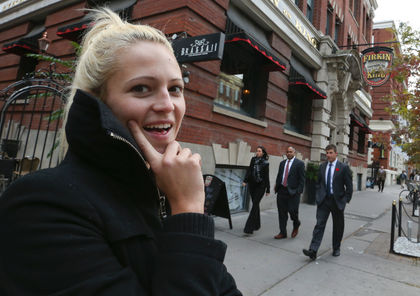
In a spontaneous call for more black cast members to be added to NBC’s long-running late-night satire show, “Saturday Night Live,”  veteran cast member Jay Pharoah told an entertainment reporter that he wanted the producers to add actress Darmira Brunson. “Why do I think she should be on the show? Because she’s black first of all, and she’s really talented,” Pharoah said. “She’s amazing. She needs to be on ‘SNL.'”

By logic, rights and justice, Pharoah should be fired for such a statement. He is pushing his show, and therefore his producers and his bosses, into a controversy that they neither want, need, nor deserve. Sure enough, his comments have already ignited debate and commentary in major dailies and in the blogosphere. He can’t be fired, of course—no producer in Hollywood would dare fire a black performer for advocating politically correct causes like diversity and affirmative action, no matter how inappropriate and unfair his comments were—and Pharoah knows that. Breaking reasonable rules of the workplace—criticizing your own boss in public and causing trouble for your employer are pretty basic taboos—because you know you’re immune from punishment doesn’t make the conduct any better.

He’s not the producer, and casting isn’t part of his job. To announce his own candidate for a hire is as outrageous and out-of-bounds as for a Pentagon general to tell reporters who President Obama should appoint as his Secretary of Defense.

Then there is the  statement itself, which in the context of entertainment and show business, is an endorsement of racial bias and discrimination, even more than with most workplace diversity and affirmative action advocacy. “Because she’s black first of all?” First of all must only be “because she’s funny, and the funniest female comic available.” Saturday Night Live’s goal, which it fitfully achieves, is to make its audience laugh. If Brunson is the best performer to accomplish that, then it makes sense to hire her. Her skin color is irrelevant, except to the extent that it opens up comic opportunities for the show. Otherwise, Brunson is pressuring his employers to hire Brunson over  superior white, Hispanic or Asian performers because of some theoretical diversity formula.

The resulting media focus on the imaginary problem to which Pharoah’s comments alluded is full of reflections, names and statistics, but the basic facts are these:

  • Professional performance comedy is completely utilitarian: if a cast entirely made up of black performers of any gender mix could be shown to be the optimum way to get laughs, ratings and make money for the network and SNL’s producers, that’s what we would have.
  • A funny, talented, improvisational skilled black actress has obvious benefits for a weekly satire show, as the reign of Maya Rudolph amply demonstrated.  There is no reason to presume that the producers would not immediately hire such a performer if one was available.
  • The pool of top-rate improvisational comic actors in general isn’t large (if it were, SNL would be funny more often), the pool of such performers who are African-American is much smaller, and the number of female black improvisational comics is tiny. When the African-American Wayans brothers wrote and produced their own satire show (Jim Carrey was the token white), they included only one full-time black female in the cast, and she was their sister (also the weak link in the cast.)

We can argue about the general principle of affirmative action at another time and place, but applying them to entertainment, sports or any field that must be a pure meritocracy is irresponsible and unfair. Saturday Night Live “needs” funny, talented performers who its audience finds funny…like, say, Eddie Murray. It does not need any black performer, male or female, just to have more black performers, and to take away performing and career opportunities from superior performers whose sole deficit is skin color or ethnicity while simultaneously getting fewer laughs and lower ratings.

Oddly, nobody has ever argued that Saturday Night Live discriminates against improvisational comic actors over the age of 35. Only once has it cast an actor of that age—Randy Quaid, in 1985. 1985 was also the most disastrous and unpopular season in the show’s history. Why no middle age or senior cast hires?  The reasons are legion: 1) Improv comedy is demanding physically and psychologically. Few older performers practice it, or are capable of doing it on a regular basis. 2) SNL’s audience is very young (as well as very male and white). Comedy is generational. 3) Older performers are seldom “new faces.” The ensemble’s called the “Not Ready For Prime Time Players” for a reason. 4) Young actors playing older real life figures and comic characters can be funny; old actors playing younger celebrities or characters is seldom funny, and often creepy. Age diversity, in brief, would not improve Saturday Night Live. Diversity is only an asset to the extent that it allows more comic opportunities. The U.S. does not require, not should ikt ask for, a contemporary satire TV show that “looks like America.” What  it needs is a show that is good.

All of which makes Pharoah’s comments irresponsible, unfair, disloyal, and racially offensive.

And not funny.

______________________________________

Sources: Washington Post, Policy Mic

Graphic: Hello Giggles

The Right Thing In Spite Of Themselves: CNN And NBC Abandon Their Hillary Projects

Hillary Clinton, in her dreams...and Bill's...

Hillary Clinton, in her dreams…and Bill’s…

If CNN and NBC had any sense of responsibility, fairness and respect for the American political system, neither would have planned Hillary Clinton projects—CNN, a documentary, NBC, a “docudrama” mini-series—for the coming year, in which the controversial Ms. Clinton is expected to begin running for President of the United States. Neither deserves any credit for cancelling them now, after pundits and especially the Republican Party screamed foul, and foul it was.

There is no way either product could avoid making difficult content choices that would be inevitably influenced by such non-ethical considerations as entertainment value, ratings, political pressure, and artist bias. The documentary and the mini-series would necessarily distort fact and history, because so much of any contemporary figure’s life and career has yet to be objectively examined, and no more so than Hillary Clinton, as polarizing and mysterious figure as U.S. politics has ever produced, rivaling Richard Nixon and Aaron Burr. Continue reading

The Klan’s Birthday Cake, Individual Boycotts And The Ethics Of Refusing to Give Service To Jerks

"Happy Birthday to You! Happy Birthday to You! Happy Birthday, Dear Racists..."

“Happy Birthday to You! Happy Birthday to You! Happy Birthday, Dear Racists…”

[UPDATE: Apparently, the “news story” that prompted this post is a fake. In that case, I want to thank the hoaxers for  inadvertently sparking a useful discussion—nothing in my post is dependent on the factual nature of the story. I wasn’t the only one fooled, and I originally noted the links on reliable sites. On the other hand, to hell with people who plant fake stories that are not obviously tongue in cheek or satirical: it’s a despicable practice, and abuse of the web, and right down there with public vandalism and creating computer viruses as unforgivable public conduct. I apologize to readers here for misidentifying a false story as true, but I’m not the unethical jerk involved. If anyone knows who that is, please forward their names. I have some choice words for them.]

As I wrote the first time I stuck my ethics big toe into this kind of controversy, I am conflicted over the current trend of forcing certain kinds of service providers to serve customers they just don’t feel like serving. I have consistently come down on the side of the rejected customer, even when the service, as in the case of bakeries and photography salons, edges perilously close to art. I think I am there still, but my resolve is weakening. I think. Let’s look at this again, in the context of the kind of recent case that always eventually occurs when one sits on the slippery slopes.

A three judge panel of a Georgia appellate court recently ruled in favor of Marshall Saxby, the Grand Wizard of a local KKK chapter, after he sued a local bakery for refusing to bake a cake for the KKK chapter’s  annual birthday party. Elaine Bailey, who owns Bailey Bakeries, said she rejected the Klan its activities violated her religious beliefs, and Saxby claimed that Bailey’s refusal of service discriminated against his religious beliefs.

The difficulty with making an ethical call on this case and others like it (and sort of like it, arguably like it or a little bit like it) is that the crucial question in ethics analysis, “What’s going on here?” cannot be answered with certainty or clarity. There are ethical arguments and ethical principles, on both sides, making the issue an ethical conflict (rather than an ethical dilemma). In an ethical conflict, we must prioritize among important ethical principles that are opposing each other.

Let’s answer “What’s going on here?” in some of the various ways this case allows, as if only one of these ethical principles were in play: Continue reading

Celebrity Values: The Good, The Bad And The Ugly

Sprouse-West-Cano

Celebrities have the opportunity to use their disproportionate and sometimes unexplainable fame to pass along good values, priorities and ethical habits to those who admire and follow them. The problem is that the U.S. culture’s current values are in a muddled state, with virtues sometimes being treated as embarrassments, and the enthusiastic embrace of non-ethical goals that once were regarded as the seven deadly sins are now often looked upon as the norm, and even appropriate. Here are some recent events in the strange world of celebrity values:

The Good: This headline on numerous web sources piqued my interest: “Dylan Sprouse Defends Restaurant Host Job.” Dylan Sprouse is a former Disney child star, a long time lead, with his brother, on the long-running “The Suite Life of Zach & Cody,” one of those loud, hyper-frenetic tween comedies that Disney and Nickelodeon acquire from some production company in Hell. Dylan was seen working in a restaurant, and this immediately spawned multiple rumors that he was broke, had blown through his millions, and was, in brief, a pathetic loser….because he has the same kind of job most American twenty-somethings fresh out of college would be thrilled to have.

Thus Dylan, who along with his brother decided to get out of the child star rat-race that has recently put Lindsay Lohan in rehab, Amanda Bynes in a mental health treatment facility and Miley Cyrus naked on a wrecking ball, and start a more conventional life with a college education (at NYU). Sprouse decided to address the weird criticism being sent his way on social media and in the gossip blogs by writing, Continue reading

The Emmys Play Favorites And Undermine Their Mission

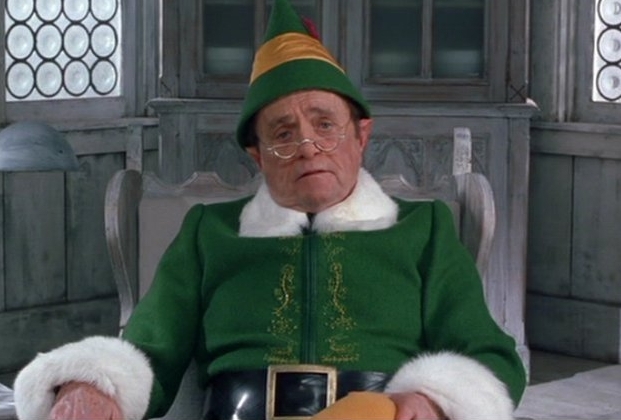
Quick, now...and no cheating: Who is this recently deceased TV legend?

Quick, now…and no cheating: Who is this recently deceased TV legend?

Three separate organizations present the Emmy Awards: the Academy of Television Arts & Sciences (ATAS), the National Academy of Television Arts & Sciences (NATAS), and the International Academy of Television Arts & Sciences. Each is dedicated to the television industry, and the award the organizations collaborate to  hand out for excellence are intended to serve multiple objectives. Prime among them is to honor and promote the professionals who bring—in theory, at least, quality entertainment into the homes of Americans. The show itself that broadcasts the awards only exists because of their larger mission, which is to say that the Emmy show exists to support the Emmys, not the other way around. The program’s producers, not for the first time, managed to forget their priorities this year, and are getting well-deserved scorn for it both in and outside the entertainment community.

The offense occurred during Sunday’s live telecast, when the show reached its annual “In Memoriam” segment. The Oscars have botched this crucial part of its own show in recent years by failing to recognize the deaths of important Hollywood figures who deserved their final bow and a last ovation. Emmy found a new and different way to insult its own. The Oscars’ omissions were negligent; the Emmys insult was, incredibly, intentional. It’s just that either nobody realized it was insulting, or, more likely, they knew but had other objectives. Continue reading

Online Review Ethics: Yelp And The Law Firm

"...and so do our own employees!"

“…and so do our own employees!”

Is it professional misconduct for members of a law firm or the non-lawyer assistants for which they are responsible to post fake reviews of their work to a consumer website? I would argue that could be: it is almost certainly deceptive advertising, which is prohibited to a greater or lesser degree in all state ethics codes, and it is dishonest and misleading communications of the sort that has drawn discipline for some attorneys in other circumstances. Whether or not such a slimy, if common practice (at least among other professions, like wrtiting) is sufficient to raise “a substantial question as to that lawyer’s honesty, trustworthiness or fitness as a lawyer in other respects” will be determined by lawyers themselves, and you would be amazed at what many of them  don’t consider sufficient to do this. I am admittedly extreme on this issue: I don’t think lawyers should lie, and take a dimmer version of even harmless deception than most in my field. This is profession that depends on trust, and the more someone lies—I don’t care about what—the less trustworthy they are.

These issues arise because the online consumer site Yelp appears to have caught employees of the law firm The MacMillan Group posting fake positive reviews about itself, on behalf of fictional clients. Continue reading

Ethics Hero: Minneapolis Dairy Queen Manager Joey Prusak

"Good job, Joey!You made Dairy Queen proud and brought honor to the store, Here's 40 dollars."

“Good job, Joey!You made Dairy Queen proud and brought honor to the store, Here’s 40 dollars.”

It’s a simple story, trivial in a way, but with an important ethics lesson.

Joey Prusak, the 19-year-old store manager at a suburban Minneapolis Dairy Queen, watched as a female customer with a heart of ice saw a vision-impaired man drop a $20 bill, picked it up, and instead of returning the money to the unaware customer, slipped it into her own purse. When the certifiably awful woman got up to the counter to order, Prusak told her what he had seen and demanded that she return the bill as a condition of service. The woman, as one might expect from someone who would take money under such circumstances, refused, so Prusek reimbursed the visually impaired customer with $20 of his own.

A customer who saw the incident e-mailed Dairy Queen in praise, and now Prusak has become something of a folk hero.

The important ethics lesson is “Fix the problem.” If you are in a position to right a wrong or prevent one, it has become your obligation to do it. Don’t adopt  any of many rationalizations available to persuade you to do nothing— “It’s not my job,” “Mind your own business,” “Who am I to judge?”, “It’s not my fault”, “What if I’m wrong?”—or, in a case like this one, manufacture excuses for the vile miscreant who took the money—–“Maybe she’s desperate,” “Finders keepers”-–and just act. Fix the problem. Continue reading

Comment of The Day…And An Ethics Quiz, Too! : “Ethics Quiz: The United Airlines Give-Away”

"Oh, this piece of junk? Yeah, who knows who its supposed to be---some guy named Veal or Beale or something painted it, I think. It's been in the attic. Make me an offer!"

“Oh, this piece of junk? Yeah, who knows who it’s supposed to be—some guy named Veal or Beale or something painted it, I think. It’s been in the attic. Make me an offer!”

The Ethics Quiz regarding whether or not it was unethical to take full advantage of United Airlines’  accidental fire sale on tickets spawned several good hypotheticals, including this one, from Tyrone T., an occasional Ethics Alarms commenter who, I happen to know, thinks about these matters as his occupation. I know the answer to this one (I’ve seen it before), so I’ll hold off until you’ve thought about it a while.

Here is Tyrone T.’s Comment of the Day on the post “Ethics Quiz: The United Airlines Give-Away”:

“So, if you are hired by your client to find the cheapest fare, can you act ethically and refuse to take advantage of the error? Consider the following:

“Alexander Mundy is a lawyer and an acknowledged expert in American painting. He has several clients who regularly retain him to negotiate the purchase of museum quality art. Recently, a client hired Mundy to negotiate the purchase of a portrait of George Washington as a young man.

“The client explained, ‘I saw it on a house tour five years ago and tried to buy it then, but the woman who owned it said it was a family heirloom and wasn’t interested in selling. I heard that she died recently and her husband is having an Estate Sale. You have authority to purchase the painting for up to $500,000.’

“Mundy goes to visit the old widower and asks whether he would be willing to sell ‘that picture of the young man there.’ Continue reading

Disaster Ethics: The D.C. Naval Yard Shooting

Twelve dead? This is great---we can make another push for gun control!!!"

“Twelve dead? This is great—we can make another push for gun control!!!”

About 10 minutes from where I live, unidentified gunmen have killed 12 people (one of the gunmen is also dead) in an unexplained rampage. The facts are still being sorted out, and at least one shooter is still at large as I write this, but already two predictable examples of unethical disaster and crisis response have been on display:

1.  Reflex anti-gun tragedy exploitation

Apparently from now until the Second Amendment is but a distant memory, some Democratic politicians and anti-gun zealots will use every gun-related tragedy as a springboard to lobby for more regulations, and the facts be damned. At this point, we have not been told why the attack took place, who the shooters were, whether it was a terrorist act or not, whether the killers were Americans, whether or not the weapons were obtained illegally and what kind of guns they were. Never mind: interviewed on the radio, D.C. Delegate Eleanor Holmes Norton, Congress’s non-voting member, immediately pointed out that with all the guns that are available in this country, it should be no surprise to anyone that tragedies like this occur. I’m sure she would have liked to have been able to claim that global warming also played a part, except that it is a cool day in Washington. Continue reading