I Wonder…What Would It Take To Get Fired From the SEC?

Keep up the way you’re going, guys. You’ll drive me to “Occupy D.C.” yet.

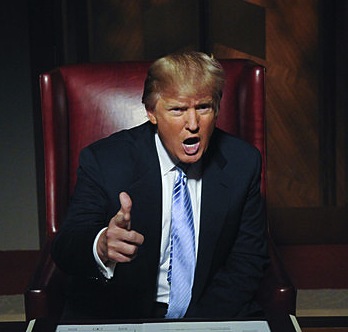
Do you think The Donald would be willing to run the SEC? At least he knows how to fire someone.

Eight Security and Exchange Commission employees were demoted, docked pay, suspended or otherwise disciplined for their role in the agency’s rank incompetence that allowed Bernard Madoff to steal billions of dollars and destroy lives and charities despite the timely warning of a persistent whistleblower, and more red flags than a bullfight. Yet despite mismanagement of epic and disgraceful proportions, the SEC couldn’t bring itself to fire anyone.

This is the state of accountability in today’s America. Run a corporation into the ground, lose the jobs of thousands, and take a mega-million dollar parting gift. Accept a bribe while you are serving as a State Senator, and not only keep your job, but get acquitted by a jury on the theory that you are too stupid to understand that what you were doing was a crime. Now the SEC’s response to an almost unimaginable breach of diligence in investment oversight by its staff doesn’t involve getting rid of a single one of the individuals responsible—even the individual deemed the most culpable, whose termination was recommended by the agency’s lawyers.

Why, you ask? Continue reading

A Close Call at Integrity Junction


What might have been...

It’s so easy to violate your integrity. It also can become a habit. I just had a close call at Integrity Junction myself, and, of all things, another blogger saved me. In part, this account is to thank him.

It was inevitable that the daily task of highlighting and discussing ethical issues and the ethical choices of others would generate some backlash, and it certainly has. As a lawyer, I know where most of the landmines are, but the danger of a deep-pockets corporation that has been properly chastised budgeting enough money to ruin you with a spurious lawsuit is always a possibility. In eight years of writing online about ethics, I have only been successfully bullied into taking down one post, that one regarding a viatical settlement company that was even more sleazy than the industry generally. The article relied heavily on direct quotes from the company’s own website, yet I received a stern “cease and desist” letter from the company’s toady of a general counsel, accusing me of libel and defamation.

2005 was a tough year at ProEthics, which was just getting established; the mortgage was a monthly challenge, and we had several financial emergencies. It was no time to spit in the wind, especially in defense of a web post that would probably get a total readership approaching the roster of a weekend bowling team. I pulled the article. It has bothered me ever since. But as a remarkable number of commenters on the “Mike McQueary and Me” post seem to be unable to comprehend, real world, pragmatic and yes, selfish considerations do factor into ethical decisions. The trick is to know how to do the factoring, and even more important, to have prepared yourself to do the analysis quickly when the time comes.

I recently received another cease-and-desist letter, demanding that I take down a post I wrote a few months ago, based on an AP story about the mismanagement of several 9-11 charities. One of the operators of the charities mentioned in the story and in my post has hired a reputation-cleaning outfit that is doing all of the dubious tasks such companies do, including complaining, harassing and threatening websites and blogs that include negative opinions or facts about their clients. The hit-group assigned to me has added bogus comments to the post (failing to mention that their opinions were bought and paid for), and repeatedly sent me ominous e-mails hinting at impending legal action. Continue reading

Mike McQueary and Me


Do you know what you would do, in Mike McQueary's place? Are you sure?

I have defended Mike McQueary, the graduate student assistant coach who, according to the Pennsylvania Attorney General’s report, witnessed Jerry Sandusky raping a young boy in the Penn State showers in 2002 and told Joe Paterno, to this extent: he took the crucial step of reporting the incident to the coach, his boss as a graduate student assistant coach, and that took courage. Because of Paterno’s reputation as a moral and ethical exemplar, the young man had no reason to believe that Paterno would not do all the right things, from confronting Sandusky to finding the boy to alerting the police. (As we now know, Paterno did none of these.)

Even so, he had to believe he was in a career jeopardizing situation. Sandusky was a Penn State football legend, though retired, and presumably had Paterno’s loyalty. Would being the messenger that created liability and public relations problems for his boss’s beloved football program make McQueary a pariah even if it resulted in Sandusky’s arrest? That scenario is not uncommon, unfortunately.

That is why, when a commenter wrote that McQueary was more culpable for Penn State’s inaction than Paterno, I disagreed strenuously, and I still do. Paterno had power, given his iconic status, perhaps the ultimate power. If he had insisted that Sandusky be confronted, removed, and reported to police, it would have happened, and would have happened completely within his natural sphere of influence. For McQueary, however, to track the university’s response and independently take action to stop Sandusky would require exemplary valor. I wish he had done it. But he had placed his faith in Joe Paterno, and at Penn State, that should be a sure bet.

I think it is easy for any of us to conclude that in Joe Paterno’s place, we would not have allowed Sandusky to continue preying on young boys. What would we do in Mike McQueary’s position, however…putting aside the action of physically intervening in the rape itself? There is a reason why the first thing he did was to go home and call his dad for advice. He never, never considered what he would do in such a situation, because never, in his wildest dreams, did he imaging such a crisis occurring.

Never underestimate the difficulty of making the right ethical decision in an unexpected crisis.

I also sympathize with McQueary, because I had my own Mike McQueary moment years ago. Continue reading

Unethical Headline of the Day: KABC-TV, Los Angeles

The headline: “Are insurance companies spying on your Facebook page?”

Why it’s unethical:

1.     The device of asking a question that raises suspicion of wrongdoing when there is none and no indication that it is occurring is inherently unfair and unethical.

2.     The story never discusses “spying” at all. Examining the public area of a Facebook page—and that is all that is described in the article—is no more spying than reading this blog is spying. Continue reading

The Bottom of the Barrel

See there, right at the bottom? That's the Washington Examiner. See it? Right next to Politico?

How low can the news media go in search of more Herman Cain dirt, semi-dirt, imaginary dirt, theoretical dirt, and non-news non-dirt that someone might think is dirt if they had their brain removed by a melon-scoop?  Low enough to print a story so ridiculous that even the National Enquirer wouldn’t stoop to publish it because it would violate its code of ethics, which is written in charcoal on a brown paper bag.

This low…..

From the Washington Examiner, and, naturally, immediately picked up by The Politico, which launched the whole Cain Sexual Harassment Feeding Frenzy:

“Donna Donella, 40, of Arlington, said the USAID paid Cain to deliver a speech to businessmen and women in Egypt in 2002, during which an Egyptian businesswoman in her 30s asked Cain a question. Continue reading

Hitler’s Paintings, Dirty Money, and an Ethics Quiz

A Hitler masterpiece during the artist's controversial "Care Bears" period

As readers here probably know, I don’t do much commentary on Swedish ethics, but this intriguing story touches on a couple of Ethics Alarms topics of continuing interest: so-called dirty money and political correctness.

Sweden’s debt collection agency had planned to sell seven paintings by that noted 20th Century artist Adolf Hitler to bring the government some extra cash to pay off debts. A genuine Hitler can fetch $40,000 or more on the global art market. The intended sale never happened, because the agency concluded that the paintings were fakes, but never mind: what is ethically provocative is that Stockholm’s Jewish association protested that it would be morally offensive for the government to make money off of Hitler’s artistic labors. “It is symbolically unfortunate that people earn money on these items,” said the group’s spokesperson. Continue reading

The University of Illinois Law School Statistics Scam and the Responsibility of Being a Corporate “Person”

The scandal itself is self-explanatory. The ethical issue I am most concerned with is not, but it is more important than the scandals.

The University of Illinois has confessed that its law school reported and published inaccurate admissions data in six of the last ten years. An investigation determined that the law school reported false LSAT and GPA data for the class of 2008 and the classes of 2010 through 2014, and fabricated the acceptance rate data for the classes of 2008, 2012, 2013 and 2014, as a result of  both overcounting the number of applicants and undercounting the number of admissions offers the law school made. The purpose of all this, of course, was to enhance the school’s rankings to bring it better applicants, which translate into more successful alumni and bigger gifts.

Solely responsible for the deceptions, the school says, was Paul Pless, the law school’s assistant dean for admissions and financial aid during that period, who resigned last week. Naturally, the 114-page report concludes with recommendations to improve the school’s oversight and controls and ensure a “culture of integrity and ethical conduct.”  This will help persuade the American Bar Association, which is looking into the matter, not to punish the law school, since it has now seen the light…having been caught. Pless, you see, was most of the problem. Continue reading

Now THIS Is Disloyalty…

Good ol' whatshisname. We'll never forget him.

…also ingratitude, venality, and crassness.

Baseball’s  Kansas City Royals are putting the name of their ball park, now Kauffman Staudium, up for corporate bidding. Soon the stadium that stood as a monument to the late Kansas City community leader Ewing Kauffmann, who owned the Royals in their very first season (1969), built the state-of-the-art home for them that is still a source of civic pride, and turned the team into a model franchise and perennial pennant contender in record time, will be named “Kansas City Masterpiece Stadium” or something else that makes it a giant billboard. Meanwhile, little will be left to remind future baseball fans and Kansas City residents of the life and dedication of the man who was responsible for the city having a major league team at all. Continue reading

Ethics Tales From The “Occupy” Movement

1. Integrity Check

"This week only: half-price on all chicken suits!"

Reports out of Occupy Wall Street, unconfirmed but apparently credible enough for New York’s Mayor Bloomberg to rely on them, suggest that the “Occupy” gang is refusing to report the various criminals in their midst, opting instead to protect the colony by ejecting and banishing them….and, of course, inflicting them on somebody else. Such wrongdoers range from simple thieves to sexual predators, or, as in Occupy Oakland,  the violent provocateurs who have seeded riots. They might not even be banished…just protected.

How ironic. The ethical rot in America’s institutions, from government to the business world, to religions and Hollywood, to athletic teams and academia, manifests itself by a progressive willingness to ignore misconduct, lawlessness, and unethical conduct among colleagues and others within the group, cementing a “them vs. us” mentality that encourages increasingly irresponsible conduct and erodes integrity. The so-called 99% have the same vulnerability to corruption as the 1% they revile. Continue reading

The Media’s Despicable Catch-22 Against Herman Cain

Mr. Cain...meet Capt. Yossarian. He'll expain everything.

I have to rub my eyes, slap my forehead, and keep reminding myself that astounding as it seems, many of the same journalists I hear calling the detail-free and meaningless sexual harassment rumors about Herman Cain “devastating” never considered the sexual harassment issue worth discussing during President Clinton’s Monica Lewinsky crisis, and ignored Juanita Broderick’s credible claims that Clinton sexually assaulted her when he was Arkansas Attorney General. Times have changed, have they? How convenient.

CNN’s Gloria Borger, whose sneering daily coverage of all Republican presidential candidates on has to be seen to be believed, asked the Perry campaign operative Cain has accused of leaking the story to Politico what it would mean for Cain’s candidacy “if the sexual harassment charges are true.” That question is incompetent, dishonest and reckless journalism, because there are no “sexual harassment charges,” and there is no possible way that they can be proven “true.” Borger’s phrasing of her question implies that there is a standing accusation of wrongdoing, and there is not; it also suggests that there is a fair process available to determine truth, when there is not. Thus she exploits the public’s ignorance about sexual harassment (which she quite possibly shares) to impugn Cain without a molecule, atom, or photon of evidence. Nothing. Continue reading