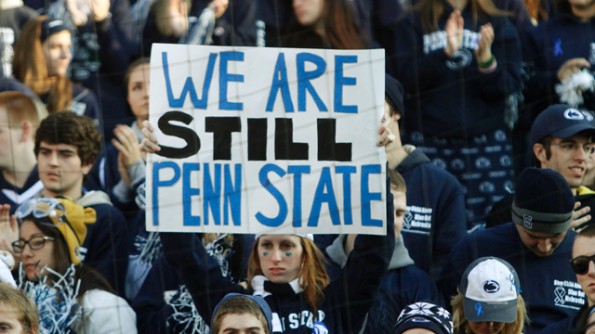
Wild Card Ethics and Cultural Expectations

Bad ideas are contagious, especially popular ones.

Major League Baseball just expanded the number of teams that qualify for post-season glory from eight to ten. Yes, there are ethical calculations involved in this, whether baseball cares or not. Supposedly, questions of fairness were part of the reason for the change, though I doubt it—in pro sports, the engine of change is always profit. And whether the change results in more fairness or less depends on what you consider fair—or perhaps whether you are sleeping intents in various U.S. cities.

Sports is such a big part of our cultural consciousness that what the National Pastime calls fair and just cannot help but influence cultural standards. Before 1969, there were two leagues of eight, then ten, Major League teams, and the two teams with the best records in each league met in the World Series. It was a simple meritocracy, with just 10% of the teams being allowed to advance after the regular season. Oh, there was always complaining about how the rich Yankees got into the Series more often than not, while the Senators, Phillies, Astros and A’s never did, but nobody camped out in the middle of Manhattan to protest baseball talent disparity. If you lived in one of the smaller Major League cities you just scaled back expectations, that’s all. And if, by some miracle, you won, then victory was all the sweeter, because you had bucked the odds by being harder working, stronger, better. Continue reading

Bad Jack’s New Gig

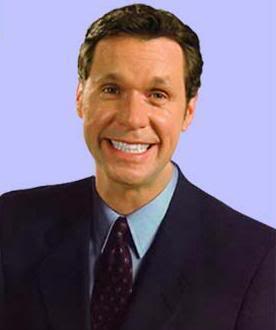
Would you trust this man?

My NPR segment was live, and predictably shorter than the star of the day, disgraced lobbyist Jack Abramoff, who was there, also predictably, to talk about ethics. Isn’t it interesting that when businessmen, lawyers, investment gurus and politicians get caught and go to jail, they always manage to have very profitable epiphanies that make them ethics experts just in time to give them a book or speaking tour deal, since their original lines of work are no longer an option?

Do I believe these changes of heart and values are real? Not for a second. Continue reading

Ethics Quote of the Week: Charlie Chaplin

I’m heading to New York City shortly, and will make an effort to check out first hand the state of Occupy Wall Street. The nationwide protest seems to be waning in both intensity and public support, despite some hopeful, futile voices (like the New York Times editorial page) who persist in claiming that its message is “important.”

I’m not denying that it could be. At this point, however, it is in danger of redefining itself as (or, in my case, confirming the diagnosis) a self-indulgent, expensive mess that never succeeded or even tried to articulate its goals clearly enough to avoid overtaken by the worst side-effects of such protests: violence, damage to property, threats to safety, and harm to innocent bystanders. Yesterday, for example, having failed to disrupt the operations of Wall Street, the New York contingent decided to disrupt the subway system—the mode of transportation overwhelmingly used by “the 99%.”

Stupid.

Words and clear thinking are not only helpful, but an obligation for those seeking social change.  As an example of how words can inspire, I offer this, the speech that Charlie Chaplin wrote and delivered at the end of his film, “The Great Dictator.” I am far from four-square with Chaplin’s politics, but he knew how to craft an inspiring rally to change—exactly what the “Occupy” should have done. Then, at least, we would recall it for what it aspired to, rather than all the annoyance and cynicism it launched. Here is a link to an editorially enhanced version of the scene and here is the text: Continue reading

Ethics Quiz: Apologies For A Sandusky Joke?

My uneasy relationship with the TSA continues.

Yes, I've sunk so low that I actually seek this out...

Today I was returning home from Atlanta, and its monster of an airport has one the cattle pen systems for going through security–a long, ling, line to all gates that keeps dividing and dividing, ultimately sending you down one of about 20 chutes to be scanned, stripped and yelled at. It is difficult to pick your chute, but in my case, it is crucial: Atlanta doesn’t have the full-body scanning devices in every line, and without it, I get gated, beeped, and sexually molested, thanks to my artificial hip.

It took ducking under a couple of barriers, but I finally got to an x-ray conveyor belt near a scanner, and had removed my laptop (separate bin) belt, jacket and shoes (not allowed in a bin in some cities, allowed in others) and lined them all up with my bag and brief case when an agent (none too politely) told me that they were closing that line, and directed me to another one, two lanes over. I lugged the three bins, bag and brief case over to that line, only to discover that it didn’t have a scanner.

That did it. I erupted at one of the agents, telling her that I did not care to be felt up at 8 in the morning, thanks, and had made a good faith effort to direct myself to a scanner, being foiled by the agent and by the fact that there are no signs warning people like me where a testicle massage is the only option.

“Why aren’t there signs?” I asked.

“I don’t know. There should be,” she said, as she helped me move my stuff to a scanner accessible line. “You should write the TSA and the airport.”

I laughed bitterly. “I’m sure that will do a lot of good. Do you all jsut like feeling up passengers? Is that the reason?”

A woman behind me laughed and said, “It sure seems like it!”

“Well, you know,” I said to her, “I hear Jerry Sandusky is trying to get a job as a screener!”

Her guffaw was interrupted by 7’8″ TSA agent, who said, loudly, “No he’s not, and I’m offended by that statement.”

My response, after a second’s consideration, was this: “I’m sorry I offended you. But I’m not apologizing.”

Your ethics quiz of the day: Should I have apologized? Continue reading

Now THIS Is An Offensive Team Name

The London, Ontario independent baseball team has decided to rename itself “The London Rippers.”

Jack's last victim: a logo, perhaps?

The city’s mayor has expressed concerns about the name, and good for him. This isn’t a manufactured political correctness complaint, based on the dubious logic that it demeans a group to honor it with an athletic team name. This is the opposite: a team name that honors a serial killer who disemboweled poor women in the slums of London in 1888. Misogyny isn’t cute or funny, and anyone who thinks that making Jack the Ripper a team symbol is anything but one more outrage perpetrated against his pathetic victims but gets indignant over the Atlanta Braves has his head on upside-down and backwards.

Now, I suppose it’s possible that an association of serial killers will protest that the name “London Rippers” dehumanizes them and puts them in the same category with lions, tigers and bears. In such an eventuality, I would side with the associations of lions, tigers and bears protesting that the name denigrates them. Sportswriting lawyer Craig Calcaterra, a sharp baseball mind whose NBC column alerted me to this story, somehow misses the point by a mile, writing:

“…Jack the Ripper did his work, like, 130 years ago. Murder is murder and it’s always awful, but at what point has enough time passed to where this kind of thing isn’t a problem?  And yes, I note the mayor’s nod to ending violence against women, but does a reference to a 19th century British serial killer who is more often fictionalized today than dealt with in his brutal reality really undermine those laudable aims?
I’m not saying it’s 100% fabulous. But really, kids were singing about Lizzie Borden taking an axe and giving her mother 40 whacks within a few years of that going down. Is it really too soon to be able to use a  long-dead historical figure as a mascot? There are a bunch teams called “crusaders” and the crusades were brutal. We still have Chief Wahoo around, and you can make an argument that the thinking behind that mascot (i.e. Indians are somehow less-than-human) represented way more death and destruction than anything Jack the Ripper did.”

Ugh. How many rationalizations are in this passage? Playground chants about Lizzie Borden (or the Black Plague, which is what “Ring around the rosey” is about) are not remotely comparable to naming a community’s baseball team after a serial killer. Playground refrains don’t become part of a community’s identity, and they don’t in any way bestow prestige on the dark subjects of their rhymes. Teams named after crusaders, warriors, braves and pirates don’t aspire to honor the deaths caused by these groups, any more than teams are named the Lions or Tigers because they have mauled people, or the Cardinals and Orioles are so named because the birds poop on our heads. There one reason, and only one, Jack the Ripper is famous. He slit the throats of desperate prostitutes and dissected them,: in the case of Mary Kelly, he minced his victim, leaving her internal organs on her night table. The London Ripper sent body parts of one victim to police, and taunted them. He didn’t possess a single admirable quality to justify a connection to a sports team, unless there are professional misogyny, mayhem or maniac leagues somewhere.

And Craig’s argument that is an expiration date on the offensiveness of trivializing tragedy is the worst of all. Seriously, Craig? So Penn State can call its wrestling team “the Molesters” in 100 years or so? What he’s really endorsing is ignorance. Kids who chant about the bubonic plague don’t realize it, and neither do their parents. That a lot of people don’t know the truth behind all the fictional Jack the Ripper tales is an argument for enlightening them, not pretending that killing prostitutes is just fun and games.

The mayor of London is right, Craig  is wrong, and if there ever was an inappropriate and harmful  team name, the London Rippers is it.

Chelsea’s New Job: A Rant on Suck-up Ethics

Now THIS is what the newscasts call "talent"...

I’m trying to locate some of the critics of “Dancing With The Stars,” many of them professional Palin-haters from the media’s left, who screamed of the injustice when Bristol Palin was chosen as a competitor on the popular has-been, D-list, fat-celebrity-looking-for- a-Jenny Craig-gig TV dance show. Remember that? I want to ask them why, if it bothered them so much for the talentless, dance-challenged Bristol to be elevated over the likes of Eve Plumb (“Jan Brady”) or Phyllis Diller or Joey Heatherton (Oh, go look her up!) for pop trash exposure for a few weeks because she has a famous mother, how they feel now about NBC hiring Chelsea Clinton as a full-time news correspondent.

I’ll tell you how I feel: it’s offensive, unfair, and an insult to just about everyone, but NBC’s own profession most of all. Continue reading

Ethics Dunce: An Unknown Diner

A waiter’s tale from a website called An Orange Box:

The waiter vows vengeance.

Here’s tip to the Faithful: this isn’t the way to convert anybody.

Comment of the Day: “Slaves, Whales, Humphrey the Hippo, and Captive Animal Ethics”

Marleen contributes a short and pointed comment to today’s post about PETA’s lawsuit alleging, absurdly, that Sea World’s performing whales are victims of slavery under the definition in the Thirteenth Amendment. Her commentary touches on a rich theme that has been explored on Ethics Alarms in the past: the obligation of issue advocates not to undermine the credibility of an important ethical argument by associating it with unfair, irresponsible or dishonest tactics.

Here is Marlene’s’ Comment of the Day, on “Slaves, Whales, Humphrey the Hippo, and Captive Animal Ethics”;

“PETA makes it difficult for me as a proponent of animal welfare. Pointing to PETA’s ridiculous antics (and this latest one really takes the cake) has become a trump card or Godwin’s Law of sorts when I occasionally discuss animal welfare topics with people. Rants about PETA ensue and the conversation is effectively killed.

“It distresses me that the only strategy they can come up with is to bastardize the courts and the Constitution for some publicity. Shout from the rooftops that captive cetaceans don’t afford us a true ability for observation and study because of the massive (and documented!) ill effects on their health and that it debases us to sacrifice them for our amusement. Play videos of orcas turning on their handlers non-stop. Don’t pull out a cockamamie argument that’s deeply insulting to any peoples familiar with true subjugation.”

Slaves, Whales, Humphrey the Hippo, and Captive Animal Ethics

The beginning of the end for this barbaric practice began with the publication of "Uncle Shamu's Cabin"...

Whether or not it is excessively cruel to killer whales to keep them at Sea World and train them to do tricks is an interesting ethical issue that turns on utilitarian principles: are whales as a species better served by the public learning to appreciate them through close contact in zoos than by having them be accessible only in the wild, and does this result justify keeping some whales in captivity, performing like seals? Good question. What isn’t a good question is posed by People for the Ethical Treatment of Animal’s lawsuit against Sea World, suggesting that it violates the Thirteenth Amendment to keep performing whales, because the practice constitutes slavery.

It’s a stupid question. It’s a silly question. It’s an offensive question, equating aquatic mammals with African-Americans. Continue reading

Paterno, Hoover, and Jones’s First Law

Would Uncle Walt have resisted the curse of Jones's First Law?

Jones’ First Law, one of many useful corollaries to Murphy’s Law (“Anything that can go wrong, will.”) is usually stated:

“Anyone who makes a significant contribution to any field of endeavor, and stays in that field long enough, becomes an obstruction to its progress – in direct proportion to the importance of his original contribution.”

This week was a good one for Jones (whoever he was; I can’t seem to find out) if not for the rest of us, because two classic examples of his principle were on display:  Penn State coach Joe Paterno, who managed to stay coach long enough to unravel his legacy and help lay the groundwork for an ethical, moral, legal, public relations, and financial catastrophe for the institution he had dedicated his life to, and J. Edgar Hoover, the subject of a newly-released Clint Eastwood directed film that shows how he too stayed long enough as the key figure of an institution he built—the FBI—to become an embarrassment to it. Continue reading