The University of Connecticut has had a free speech-hostile policy since 2017. It reads in part,
“The University of Connecticut is permitted to, and will, limit expression in order to protect public safety and the rights of others.This includes expression that is defamatory, threatening, or invades individual privacy. Protected speech may also be reasonably regulated as to the time, place, and manner of the expression.”
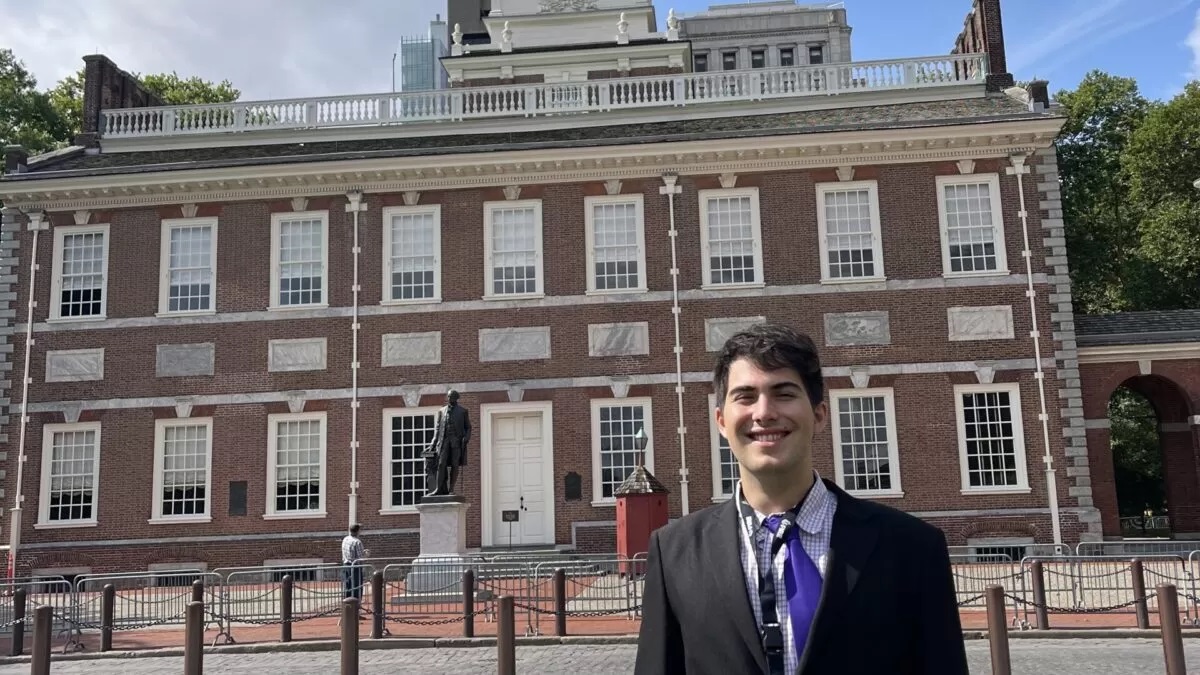
It needs to go, and senior Isadore Johnson, a founder of UConn’s Students for Liberty (SFL) chapter wants to help get rid of it. Speaking with the libertarian magazine “Reason,” he told writer Ella Lubell.
“I think many universities, including UConn, take it for granted that students appreciate the protections and values of open discourse and discussion. Many students do not, and it is incumbent on the university to clarify and explain such values so students know what rights are protected. The right to argue vigorously and sometimes offensively is part of our civic culture, and students ought not be protected against that.”
Why I am I not surp….oh, oh, there goes the head again. I guess I am surprised after all.
Since I regard soccer as about as entertaining as watching paint dry, I took only scant notice of the massive scandal in 2015 involving the Fédération Internationale de Football Association (FIFA), which oversees international soccer. More than 50 people and companies were charged in the case, and dozens have pleaded guilty. You can catch up here; I’ll wait.
All set? OK, then process this: six years after the massive criminal indictment exposed decades of corruption in global soccer, the U.S. government approved the payment of more than $200 million to….wait for it!—- to FIFA as well as its two member confederations also implicated in the scandal.
See, the theory is that the organization that was run by the individuals who stole all that money and engaged in bribery, money laundering and corruption, was really just another victim of it all. The repayment begins with an initial payment of $32.3 million in forfeited funds, the Justice Department announced, and prosecutors have approved a plan in which the soccer organizations could receive as much as $201 million.
—-Dr. Anthony Fauci, Director of the National Institute of Allergy and Infectious Diseases and the Chief Medical Advisor to the President
Fauci was talking about the need for everyone to get vaccinated, but it doesn’t matter what he was talking about. When government officials, whether they are elected or not, follow statements like “I respect people’s/personal freedom/liberty/rights with the word “but,” that’s all Americans need to hear to know that the speaker does not respect our freedom, liberty or rights, and that not only he or she cannot and must not be trusted, no government that continues to employ such an official can be trusted either. Continue reading →
1. Good Harry, bad Harry. I recently watched the 1961 interviews David Susskind did with Harry Truman in 1961. You can see them on Amazon Prime streaming. I was very impressed; I could not remember any President in my lifetime who appeared so candid, open, and sincere about his principles, certainly none of our recent POTUSes. Truman is not one of favorite Presidents; I regard him as a mediocre man thrust into a job far above his abilities who managed to do better than anyone could have predicted. He rose to the occasion as best he could, and that is deserving of respect. The interviews elevated Harry in my estimation.
Then, yesterday, I read a scholarly paper by Prof. Paul Campos of the University of Colorado Law School that shattered my newly grown regard for Harry. The Former Presidents Act (FPA), a 1958 statute provides ex-Presidents with millions of dollars in future taxpayer-funded benefits. One of the motives behind the House’s “snap impeachment” of Donald Trump was to ensure that he not be a beneficiary of the Act. (They failed. As Nelson Muntz would say, “HAHA!”) Campos’s research shows that while the FPA has always been explained as a response to former President Truman’s financial struggles in part because he refused to exploit his status as a former President cash in (like some Presidents of recent vintage), this was not just a false narrative, but a spectacularly false narrative. Campos writes,
“Using recently released and until now unexamined archival evidence… in a complete contravention of the existing standard historical record, [it appears that] Harry Truman was, as a direct result of being president, a very wealthy man on the day he left the White House, with an estimated net worth, in relative economic terms, of approximately $58 million in 2021 dollars. …[T]his wealth was a result of both Truman’s enormous presidential salary — several times larger, in real terms, than the current salary for the office — and, more problematically, of the evident fact that Truman misappropriated essentially all of the multi-million dollar — in 2021 terms — presidential expense account that was set up for him by Congress at the beginning of his second term….[A]gain contrary to the current historical understanding, Truman made another fortune after he left the Presidency, by doing precisely what he claimed he was not doing, that is, exploiting his status as a former President to maximum economic advantage. Indeed, by the time Congress passed the FPA in response to Truman’s various claims that he was at least teetering on the brink of potential financial distress, Truman’s net worth was, in relative economic terms, approximately $72 million in 2021 dollars.”
Well, there goes that newfound respect! Truman was a member of the corrupt Prendergast political machine in Kansas City before entering national politics, so this isn’t as much of a surprise as it would be for some other icons.
Harry Truman liked to say “If you can’t stand the heat, stay out of the kitchen.” That applies in a lot of fields, but perhaps nowhere more than in the field of humor and satire in these days where would-be censors and race-baiters slither across the landscape. If you are going to venture into these dangerous environs (what they endanger is free speech, expression, and freedom itself), you better have the courage of conviction and willingness to fight the adventure requires. If not, you will make things worse. You will become part of the problem, and it is a big problem.
Gene Weingarten is a longtime columnist for the Washington Post, I’ve written about one of his serious pieces here (also here) and had debates with him via email on occasion. He often writes humorous columns, and it was one of those that unjustly made him the target of the social media mobs.
I assume Gene was a little stuck for a topic, because his theme, foods he won’t eat, is a pretty hoary one. I have read very similar joke essays by other writers, going back to Robert Benchley. Clarence Darrow used to riff on foods he didn’t like: he once said, “I don’t like spinach, and I’m glad I don’t, because if I liked it I’d eat it, and I’d just hate it.“ Another of Darrow’s was “I don’t like turnips, and I don’t like anyone who does.”
So Weingarten whipped off a lazy column joking about all the foods he says he hates; remember, actually hating them isn’t an ethical requirement. The idea is just a platform to justify snarkiness and to make silly comments like ” Balsamic vinegar likely broke up the Beatles.” Among his targets: Old Bay seasoning (hate it), hazelnut (I agree), anchovies (it depends), blue cheese (yecchh), pizza with more than two toppings (I think that’s about right), “garbage sushi,” meaning junk like California rolls (not worth hating) and sweet pickles (absolutely). It should be obvious to a spaniel that all of his laments are tongue in cheek, but that spaniel might object to “Drowning good food in wildly disparate other tastes is — I do not mean to exaggerate — like drowning puppies in a toilet.”
Here I am, always desperately searching for positive ethics stories, and there was a great one sitting for two months in my “Read This” file…
Verda Tetteh, a 17-year-old Fitchburg, Massachusetts high school senior, was already accepted into Harvard (poor kid!) which is going to pay her tuition, room and board. She also had qualified her other scholarships that would cover her college expenses. Her guidance counselor still urged her to go for another one, the $40,000 local award called “The General Excellence Prize.” Every year the prize goes to one male and one female student selected by a committee of teachers, administrators and guidance counselors
Verda applied to shut him up, essentially, assuming she would never win. But she did. She found out at her graduation ceremony on June 4, when the assistant principal of Fitchburg High School announced to the audience that she was the winner. Surprised, she accepted the award, thought hard as she walked away, then turned and walked back to the podium.
“I am so very grateful for this, but I also know that I am not the one who needs this the most,” Verda said, her voice shaky. “I would be so very grateful if administration would consider giving the General Excellence scholarship to someone who is going into community college.”
Her fellow classmates and the crowd rose to give her a standing ovation.
I try to keep my true rants to a minimum, as they are unseemly for one in my role. I also try, not quite so successfully, to tamp down my occasional impulse to write, “I told you so!” It really helps me a lot when a web pundit like Lincoln Brown, a former talk show host and conservative columnist, writes pretty much exactly what I am feeling.
Brown’s essay titled “Dear Leftists, I Hope You Can’t Live With Yourselves” is what I have been dreaming of posting on Facebook for my 200 or so left-biased Facebook friends, some of them real friends I once thought better of as well as a few relatives, who would write mouth-foaming screeds about President Trump’s emails but who have maintained absolute Facebook silence on the Afghanistan disaster other than to post a meek and deflecting, “I think it was time to get out of Afghanistan, right everybody?” Brown’s whole post is the Ethics Quote of the Month, but here are some highlights:
Ah, those heady days when the U.S. felt ethically justified in toppling governments it didn’t approve of, and “nation building” was still considered practical and virtuous. Today marks the anniversary of the U.S. overthrowing the government of Premier Mohammad Mosaddeq and reinstalling the Shah of Iran in 1953, The Shah was a torturing, oppressive autocrat, but he was our torturing, oppressive autocrat for 26 years, a dependable anti-Communist ally of the United States until a revolution ended his rule in 1979. You should know the rest. Wonder why Iranians aren’t crazy about the U.S.? Today is one big reason. Also on the ethics regrets list is the release of the West Memphis Three on this date in 2011. I wrote about that one here. An excerpt:
“In an ethical system, prosecutors would have made certain the wrongfully convicted men were freed, without any further adversary action. But this was not an ethical system. Instead, prosecutors insisted on a bizarre plea deal in which the Memphis Three agreed to take an Alford plea, a strange, dishonest and much criticized guilty plea in which a defendant essentially lies to avoid an otherwise unavoidable unjust punishment. With an Alford plea, the prisoner or defendant asserts he or she is innocent, but acknowledges that the prosecution has sufficient evidence to prove guilt beyond a reasonable doubt, and thus acknowledges legal, though not actual, guilt. Prosecutors insisted that all three men plead “guilty” in this fashion in order to agree to release them with time served. The judge accepted the deal. Now Echols, Baldwin and Misskelley are free, their lives all but ruined by 18 lost years, thanks to a rotten system. The news media for the most part didn’t bother to explain why the terms of their release was just one more gratuitous assault on their existence by Arkansas legal hacks.”
I’m sorry today reminded me of this case. It still upsets me to think about it.
1. Here’s evidence that the current complaints of antiracism propagandists is a crock: Denzel Washington. I’ve been watching a lot of his movies lately, and a comparison with Sidney Poitier is unavoidable. Poitier was the ground-breaker, the black man who became a genuine movie star in a majority white market, and more than that, did it by holding up the racism and discrimination in American culture for all to see. Nonetheless, he was limited by his race. Poitier always played character’s whose race was central to their roles in the plot. He never played a villain: like many stars, like John Wayne, Cary Grant and Clark Gable, he regarded his career as a continuous work exploring a particular archetype in all of its facets. For Poitier, it was that of the outstanding black man as an outsider in American society. In Poitier’s amazing year of 1967, he was in three hit movies: “In the Heat of the Night,” “Guess Who’s Coming to Dinner?,” and “To Sir, With Love.” All three featured Poitier as a black man thrust into a biased white environment, and gradually earning respect and some measure of equality. Today the #1 black star is Denzel, and he doesn’t have to play such sanctimonious roles. Race plays a part in many of his movies; he has even played black civil rights activists, like Malcolm X and Hurricane Carter. Washington, however, in part because of Poitier’s work, often plays parts that were written for white actors, and nobody cares. He isn’t afraid to play flawed characters and even brutal ones, like in “The Equalizer.” Washington’s success, and the versatility and range he is allowed to explore in his movies, would have been impossible in Poitier’s prime years. His body of work is proof of how far American attitudes toward race have advances and how unfair and dishonest the Black Lives Matter/ Critical Race Theory narrative is holding that the Jim Crow culture still rules America.
Denzel is also better than Poitier, although it is fair to say that Poitier never had the option of being as versatile as Washington. If Sidney Poitier is cinema’s Jackie Robinson, Denzel Washington is its Willie Mays.
President Joe Biden, employing Rationalization#52. The Underwood Maneuver, or “That’s in the past,” to brush off an interviewer’s reference to desperate Afghans falling from U.S. transport plans in their desperate efforts to escape a Taliban onslaught.
President Biden, who has been avoiding questioning from the news media over his self-made national and international crisis in Afghanistan, took the weird but telling step of sitting for an interview on the matter with a single journalist—sort of–that has yet to be broadcast. Not surprisingly, the journalist chosen was career Democratic Party operative George Stephanopoulos, who hosts ABC’s talking heads Sunday news show as well as “Good Morning America!” where he is more like a performer. As Ethics Alarms regularly pointed out until I got sick of it, George has no business interviewing political figures like Hillary Clinton, since he has a flaming conflict of interest, nor can he be trusted to cover any political story involving partisan divides. Virtually all TV journalists are Democrats, but Stephanopoulos was a professional Democrat, and has proven repeatedly that he lacks the integrity and courage to overcome that bias.
1. Combine mental health with unaccountable female superstar athletes and you get.…another “How dare you expect me to answer questions like any other pro athlete, you sexists racist!” moment from Naomi Osaka. Ahead of the Western & Southern Open in Mason, Ohio, tennis’s reigning queen finally agreed to sit down for questions from the press on a Zoom call. You will recall that at the French Open in May, she said she would decline to do pretournament or post-match news conferences, even though they are required of all players. When Osaka was fined $15,000 for skipping her press commitments after her first-round victory, she withdrew before her second-round match in Paris, for the first time playing the mental health card., later used so effectively by Simone Biles at the Olympics. At the session in Mason, Paul Daugherty, a sports columnist for The Cincinnati Enquirer, asked ,“You are not crazy about dealing with us, especially in this format. Yet you have a lot of outside interests that are served by having a media platform. I guess my question is, How do you balance the two?” Osaka, after an attempt at an answer that wasn’t an answer, ran out of the room in tears. Her agent, Stuart Duguid, said via text message, “The bully at The Cincinnati Enquirer is the epitome of why player/media relations are so fraught right now. Everyone on that Zoom will agree that his tone was all wrong, and his sole purpose was to intimidate.”
Imagine that response from a male athlete to a legitimate if tough question. Imagine an agent for such a male athlete calling the questioner a “bully.” Female athletes cannot protest that they must be treated equally with male jocks and still reserve the right to revert to delicate flowers when it serves their purposes.







 Ethics Alarms