Tip Shaming Fraud On The Web: NOW Do You See Why Applebee’s Was Right To Fire Its Vigilante Waitress?

bad-tip-fraud

At the beginning of the year, we had a real donnybrook on Ethics Alarms over my contention that Applebee’s correctly fired a waitress for web- shaming a customer who refused to tip another server on the grounds, as the customer wrote on her credit card receipt, that the automatic tip of 18% was excessive since she (a pastor as well as a jerk) gave God only 10%. The indignant waitress posted the receipt on Reddit, which led to locals recognizing the pastor’s handwriting and appropriate antipathy being directed her way. Since the waitress’s conduct was a clear violation of Applebee’s employment terms and because publicly shaming customers who exercise their right not to leave tips is a poor customer relations strategy, she was sacked. Subsequently the unapologetic waitress received a lot of sympathy, while equally misguided observers vowed to punish Applebee’s for not wanting to be known for having  waitresses on the payroll who are prone to misappropriate customer receipts and post them online to bring opprobrium down on the niggardly diners’ heads.

I think Applebee’s is looking prescient and wise right now. Ask Red Lobster, which did not fire Christina Jenkins, a 19-year-old African-American server at the Red Lobster restaurant in Franklin, Tennessee. Jenkins served a $44.53 order to Devin Barnes and his wife. Barnes wrote the word “none” by “tip, ” and, Jenkins claimed, wrote “Nigger” on the receipt as well.  Jenkins then posted a photo of the racist receipt on her Facebook page, writing, “This is what I got as a tip last night…so happy to live in the proud southern states. God Bless America, land of the free and home of the low class racists of Tennessee.” Going the Applebee’s vigilante one better, Jenkins allowed Barnes’ signature to be visible on the receipt.

The photo, and story, went viral on the web and the news media gobbled it up. Mr. and Mrs. Barnes denied that they would write such a thing (they didn’t tip because the order was a carry out), but nobody believed them. After all, everyone knows that white customers in southern states are likely to write “nigger” on receipts, just as everyone knows that sort-of white neighborhood watch members racially profile black kids in hoodies for carrying bags of Skittles. Jenkins, in contrast, was besieged with sympathy and cash contributions: the latest tally was $10,749. A handwriting expert hired by Barnes, however, proved that “nigger” was not written by the customers, but by the waitress herself. Now Jenkins and Red Lobster are being sued by the Barneses, who have been subjected to harassment and threats.

And that’s not all… Continue reading →
Ethics Hero, Thanksgiving Division: Scott Stuckey, Manager of Atlanta’s Omni Hotel

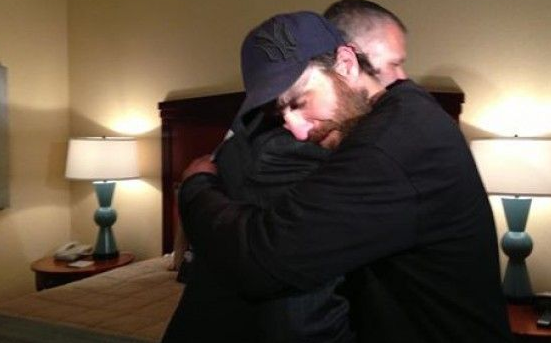
Scott Stuckey gets hugged by a grateful non-criminal Joel Hartman was homeless and surviving in Atlanta by dumpster diving, but when he found a lost wallet with the owner’s identification and credit card inside, he was determined to do the right thing. The wallet obviously belonged to a tourist, so the 36-year-old man checked the hotels in downtown Atlanta until he found out that the tourist (from France, for a conference) was staying at the Omni Hotel.

After Alanta’s Omni manager Scott Stuckey saw the surveillance video of Hartman—who looked as destitute as he was— turning in the wallet to the hotel’s  security guards, he decided that a reward was in order.  Hartman had given them a fake name, so it took some effort to track the shy good Samaritan down. Stuckey and his staff searched for a week, leaving messages with other homeless people that the Omni wanted to thank the man who recovered its guest’s stolen wallet. Eventually Hartman heard about their quest, and showed up at the hotel. He was shocked at what Stuckey had planned for him. Hartman was told that he would be the Omni’s guest in a luxury room through the Thanksgiving holiday with complimentary room service. The hotel also  gave him $500.

I think the gesture by Stuckey and the Omni was kind, appropriate, and in keeping with the spirit of the holiday….but: Continue reading →

Ethics Dunces: NFL Football Fans

FOOTBALL FANSIn response to a question in a newly released CNN poll, a majority of football fans responded that the fact that the NFL intentionally withheld from its players evidence that repeated  concussions were inevitable despite the supposed protection provided by equipment, and that this would lead in many cases to devastating premature cognitive damage to players which would leave them disabled, depressed, violent, demented and/or suicidal until their early deaths didn’t trouble them at all, as long as they got their weekly Sunday football fix.

All right, that’s unfair. The results actually just showed that only 36% of respondents think that the NFL’s handling of the concussion issue has caused them to view the pro football league less favorably. No, on second thought, it’s not unfair at all.

I’m sure the NFL honchos who are determined to keep their billion dollar profit machine purring away, powered by the game’s consumption of the minds and bodies of young men lured by a short-term bonanza of fame and bucks, are whooping it up in their park Avenue suites. Yup, they did it! They have successfully converted much of America into crass, blood-thirsty sadists who are only different in degree from the Romans who cheered on Nero’s various bloodsports. Continue reading →

“How Dare Universities Charge Such High Tuition?” KABOOM!* #1: Georgetown University Law Center

headexplode

Kaboom.

James Feinerman, the James M. Morita Professor of Asian Legal Studies at Georgetown University Law Center, who also serves as its associate dean for transnational programs, was hired by the U.S. government as an expert witness  to bolster the prosecution in a spying case, and apparently plagiarized a substantial potion of the report submitted to the court from <sigh–there goes that value of THAT degree> Wikipedia.The defense picked up on the uncited cribbing and the federal court is now examining whether the sources used by Wikipedia are reliable enough for his report to be accorded any validity. The Government, meanwhile, represented by assistant U.S. attorneys Peter Axelrod and John Hemann, is stuck with making desperate “ahumunahumuna” sounds like Ralph Kramden used to do on “The Honeymooners” when he was caught looking stupid and spouting lame arguments in court filings about how Feinerman “utilized language from Wikipedia as a concise English-language summary of his opinions on certain topics.”

Riiiight. Continue reading →

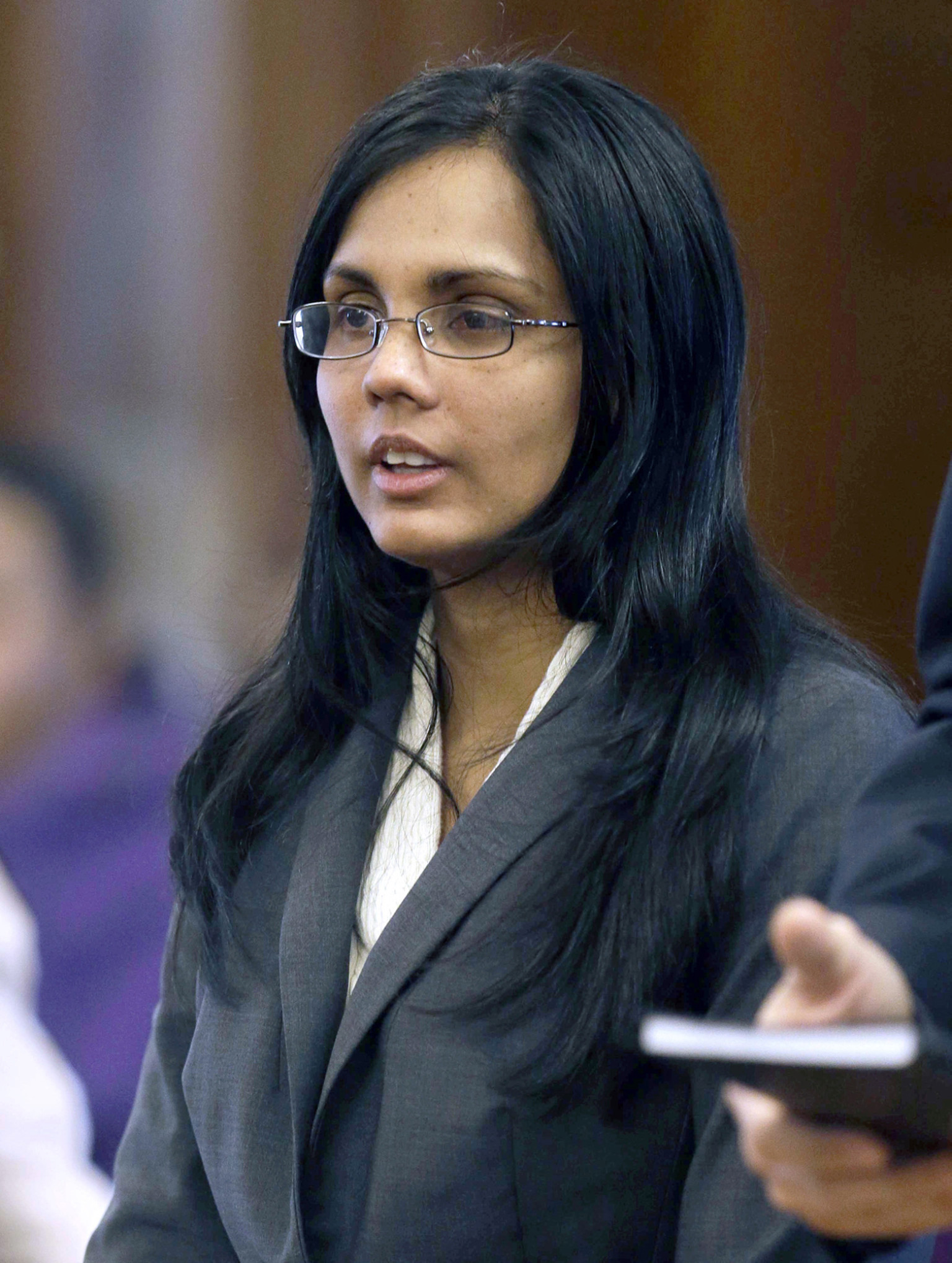
Annie Dookhan, The Nightmare Employee

Funny---she doesn't LOOK evil.

Funny—she doesn’t LOOK evil.

Every organization dreads the falsely competent employee who is secretly cutting corners and covering their tracks. Sometimes, they are embezzlers. Sometimes they are plagiarists, or journalists who fabricate quotes and only pretend to check sources.  Sometimes they are managers, CEOs, generals and leaders who are faking it, not providing oversight and diligently making sure that others are doing their jobs. These people are thieves, essentially: they are stealing their salaries under the false pretense that they know what they are doing and can be trusted. Often they are worse than thieves, because they sap their organizations of efficiency and momentum, secretly, stealthily. Needless to say, government bureaucracies are crawling with them, and they cost all of us money, security, hope and happiness.

Annie Doohkan is one of the worst of this breed I have ever encountered.  She was a state chemist in Massachusetts who intentionally mishandled evidence in drug cases, rushing results, falsifying them, certifying that she did tests when she really didn’t. Finally the lies became too much to hide, and she was exposed, but not before her perfidy forced the release of hundreds of convicts, raised new questions about thousands of other cases, and forced the state to spend millions of dollars. Apparently she had no greater motive for inflicting this carnage than her desire to give police and prosecutors what they wanted, and to appear to be fast, efficient and reliable. Continue reading →

“Would You Rather”: An Ethics-Horror-Health Care-Dinner Party In Hell Movie You May Have Missed

“Would You Rather” is an odd 2012 film that sets up a film-long set of unlikely ethical dilemmas for its characters to solve. Desperate to save her dying brother with expensive medical treatment she can’t afford, the heroine (played by Brittany Snow) finds herself at a dinner party with seven other desperate strangers, hosted by a wacko family of millionaires who will help one of them after the others have been “eliminated” during the course of the evening. As what is described as a game progresses, each contestant is put through escalating rounds of risk, pain and torture in which they must make various Sophie’s Choices, such as…

  • Would you rather administer a painful shock to yourself with high-voltage electricity, or the person next to you? What if that person has been weakened by a previous shock? What if she is in a wheelchair?

Ethics Hero (Animal Lover Division): Janet Sinclair

janet+and+sedona

Janet Sinclair used United Airlines’ “PetSafe” service to fly her beloved greyhound Sedona cross-country from San Diego. The service assures flyers that their pets will make the journey safe and sound, with responsible care and personal handling. Sinclair, however, became alarmed when she saw a United employee kick Sedona’s crate six times to shove it under the shade of the plane’s wing instead of carefully moving it. She then began documenting United’s pet care. Her video  shows her dog being left outside in 94 degree heat at a mid-journey stop (in Houston), and not placed in a temperature-controlled vehicle as she had been promised. When Sinclair landed at Logan Airport in Boston, her dog was barking at death’s door.

“Sedona’s entire crate was filled with blood, feces, urine,” Sinclair told reporters. “Sedona was in full heat stroke. All of the blankets were filled with blood. She was urinating and defecating blood. She was dying, literally, right in front of me.” The veterinarian who saved Sedona diagnosed her with heat stroke, urinary tract infection and liver dysfunction, all arising from the over-heating the dog experienced during the United Airlines flight. The airline, for its part, claimed that the dog’s distress was due to pre-existing conditions, though Sinclair’s vet had declared Sedona healthy following a pre-trip exam. Continue reading →

The Daily Beast’s Lloyd Grove, Cultural Pollutor…But Only One Among Legions

Interestingly, THIS grove understands ethics better than Lloyd.

Interestingly, THIS grove understands ethics better than Lloyd.

There are three primary reasons the United States of America is getting steadily disoriented, more gullible, less discerning, cruder and unethical. The first is that our leaders now only care about maintaining power, where once  leaders tended to their duty of being what John Adams called America’s aristocracy. Such leaders, not too long ago, modeled the best values and behavior for the public because they carried the most crucial responsibilities, and thus had to be trustworthy. They understood this obligation was theirs because they had the most visibility, and recognized that this demanded positive, admirable, virtuous public behavior. Now our leaders use sophisticated modern marketing techniques to package themselves and ideas like a phony weight-loss remedy, gradually dropping the facades once they are too entrenched to remove. The dispiriting journey make us cynical, less civically involved, and confused. Continue reading →

Ethics Quote Of The Month: Dr. Jonathan Gruber

“We currently have a highly discriminatory system where if you’re sick, if you’ve been sick or [if] you’re going to get sick, you cannot get health insurance. The only way to end that discriminatory system is to bring everyone into the system and pay one fair price. That means that the genetic winners, the lottery winners who’ve been paying an artificially low price because of this discrimination now will have to pay more in return. And that, by my estimate, is about four million people. In return, we’ll have a fixed system where over 30 million people will now for the first time be able to access fairly price and guaranteed health insurance.”

—– Dr. Jonathan Gruber of MIT, an economics professor who is among the designers of the Affordable Care Act, a.k.a Obamacare. He was interviewed by NBC’s Chuck Todd regarding the troubled law’s problems.

lottery

Could it be that the act of getting involved with this administration turns even non-politicians into deceivers and liars? For an economist to talk so deceitfully and manipulatively is distressing. He, of all people, certainly knows how insurance works, and has to work. The insurance company accepts, in essence, wagers from its insured, in the form of premiums, that they will “win” by incurring health care costs that require more funds more than the accumulated “wagers.” The insurance company gambles that it will “win” by the insured remaining relatively healthy, so that the premiums (and whatever investment income they generate) exceed what the company has to pay in medical costs for that individual. The only way a company can keep providing insurance is to win more bets than it loses.

Saying that an insurance company is “discriminating” (in the unjust and biased sense) when it refuses to  accept a wager that is virtually certain to win is like saying that a poker player is engaging in discriminatory conduct by refusing to play with a new player who brings a royal flush to the table with him. It is not discrimination to refuse to lose money, and Gruber knows it. But  like an expert liar, as I must presume he is, he plants a false definition of discrimination at the beginning of his discussion and then treats it as an agreed-upon description of what is occurring. Not selling something to a customer who can’t afford a fair price is not discrimination, and refusing to gamble with someone who is assured of winning is also not discrimination. But discrimination is something that everyone regards as wrong, unfair, and unlawful, so that is how the lawful operation of insurance companies is framed by this clever, learned, dishonest man.

I no longer trust Dr. Gruber, nor should you.

His statement is of additional interest, however, because it starkly defines the unique Progressive definition of “fairness,” by his repeated use of lottery imagery to describe the fact that some people, through no fault of their own, have fewer advantages than others, while those others, often through no virtue of their own, have more resources and opportunities. Progressives regard this as inherently wrong and unfair, and so unfair that it must be remedied by obtrusive government interference. The rest of America regards this as “life.” Continue reading →

My JFK Ethics Tale

 Shredded Files

As regular readers here  know, I am not an admirer of the character of John Fitzgerald Kennedy, though he had some notable leadership skills that I respect. His reputation as a great man and President is vastly inflated and, in a strange way, I may share some of the responsibility for that.

Several years ago, I had just completed an ethics seminar for the DC Bar. One of the issues I discussed was the lawyer’s ethical duty to protect  attorney-client confidences in perpetuity, even after the death of the client. An elderly gentleman approached me, and said he had an important question to ask. He was retired, he said, and teased that I would want to hear his story. I don’t generally give out ethics advice on the fly like this, but I was intrigued.

“My late law partner, long before he began working with me, was Joseph P. Kennedy’s “‘fixer,'” he began, hooking me immediately. “Whenever Jack, Bobby or Teddy got in trouble, legal or otherwise, Joe would pay my partner to ‘take care of it,’ whatever that might entail. Well, my partner died last week, and when I saw him for the last time, he gave me the number of a storage facility, the contract, and the combination to the lock. He said that I should take possession of what was in there, and that I would know what to do. Continue reading →