Comment of the Day: “Ethics Hero Emeritus: Henri Salmide, 1919-2010”

Henri Salmide

Henri Salmide, Hero: Unknown in the US, and only barely recognized in Germany or France. Greatly appreciated on Ethics Alarms, however.

German visitor Reinhard Gross sent me a useful clarification on the 2010 Ethics Alarms tribute to Henri Salmide, who as a German soldier in World War II saved the French port of Bordeaux by defying orders to blow it up and blowing up his German superiors instead. You can read the post on Salmide, an Ethics Hero Emeritus, here, and his New York Times obituary here. It’s an inspiring story, and if you are not familiar with Salmide, you should be.

Salmide lived the rest of his life as a French citizen in Bordeaux, and until late in life was seldom noted for his heroic act in France, so strong was the bias against him as a former German soldier. I asked Reinhard what the attitude in Germany was toward Salmide, and his Comment of the Day was the response. It also provides some insight on the the long and painful process the German culture must work through, as the German people come to terms with the dark Nazi period, when their society and its values were so horribly warped, with such tragic consequences for Germany and the world.

Here is Reinhold Gross’s Comment of the Day on the post Ethics Hero Emeritus: Henri Salmide, 1919-2010…and I thank him for reminding me of Henri Salmide’s courageous and ethical act: Continue reading →

Sugardaddies, Pregnancy Tests and Nigeria, or “If U.S. Culture Is More Ethical Than The Rest Of The World, The Rest Of The World Is In Big Trouble”

Our surprisingly ethical U.S. culture on display...

Our surprisingly ethical U.S. culture on display…

Aniruddh Khachaturi an is from Mumbai, India, and has been in the U.S. for the past two years, studying  computer science at Carnegie Mellon. For some reason his observations about what surprises him about American culture are newsworthy, according to Investors Daily, as opposed to, say, anyone else. They are thought-provoking, however, especially this : he is impressed with the nation’s “strong ethics”:

“…everyone has a lot of integrity. If someone cannot submit their completed assignment in time, they will turn in the assignment incomplete rather than asking for answers at the last minute. People take pride in their hard work and usually do not cheat. This is different from students from India and China as well as back home in India, where everyone collaborates to the extent that it can be categorized as cheating.”

I happen to think he is right, and that this is probably the reaction of most foreigners who spend much time here. Compared to almost everywhere else on the planet, the population of the U.S. is more ethical, and the U.S. culture is more concerned with ethical values, as one should expect in the only nation expressly founded as the expression of ethical ideals.

Nonetheless, our culture has shown alarming signs of growing more tolerant and even accepting of unethical conduct, and that is worthy of more than merely academic concern. Continue reading →

Hustle

Diligence. Integrity. Responsibility. Reliability. Trustworthiness

Pete Rose may have been a fool who  gambled on baseball, but he never, ever, failed to run hard to first base.

Pete Rose may have been a fool who gambled on baseball, but he never, ever, failed to run hard to first base.

The Washington Nationals’ blossoming star outfielder Bryce Harper provided a graphic lesson in the importance of these ethical values in the breach of them last night, when his lapse of character on the field contributed to a loss D.C.’s struggling major league baseball team could ill-afford.

The Nats have been one of the baseball season’s greatest disappointments. A team that had the best record of all last season and was widely favored to be a World Series contender, it has barely won more games than it has lost, and is hopelessly trailing the Atlanta Braves for the National League East championship. A wild card berth in this season’s play-offs also looked like a futile hope, until a recent winning streak and a flash of 2012 brilliance allowed fans to dream of a thrilling late-season comeback. It is possible, but time is running out, and every game counts. To have any chance, the Nats have to win games like last night’s against the sub-par Mets.

With the Mets leading 3-2, Washington had mounted a two-out rally, and had runners on first and second base. Harper, the team’s youngest, most exciting and most talented player was up at bat,  but he bounced an easy ground ball to the Mets second baseman. Clearly disgusted with his failure to come though in the clutch, Harper merely jogged to first base. If he had run hard, which was his trademark last season when Harper’s energy and enthusiasm made him an instant fan favorite, he would have reached first base safely, loading the bases, for the fielder unexpectedly booted the ball. But because Harper was loafing, the second baseman had time to recover and throw to first for the out. It was the last chance the Nationals had to tie the score, and they lost a game that the team needed to win. Continue reading →

No, It’s Actually Allison Benedikt Who’s A Bad Person

Hang in there--the schools will be better in a few generations...

Hang in there–the schools will be better in a few generations…

There may be some persuasive arguments to be made for sending your child to a public school system you don’t trust. The obvious one is that you have no choice, which is true for many Americans. There are also some good reasons to write a “manifesto” called “If You Send Your Kid to Private School, You Are a Bad Person,” the best of which is to cause people to focus on the problem of the failing and unacceptable public school system, and what should be done about it. However, Allison Benedikt, who actually wrote an article with this title and presumably this intent, failed so miserably at making a coherent and persuasive argument of any kind that her provocative title amounts to an unethical assertion itself: if you are going to make a blanket indictment of the character of millions of people, you had better be able to produce an ethical argument or two, or at least demonstrate that you comprehend a little bit about ethics. Allison doesn’t. Based on this piece, I not only wouldn’t trust her (oh, by the way, Allison, the core objective of ethical conduct in your profession—any profession, actually—is trust) to provide advice about how to educate my child, I wouldn’t trust her to walk my dog. Continue reading →

Advice Column Ethics: Amy Dickinson Sounds An Ethics Alarm

"DANGER, Other Woman...DANGER!!!"

“DANGER, Other Woman…DANGER!!!”

Today, syndicated advice columnist Amy Dickinson (“Ask Amy”) answered a query with admirable directness, properly defining the proper  use of ethics alarms for a woman who was puzzled about what to do when the answer should have been obvious. Unfortunately, Amy adopted the letter-writer’s incorrect terminology for an ethics alarm, based on the help-seeking “other woman” in an adulterous relationship writing that her relationship was beginning to feel “icky.”

As we have discussed here many times, “ick” and unethical conduct are not necessarily the same thing.  Humans naturally assume that what is strange or instinctively repugnant is wrong, but that assumption always needs to be tested by sound and objective ethical analysis. The best current example: to heterosexuals, gay sex is “icky,” but that doesn’t make it unethical or wrong. When Amy uses the term “ick-o-meter,’ what she means is “ethics alarm.” Continue reading →

Bob Filner Is A Fick

Leroy Fick (L); unidentified woman, (C) Mayor Filner (R)

Leroy Fick (left); unidentified gropee, (right); Mayor Fick (far right)

“Fick” is a term of art on Ethics Alarms, describing the rare unethical miscreant who is not only  engaged in misconduct but perfectly happy to profit from it in full view of the public eye, apparently without shame. The appellation  is named after the despicable Leroy Fick, a Michigan lottery winning millionaire who exploited a loophole to keep getting public assistance. Ficks are the worst of the worst.

San Diego Mayor Bob Filner is a fick.

As the number of women who have accused him of groping, head-locking, kissing or otherwise sexually harassing them climbed beyond 18, Filner adamantly refused to do the right thing and resign (call me crazy, but I think even Bill Clinton would have had the decency to resign if a new Monica surfaced every other day for a month), even as other allegations of his misdeeds in the financial realm were being investigated. Knowing the recall effort rapidly gathering steam would cost the city many thousands of dollars, and understanding that San Diego was being humiliated as well as being barely governed while Mayor Fick, er, Filner, held it hostage, the city council has negotiated an exit by Filner, one that requires the city to pick up his legal tab, as well as the damages or settlements he would otherwise pay in any law suits against him arising out of his various incidents of harassment. Continue reading →

Ethics Dunce: Colin Powell

I will file this under "disillusionment."

I will file this under “disillusionment.”

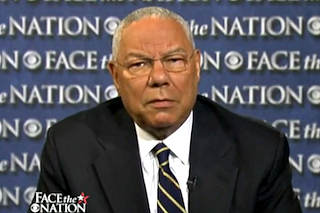
Another prominent African-America leader lept on board the Trayvon Martin-George Zimmmerman Ethics Train Wreck Sunday, when General Colin Powell aided and abetted the increasingly successful effort by divisive activists to re-write the history of the George Zimmerman trial into an example of a racist all-white jury freeing the murderer of a black man in defiance of the evidence and justice.

Appearing on “Face the Nation,” the former Secretary of State said that he thought the jury’s verdict “will be seen as a questionable judgment on the part of the judicial system down there,” adding that he didn’t know if it would have “staying power.” Powell’s comment was an especially pusillanimous fog on the issue, not explicitly endorsing  the criticism of the verdict—“Now I never said it was questionable, just that it will be seen that way,” the General can claim—but appearing to support it nonetheless. How weak, irresponsible, and disappointing. Continue reading →

Wanetta Gibson, Elizabeth Paige Coast, Chaneya Kelly, Cassandra Kennedy and the Alkon Formula: How Should We Punish False Rape Victims?

Coast: How much compassion does she deserve?

Coast: How much compassion does she deserve?

Commenting on the case of Elizabeth Paige Coast, a Virginia woman who finally came forward last year to confess that in 2008 she had falsely accused Johnathan C. Montgomery, a former neighbor, of raping her in 2000 when she was 10 years old and he was 14, advice columnist and blogger Amy Alkorn proposes this sentencing formula:

“I feel strongly that those who falsely accuse someone of rape should spend the amount of time incarcerated that the person they falsely accused would have.”

Coast’s victim was convicted of rape and  spent four years in jail as a result of her lies. As for Coast, she was recently sentenced by Hampton Circuit Court Judge Bonnie L. Jones to only two months in jail, plus being required to pay Montgomery $90,000 in restitution for de-railing his life. The judge suspended the rest of a five-year sentence, and is allowing Coast to serve the remainder on weekends so not to unduly disrupt her life.

Coast’s lawyer had argued any jailing would send the wrong message to others who lie about false rapes. The prosecutor, agreeing with Alkon, asked for a 10-year sentence with six years suspended so she would serve the same length of time as Montgomery. It seems the judge agreed with the defense more than Alkon. I think Alkon is closer to the mark, but if we make the punishment for recanting rape accusers too severe, it is probably going to mean that some in Coast’s position will choose to let their victim rot and just live with a guilty conscience. Continue reading →

Unethical Quote of The Month: Martin Luther King III

“The vision preached by my father a half-century ago was that his four little children would no longer live in a nation where they would judged by the color of their skin but by the content of their character. However, sadly, the tears of Trayvon Martin’s mother and father remind us that, far too frequently, the color of one’s skin remains a license to profile, to arrest and to even murder with no regard for the content of one’s character.”

–— Martin Luther King III, the son of the martyred civil rights leader and humanist, speaking in front of the Lincoln memorial before thousands gathered on the National Mall  to commemorate the upcoming 50th anniversary of Dr. Martin Luther King Jr.’s 1963 March on Washington, and his iconic “I have a dream” speech.

The passage was despicable and inexcusable, an insult to his father’s legacy and all of the courageous and sincere Americans, black and white, who have worked hard and effectively this past half-century to make remarkable progress toward the society that Rev. King envisioned.

“The tears of Trayvon Martin’s mother”  have exactly nothing at all to do with racial profiling or a “license to murder.” King’s son, proving once again that greatness of character and mind is seldom passed on to succeeding generations, chose to engage in divisive, misleading and cheap rhetoric that undermine his father’s goal of bring the races together. In this he was certainly consistent with the motivations of the event’s organizers, prominent among them Al Sharpton, whose paycheck and existence on the national scene depends on furthering the illusion of widespread racial discord, prejudice and injustice.

Even allowing for the excesses of oratory, the younger King’s speech deliberately misrepresented the historical, legal and factual record, which is this: a mixed-race citizen was pre-judged to be guilty of racism and murder by the color of his skin, and then demonized in order to provide a rallying point for a race-based political agenda. The civil rights establishment, aided by a complicit media and irresponsible politicians, distorted the facts of a tragic encounter so effectively that most Africans-Americans believe the lies rather than the facts, and bullied a politicized prosecution into bringing a criminal case to trial it could only win by jury intimidation, for it did not have sufficient evidence. Against all odds, a courageous jury embodied the best of the American justice system by properly acquitting an unpopular defendant who could not be proven guilty beyond a reasonable doubt, a standard that is crucial to maintaining racial justice in the courts. Despite this inspiring display of character, the organizers of today’s event, its supporters, and most of those in attendance, have chosen to judge those jurors as biased, comparing them to the bigoted jurors in the Emmett Till murder trial, based on the color of their skin.

How immensely hypocritical, destructive and sad.

Martin Luther King propelled the cause of racial harmony and justice forward on August 28, 1963.

Today his son made pushed that cause backward to-day in favor of hate, suspicion, and ignorance, 50 years later.
Al Gore, Hustler

Gore Hustler

Al, as he is portrayed by the climate change skeptic community. He has no one to blame but himself.

I have mixed feelings about Al Gore. On one hand, I have great compassion for the man, as one of two Presidential candidates in our history to win more popular votes than his adversary, still lose the Presidency, and fail to take the office in a subsequent attempt. I know that would make me angry, bitter and perhaps a little crazy, and in that respect, Al has handled his misfortune well.

On the other hand, I wouldn’t trust Al Gore to deliver a birthday card to John Edwards. Back when I was running a struggling national health care promotion and education non-profit, Senator Gore was the organization’s patron saint, giving us endorsements, opening doors to corporate contributors, and generally bolstering our efforts. I was warned, though, by one of his staffers, not to get too dependent on Gore’s passion. “The Senator likes to find the hot issue and lead it,” she told me. “But he’s been on health care for a while now, and if history is any measure, he’ll move on to something else soon. Don’t rely on his support.” Sure enough, Gore became the herald of “the information super-highway,” later known as the internet, shortly thereafter, and dropped my organization and the health promotion issue flat, without a warning or a good-bye. He just stopped answering our calls.

Gore finally found his perfect hot issue, literally in this case, as the front man for global warming. He has made millions from the issue and the notoriety it brought him, which is fine; he also greatly contributed to public awareness of the issue, which is a good thing: any public awareness of any real public policy issue is an improvement. On the minus side, Gore failed to follow through on his responsibilities and obligations as a spokesperson for climate change policies. He never educated himself on the science of climate change sufficiently to avoid making embarrassing gaffes, and he has continued to over-hype the topic, making apocalyptic pronouncements, treating projections and models as more conclusive than they are, making irresponsible and factually misleading statements,  and generally imitating the technique of the Bush Administration regarding Iraq’s “weapons of mass destruction.”

He was at it again this week, conclusively affirming that he has crossed the line from advocate to hustler. Continue reading →