The Ethics Attic: Notes From Around The Web

messy attic

[I’m still feeling lousy, so in an effort to conserve some energy while keeping the torch high, I’m presenting a few links that the ethics-minded might enjoy visiting. Normally I would write about some of these, so consider yourselves lucky.]

  • Historian Paul Finkleman delivers that harshest verdict yet on the hypocrisy of Thomas Jefferson regarding civil rights and slavery. You should then read David G. Post’s splendid contra essay here. (The last two sentences in Finkleman’s op-ed are pretty much indefensible.)
  • A fascinating reflection, inspired by the movie “Lincoln,” on Utilitarianism and “the ends justifies the means.”
  • In fact, the program is a benign one, but considering the issue raised in my last post, it is hard to imagine more perfect symbolism for the American public trading self-sufficiency for government protection than the trade described here.
  • If you missed the recent George Will column, a frightening one, about the assaults of free speech and thought around the campuses of American universities, you have another chance to read it, here.
  • I only recently learned that 3-D copiers are a reality, and Dr. Chris MacDonald, on his always excellent Business Ethics Blog, has some insight on their ethical implications here.
  • Once again this year, I have an essay in The 2013 Hardball Times Baseball Annual, and publisher Dave Studenmund references my analysis of the Stephen Strasburg affair here.
  • Finally, thanks to Mary Wright on the HR Gazette for posting the Ethics Alarms Apology Scale.

The Inconvenient Truth About The Second Amendment and Freedom: The Deaths Are Worth It

carl-with-a-gun-The shocking murder-suicide of of the Kansas City Chiefs’ Jovan Belcher has once again unleashed the predictable rants against America’s “culture of guns” and renewed calls for tougher firearms laws. Yes, reasonable restrictions on firearms sales make sense, and the ready availability of guns to the unhinged, criminal and crazy in so many communities is indefensible. Nevertheless, the cries for the banning of hand-guns that follow these periodic and inevitable tragedies are essentially attacks on core national values, and they need to be recognized as such, because the day America decides that its citizens should not have access to guns will also be the day that its core liberties will be in serious peril.

Here is Kansas City sportswriter Jason Whitlock, in the wake of Belcher’s demise:

“Our current gun culture ensures that more and more domestic disputes will end in the ultimate tragedy and that more convenience-store confrontations over loud music coming from a car will leave more teenage boys bloodied and dead. Handguns do not enhance our safety. They exacerbate our flaws, tempt us to escalate arguments, and bait us into embracing confrontation rather than avoiding it… If Jovan Belcher didn’t possess a gun, he and Kasandra Perkins would both be alive today.”

I don’t disagree with a single word of this. Yet everything Whitlock writes about guns can be also said about individual freedom itself. Continue reading →

Comment of the Day: “The Asperger’s Child, the Company With A Heart, and the Cheapskate Parents: A Cynical Ethics Tale”

Death StarFrom new commenter Ron Bishop, a Comment of the Day on the post, The Asperger’s Child, the Company With A Heart, and the Cheapskate Parents: A Cynical Ethics Tale, It is self-explanatory. I would like to know, however, and have asked, what these parents would have done if, after all their son’s toil and planning, the Death Star had cost a hundred dollars or so more than he could raise. Would they have had him ask LEGO for help, or helped him out themselves?

“I believe it’s a real story, because my family has lived a very similar story. My 11 year old with Aspergers Disorder, also a Lego fan and in a social skills group, wanted the $400 Death Star set. Sensing a “learning moment”, I told him, if he saved up the money, he could purchase it. Continue reading →

The Last Birthday Gift

blown out candles on a birthday cakeThis is my birthday. It’s also the third anniversary of my father’s death, as the two dates collided for all time when I found him dead, as if asleep, in his favorite chair when I went to my parents condo to meet him for a late birthday dinner, December 1, 2009.

I feel no more in the mood to celebrate my birth this day than I did that one, and seriously doubt if I ever will again. I miss my father terribly, every day really, and yet I recall that moment when I realized he was gone with mixed emotions. I knew that the old soldier, 89, fighting cancer, a heart condition and old war wounds, was facing a sharp down-turn in his quality of life; I knew that this was the way he always said he wanted to go out—quickly, without drama, humiliation or excessive expense—and I knew that among the members of his immediate family, I was the one whom he would have wanted to find his abandoned body. I never felt closer to my father, who, like so many of his gender and generation, had trouble expressing affection and intimacy directly, than I did in those last moments before the EMT’s arrived, as I stroked his thin, gray hair and said good-bye.

I have also come to believe that he gave me a great gift three years ago, probably unconsciously, but with my father, you never know.  He detested and rejected all forms of score-keeping, including regrets, accolades, praise and bucket lists. He was proud of many things in his life, especially his military service and his family, but he never felt superior to another human being based on what had happened in the past. My father believed that what mattered in life was going forward—doing one’s duty, helping others, setting a good example, and making every minute of your life count by trying to leave the world, even if it is only your small corner of it, better than it was before you got there. And when you’re done, you’re done. There is nothing to be sad about, or to be afraid of, or to regret; no recriminations for what didn’t happen, what couldn’t be completed, or mistakes made along the way. Just do your best, as you have learned to do it, for as long as you can. It’s not a competition, and you shouldn’t judge yourself by anyone’s standard but your own.

My father’s death reminded me that there is nothing special about being born. Everybody is born. It is how we use whatever time we have, when we use it well, that is truly worth celebrating, and even then, past achievements never justify resting on our laurels as long as we are still capable of doing some good, and have time left to do it.

On the day he died, my father spent loving hours with my mother in her hospital room, gave some needed advice and encouragement to my sister, wished his son a happy birthday, and made him laugh one last time. Good work, right to the end. If the timing of his finale changed for all time the meaning of my birthday for me, it also made vivid the life lessons that were the essence of Jack A. Marshall, Sr. Care about others. Be responsible.  Be fair. Do the best you can for as long as you can. Keep trying to be better. Never give up. Don’t be afraid. If you do all of that, you don’t need celebrations to prove your life has meaning. It just does.

It is true that “Happy Birthday” will never sound right to me again. Still, my father’s life and his way of leaving it gave me ideals good and true to celebrate on every December 1,  the wisdom to cherish whatever birthdays I have remaining, and the sense to never waste precious time regretting what is past and beyond changing. In many ways, his last birthday gift to me was the best one of all.

Ethics Quote of the Week: Sen. Lindsey Graham

“If you can give nothing but bad information, isn’t it better to give no information?”

—- Sen. Lindsey Graham (R-SC), during a press conference on Nov. 27th, during which he reiterated his position that U.N. Ambassador Susan Rice had knowingly and intentionally misled the American public regarding the fatal attack on the Benghazi compound on 9/11, in her appearances on multiple news shows five days later repeating “talking points” to the effect that the attacks had been spontaneous and sparked by an anti-Muslim video.

Apparently.

Even many liberal commentators are now conceding that Rice was being a “good soldier” on September 16, carrying a technically accurate but intentionally misleading message that seems to have been designed by Obama campaign strategists to make sure the death of an American ambassador in Libya wasn’t seen as a refutation of Obama’s claims to a successful handling of that nation’s struggles or a contradiction of the argument that “his” killing of Bin Laden had Al Qida on life support. After all the attacks on Republicans Senators McCain, Graham and Kelly Ayotte for their condemnation of Rice for her part in the Obama campaign’s spinning, including accusations of racism from Congressional Black Caucus members and the affirmatively weird complaint by President Obama (which seems to be that as long as Rice was repeating what she had been programmed to say by others she shouldn’t be held personally responsible for the content of her own public statements),Graham in particular has refused to back off his criticism, and cheers to him for that. Continue reading →

What’s Wrong With The “Crews Missile”

Nick Crews, trying tough-love without that tricky “love” part.

I was happily unaware of the e-mail that retired Royal Navy officer Nick Crews sent to his son and two daughters in February, expressing his and his wife’s disappointment in them, until an attorney brought it to my attention during my legal ethics seminar yesterday. Apparently the screed made Crews something of a folk hero in Great Britain. In other news, the Brits elevate jerks to folk heroes just like we do.

Crews decided that he and his wife had reached the end of their ropes with their three adult children’s career and domestic misadventures, so he felt what the kiddies needed was a swift kick in the pants, old school. He wrote all of them a withering e-mail denouncing them as failures and fools. Some samples:

  • “Which of you, with or without a spouse, can support your families, finance your home and provide a pension for your old age? Each of you is well able to earn a comfortable living and provide for your children, yet each of you has contrived to avoid even moderate achievement. Far from your children being able to rely on your provision, they are faced with needing to survive their introduction to life with you as parents.” Continue reading →

The Complete “It’s A Wonderful Life” Ethics Guide [UPDATED]

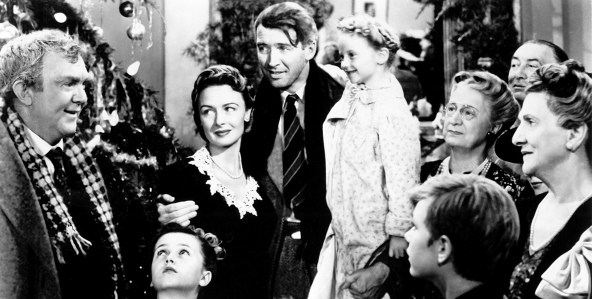
 Frank Capra’s 1946 masterpiece “It’s A Wonderful Life” is one of the great ethics movies of all time, perhaps the ethics movie of all time. In 2011 I prepared a guide through its complex ethics thicket. The post was divided into three separate posts, and I eventually combined them s0 readers can have the pleasure, if one can call it that, of watching the film like I do: having ethics arguments the whole way through. And now, here is your guide. Additions are welcome and encouraged.

1. “If It’s About Ethics, God Must Be Involved”

The movie begins in heaven, represented by twinkling stars. There is no way around this, as divine intervention is at the core of the fantasy. Heaven and angels were big in Hollywood in the Forties. Nevertheless, the framing of the tale advances the anti-ethical idea, central to many religions, that good behavior on earth will be rewarded in the hereafter, bolstering the theory that without God and eternal rewards, doing good is pointless.

We are introduced to George Bailey, who, we are told, is in trouble and has prayed for help. He’s going to get it, too, or at least the heavenly authorities will make the effort. They are assigning an Angel 2nd Class, Clarence Oddbody, to the job. He is, we learn later, something of a second rate angel as well as a 2nd Class one, so it is interesting that whether or not George is in fact saved will be entrusted to less than heaven’s best. Some lack of commitment, there—then again, George says he’s “not a praying man.” This will teach him—sub-par service!

2. Extra Credit for Moral Luck Continue reading →

Lindsay Stone Scores A Jumbo: The “I Didn’t Intend To Do What I Did When I Intentionally Did What I Did” Excuse

I have to give Lindsay Stone credit. You will seldom see as pure an example of an outrageous denial of the undeniable in a public apology as the one she just authored. Brava! And good luck with the job hunt.

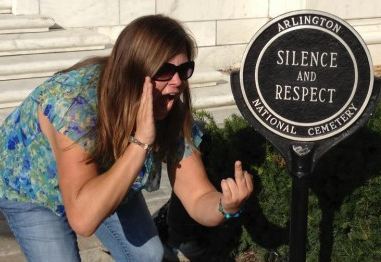
Stone, who is an idiot, and her friend, who is an idiot whose name has yet to be tracked down by the media, collaborated on a photo showing Stone giving an upturned middle finger to the Tomb of the Unknown Soldier, while yelling something by the sign there that says “Silence and Respect.” The photograph was posted on Stone’s Facebook page and naturally went viral. Thousands of protesters bombarded the website of their employer, Living Independently Forever, with demands that the two be fired. Today, they were.

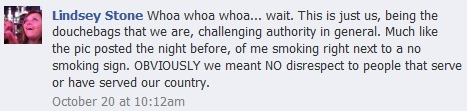
Before the inevitable axe fell (more on that in a bit), Stone posted this remarkable explanation:

Continue reading →

The Assumption Church in Barnesville, Minn: Wrong On Belief, Right On Integrity

“Oh, what the hell. Sign him up.”

In Barnesville, Minnesota, the Catholic Church has denied the religious sacrament of confirmation to two students who posted their support for gay marriage on Facebook.

Good.

The Catholic Church has been barely holding on to a dwindling membership by adopting the strategy of becoming an organized religion for hypocrites. Being a member of any church should mean the full acceptance of its core teachings. The students involved publicly expressed their disagreement with the Catholic Church’s opposition to gay marriage, and the Church was right to deny them confirmation.

Is the Catholic Church dead wrong to oppose same sex marriage as a sin? Of course. The way to make the Church enter the 21st Century is for double-talkers like John Kerry, Joe Biden and Mario Cuomo to show some backbone and integrity, and reject the Church or their upbringing because it doesn’t accept same sex marriage and abortion, while they obviously do. Instead, these and other faux-Catholics absurdly claim in public that they support diametrically opposed positions simultaneously. All three have piously stated that as Catholics they believe that life begins at conception (ergo, abortion is the sinful taking of innocent human life), but that as elected officials they feel it is inappropriate to “impose their beliefs” on the public. Of course, what elected leaders do is to impose their beliefs on the public, wherever those beliefs come from. What Cuomo, Biden and Kerry, as well as many others, have done, is to aggressively and pro-actively support policies, like abortion-on-demand, that they and their Church say they believe are wrong. Liars or hypocrites, take your pick. Continue reading →

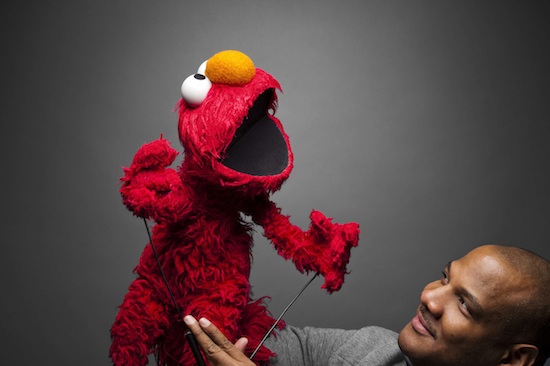
Elmo and the One Recant Rule

When we last left the sad saga of Kevin Clash, the Muppets puppeteer whose voice and hands give cute little Elmo his panache, the 23-year-old man who had accused Clash of having underage sex with him had recanted, agreeing with Clash’s defense that their relationship was consummated later, when both were consenting adults. I opined that this would do little to rescue Clash’s career, as the most innocent Muppet on Sesame Street could not survive being operated by a man who was now associated with gay sex, consensual of not. This likely result seemed unfair to Clash, but is nonetheless a responsible decision on the part of Clash’s employers, the Children’s Television Workshop, whose duty is to their mission and core audience, not to one unmasked Muppet.

Clash’s prospects have not improved. It was revealed last week that the recant was bought and paid for by Clash, who handed Sheldon Stephens $125,000 to deny his previous accusation and never to raise it again. Needless to say, a recant induced by monetary compensation is not a reliable one, and leaves as many questions open as the original claim, if not more. In a settlement, the accuser is paid to drop any legal action, but doesn’t agree to retract the original claim. What Clash did is called “buying testimony,” or ” a pay-off.” Continue reading →