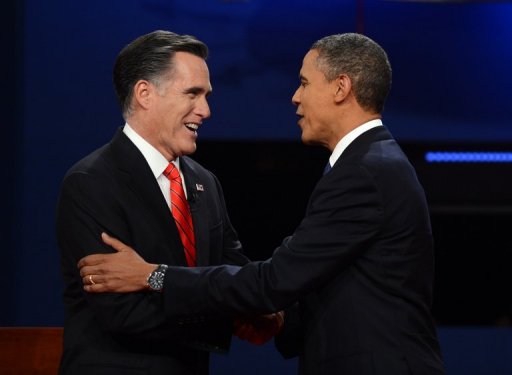
Congratulations to President Obama and Mitt Romney for being respectful, civil, dignified, good-natured, articulate and presidential in tonight’s debate.
I was proud of both of them.
Thanks. We needed that.
Congratulations to President Obama and Mitt Romney for being respectful, civil, dignified, good-natured, articulate and presidential in tonight’s debate.
I was proud of both of them.
Thanks. We needed that.

The Daily Caller found a previously uncirculated Barack Obama speech from 2007, and the conservative media has been giving it the “47%” treatment. No wonder. The speech is uncommonly ugly, with the future President channeling Rev. Wright and Kanye West, encouraging black anger and racial hate. Needless to say, he does not sound like a leader of “all the people” here.
I am on record as believing that such partisan audience speeches should be taken for what they are, and thus with several grains of salt, but never mind: the standard, a different one, has already been decreed by the mainstream news media, which treated Mitt Romney’s unscripted remarks about the government-dependent “47%” as more significant than the collapse of Obama’s foreign policy, the negligent death of our Ambassador, and a protracted White House cover-up of a terrorist attack. If they want to aspire to any fairness and even-handedness at all, it should devote a similar amount of attention and outrage to Obama’s remarks to black clergy, which were, in my view, far worse, because they were designed to exploit racial fears and divisiveness. They are also, like Romney’s comments, misleading and unfair.
I could argue that it is more reasonable to focus on Obama’s speech, because it was made in public, and presumably was fair game for criticism at the time. Why didn’t the reporters who witnessed it raise any alarms then? Wouldn’t such a racially divisive speech during the campaign (for the nomination) be at least as newsworthy in 2008 as the “47%” line by Romney 2012? Of course not—because the media was trying to elect Obama then, and it is trying to defeat Romney now.
Don’t be silly. Continue reading
The hype and predictions about tomorrow night’s first debate between Mitt Romney and President Obama are already unbearable. Yet the debates will be worth watching, and could do this revolting campaign a lot of good, if we can discipline ourselves to watch it ethically. This is harder than it sounds.
1. The most important aspect to ethical debate watching is resolving to be fair. That means don’t do your own “spin”: force yourself to be equally critical of both candidates. There are no villains in this election, much as it has been framed that way by the two parties. Neither has a nefarious objective; both are dedicated public servants and loyal Americans. If you don’t believe that, you probably shouldn’t watch the debates at all.
2. Look for honesty, and be grateful for it. I will give points to any candidate that admits a mistake, gives credit to his opponent, state that he doesn’t have all the answers, acknowledge that there is merit in some of what the other candidate suggests.
3. Look for dishonesty, and be critical of it. Are his answers evasive? Does he quote false statistics? Is he making promises he can’t keep, or has no control over whether he keeps them or not? Is he trying to mislead the ignorant and gullible in the audience? Do you trust him?
4. Watch for signs of character, good and bad. The debate isn’t scripted, which means that we have a rare chance to see the human beings (maybe) rather than the facades. Are they arrogant? Nervous? Disrespectful? Rude? Dispassionate? Impulsive? Cocky? Are they respectful? Fair? Reasonable? Gracious?
5. Ignore the practiced zingers and the style points. Don’t be overly impressed with recitations of facts, names and numbers: both candidates are smart and do this well; so can many people you wouldn’t want in the White House on the best day of their lives. This is a crisis for each of them; the stakes are huge. How do they handle it? Are they cautious? Reckless? Unprepared? Impulsive? Brave?
6. Try to ignore whether you like either candidate, but rather examine about whether they can be persuasive to others. Try to adjust for your biases.
7. Be open to having your mind changed. The hardest task of all.
8. After the debate is over, make up your own mind before you listen to any of the partisan analysts. All Republicans will say Romney won; all Democrats will say Obama won, except pundits who want to stand out as the “objective” ones. Most of them are calculating too. Confirmation bias operates in overdrive in such events: the partisans really see it the way they want to. Ignore them. Don’t listen to them. How did you feel about the debate? That’s all that matters. Nobody knows how you should react to it better than you do.
9. Watch it. This is important, and we are lucky to have the system we have, as rotten as it often is.

Stop scaring my dog!
A commenter recently pulled out the hoary and almost always misused “innocent until proven guilty” line, which reliably makes me scream, frightening the dog and the neighbors. Thus I was happy to see this September 28 ruling by the Louisiana Supreme Court, which found that Philip Pilie, a 2007 University of Georgia School of Law who passed the bar examination in 2009, lacked the character and fitness to be admitted to practice in the state, despite the fact that he was not convicted of the crime that resulted in his disqualification.
Why? Because he did it, that’s why. Pilie contacted what he thought was a 15-year-old girl online and arranged to have sex. She was, unfortunately for Pilie, really a big, hairy, middle-aged man looking for predators who like to have sex with under-age girls. Pilie was arrested at the planned rendezvous and charged with two felonies, computer-aided solicitation of a minor and attempted indecent behavior with a minor.
Pilie negotiated a deal with the district attorney to avoid prosecution. He completed a pre-trial diversion program including counseling, and all charges were dropped. Pilie took and passed the bar exam, but was informed in March 2009 that he lacked the character and fitness for admission to practice, because he trolled on computers for young girls to have sex with, by his own admission. His appeal to Louisiana’s highest court failed, twice.
In the latest decision, the court said that Pilie’s lack of a criminal conviction made no difference in its reasoning. “Had petitioner been a practicing attorney at the time of his misconduct, it is very likely he would have been permanently disbarred,” it wrote. “Given this fact, we can conceive of no circumstance under which we would ever admit petitioner to the practice of law.” Pilie was permanently barred from ever again seeking admission, without ever being “convicted in a court of law.” Continue reading
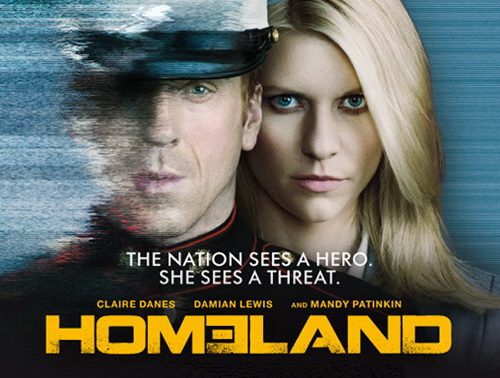 In “Homeland,” Showtime’s excellent Emmy-winning drama starring Claire Danes, a G.I. named Nick Brody imprisoned for years returns to the states a hero, and, secretly, a converted Muslim and terrorist. By Season Two, which premiered last night, Brody has risen to be a member of Congress, where he is working from the inside to benefit the interests of his captors. He has kept his conversion to Islam secret from everyone but his teenage daughter Dana, who accidentally caught him praying to Mecca in the basement in the first season.
Now Brody’s name is being floated as a possible running mate for the current Vice President, who is a presumptive presidential nominee. The Veep tells Congressman Brody that if there are skeletons in his closet that his researchers wouldn’t have found—I’m pretty sure being a secret terrorist would qualify—Brody needs to air them. Brody says there aren’t any. We know better.
Meanwhile, at Sidwell Friends, the tony Quaker private school in D.C. that all the pols send their kids to, Dana is fuming because she has to listen to the Vice-President’s obnoxious son go on about how “Muslims aren’t like us” and “don’t respect human life.” Dana, having been admonished for insulting him, blurts out, “Well, my father’s a Muslim!” in class. Dana’s subsequent position is that she was joking to make a point. At home, however, her outburst causes a domestic crisis, as her mother feels that Brody has been lying to her, which he has.
I’ll leave Rep. Brody out of this ethical dilemma, as he is suffering from an Islamic strain of the Stockholm Syndrome, but what about the family? From their perspective, which is that they don’t suspect for a second that Brody is a traitor, what is their ethical obligation should he announce that the Vice President is going to choose him as a running mate, and that he expects them to keep his secret?
His argument, of course, is that his religion shouldn’t and doesn’t matter. It is true that the “public would want to know,” and also that the public would probably not feel very comfy electing a Muslim these days to be a heartbeat away from the Presidency, fair or not. The family knows he is a good man (they think) and like the idea of being Second Family; there is no reason to sink his career and their aspirations to celebrity by allowing irrational bigotry to take hold. Is there?
That’s not the whole truth, however. Brody has lied to the Vice President and to his constituents, and they do have a right to know that. In my view, both wife and daughter have an ethical duty as citizens to tell husband and father that if he accepts the nomination, they will be forced to expose him. They should also tell him that he needs to resign from Congress, or, if he’s willing, tell the public about his deception and ask for their forgiveness. I think, in short, that this is a John Edwards situation.
Is that what you would do, in their place?
And my favorite hypothetical of them all, that I refuse to believe wasn’t lurking in the minds of the writers:
Michelle discovers Barack praying to Mecca in the basement.
Tomorrow.
What would be her ethical duty?

1. Elizabeth Warren may have engaged in the unauthorized practice of law in Massachusetts at various times.
2. It is not as clear that she has done so as her primary accuser, Prof. Jacobson, appears to believe, nor is it as certain that she has not done so as her reflexive defenders assert.
3. If she did practice Massachusetts law without a license, it is very unlikely that she did so intentionally.
4. It is also likely that at this moment, she herself is unsure whether she did or not.
5. I very much doubt that if she did as Prof. Jacobson asserts, that would lead to discipline by the Massachusetts Bar. The discussion of the issues surrounding Warren’s situation make it clear that a) the whole area of unauthorized practice when it involves state and Federal law is relatively unresolved and murky, with even legal ethics experts in disagreement, b) it would be impossible to separate the professional regulation of the matter from its political content, and 3) any time members of the disciplinary committee slap their foreheads and say, “Damned if I know!” when the discussion turns to what the rules require, discipline is unlikely, and properly so.
6. The fact that Warren may have blundered into UPL between the varying requirements of her two bar memberships and her intermittent practice in Massachusetts does not make her unfit to practice law.
7. It may, combined with her unwillingness to candidly and thoroughly reveal all documents that bear on the issue, call into question her fitness to be a U.S. Senator, especially one running on the proposition that regulations on another profession (the financial sector) need to be strictly followed and tightly enforced. It definitely is worth exploring and explaining to voters, which the mainstream media clearly does not intend to do. Continue reading

“Nope, no way to Texas; can’t get to New Jersey…maybe I should just bite the bullet and get a Massachusetts law license? Nawww, who’s going to care?”
No major newspapers or broadcast news outlets seem to care, but what was originally dismissed as a partisan blogger’s over-reaching accusation has been bolstered by more than one smoking gun, proving Elizabeth Warren’s untrustworthiness and lack of fitness for high office.
Robert Eno of Red Mass Group, who joins Prof. William Jacobson as a blogger doing dogged and necessary research on the Massachusetts Senate candidate, has convincingly shown that Warren’s justification of her practice in Massachusetts, sans law license, doesn’t work, because what she says can’t possibly be true.
Earlier this week, Warren tried to rebut Jacobson’s allegations by explaining, “I haven’t practiced any law since 2010 since I went down to do the Consumer Financial Protection Bureau. I’ve been a member of the bar in Texas for all of my career, in the Supreme Court bar, and until a few weeks ago the bar in New Jersey.” Warren and her defenders also argued that Jacobson’s claim that she was operating a regular law office out of her Harvard faculty office, which would make her an unlicensed Massachusetts practitioner, was inaccurate. Warren periodically was involved in cases in Federal court, which did not require a Massachusetts license, they said. All that was necessary for Warren to appear before various Federal Courts was for her to be duly licensed in a state or territory, and file a statutory request to the court to appear.
Warren’s problem: it is beginning to appear that she may not have been properly authorized to practice law anywhere, or, if she was, she had to be using her Harvard office as a regular law office, meaning that she was practicing Massachusetts law. Without a license.
Here is what Eno discovered:
1. Warren says she has been a continuous member of the Texas bar,which is technically true but misleading. After following her constantly changing spin while explaining her undocumented status as an affirmative action beneficiary, I believe misleading us is her intent. Yes, she has been a member of the Texas bar during her whole career, but during most of that period she was not allowed to practice Texas law, which was the topic under discussion when Warren cited her membership. Kim Davey the Public Information Officer for the State Bar of Texas told Eno that Warren has been on inactive status in Texas since June 1, 1992. Inactive status means a lawyer is not authorized to practice law. Warren says that she only stopped practicing law (while living and working in Massachusetts) in 2010, which means that she could not rely on her Texas license while she was at Harvard.
2. Thus it must have been her New Jersey law license that made Warren eligible to appear in Federal Court. But there’s a problem there, too. New Jersey rules hold that a lawyer can only be a licensed attorney in good standing in New Jersey if that lawyer maintains a bona fide office for the practice of law. The office can be in any state, but it must qualify as a law office, or New Jersey’s license to practice law is no longer valid.
This means that Warren is mired in a Catch 22. If, as her defenders and Warren have maintained, she was not engaged in the practice of law because her Harvard office did not constitute “a systematic and continuous presence in Massachusetts for the practice of law” (because Warren was just a typical Harvard law professor who now and then helped write a few briefs for the U.S. Supreme Court and out-of-state federal courts), then she could not meet New Jersey’s licensing requirements, and was practicing law without any valid law license in any state once she went on inactive status in Texas. If, in the alternative, her Harvard office was a bona fide office for the practice of law, rather than a place where she just “dabbled,” then she was practicing in Massachusetts without a Massachusetts license. Continue reading
 Prof Jacobson, on his blog Legal Insurrection, is in line for an Ethics Hero award with his tenacity regarding Elizabeth Warren’s dubious qualifications to engage in the practice of law in Massachusetts. The overwhelming reaction by his colleagues in legal academia, and mine in the legal ethics community, has been to airily dismiss his arguments as trivial, far-fetched and thinly disguised political warfare, since Jacobson is an unapologetic conservative blogger (and a distinguished one.) Meanwhile, the mainstream media has, I think it is fair to say, completely ignored the story.
Part of this is undoubtedly because of the ignorance of most journalists regarding the importance of the legal ethics rules in question. Part of it is probably due to the accurate assessment by editors and TV news producers that the average American’s brain would switch off right around the time the story mentions Massachusetts Rule of Professional Conduct Rule 5.5 Subsection (c), and will start wondering about how Blair from “The Facts of Life” is going to do on “Survivor.” And part of it, infuriatingly, is because most journalists are willing to forgo the ethical duties of their profession in order to ensure that a Democrat wins back Ted Kennedy’s Senate seat, and character be damned.
The rude brush off Prof. Jacobson is getting in this wagon-circling exercise is wrong in every way, and does injustice to every person and institution involved, including the Massachusetts legal establishment, the legal profession, ethical lawyers (which, believe it or not, the vast majority of them are), Senator Brown, the U.S. Senate, Massachusetts voters, and the American public. Bar associations across the country regularly punish ordinary lawyers who practice law without proper authorization, and there is a reason: a lawyer who won’t or can’t obey the most basic requirement of the profession—be sure you are practicing law legally—should not be trusted to handle the important transactions and controversies of their clients’ lives. Continue reading
 On the site Learn Stuff, Sarah Wenger has produced an infographic with a strong ethics message, aimed at the vast number of people in management and supervisory positions in business who abuse their position and power, making those they lead miserable, unproductive, and insane themselves. How many horrible bosses inflict themselves on the nation? That is a mystery, though we know it’s a lot. Incompetent, unfair and irresponsible supervisors at all levels, as the feature states,
“cost their employees their health and the U.S. economy some serious cash. Employees with bad bosses can lose their hair, gain weight and up their chances of heart disease by a whopping 25%. And to top it all off, poorly managed workplaces are less profitable and have lower levels of productivity. Psychopathic bosses: bad for you, bad for the economy.”
The problem is that management is hard, leadership is harder, formal training in either cannot cure personality defects that make being successful in these two endeavors unlikely, and because truly talented managers and leaders are so rare, most people rise to positions of power without ever experiencing what effective leadership is. A good starting point for any boss is a commitment to fairness and respect, as well as an understanding of what responsibility and accountability mean. That, of course, means ethics.
Here is Sarah Wenger’s infographic, “Your Boss is Insane,” re-published with her permission: Continue reading

Uh, guys? Do you even care what really happened any more?
[ Original post here]
He has read various critiques of his analysis and allegations, and addresses them here. Jacobson also spoke with the much quoted General Counsel of the Mass Board of Bar Overseers, and confirmed that Michael Fredrickson was not speaking officially or on behalf of the BBO, but rather giving his personal opinion.
For my part, I am dismayed, if not shocked, that the legal establishment, as well as legal ethicists who should know better, are letting their political biases dictate their analysis. It is true that Jacobson is an openly conservative blogger as well as a long-time critic of Warren, but he raises legitimate questions that deserve to be taken at face value, whatever their source. The fact Fredrickson, the BBO General Counsel, felt it necessary to personally defend Warren in the absence of sufficient facts strongly suggests a pro-Warren bias in the disciplinary system, where it really shouldn’t matter who breaks the rules, but whether or not they have. Similarly, over at the Legal Ethics Forum, legal ethics legend Monroe Freedman comments,
“It surprises me that so much commentary has been expended on such a relatively unimportant issue, which apparently was raised in the first place to embarrass a candidate for the Senate in a race that has matters at stake that could affect the future of the country.” Continue reading

