 As you probably know by now, North Carolina voters went to the polls yesterday and passed a constitutional amendment that made same-sex marriages and even civil unions invalid under the law. Amendment 1, as it is called, is unusually brutal, as it will almost certainly take away the health insurance of many individuals in long-term committed relationships who were covered by their partner’s workplace insurance, and if they have pre-existing conditions, it will be difficult and expensive finding new coverage. Even that however, is less harmful and hurtful than having their home state declare that they are a second-class citizens, which is what this and similar provisions around the country do. Continue reading
Character
Elizabeth Warren and an Affirmative Action Flashback
 Over at Popehat, Patrick, the more flamboyant of the libertarian performance artists who blog there, has erected a harsh condemnation of Elizabeth Warren’s attenuated Native American pose, as well as her subsequent defense of it. A sample:
“The truth about Elizabeth Warren is that, when she chose to call herself a Cherokee Indian, she failed to consider that she might one day be called on her claims. The truth about Elizabeth Warren is that her decision to call herself a Cherokee Indian, at a time when she thought no one would ever call her on her claim, was more revealing of her character than all of her actions since becoming a politician in the spotlight. The truth about Elizabeth Warren is that she will lie about her background for professional advantage when she thinks that she can get away with it. The truth about Elizabeth Warren is that it is only now dawning on her that lying about one’s race in order to gain affirmative action benefits is considered, by many, to be no different from lying about one’s college diploma, or lying about winning the Congressional Medal of Honor. The truth about Elizabeth Warren is that she is no more deserving of a seat in the United States Senate than she is of a seat on the Cherokee Nation’s tribal council.”
I more or less agree with Patrick on all points, and the criticism of his post from commenters has reinforced that conclusion. For the most part, their protests boil down to “but she’s a liberal/Democrat/ ally of the 99% and running against a Republican, and that’s what matters, not her character!” If it hasn’t already become obvious, the official position of Ethics Alarms is that if the public chose its elected officials on the basis of demonstrated virtues like integrity, courage, honesty, fairness and responsibility rather than partisan affiliation, single issues and official policy positions, the nation would be far better served. Patrick’s post, however, following on the heels of my own, also sparked a flashback to a conversation I had almost 40 years ago, when I was working in the administration of Georgetown Law Center. Continue reading
When A Corporation Trusts Too Much: The Saga of the Unlimited AAirpass

If you sell this guy a ticket to your all-you-can-eat buffet and he eats the table, is he at fault, or are you?
A strange subplot of the American Airlines bankruptcy is the saga of its unlimited AAirpass, a special deal offered by the airline in 1981. The company sold passes for a lifetime of free and unlimited First Class travel with no limitations at a price of $250,000. An additional $150,000 permitted AAirpass customers to buy one “companion ticket” that would let one person—anyone— accompany them on any flight, anywhere, again, for life.
Apparently eschewing competent market research—and you wondered why this airline went belly up?—American assumed that the lifetime luxury travel passes would be bought by corporations for their high-flying employees. But no; the purchasers were almost all very rich people with a lot of time on their hands. As designed, American got a quick influx of cash, but at an unacceptable and strangely unanticipated cost: the AAirpasses placed the company at the mercy of few profligate travelers who exploited American’s carelessness to the edge of absurdity, thereby raising a fascinating ethical question: If someone lets you have the right to ruin them, is it ethical to do it? Continue reading
The Schizo Principal’s Facebook Dilemma
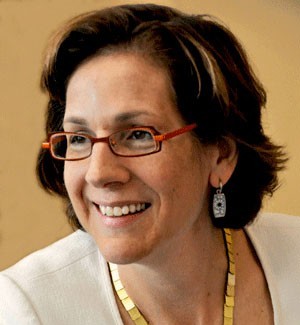
Principal Losos, a.k.a Suzy Harriston. Don’t ever call her “Sooz”.
In Clayton, Missouri, the high school principal has resigned after being outed as a fake student on Facebook. Posing as Clayton High student Suzy Harriston, Principal Louise Losos amassed over 300 student friends from her school, until a former student pierced her false identity and urged everyone to de-friend it. Poor, fictional Suzy vanished, and shortly afterward so did Louise, who was placed on a leave of absence. Now she has resigned.
Can anyone think of a good reason why Losos should not have lost her job? In addition to being creepy, her posing as a student was a lie, and hardly proper conduct for the head of a school, a role model, and an ethical exemplar. If she were investigating a murder, or a series of unexplained thefts, or a suspected Al Qaeda cell working out of the Science Club, she might have some ammunition on her side, but the only use she seems to have put Suzy to was building student support for a friend of hers, a physical education teacher, whose job was in jeopardy.
There was one note in the Yahoo! report that complicates the analysis: Continue reading
The Monsters, the Baseball and the Kid

“WAAA! I wanted that ball! By the way, where am I?”
I skipped this ten-minute controversy from last month, but I think it was worth mentioning from several ethics angles, so consider this catch-up.
Rangers fans Sean Leonard and Shannon Moore were at a Texas Rangers-Yankee game a few weeks ago when a game ball was tossed into the stands by Texas’s Mitch Moreland. They caught it and gleefully posed for the TV cameras, which also caught a three-year old boy crying hysterically next to them. Immediately, the couple was vilified far and wide, on TV, in blogs and on radio talk shows ( Business Insider called them “The Monsters Who Made A Little Boy Cry”) for taking the ball and not giving it to the child. The main accuser who sparked all this hatred was Yankees broadcaster Michael Kay, who told his radio audience that the couple was taunting the unhappy boy.
Outrageous, all right, but Kay, not the couple. Kay’s description of what occurred was speculative and even fanciful, and for other commentators to commence vilifying the two fans without knowing anything about them, or even why the child was crying, was frighteningly unfair, irresponsible and cruel. Yes, you too can be caught on camera and turned into a national punching bag! Later, we discovered that…. Continue reading
“Show Boat” Ethics: Defining Deceit
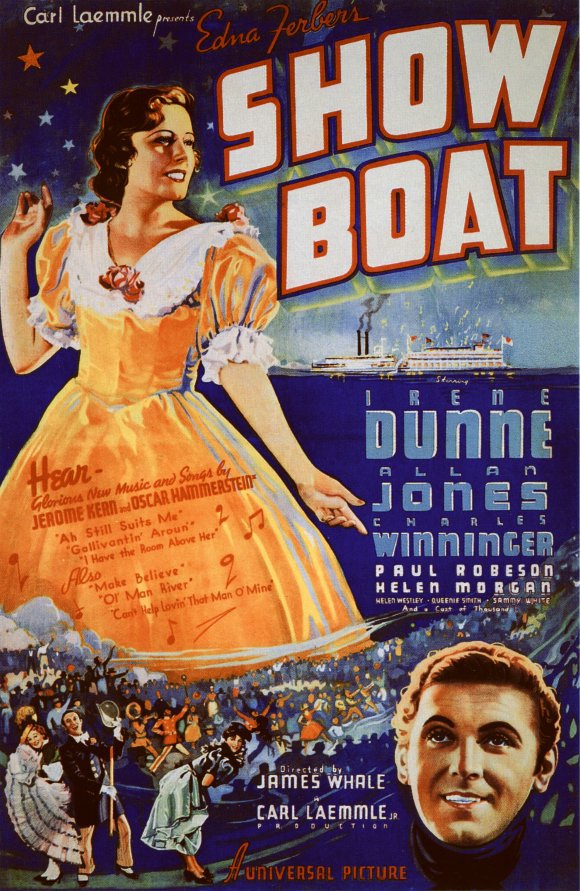 I frequently discuss the concept of deceit in ethics seminars, and my favorite example, which I have also used on Ethics Alarms, is the famous “Does your dog bite?” gag from “The Pink Panther Strikes Again!” This morning I was reminded of an even better example, though not so funny, while watching Turner Movie Classics. TMC was showing the 1936 Hollywood adaptation of “Showboat,” the black-and-white version directed by James Whale of “Frankenstein” fame, that is richer and more faithful to the original Oscar Hammerstein-Jerome Kern Broadway musical than the later, color version starring Ava Gardner, Kathryn Grayson and Howard Keel. Continue reading
Ethics Quiz: Elizabeth Warren’s Native American Ancestry

Remember that old Cher song, “1/32 Breed”?
If Scott Brown wins re-election as a Republican Senator from Massachusetts this fall, he will go on record as one of the luckiest political candidates since, well, Barack Obama. Brown won an upset victory in the special election in 2009 (any time a Republican wins in my home state, it’s an upset) in part because his inept Democratic opponent, Martha Coakley, showed herself to be unforgivably ignorant on the one topic most state residents really care about—the Boston Red Sox. Now he has the latest contender for his job, Harvard professor Elizabeth Warren, on the ropes because of her own self-inflicted wound, Warren’s dubious claim of minority status as a Native American between 1986 and 1995.
Warren listed herself as part Native American in the Association of American Law Schools desk book, she says, in the hope of meeting others in her field with similar backgrounds. She did not, she insists, do so to gain any professional edge. Yet in 1992 she was hired to teach at Harvard, and when she became a permanent faculty member in 1995, Warren dropped the minority claim from her profile in the directory. Harvard, meanwhile, began counting Warren as a Native American in its diversity statistics, just as her previous employers had at the University of Texas and the University of Pennsylvania. Whatever her intent may have been, a former chair of the AALS confirms that minority listings in the organization’s directory were used in hiring decisions by members.“In the old days before the internet, you’d pull out the AALS directory and look up people. There are schools that if they were looking for a minority faculty member, would go to that list and might say, ‘I didn’t know Elizabeth Warren was a minority, ” George Mason University Law professor David Bernstein, a former chairman of the American Association of Law Schools, has told reporters. Continue reading
Ethics Dunce: David Barton
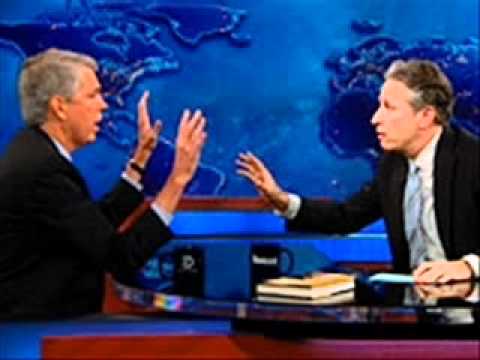
David Barton, telling fairy tales to Jon Stewart
Pseudo-historian and evangelical leader David Barton went on Comedy Central’s “The Daily Show” this week and trotted out a factually dubious story ( and one that is almost two decades old) about a St. Louis elementary school student named Raymond Raines who was, the story goes, reprimanded by both his teacher and a principal for praying over his lunch in the cafeteria. Jon Stewart was skeptical, but Barton, an author, a self-styled historian and, of course, a man of God, insisted that the tale was true, and indicative of the persecution Christians are subjected to in Obama’s America. The story is not “true;” at best it is disputed; I think, as Stewart suggested, that it is highly unlikley. It is dishonest to state that it is fact, because Barton doesn’t know that.
There is no excuse for this, but plenty of possible reasons. One is that Barton was intentionally lying to bolster his claim of culture-wide persecution. Another is that he was in the throes of confirmation bias, and assumed that a horror story that seemed to support his already-formed beliefs must be true. A third is that he related a popularly-repeated myth on national television without bothering to check whether it was true or not. None of them are acceptable. Continue reading
Ethics Article of the Week: George Will On His Son’s Birthday

Happy birthday, Jon.
Conservative columnist George Will has only occasionally mentioned his Down Syndrome-inflicted son Jon in his columns, but when he has, it has provided an extra dimension to Jon’s father, who usually comes across in print and on TV as cynical, dour, and archly intellectual. Today is Jon’s birthday, so Will devotes the full column to him, his challenges, and, when all is said and done, ethics.
It’s a beautifully written piece, as Will’s columns often are, and a tender one. More importantly, however, it is an essay that should provoke thought, beginning with the fact that the only reason Will wrote this column is that he and his wife chose, 40 years ago, to do what 90% of all parents informed that their gestating child has Down Syndrome refuse to do: allow the child to be born.
The column is here
__________________________________________________
Graphics: Richmond Times-Dispatch
Did Any Journalists Actually READ Obama’s Autobiography?
 Today Rush Limbaugh was fuming over a Politico report that the President had admitted to biographer David Maranis that “Genevieve Cook,” the New York girlfriend depicted in his 1995 autobiography “Dreams From My Father,” was not a real person but a composite of several girlfriends. Rush’s point: the book was widely represented, by the President as well as others, as true. What else in the book is a lie?
Politico, however, did something novel: its reporters went to the book itself. They found that Obama had written, right up front, that some characters were composites, though he didn’t say which. Limbaugh’s larger point is still valid: if it contained fiction, and composite characters are that, the book is not reliable, and is not truly a work of non-fiction that can or should be trusted. Obama did not hide that fact, however…if anyone had been paying attention. Continue reading

