On Apologies: the Sincere, the Forced, the Cynical and the Harmful

"Apologize! SINCERELY!"

On February 17th, Washington Post political commentator Dana Milbank wrote a column disparaging what he called “forced apologies.” Although the context of his column and the apology he was refusing to make was too silly to bother with* (yes, there really are things too silly for Ethics Alarms to bother with) something told me I should keep his column handy, and indeed, the perfect time to consider Milbank’s argument has arrived. Forced apologies are flying all over the place.He wrote:

“…one of the most annoying components of our decaying political culture [is] false umbrage. Liberals created this form of identity politics, in which an underrepresented group claims persecution, but conservatives have embraced it. One of its most common expressions is the demand for an apology. It’s phony by definition — an apology can’t be sincere if it’s answering a demand — and the reflexive demand (like a demand for a resignation) serves only as an excuse to keep a news story alive. Sorry, but it’s time to put this tired gimmick to rest.”

Milbank’s essay included an impressive catalogue of recent demands for apologies, and since it was published there have been many more, the most recent example, of course, being Rush Limbaugh’s mea culpa for his outburst against Sandra Fluke. His central thesis, however, is wrong.

Here is the hierarchy of apologies, their function and their motivation, 1-10, from most admirable to despicable: Continue reading →

Rush’s Apology, His Power, and His Responsibility

They're coming, Rush!

The Sunday morning talk shows had a real Rush Limbaugh bash-fest this morning, and that’s fine: he earned it, with his ill-considered and vicious attack on Sandra Fluke for stating her opinion. This is a real career crisis for Limbaugh, I think, and he knows it. His initial reaction to the furious criticism of his offensive comments about the Georgetown Law student was to refuse to back down, as has been his response to controversies his entire remarkable career, and it has served him well. Then he realized that this controversy was different. He had crossed a line of decency, fairness and civility that the culture as a whole, not just political adversaries, would not tolerate. He apologized, saying.

“For over 20 years, I have illustrated the absurd with absurdity, three hours a day, five days a week. In this instance, I chose the wrong words in my analogy of the situation. I did not mean a personal attack on Ms. Fluke.

“I think it is absolutely absurd that during these very serious political times, we are discussing personal sexual recreational activities before members of Congress. I personally do not agree that American citizens should pay for these social activities. What happened to personal responsibility and accountability? Where do we draw the line? If this is accepted as the norm, what will follow? Will we be debating if taxpayers should pay for new sneakers for all students that are interested in running to keep fit? In my monologue, I posited that it is not our business whatsoever to know what is going on in anyone’s bedroom nor do I think it is a topic that should reach a Presidential level.

“My choice of words was not the best, and in the attempt to be humorous, I created a national stir. I sincerely apologize to Ms. Fluke for the insulting word choices.”

Was it a “real” apology? I’m going to discuss the issue of apology ethics in the next post, but yes, it was as real as most apologies. If one’s definition of apology is ” a statement of contrition and regret freely and sincerely given,” the answer is no. Very few apologies meet that high standard, if only for the reason that few of us will apologize unless an apology benefits us in some way or is unavoidable. Rush’s reputation is based on daring, outrageousness and his refusal to back down from the ‘truth” despite assaults from the “drive-by” media and the politically correct; he, of all people, would never apologize for anything he said on his show if he had any choice in the matter. In this case, I assume that Limbaugh was hearing from his affiliates, his sponsors, other talk show hosts, and political figures that he was courting disaster if he didn’t back down. Continue reading →

Ethics Hero Emeritus: James Q. Wilson (1931-2012)

“Denmark or Luxembourg can afford to exhibit domestic anguish and uncertainty over military policy; the United States cannot. A divided America encourages our enemies, disheartens our allies, and saps our resolve—potentially to fatal effect. What General Giap of North Vietnam once said of us is even truer today: America cannot be defeated on the battlefield, but it can be defeated at home. Polarization is a force that can defeat us.”

James Q. Wilson wrote that, in an essay on America’s polarization. The scholar, author, philosopher and social scientist who died yesterday at the age of 80 was a passionate conservative who believed in winning arguments, influencing policy and changing conduct with the power of ideas, facts, studies and analysis. That the media, especially the conservative media, treated the death of Andrew Breitbart as a thunderclap and the death of Wilson as a footnote tells us as much as we need to know about our culture, values and intellect. I watched GOP presidential candidate Rick Santorum respond to the news of Breitbart’s death as if the culture warrior was the equivalent of Martin Luther King. Breitbart died too young, at 43; he had a family, and reputedly was a nice guy. But his contribution to the American scene was to use his various websites to increase the intensity of partisan warfare, and to help banish fairness, compromise, civility and mutual trust from public discourse. One of the last videos of Brietbart showed him screaming insults at Occupy protesters.

I had stopped using Breitbart’s sites for source material: I couldn’t trust them. The editing of James O’Keefe’s ACORN sting was one strike; the misleadingly truncated Shirley Sherrod speech was another. I wasn’t going to wait for a third. It tells me something alarming about conservatives in this country that such an unethical new media figure could be so lionized upon his death, when his methods were so frequently aimed at destruction rather than elightenment.

Wilson, in contrast, got substantive and wide-ranging results.His 1981 essay “Broken Windows” argued that community policing, rather than mere law enforcement, was the secret to changing urban culture. He wrote (with co-author George Kelling): Continue reading →

Ryan Braun, Steroids and Fairness

If Ryan Braun is innocent, this man, who never met him. tried to ruin his career. It can happen…you know, like Mark Furman tried to frame O.J.

The strange case of Ryan Braun, the 2011  National League Most Valuable Player who tested positive for steroids during the post-season play-offs, once again raises the perplexing ethical issue of fairness when formal procedures concerning alleged wrongdoing are involved.

Braun’s positive test sent a shudder throughout baseball. He was supposed to  be one of the game’s rising young “post-steroid era” stars. For Braun to be caught cheating was a discouraging reminder that the game had not left its disastrous days of pumped-up stars and dubious records behind: now the legitimacy of an MVP season was being called into question. Braun vehemently denied the charges (as every positive-testing player has) and appealed them, a move that had been futile in every previous case. To literally everyone’s surprise, however, the three member arbitration panel ruled 2-1 in Braun’s favor. Although the report of the independent arbitrator who cast the deciding vote has yet to be released, the reason Braun prevailed appears to be that the Major League Baseball contractor who had  responsibility for sending Braun’s urine samples to the testing facilities had to store them at his house for the weekend because FedEx had closed before he could mail them to the lab. This created a sufficient break in the chain of custody, it seems, to make the results invalid. Continue reading →

Art Jones: Future Incompetent Elected Official of the Month?

Let’s hope not.

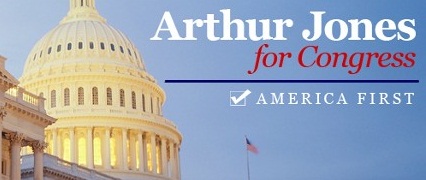
Art Jones, running in the Republican primary to challenge Democrat Dan Lipinski in Illinois’ 3rd Congressional District, is a former member of the American Nazi Party, who, true to his breed, denies that the Holocaust occurred. Jones explains,

“As far as I’m concerned, the Holocaust is nothing more than an international extortion racket by the Jews. It’s the blackest lie in history. Millions of dollars are being made by Jews telling this tale of woe and misfortune in books, movies, plays and TV. The more survivors, the more lies that are told.”

The sunny side of this human cloud is that in America, even vile, hateful and ignorant citizens like Jones can express their views and run for office.

The scary side is that some of them get elected.

Ethics Hero: Journalist Harris Meyer

Harris Meyer is an Ethics Hero because he won’t let a bad lesson go unchallenged.

Meyer is an award-winning  freelance journalist and a former editor at the Yakima (Wash.) Herald Republic. That was the paper that first broke the story of Gaby Rodriguez last year, which I wrote about here. With the encouragement of her high school principal, Rodriguez, a senior, embarked on some amateur social science research that involved deceiving everyone in her life except her mother, one (of seven) siblings, her boyfriend, and the principal. She pretended that she was pregnant, suing padding. She faked the pregnancy for months, finally announcing the sham in a student assembly. This extended hoax was supposedly designed to expose how pregnant teenagers are treated by their peers and others. It was, by any rational standard, a despicable thing to do—a betrayal and exploitation of her friends,  her boyfriend’s family, her siblings and teachers. Deception on such a scale must be justified, if at all, by both need and necessity. Were there other, less destructive ways to investigate the treatment of pregnant teens? Sure there were; interviews come to mind. Collecting published journals and other accounts. But Gaby’s unethical stunt was in spiritual synchronicity with a reality show-obsessed culture, where fake is entertaining and collateral damage is of no concern.  I wrote: Continue reading →

Ethics Quiz: How Unethical Is This Lawyer?

"Dr." Susan Friery with "Bowser", who for the last ten years has claimed to be a poodle.

Newburyport (Mass.) lawyer Susan Friery, a partner at the New York-based law firm Kreindler & Kreindler, has been suspended from being able to practice law in Massachusetts until February 2014.

Why? Two years..that seems pretty stiff. Well, it seems that from the time she joined the firm as a part-time paralegal and medical consultant in 1986 to her resignation, she represented her self to the firm and its clients as an MD.  Friery joined the law firm in August 1986 . In truth, she had only completed taken four semesters of medical courses at SUNY Buffalo School of Medicine, and never got a degree. But she got her entre into the  firm by falsely claiming that she had graduated from another school, the College of Physicians and Surgeons of Columbia University in New York. In 1989, the firm paid most of her tuition to law school,and by 1993, Friery became an associate, specializing in medical malpractice cases and personal injury law suits with medical injuries. Her name appeared with the title MD or Dr. on the firm’s letterhead, business cards, legal correspondence and other documents filed in numerous courts.

Court documents also show that Friery presented herself as a doctor at seminars and meetings. By 1998, the law firm had included Friery’s alleged medical credentials in its web-based advertising.

Your Ethics Quiz for today, therefore, is this…TWO YEARS??? I’m sorry, let me calm down. <big breath> Ok, here’s the question:

Do you think a suspension of two years for 25 years of falsely holding oneself out to the public as well as colleagues as a medical doctor is sufficient punishment? Continue reading →

Social Science, Group Research and Bigotry: The Most Slippery Slope

Typical...

Decades ago, Arthur Jensen became a target of critics and a pariah in his field by publishing a controversial study that indicated that differences in racial performance on intelligence tests probably had a genetic component. He was, and is, called a racist, though Jensen has continued to produce respected research. Since the publication of the 1969 Harvard Educational Review article that made him infamous, Jensen has won the prestigious Kistler Prize in 2003 for original contributions to the understanding of the connection between the human genome and human society.

The problem with Jensen’s research results, whatever the legitimacy of the data and his methods, was this: What do you do with it? Like other studies that show women, as a group, with less aptitude for the sciences, or those that show superior traits in other races and ethnic groups, this information just serves as a catalyst for bigotry. Whatever the trends within a large group may be, they tells us nothing about any individual in that group. Yet the existence of a study creates a natural tendency to apply the claimed group characteristics to every group member. Most people think like that, always have and always will. This is similar to the problem with stereotypes. Many, perhaps most, stereotypes have some truth in them. I was raised in a Greek family, and Greeks are reputed to be clannish, cheap, bigoted, and gifted in the kitchen. Well, that would describe a large proportion of my relatives, too, but not all of them. My Aunt Bea is fanatically liberal. My Mom couldn’t cook a lick.  All right, they all were cheap, but the point is that it would be foolish and unfair to assume what any of them would be like without knowing them.

Knowledge is an absolute good, but perversely, some knowledge also guarantees abuse, and thus results in more bad than good. Jensen’s study, as far as I can see, has no good use in a democracy where every individual has the right to be assessed according to his or her conduct and character. Nor do any studies that “prove” character or ability differences in broadly defined groups.

This is all a prelude to my conclusion that the now widely publicized National Academy of Science study that has this conclusion-— “Higher social class predicts increased unethical behavior”—is just throwing gasoline on a fire, and has no useful or benign purpose at all. Continue reading →

The Gas Price Blame Game: Can “Tit for Tat” Ever End?

There’s an amusing page up at Buzz Feed that has an audio of Senator Barack Obama raking the Bush Administration (in 2006) for the $3.40 gas. Also on the page : a video of Nancy Pelosi, while Speaker of the House, attacking the Bush White House for the same problem. Applying the well-worn unethical practice of “Tit for Tat”, also known as “You Did It To Us, So We Can Do It To You and Nobody Can Blame Us,” the Republican presidential hopefuls (Groucho, Chico, Harpo and Zeppo) are making similar accusations against President Obama, since that $3.40 cents gas looks like the Good Ol’ Days now.

Is the Republican criticism of Obama for this round of high gasoline prices any less unfair, dishonest and irresponsible than the Democratic version six years ago, because Obama was part of it? No, it’s exactly as unfair, dishonest and irresponsible. Continue reading →

Weekend Ethics Catch-Up

If you took an ethics break this last weekend of February, here’s your Ethics Alarms make-up assignment: