Why “He’s Suffered Enough” Is Not Enough

Not enough.

“He’s suffered enough” is one of the more popular and effective rationalizations, usually put into use in defense of white collar criminals and the likes of Roman Polanski, wealthy or once-respectable criminals for whom remorse and humiliation are deemed to be as devastating as incarceration.  Yet it is still a rationalization—a deceptive representation of the truth—and shows a misunderstanding of what official punishment needs to accomplish.

A sad drama has played out in a Montgomery County Maryland court, where twenty-year old Kevin Coffay was sentenced to twenty years in prison for fleeing the scene of a May auto accident that he had caused by being drunk behind the wheel, as Spencer Datt, 18; John Hoover, 20; and Haeley McGuire, 18, remained in the wreck after Coffay fled.  All three died.

Coffay was stunned by the sentence, and news reports say that the case has torn the community apart, with the families of the victims seeking retribution, and supporters of Coffay pleading for compassion and mercy. Their argument, as it always is in such tragedies, is that “he’s suffered enough”. This misses the point of the trial, the sentence, and the societal ritual that such events demand. Continue reading →

Iowa Aftermath: Five Ethics Lessons

The Iowa Caucuses produced a bumper crop of ethics lessons.

Ah, it may look like corn, but but there are kernals of ethics knowledge in those Iowa fields!

1. People may do the right thing for the wrong reasons, but what counts is that they do the right thing. Jaw-dropping statements from some Evangelicals in Iowa that they just couldn’t see voting for a woman to be President had many pundits writing that Iowa was too backward to have such a prominent role in electoral politics. The result of this particular bias, however, was to knock Rep. Michele Bachmann out of the race, a result she had earned with her serial irresponsible statements and half-truths. And it was a bias that she courted, both by her repeated nod to subservience in her own marriage and her self-identification with the Evangelical bloc. The bigotry that helped end her candidacy was a bigotry that she  supported, and that equals rough justice, but justice nonetheless.

2. The news media’s lack of diligence and professionalism warps the process. Continue reading →

The Admirable Mr. Sondheim

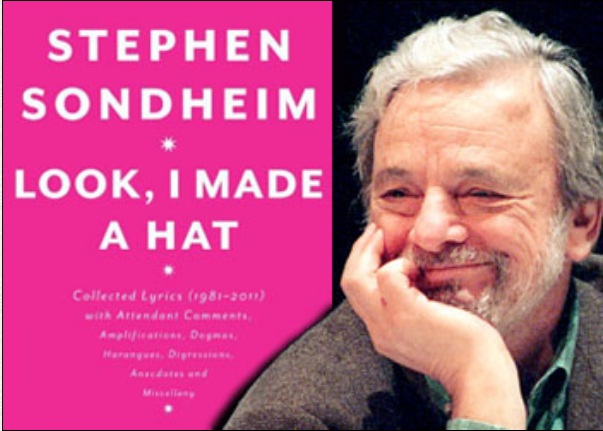
And an ethical hat it is, too!

Readers who are not interested in the art of lyric writing and the mechanics of constructing a Broadway musical should probably avoid the second and final installment of Stephen Sondheim’s chronicle of his creative life, “Look, I Made a Hat.”  They will be missing something important nonetheless: a rare example of truly ethical memoirs.

As in his first volume, “Finishing the Hat,” America’s pre-eminent composer-lyricist for the stage reveals himself as a gentleman, an adult, and a thoroughly ethical human being, and does so not by proclaiming his virtues, but by demonstrating them in his writing. He is not uncritical, but always fair and kind. He accepts personal responsibility for projects that failed, and is generous with giving credit for projects that were successful. There is no false modesty in Sondheim about his own skills and achievements, but neither does he seem to overvalue them or seek his reader’s admiration by blowing his own horn.

The line Sondheim walks in both books is fine, and he walks it finely. For example, I initially thought his decision to only criticize the techniques of other lyricists who are dead was a cowardly one, but upon reading both books it is clear that the decision was motivated by kindness. Sondheim takes the craft of lyric-writing very seriously, and his integrity would not allow him to censor a critical observation regarding a colleague’s work when he believed the criticism was illuminating and had merit. Realizing how hurtful a critique from someone of his reputation and accomplishments could be, Sondheim restricted his frank and (mostly)  fair assessments to writers beyond wounding. If Jerry Herman isn’t grateful, he should be. Continue reading →

The Third Annual Ethics Alarms Awards: The Worst of Ethics 2011 (Part 2)

The 2011 Ethics Alarms Awards for the worst in ethics continues (you can catch up with Part I here) with the large and depressing…

 Shameless Bad Character Division

Jerk (defined as an individual who habitually places his personal benefit and ego gratification above the welfare of everyone and everything else) of the Year: Donald Trump

The Dennis Rodman Award, (Awarded to a professional athlete for a career and lifetime of  behaving like a jerk): Jose Canseco. Jose’s done it all, from being baseball’s Typhoid Mary of steroids, to getting arrested for various assaults, to writing a series of tell-all books designed to rat out the very players he corrupted, not as a service to his sport, but as revenge for it rejecting him. In 2011, he hit a new low, accepting money to appear in a celebrity boxing match (the 21st Century version of becoming a circus geek to pay the bills) and sending his less-talented, equally dim-witted, identical twin brother Ozzie to perform instead, hoping to fool the fools who hired him. This, of course, was fraud. It takes quite a jerk to take this award from Manny Ramirez, who became eligible in 2011, but Jose was up to the task.

Asshole (defined as an individual who intentionally and maliciously causes pain and harm to others because he can) of the Year: Rev. Terry Jones, the publicity-seeking leader of a tiny rural church, who caused riots and deaths abroad and ramped up political tensions between America and Muslim nations by threatening to burn, and finally burning, the Koran as a demonstration of contempt for Muslims and the Islamic faith. Continue reading →

Unethical Quote of the Week: Rep. Ron Paul

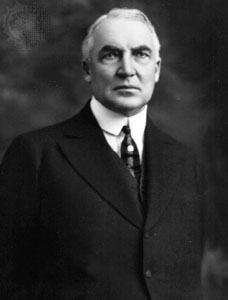
Warren G. Harding, the patron saint of "Nobody's perfect!" presidencies.

“I don’t think anybody in the world has been perfect on management, everybody that’s ever worked for them. So, yes…  it’s a flaw. But I think it’s a human flaw… I admit that I’m an imperfect person and didn’t monitor that as well.”

––GOP presidential candidate Ron Paul, responding to ABC’s Jake Tapper’s question about whether his accountability for racially inflammatory statements made in his name in newsletters published by him 20 years ago raise legitimate doubts about his management abilities.

Anyone who’s read this blog much knows what I think of the “nobody’s perfect” excuse for misconduct. To be precise in this case:

1. Nobody said you weren’t human, Ron. Humanity is a rather low bar for a presidential candidate, don’t you think?

2. There is a lot of territory between “perfect” and “letting people write racist and homophobic content under your name in a for-profit newsletter.” For example, the rest of the Republican field is as far from perfect as one could imagine, yet none of them have done that.

3. People who fail to fulfill core management functions when they oversee a project are imperfect, flawed and human, and also called “inattentive and incompetent leaders.” Imperfect, flawed and human individuals can be good and effective Presidents of the United States. Inattentive and incompetent leaders, however, cannot.

Happy 2012! Your New Year’s Ethics Quiz: “Firing Super-Clerk”

Last week, convenience store clerk Eric Henderson was confronted by two female robbers in Pensacola, Florida who demanded that he hand over the cash in his Circle K register.  Henderson  grabbed the gun pointed at him by one of the women, slammed her to the ground, and then chased the two into the street where they fled in a getaway car.

Henderson was promptly fired by Circle K  for violating a company policy that forbids heroics by employees in the middle of attempted robberies. Now Henderson has gone to the media, which is pointing out that he had been unemployed for two years (Occupy Circle K! But how long he had been out of work should have no bearing on the decision whether to to fire him) and that according to Henderson, the unarmed robber was urging her armed companion to shoot him. (Aside: Some of the news accounts also included this hilarious line: “The 30-year-old grabbed the gun pointed at him by one of the alleged robbers…“ Alleged robbers? Can we all agree that when there is an actual  gun to be grabbed, the term “alleged” is idiotic? What else is someone who points a gun at a convenience store clerk? A practical joker? Some one who wants to trade a Glock for Twinkies?)

Your New Year’s Day Ethics Quiz: Was Circle K right to fire Eric? Continue reading →

Philidelphia’s Conflicted, Shameless, Greedy—But Law-Abiding!— City Council

In the City of Brotherly Love, why shouldn't the City Council show a little love to itself--and its members' bank accounts?

Philadelphia, a city that like all cities these days is reeling under budget deficits, contemplating harsh cuts in city services and programs and raising taxes, is receiving a cruel lesson in the limits of public-mindedness by elected officials when the price is right.

Philadelphia City Councilwoman Marian Tasco retired yesterday, collected $478,057 in pension payments, and then plans to return to work after she is sworn-in on Monday to serve her seventh term. Register of Wills Ronald Donatucci retired Dec. 23 and will also return to work on Monday. He collected $366,797.

Why are they doing this? Because they can. Because it’s a lot of money. Because nobody can stop them. In Tasco’s case, because her irresponsible, disengaged, foolish constituency voted her into office despite ample warning that this is what she had planned. Continue reading →

A Frightening Figure, Setting Off Ethics Alarms

We don't even know how to play Russian Roulette responsibly.

On Friday, the day before Christmas Eve when much of America was thinking about sugar plums,  lay-away plans, and protesting Christmas pageants, the Federal Accounting Office released its analysis of  the net present value of the nation’s Social Security and Medicare obligations, “net present value” being  the total funds that would have to be set aside today to pay the costs of these programs in the future. Seldom do figures so clearly indict the unethical practices and statements of so many.

In fiscal 2011, the cost of the catching up on the required funding of Medicare and Social Security rose from $30.9 trillion to $33.8 trillion. That $2.9 trillion increase should be regarded as adding to the $1.3 trillion cash deficit for fiscal 2011, making a $4.2 trillion deficit—and this coming in a year in which the rising national debt was supposedly recognized, at last, as a threat to America’s stability, prosperity, and welfare. The costs of Social Security and Medicare are rising at a frightening rate, nearly doubling in the last decade, with little or nothing being done to address the problem. And there is good reason to believe that the Medicare estimates are based on unrealistic assumptions. The GAO report also includes an alternate, less rosy scenario (or perhaps “more putrid” is a better phrase) in which the projected Social Security-Medicare debt is more than $46 trillion. How serious is that? Well, the combined value of the equity in U.S. homes and the value of all publicly-traded companies is less than 20 trillion dollars.

What do these figures tell us about the ethics of the various players on the national scene? Continue reading →

Unethical Quote of the Week: Patrick Lott

Patrick Lott, hard working role model

“I have always given my best and tried to be a great role model. No one is perfect. Thanks for the memories.”

—-Patrick Lott, Assistant principal at Bernardsville Middle School in Somerville, New Jersey, in a cryptic Facebook post earlier this month that was explained, sort of, when he was arrested for allegedly using a hidden camera to videotape boys in the Immaculata High School showers for a period of nearly three years.

I say “allegedly” because people get mad at me when I don’t, and because he hasn’t been tried and convicted yet. On the other hand, videos of nude teenagers showering were found in his home. Maybe they flew in the window.

“Nobody’s perfect” is one of the great and infuriating rationalizations used by scoundrels and their apologists,  and goes hand in hand with all the other clichés designed to discourage people from making the kind of ethical judgments that keep societal standards sturdy, ethical, and clear. It is right up there with “It’s not the worst thing” and “Judge not, lest ye not be judged” as bumper sticker dodges that set my teeth on edge, but “Nobody’s perfect” may be the most outrageous of all….at least when employed by someone like Lott.

There is a pretty big chasm between “perfect” and taking secret videos of naked kids when you are a trusted school administrator. This guy couldn’t see “perfect” with the Hubble telescope. And he says he’s always given his best—-this was his best? I shudder to think about what Lott would have done if he wasn’t trying so hard. He tried to be a great role model? For who…Penn State assistant coaches?

Lott’s statement is an outrageous plea for sympathy for all the wrong reasons. His best would have been to seek help of find another line of work when he realized he couldn’t control his desire to watch naked young boys. Trying to be a great role model begins with not breaking the law. And  one who behaves outrageously should not insult the rest of humanity by trying to suggest that we’re really not so different. Oh yes we are.

This is Lott’s disgrace, Lott’s shame, and Lott’s crime. The very least he should be able to do is accept responsibility, and not try to minimize his misconduct or suggest that it’s not all that different from overeating or going 45 in a 35 mph zone.

Spin, Rationalizations and Denial From the Ron Paul Faithful: An Ethics Lesson

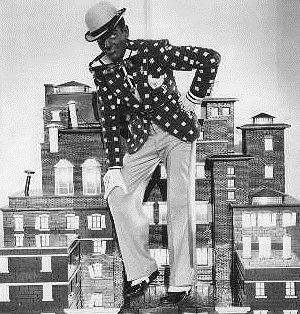
What does Fred Astaire in blackface have to do with Ron Paul? Not much.

There are a lot of reasons to regard Rep. Ron Paul, currently facing what should be his last hurrah in the idiosyncratic Iowa Caucuses, as the model for politics and leadership as we wish it could be. He says what he means. He doesn’t pander. He isn’t afraid of uncomfortable truths. He has integrity. This explains why the supporters of the one true libertarian in the U.S. Congress seem ready to fight to the end to preserve his presidential candidacy, though its long-term prospects are about the same as those of Frosty being elected President of Hell. They are, as a result, providing the rest of us with a textbook example of how loyalty and dedication can spawn intellectual dishonesty, cause otherwise good and intelligent people to substitute rationalizations for reason, and lead to corruption. How did all those idealistic young lawyers end up in jail supporting the plots of Richard Nixon?  Why did otherwise honest and ethical Democrats, elected officials and feminists twist their principles into pretzels to defend Bill Clinton’s using White House staff as a personal dating bar and lying about it under oath?  This is how. When you believe that a leader is good, then affirmative proof of flaws that disqualify him for leadership must be justified and explained away. It often isn’t even a conscious decision: this is cognitive dissonance at its strongest. The results, however, are the same as intentional deception.

Over at The Daily Caller, Wesley Messamore, who is Editor in Chief of the HumbleLibertarian.com, has registered an impassioned and angry defense against Paul critics who, like me, regard the content of his newsletters from the Eighties and Nineties an automatic disqualification for Paul as a presidential nominee. I don’t mean to pick on Messamore: his arguments are typical of Paul defenders; he’s no worse than the rest. His article, however, neatly covers all the unethical tactics Paul’s followers have had to embrace to convince themselves that their hero hasn’t failed the leadership test.

Here they are: Continue reading →