A Chess Ethics Controversy!

And it’s a chess ethics controversy that I don’t understand, despite a relatively secure knowledge of chess. Here’s what happened:

World Chess Champion Magnus Carlsen quit the annual, invite-only Sinquefield Cup chess tournament in St. Louis, Missouri, United States, a stop on the Grand Chess Tour, mid-match. His unprecedented exit sparked speculation that he was engaged in a silent protest after losing to Hans Niemann, regarded as an inferior player. Niemann was accused of cheating earlier in his career.

Opined WorldChess.com,  “Carlsen likely walked out because he felt that the organizers could not ensure fair play procedures.” This was the consensus of many chess fans and commentators as well. Chess Grand Master Hikaru Nakamura also theorized that Carlsen withdrew because he suspected Niemann of cheating in their game, saying: “I think that Magnus believes that Hans probably is cheating.”

Continue reading

Ethics Quiz: A.I. Cheating In The Art Competition?

Once again, Artificial Intelligence raises its ugly virtual head.

The Colorado State Fair’s annual art competition rewards artistic excellence prizes in painting, quilting, and sculpture, with several sub-categories in each. Jason M. Allen got his blue ribbon with the artwork above, which he created it using Midjourney, a program that turns lines of text into graphics. His “Théâtre D’opéra Spatial” won the blue ribbon in the fair’s contest for emerging digital artists.

He’s being called a cheater. Just this year, new artificial intelligence tools have become available that make it possible for anyone to create complex abstract or realistic artworks by simply by typing words into a text box. The competition wasn’t paying attention, and in the era of rapidly moving technology, that’s always dangerous. Nothing in the rules prohibited entering a “painting” that was made using AI. Continue reading

Ethics Hero: Criminal Defense Lawyer/Blogger Scott Greenfield

Scott Greenfield’s post yesterday on his blog Simple Justice was fortuitous, coming as it did shortly after my musings (item #2) about a trusted and respected legal ethics colleague whose ugly past ethical breach I only recently learned about. Greenfield isn’t quite discussing the same issue—my dilemma involves trusting someone’s judgment and integrity, his involves pure friendship—but his post is helpful nonetheless, and admirable.

In fact, it reminds me of my father.

Continue reading

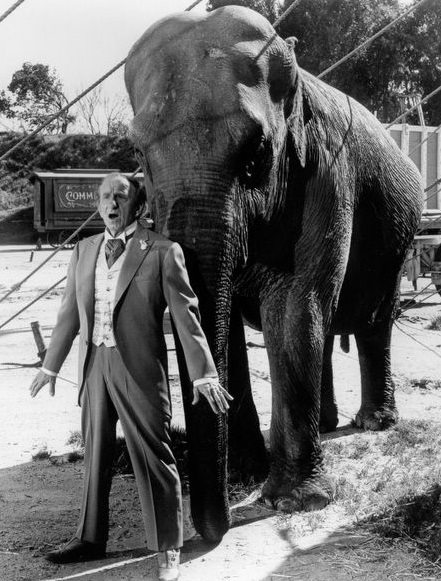
The President Scores A Jumbo!

And it’s a really funny Jumbo, almost as funny as Jimmy’s (“Elephant? What elephant?”), if you ignore how sad, scary and pathetic Biden saying that now is.

Biden last night: “Donald Trump and the MAGA Republicans represent an extremism that threatens the very foundations of our Republic.”

Biden today: “I don’t consider any Trump supporter a threat to the country.”

Divisive rhetoric? What divisive rhetoric?”

Ah, so many things jump into my fevered brain…

Continue reading

Ethics Quote Of The Month: Ann Althouse On Biden’s Speech Last Night

“I can sum it up in 7 words: We the People, but not you people.”

—–Allegedly non-partisan blogger Ann Althouse (she’s a Democrat), providing a preview of her soon to be posted review of Biden’s “soul of the nation” speech.

As soon as I read that Biden was going to give a prime-time speech on the peril to the “soul of the nation,” I knew exactly what was coming, what motivated it (panic and desperation, plus terrible advisers), and what it would be: the ultimate IIPTDXTTNMIAFB.

And wildly unethical, of course: irresponsible, disrespectful, unfair, and un-American, as well as hypocritical, indeed a betrayal, from a leader who promised on his Inaugeration Day, “We can join forces, stop the shouting and lower the temperature. For without unity there is no peace, only bitterness and fury. No progress, only exhausting outrage. No nation, only a state of chaos. This is our historic moment of crisis and challenge, and unity is the path forward.”

Was I wrong?

I haven’t read the various pundits about the speech yet, and I haven’t read the text yet; I have a doctor’s appointment and I don’t want to be nauseous. I am curious about whether any of the usual Biden cheer-leaders will have the integrity to state the obvious, and what was obvious the second the speech was announced. This is deliberate divisiveness. It is the essence of totalitarian messaging; it is more fascist in intent and substance than anything Donald Trump ever did or said.

Continue reading

Comment Of The Day: “Verdict: ‘Quiet Quitting’ Is Unethical. Next Question?”

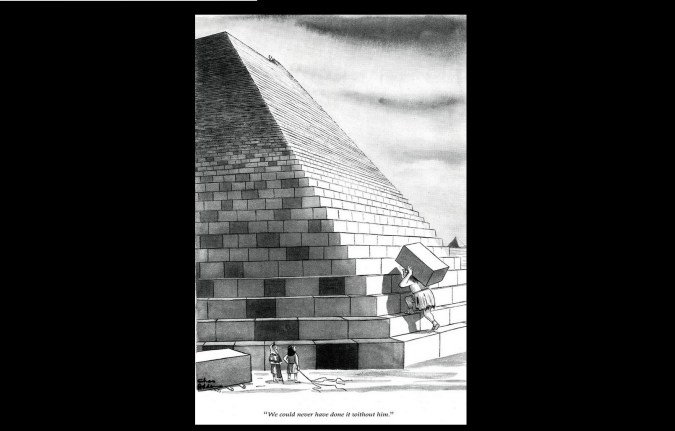
[The caption on perhaps my favorite Charles Addams cartoon reads, “We never could have done it without him.”]

I thought that the essay on “quiet quitting” would spark a good discussion, and when I think that, I’m usually wrong. This time I was right, and among the excellent comments was this Comment of the Day by Tim Hayes, who focuses on the crucial aspect of the issue that I barely touched on at all: the responsibilities of management.

Here is Tim’s Comment of the Day on the post, “Verdict: “Quiet Quitting” Is Unethical. Next Question?”…

***

So, full disclosure, I hate the terminology and discussions around “quiet quitting”, both as a manager, and as an employee. Part of this is because it is unethical – but also part of it is because a lot of current discussions seem to be about deflections and doublespeak, and they just frankly aren’t doing anyone any good.

Some instances of quiet quitting are simply laziness on the part of the employee – this shouldn’t surprise us (I can make a strong argument that laziness when possible is actually a biological predisposition, and furthermore beneficial to societies when channeled appropriately), and while performing excellently is a virtue, and should be a path to success, it is not a necessity in all things. The American experiment, and indeed all civilizations (Western and Eastern), have gotten along just fine with the majority of individuals being mediocre – the trick has historically lay in defining mediocre as still sufficiently productive to support a society when the majority of its members are at that level, while allowing those who wish to perform exceptionally to do so. So, in the situation where quiet quitting is about laziness, the only major question to be answered is what constitutes acceptable levels of performance in the role at hand, and have those been adequately defined and communicated to the person in that role.

This is why I hate hearing the discussions as a manager – they almost always ignore that there is a failure of leadership/management in these cases. If I have someone who is performing the job as I’ve described it to them, and is actually meeting my set standards for acceptable levels of performance, yet their performance of their responsibilities is insufficient in some way, then it is axiomatic that I have failed to define as acceptable the levels of performance that are sufficient to fulfill my need. If, conversely, I have described acceptable levels of performance and the person is not meeting them, and so my business needs are not being met, than I am failing to hold this person to the standards I have set. Continue reading

Verdict: “Quiet Quitting” Is Unethical. Next Question?

I had happily never heard of the term “quiet quitting” until last week, and now it is supposedly a hotly-debated ethics topic. There’s nothing to debate about. “Quiet quitting” is not new (the term may be new), nor is there any defense for it. It is un-American to its core. But as so many American values are being eroded by revolutionary fervor of people who simply don’t like the unique history, culture and principles that make the nation the unique entity that it is, it figures that slacking at one’s job and being self-righteous about it would be on the rise.

It is, there is little doubt about that. Ethics Alarms has mentioned the trend of increasingly poor and unaccommodating service in every sector. The usual explanation is the under-staffing that the destructive pandemic lockdown facilitated, but it’s good that focus is falling on the declining belief in seeking excellence in all one does, and putting out one’s best effort at all times. The death throes of American dedication to excellence as a cultural value is what has been newly christened “quiet quitting,” the many ways in which workers reduce the time, energy, and care they commit to their jobs.

Continue reading

If The Public Cannot Trust Accountants To Be Ethical, Who Can They Trust? Answer: Nobody

Let’s begin with a confession and an apology. On June 28, the SEC announced that it had charged Ernst & Young LLP with extensive cheating by its employees on exams required to obtain and maintain Certified Public Accountant (CPA) licenses. Moreover the Big Five firm withheld evidence of this misconduct from the Security and Exchange Commission’s Enforcement Division during the SEC’s investigation. EY admitted the facts leading to the SEC’s charges and agreed to pay a $100 million penalty. [You can read the SEC’s press release here.]

I have no idea how I missed such a major and troubling ethics story. It’s my job to keep up on such matters; I teach accounting ethics, though I haven’t had a training assignment for that profession since the pandemic hit. I apologize profusely. I will work to do better. While the various breaches of government, journalism, legal and business ethics that occupy most of my attention on Ethics Alarms are important, none are more ominous than this story. It really feels like the canary dying in the mine.

Continue reading

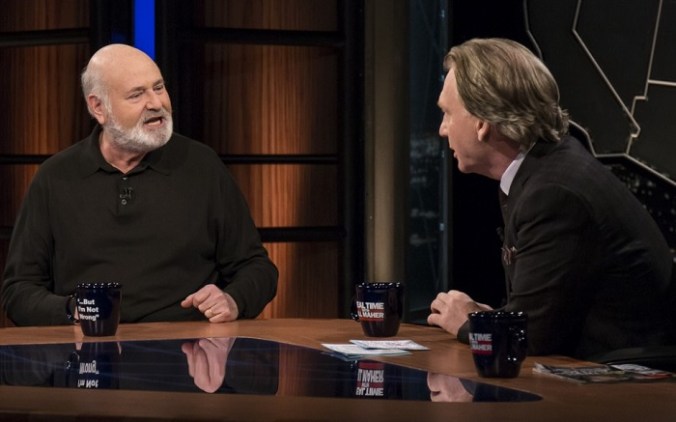
Essential Addendum To “From The ‘Res Ipsa Loquitur’ Files: Rob Reiner Provides A ‘Bias Makes You Stupid’ Case Study” [Link Fixed!]

Lest this post mislead you into the dangerous conclusion that snide comic and would-be pundit Bill Maher has suddenly developed integrity, some perspective may be necessary.

You will recall that in said post, I recalled Maher’s previous approval on another installment of his HBO show of using any means necessary to bring down Trump, rendering his apparent current condemnation of a media “conspiracy” to defeat him in the 2020 election less than convincing:

Maher is, of course, right, but he’s ethically estopped from making this argument. Before he decided that exposing the Left’s unethical plots to take out Trump would get his show some publicity, Maher had said on his show, during Trump’s Presidency, that crashing the economy to defeat Trump was “worth it.”

Conservative blogger Don Surber has a better memory than I do: he recalls how Maher treated the Hunter Biden laptop story ten days before the election:

“It’s getting so crazy. The ‘October surprise’ that the Trump people have now… have you seen this? It’s Hunter Biden’s laptop. Joe Biden’s ne’er-do-well son, Hunter, has this laptop which apparently had incriminating evidence—maybe stuff about influence-peddling on it—that was contained in his emails. And apparently, according to this, Hunter was trading on his name, selling access to his father, accepting money for nothing—what Don Jr. calls living the dream….Here’s the part that gets a little swirly about the story. How do we know about these emails? Well, apparently Hunter took his computer—which wasn’t working—to a computer repair shop, as we all do in 2020… and left it there and forgot about it, because, says Rudy Giuliani… he was drunk. And the computer repairman is blind. I’m not making that part of the story up. So, how did the blind man know Hunter was drunk? How you repair a computer if you’re blind? I don’t know about that either. But in the process of repairing Hunter’s computer blindly, he read Hunter’s emails and turned it over to the FBI. Is that how you fix a laptop nowadays? You read somebody’s emails? It’s like a plumber saying, ‘Well, the problem with your pipes is that you have cocaine in your underwear drawer.’”

That Bill! Anything for a laugh! The ethical time to question the deliberate blocking of the Biden influence-peddling evidence raised by the laptop was before the election, of course. But Maher went along with the conspiracy he’s attacking now, because those involved in it are his ideological allies most of the time, not that Maher can be trusted by friend or foe. Now Maher thinks it’s advantageous to pose as a truth-teller, so he’s temporarily turning on the metaphorical hands that feed him, like poor, addled Rob Reiner.

Bill Maher is a Machiavellian, unethical, dishonest and unprincipled asshole. There are many such creatures in today’s popular media, but he is one of the most pernicious. Don’t let him fool you.

Saturday Night Ethics Fever, 8/27/2022: Davy Crockett, and Other Ethics Stories…

For once, here is a germane Davy Crockett historical ethics note that has nothing to do with the Alamo. The episode is relevant to the recent vote-buying Hail Mary by President Biden, using tax-payer funds to deliver a large monetary gift to those who took on a financial obligation, derived its benefits, and were complaining that requiring them to pay their debts was “unjust.” It comes from an essay published in Harper’s Magazine in 1867, first flagged by the Foundation for Economic Education in 2008, and today by Instapundit.

A bill was taken up in the House of Representatives appropriating money for the benefit of a widow of a distinguished naval officer, and several impassioned speeches had been made on the bill’s behalf. The Speaker was just about to put the question when Rep. Davy Crockett (D-Tenn) rose to speak. He said,

“Mr. Speaker–I have as much respect for the memory of the deceased, and as much sympathy for the sufferings of the living, if suffering there be, as any man in this House, but we must not permit our respect for the dead or our sympathy for a part of the living to lead us into an act of injustice to the balance of the living. I will not go into an argument to prove that Congress has no power to appropriate this money as an act of charity. Every member upon this floor knows it. We have the right, as individuals, to give away as much of our own money as we please in charity; but as members of Congress we have no right so to appropriate a dollar of the public money. Some eloquent appeals have been made to us upon the ground that it is a debt due the deceased. Mr. Speaker, the deceased lived long after the close of the war; he was in office to the day of his death, and I have never heard that the government was in arrears to him.

Every man in this House knows it is not a debt. We cannot, without the grossest corruption, appropriate this money as the payment of a debt. We have not the semblance of authority to appropriate it as a charity. Mr. Speaker, I have said we have the right to give as much money of our own as we please. I am the poorest man on this floor. I cannot vote for this bill, but I will give one week’s pay to the object, and if every member of Congress will do the same, it will amount to more than the bill asks.”

The bill, which up until that point had been considered a cinch to pass overwhelmingly, was voted down. Later, the Harper’s piece claims, Crockett was asked by a friend why he had opposed the appropriation, and replied by telling the story of a man who told him he would not vote for him again because he had voted for a Treasury pay-out of $20,000 to relieve its suffering women and children as a result of a recent fire in Georgetown. The man, as Davy told it, explained in part,

“‘It is not the amount, Colonel, that I complain of; it is the principle. …The power of collecting and disbursing money at pleasure is the most dangerous power that can be entrusted to man…while you are contributing to relieve one, you are drawing it from thousands who are even worse off than he. If you had the right to give anything, the amount was simply a matter of discretion with you, and you had as much right to give $20,000,000 as $20,000. If you have the right to give to one, you have the right to give to all; and, as the Constitution neither defines charity nor stipulates the amount, you are at liberty to give to any and everything which you may believe, or profess to believe, is a charity, and to any amount you may think proper. You will very easily perceive what a wide door this would open for fraud and corruption and favoritism, on the one hand, and for robbing the people on the other…So you see, Colonel, you have violated the Constitution in what I consider a vital point. It is a precedent fraught with danger to the country, for when Congress once begins to stretch its power beyond the limits of the Constitution, there is no limit to it, and no security for the people. I have no doubt you acted honestly, but that does not make it any better…

Crockett claimed that he replied,

“‘Well, my friend, you hit the nail upon the head when you said I had not sense enough to understand the Constitution. I intended to be guided by it, and thought I had studied it fully. I have heard many speeches in Congress about the powers of Congress, but what you have said here at your plow has got more hard, sound sense in it than all the fine speeches I ever heard. If I had ever taken the view of it that you have, I would have put my head into the fire before I would have given that vote; and if you will forgive me and vote for me again, if I ever vote for another unconstitutional law I wish I may be shot.”

Continue reading