Correct Decision in the “There Are Only Two Genders” T-Shirt Case

The conservative media is foaming at its metaphorical mouth after a three-judge panel of the U.S. Court of Appeals for the 1st Circuit upheld a District Court decision from last summer that the Nichols Middle School in Middleborough, Massachusetts didn’t violate then-seventh grader Liam Morrison’s First Amendment rights when he was required to remove his “There are only two genders” T-shirt last year.

Liam, no weenie he, was sent home from school in March 2023 after he refused to change into a more neutral shirt. The case was filed on behalf of Morrison and his family last year by two conservative Christian groups, Alliance Defending Freedom and the Massachusetts Family Institute. Sam Whiting, a staff attorney with MFI, reacted to the ruling by saying in a statement, “This case is about much more than a t-shirt. The court’s decision is not only a threat to the free speech rights of public school students across the country, but a threat to basic biological truths.”

Continue reading

Ethics Quiz: Maryland’s Mass Pot Pardon

This is an ethics quiz because I recognize that I am irretrievably biased on the question of marijuana (no, I really don’t care that I’m supposed to call it “cannabis” now: bite me), which I believe should continue to be illegal, though I am under no illusions that this metaphorical horse has left the barn for good.

Maryland’s governor Wes Moore signed an executive order yesterday that pardons more than 175,000 convicted drug-abusers whose crimes were related to marijuana use. Moore said he did this “with deep pride and soberness.”

Yes, he’s proud to announce that Maryland doesn’t think violating laws is anything anyone should be ashamed of.

“Today is about equity; it is about racial justice,” Anthony Brown, Maryland’s attorney general, said. “While the order applies to all who meet its criteria, the impact is a triumphant victory for African Americans and other Marylanders of color who were disproportionately arrested, convicted and sentenced for actions yesterday that are lawful today.” This is because a disproportionate number of blacks broke the pot laws. This in turn acculturated many of them into breaking other laws with impunity as well. The progressive rule is that if laws are violated by larger numbers of a minority group than their demographic presence in the population would predict, it is discriminatory to enforce those laws.

I wonder who thought up that dodge? Whoever he or she is, it’s brilliant.

Your Ethics Alarms Ethics Quiz of the Day is…

Is the Maryland pardon fair and responsible?

Continue reading

“The Ethicist” Is Persuaded By Pro-Abortion Double-Talk: 10 Observations

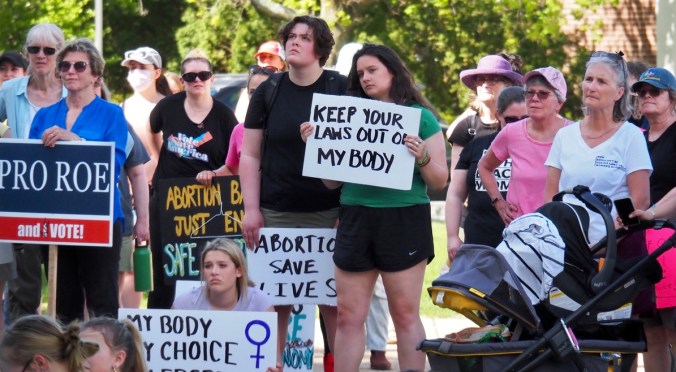
I find the latest query posed to The Ethicist to have such an ethically obvious answer as to be unworthy of publication, unless the objective was to demonstrate how weak and intellectually dishonest ethical the position of pro-abortion advocates is.

Here it is:

I’ve always supported a woman’s right to choose, not least because legal access to abortion once saved me from an untenable situation. I also believe that if a woman chooses to abort, her wish should supersede any opposition to it by the father. The physical, practical and emotional effects on a woman obliged to carry a child to term (and to care for it afterward) are, in my view, far more significant than they are for the father.

But what about the reverse? What about a case in which the father (in this case, my son) is adamantly opposed to having a child, but the woman (his ex-girlfriend) wants to keep the pregnancy? While it’s not relevant to the moral question, the pregnancy is shockingly unexpected given a medical issue of the father’s. And the couple’s relationship has almost no chance of success, even without a pregnancy. Given that the woman has neither a willing partner nor a job and is already responsible for a child from a previous relationship, her decision to continue with the pregnancy is viewed by most in her circle as reckless and certain to risk her already precarious mental health. Here, her right to choose to carry the child will have a profound impact on three (soon to be four) people and is likely to be very difficult for all.

Is it right to force someone to be a parent, even if in name only? Many people, me included, would say no if that person is a woman. Recent events have shown how fraught this issue is. And yet a man who does not wish to be, has never wanted to be and was told that his chances of ever being a parent were nil can find himself in a situation where his opposition carries no weight. While it’s evident that he will have financial obligations, what might his moral responsibility be?

What a god-awful, ethically-obtuse letter to be send for publication, never mind circulated by an ethicist! Let’s see:

Continue reading

Ethically Provocative Quote of the Month: Duval County School Board Member Charlotte Joyce

“If we don’t do something about this problem, then it could be the demise of traditional public education in Duval County.”

—-Duval County school board member Charlotte Joyce during a recent board meeting, quoted by Politico in “School choice programs have been wildly successful under DeSantis. Now public schools might close. The Republican governor’s school choice programs may serve as a model for other GOP-leaning states across the country.”

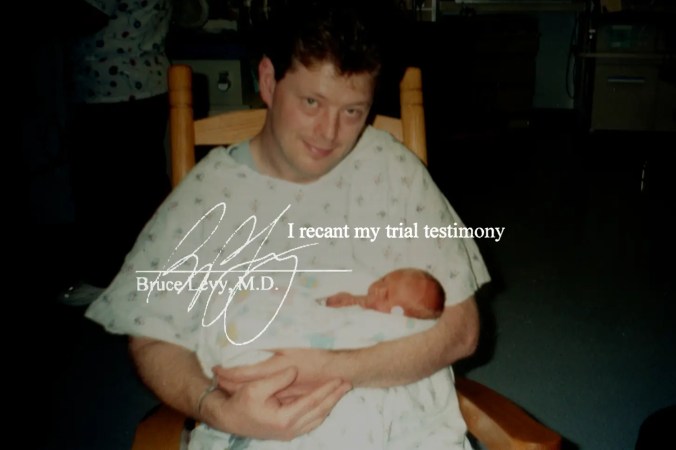
I saw that two-day-old story from Politico while web-surfing late last night, and had two immediate reactions: “What a perfect opportunity for Bruce to make an appearance from the Ethics Alarms Hollywood Clip Archive!” and “Good!”

I know nothing about Charlotte Joyce, her political affiliation or her attitude toward public schools, but I do know this: America’s public school system is broken, and was broken deliberately by ideologues who decided that the best way to achieve radical transformation of American rights, society and culture was to use mandatory public education to indoctrinate children from the youngest ages right through high school, after which college would pick up the assignment. Parents, lazy, apathetic, uninvolved and often badly educated and uninformed themselves, allowed this to happen under their metaphorical noses. The horrific result, among many others, is that chaos on college campuses as students whose minds have been poisoned by intersectionality cant now equate the terrorism of Hamas with the civil rights march on Washington.

Good job, everybody!

Continue reading

“The Ethicist” Gets A Genuinely Hard Question…And I Don’t Like His Answer

This time, I’d like to concentrate on the answer “The Ethicist” gave to a question more than the question itself. Prof. Appiah was asked by a woman (or man) who had been sexually molested by his (or her) father whether it was time to finally inform family members about the abuse, now that this son or daughter has decided to cease contact with the father for other reasons as well as the obvious one. He or she says the mother and siblings think the decision to cut off Dad is cruel, and that the father should have a chance to make amends—but they don’t know the whole story.

“If I were to share these details with my mother, I’d risk destroying a decades-long marriage in a single conversation,” the inquirer writes. “If I were to tell my siblings, I’d do irrevocable damage to their relationship with our father. Should I continue my silence to protect the rest of my family from emotional harm? Or do I owe it to them to tell them the truth? As I write this, I’m also painfully aware that if I break my silence, he will try to manipulate them into believing that none of this is true, that I’m delusional — he has done it successfully before.”

I’m not a nuanced kind of person regarding situations like this. My reaction: The truth shall set you free. Would I want to know if my spouse or father was a monster? Absolutely. That the information would be painful doesn’t mean I’d rather live in contrived ignorance. The writer has no obligation to protect his father, and it’s not protecting the mother or siblings to enable a lie.

Here’s the philosophy professor’s answer, in a few bite-size chunks:

“Now, an immediate issue is whether your father could be in a position to repeat his crimes with other children — that there aren’t others suffering in silence. If that’s the case, staying silent isn’t an option. You don’t raise this as a concern, but you need to be confident that it isn’t one.” 

And how exactly could that confidence be justified? It can’t be. The writer has already stated that this man has managed to fool his entire family for decades. The rest of “The Ethicist’s” answer is superflous: “staying silent isn’t an option.” A man who molested his own child isn’t trustworthy, and never can be.

Suppose you told him that you’ll keep quiet if he tells the family that he accepts that you don’t want to see him owing to a serious wrong he did to you. The problem is that questions would arise about the nature of that wrong, and that he may not be willing to deal with them. Nor is it obvious that keeping the details vague would leave your parents’ relationship intact. Besides, your father doesn’t sound like the sort of person who could be talked into taking responsibility.

Never mind that: bargaining with the damaging information comes to close to extortion for my ethics alarms.

Even if you reveal the truth, he may be confident, rightly or wrongly, that he can get people to believe you’re not to be trusted.

So what? Don’t be a weenie. Tell the truth, and if the family chooses to believe the abuser, that’s their problem, and their tragedy.

Whatever you decide, though, you shouldn’t be motivated by the thought that you owe this truth to anyone. It’s not that there isn’t reason to care that they know the truth. Many people in your family have relationships predicated on ignorance. They might even feel, were it to come out, that you should have told them before, precisely because we want to live a life in which our important relationships are not based on a failure to understand what our intimates are like.

Yet these reasons to disclose what happened don’t impose a duty on you of doing so. You may judge that they are outweighed by the fact that sharing the truth will cause pain and disruption to many lives without doing enough compensating good. Nor are you obliged to subject yourself to the pain and disruption that your father’s manipulations may bring you.

I disagree completely. There is no duty owed to the father to keep the ugly truth from the family, but the family has a right to know.

“Which brings me to my final thought: Taking measures to protect your well-being isn’t selfish when you are, objectively, the wronged and wounded party. Will your well-being be best protected by your admittedly painful policy of steering clear of both your father and the tumult of disclosure?…”

“It’s OK to be a coward if that’s the easiest path for you.” Again, I disagree.

The last point I have to make is that I doubt very much that the mother doesn’t know about the abuse. Spouses of child-abusing parents almost always either know or are in denial.

Observations on a Scenario in Which Everyone and Everything Involved Looks Bad Including the Schools and American Society in General

Zoey (above), a high school senior at Ayala High School in Chino Hills, California —we don’t yet know her whole name—was expelled for cyberbullying, intimidation, harassment and attempting to cause physical injury to another person after she used her cell phone to live-stream a classroom brawl between fellow students. There seems to be some suspicion that she was in on the plot to attack one of the combatants, though Zooey denies it. The incident and the report covering it raise all sorts of ethics questions and conclusions.

Such as…

1. Why are students allowed to have cell phones in class at all, specifically cameras? The school has a rule against filming and posting occurrences in the school involving students, potentially embarrassing them, humiliating them and harassing them—why not just confiscate all of the phones before class so this kind of thing is impossible?

2. Zoey’s explanation: “In our generation, you go live to do makeup, to do everything, so it was just going live just to go live. It wasn’t my intent to purposely or try to cause harm to anyone.” I see Zoey has virtually reached adulthood without anyone teaching her that rationalizations aren’t valid reasons for unethical conduct, and “Everybody does it” is particularly wrong.

Continue reading

I Don’t Understand This “Niggardly Principle” Story At All…Or Maybe I Do and Am Just Afraid To Accept the Truth

Now get this: In 2017, three 14-year-odlCalifornia teens, two of whom, Holden Hughes and Aaron Hartley, were about to begin attending St. Francis High School, a Catholic private school in Mountain view, were modeling anti-acne medicinal face masks that involved smearing dark green goo on their faces. (One of the boys had severe acne and his friends put the stuff on their own faces in an act of support). The teen who wasn’t headed to the private school snapped a selfie because the boys thought they looked funny. A similar photo taken a day earlier indicated that they had tried white medicinal face masks as well. 

A student at St. Francis found the image online and uploaded it to a group chat in June 2020. Not only was the George Floyd Freakout in full eruption, but the photo was circulated on the same day that recent SFHS graduates had posted on Instagram a satirical meme pertaining to Floyd’s demise, so the school was “triggered.” The gloriously woke student who decided to publicize the greenface photo claimed that the teens were using blackface; “another example” of rampant racism at the school, he posted, and urged everyone in the group chat to spread it throughout the school community—you know, to cause as much anger, division and disruption as possible.

I can’t find the name of that charming kid. He’ll probably be Governor of California some day.

Soon after this seed was planted, the Dean of Students at St. Francis Ray called the Hughes’s and Aaron Hartley’s’ parents to ask them if they were aware of the photograph. They explained that the teens had applied green facemasks three years earlier, long before the non-racial Minnesota incident that had no demonstrable racial significance and definitely no relevance to blackface. The parents added that the teens’ use of the acne medication had “neither ill intent nor racist motivation, nor even knowledge of what “blackface” meant.”

Continue reading

Yes, This Is Too Easy, But Still: Ethics Observations on Gov. Hochul’s Condescending Black Stereotype Hyperbole…

“I mispoke and I regret it,” was the serial head-exploding Democratic governor of New York’s attempt at backtracking after she claimed, during a speech at the Milken Institute Global Conference in Los Angeles, “Right now we have, you know, young black kids growing up in the Bronx who don’t even know what the word “computer” is. They don’t know. They don’t know these things.”

“Of course black children in the Bronx know what computers are — the problem is that they too often lack access to the technology needed to get on track to high-paying jobs in emerging industries like AI,” Hochul said in her desperate mea culpa. “That’s why I’ve been focused on increasing economic opportunity since Day One of my Administration.”

If it’s really “Of course,” Governor, then why did you say what you said? And emphasize it three times?

Hochul’s scripted smear of the black children in her state triggered instant, if in some cases restrained, condemnation from her own party. “I’m deeply troubled by the recent statements made by Governor Kathy Hochul,” wrote New York State Assembly Member John Zaccaro Jr. in a statement. “The underlying perception conveyed about Black and brown children from the Bronx is not only disheartening but also deeply concerning.” Assembly Member Karines Reyes tweeted that she was “deeply disturbed” by Hochul’s remarks and “the underlying perception that she has of Black & brown children from the BX” because “Our children are bright, brilliant, extremely capable, and more than deserving of any opportunities that are extended to other kids,” Reyes wrote. “Do better.” Assembly Member Amanda Septimo called Hochul’s comments “harmful, deeply misinformed, and genuinely appalling,” adding that the Governor was “repeating harmful stereotypes.” Assembly Speaker Carl Heastie described Hochul’s remarks as “inartful and hurtful.”

Observations:

Continue reading

Comment of the Day: “Fat-Shaming Ethics”

I have such a strong visceral reaction to this provocative Comment of the Day, a personal account by Joel Mundt, that I’m going to eschew my usual introduction and let you make your own judgments without any influence by me. Here it is, in reaction to “Fat-Shaming Ethics” and the lively comments it has generated so far…

***

I’m going slightly off-topic, and I apologize in advance…

I’m of the opinion that shaming is, to a degree, a good thing. In my opinion, it’s a form of non-physical discipline that emphasizes embarrassment and plays on an individual’s need to be liked and to be more like the collective. It’s a way to manipulate desired behavior using something of a “group intervention.”

A perfect example of this is…well…me. As an elementary student, I had a reputation of being really smart, but also talking out-of-turn an awful lot in class, which was disruptive. My 5th-grade teacher, Mrs. Crooks, sought me out and purposely got my name on her class list. Nobody wanted her as their 5th-grade teacher…she had a terrifying reputation among younger students. I didn’t know it until years later, but she had talked to my parents ahead of time, explaining that I would be her student, and she would break me of my disruptive ways.

And she did her best! I was punished in the most imaginative ways for speaking out of turn, like being ordered to walk around classroom without making a sound for 10 minutes while she taught the other students, or playing the part of the “silent i” in front of the class when learning to spell words like “receive”. She was modestly effective…until the day of “the sign”. I was talking out of turn yet again and Mrs. Crooks told me – in front of the class – that my punishment was to write the words “I’m a big mouth” on a piece of paper, then glue it to a piece of cardboard she gave me with a string in it, then wear it around my neck…outside during our lunch recess with the entire school.

Continue reading

Unethical Quote of the Week: The Columbia Law Review

I gave a legal ethics seminar 90 minutes after finding my wife dead, and these infants are too traumatized to take their exams because of a “horrific time on campus” and their “level of distress”:

Continue reading