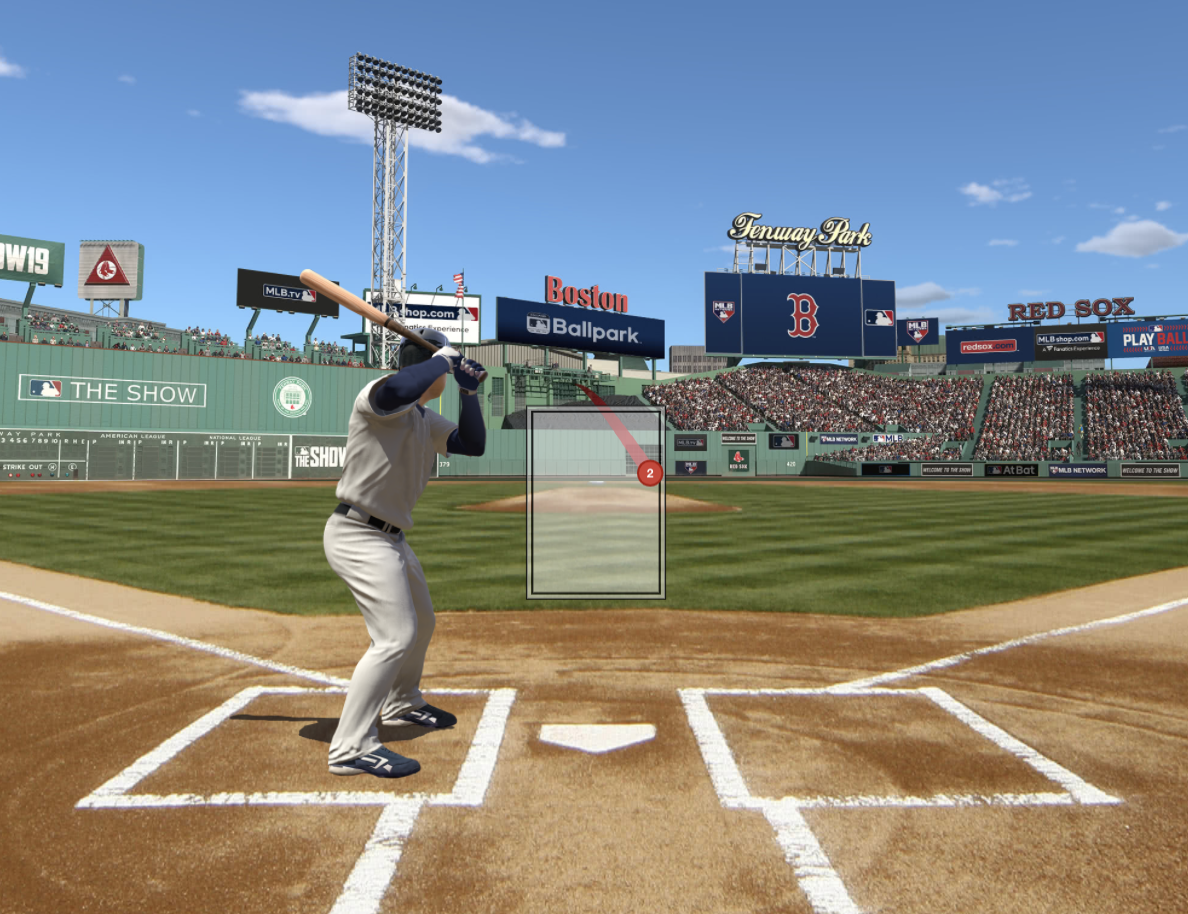
My verdict: it’s an improvement over relying entirely on the fallible home plate umpires, but ethical problems remain.
The current system gives each team two challenges if they think a ball or strike call is wrong. The teams can keep challenging as long as the ABS (Automated Ball and Strike) system backs their judgment. If a challenge proves mistaken, the team loses the challenge.
We have learned that knowing when a ball or strike call is wrong from the players’ perspective is harder than it looks. A few players are really good at it, but most are not. Because the prospect of a key pitch call being blown at a crucial juncture late in the game when the victimized team is out of challenges looms large, players have become increasingly reluctant to challenge pitches early in a game.
Ironically, the system takes accountability from umpires in some cases. In a recent Red Sox game, Boston’s opponent was out of challenges. In the 7th inning with the game close, a 3-2 pitch was called out of the strike zone, and Boston’s batter walked to first base with two outs. The pitch was, in fact, a strike, and should have ended the inning. Instead, the Sox had a long rally, scoring six runs. The announcers harped on the fact that it was the miscalculations of the losing team in using up their two challenges that opened the floodgates, but that’s not why the team lost. The team lost because the umpire blew the call, and it’s his job to call pitches correctly.
This situation, and there have been many of them so far this season, convinces me that players should not have to challenge bad calls, and the results of games should not depend on whether an umpire’s botch is challenged or not. The ABS system knows when a ball is in the strike zone with every pitch. If an umpire calls a ball a strike or vice-versa, the bad call should be instantly overturned without having to be challenged.


“Because the prospect of a key pitch call being blown at a crucial juncture late in the game”
This is what I’ll call the “winning touchdown fallacy”.
Two teams are tied 21 to 21 and Johnny Runningback scores a touchdown and his team wins. Did he score the game winning touchdown?
We’d say yes. But then again, if Freddy Flatfoot hadn’t scored the first touchdown, then Johnny’s touchdown wasn’t game winning. So Freddy has just as much claim to the “game winning touchdown”.
So- how is a blown call in the first inning not as crucial as a blown call in the 9th….?
Let’s say they hit a situation where they are down by one run and luckily they’ve saved their challenges for “this crucial moment”….
But the moment may not even be remotely crucial if they’d challenged a call earlier that would have put them in a lead.
If they save their calls because they aren’t confident then….so?
A blown call early in the game is a crucial juncture isn’t it?
Of course. They just don’t think of it that way because baseball players are not all that bright. A single 1-2 count in the first inning that should have been 2-1 can change the whole course of the game. Drives me crazy, especially since I can see on the TV when some calls are clearly wrong.
Teams and players have had discussions on the strategy of challenging calls. One thing I think everyone agrees on is that pitchers are the worst positioned to challenge things, and some teams have pretty much forbidden their pitchers to challenge.
Of all the replay schemes I’ve seen, this one is consistently very quick — if you weren’t paying attention you could miss a challenge being made.
There are times when I feel that the real function of the ABS challenge system is just to add some excitement and interest to the game. The home crowd gets a charge when their team wins a challenge. I also think, backed up by some commentary amongst the broadcasters, that players are getting more confident about challenges as they get more experience with the system. But there are still batters who make some impulsive challenges when a call goes the other way.
We’ll see how it goes. In some ways it is a bit like the second throw over to first base. If you still have two challenges, you can be freer to use up the first. When you are down to one, you should be more certain.
I’m not stupid! I’m smart!
The challenge protocol is nuts. It’s luck and gamesmanship that destroys the integrity of the game. It’s also kabuki theater. The umps could know instantly what the computer shows. Instead, they walk in front of the batters’ boxes and act like they’re in a Star Trek episode and the results magically appear from New Jersey.
Come on, MLB. Do the right thing. Of course, you’ve got an impending work stoppage to deal with.
How should they fix it then? Allow unlimited challenges, or get rid of human umps altogether and have the computer signal every call on the scoreboard or something?
Go all computer balls and strikes and have the ump get a signal in and earpiece and announce it.
I agree. It is easy to do, and it will eliminate bad calls. It is foolish not to go to such a system.
Umpires should then be the back up to the robo-caller – insomuch as they can notice trends and raise suspicions if a machine appears to be malfunctioning.
Like machines replaced a particular laborer, but really the laborer then becomes supervisor of the machine.
In soccer they have a match official called Video Assistance Referee (VAR), who helps the on-field referee correct clear and obvious errors and serious missed incidents. The VAR is stationed in a centralized Video Operation Room (VOR) with replay operators, and is assisted by a team to continually reviews broadcast angles and advises the head referee via a communication headset.
VAR intervention is strictly limited to four key, match-changing situations:
The VAR team in the VOR constantly monitors every reviewable incident in real-time. If a potential error occurs, they immediately radio the on-field referee. For factual decisions (e.g. offside goals) the on-field referee typically accepts the findings of the VAR team; for more subjective decisions (e.g. red cards) the on-field referee may override the advice of the VAR team.
Something similar could be done in baseball to ensure fair decisions by the umpire and remove all gamesmanship. Fairness in applying the rules of the game is more important than excitement and drama following bad umpire calls.
The NFL has something similar. I don’t know what the exact parameters are, but every so often there is a call from the video assist booth, I think they might call it.