Reflections On President’s Day, 2012: A United States Diminished in Power, Influence and Ideals

Rep. Ron Paul is fond of saying that the United States shouldn’t be the world’s policeman, and thanks to irresponsible stewardship of America’s resources and horrific maintenance of its ideals, his wish has already come true. One result is a world that has no functioning opposition to evil, a world at the mercy of chaos with no champion or guiding inspiration in sight. The other result is a United States that no longer stands for its own founding principles.
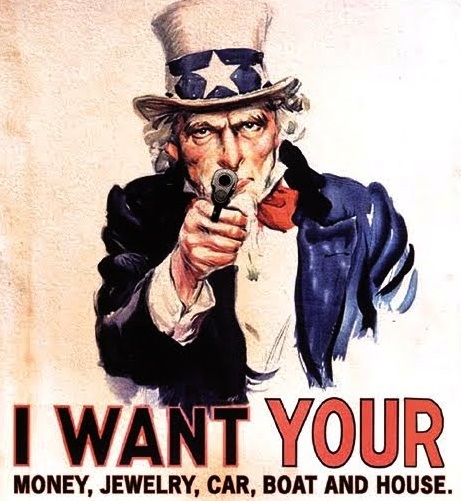


For proof, we have only to look as far as Syria, where a brutal dictator is killing his own people at an accelerating rate. Although his people have tired of his tyranny, Hafez al-Assad, like Gaddafi before him, seems determined to kill as many of his own countrymen as he has to in order to stay in power. Our President, Barack Obama, has delivered stern admonitions and disapprovals, which is this President’s style and approximately as effective as tossing water balloons. The Secretary of State, Mrs. Clinton, expresses frustration, for all the good that does. The killing, of course, goes on.

If you think I’m going to advocate U.S. action in Syria, you are wrong. Quite simply, we can’t afford it—not with a Congress and an Administration that appear unwilling and unable to confront rising budget deficits and crushing debt with sensible tax reform and unavoidable entitlement reductions. Yesterday Congress and the President passed yet another government hand-out of money it doesn’t have and refuses to raise elsewhere, among other things continuing to turn unemployment insurance, once a short-term cushion for job-seekers, into long-term government compensation for the unemployed. Part of the reckless debt escalation was caused by the last President unconscionably engaging in overseas combat in multiple theaters without having the courage or sense  to insist that the public pay for it, and the current administration is incapable of grasping that real money, not just borrowed funds, needs to pay for anything. The needle is well into the red zone on debt; we don’t have the resources for any discretionary military action.

Ron Paul thinks that’s a good thing, as do his libertarian supporters. President Obama, it seems, thinks similarly. They are tragically wrong. Though it is a popular position likely to be supported by the fantasists who think war can just be wished away, the narrowly selfish who think the U.S. should be an island fortress, and those to whom any expenditure that isn’t used to expand  cradle-to-grave government care is a betrayal of human rights, the abandonment of America’s long-standing world leadership in fighting totalitarianism, oppression, murder and genocide is a catastrophe for both the world and us. Continue reading →

The Civil Forfeiture Outrage: American Government At Its Worst, So Naturally We Ignore It

Do progressives and conservatives have the courage to confront the illusion-shattering outrage of civil asset forfeiture in America? Not so far they haven’t. That shouldn’t be too surprising.

There are some things our governments do that are so frightening, wrong and un-American that we tend to look right by them—ignore them, pretend they aren’t happening, focus on other things—because their implications are too confounding to deal with. For fans of big government, who look to central authority to micro-manage our economy, distribute our resources, protect us from every threat and isolate us from the consequences (and often the benefits) of human nature, the fact that government power corrupts as surely as any power is an inconvenient (and undeniable) truth that threatens the foundation of their ideology. How irrational is it to place more responsibility on the government if we can’t trust the government, because we can’t trust the inevitably flawed and conflicted individuals who run it?

The willful blindness is no less insidious with conservatives, whose core belief is the inherent goodness of the American system and way of life, as defined by our founding documents. Accepting that the largest and oldest democracy on earth sometimes targets and plots against law-abiding citizens means accepting the possibility that the system itself doesn’t work, and that its supposedly sacred ideals—life, liberty, and the pursuit of happiness—are a cynical lie. Aiding and abetting the blindness is the traditional media, which is substantially populated by self-important, inadequately-educated, ethically-shaky pseudo-professionals who believe their duty to objectively tell the public what it needs to know should be tempered by what they believe will persuade members of the public to adopt the “right” views, and, of course, by what will pull their attention away from the competition. Better to have features about Michelle Obama’s healthy eating crusade than to tell Americans about government wrong-doing, especially when the journalists support the party in power.

As a result of this toxic mix of bias, self-interest, self-delusion and incompetence, many of the most illuminating examples of how far America can go wrong can take a long, long time to enter into public consciousness. A recent example is insider trading by members of Congress, which had been well-documented for a decade before a “60 Minutes” report combined with the Occupy protest visibility and the widespread distrust of Wall Street suddenly made it a significant public concern. But other equally important issues, like the abuse of U.S. convicts, including the tolerance of prison rape, haven’t broken through the willful blindness yet.

Neither has civil asset forfeiture, despite the efforts of libertarian activists, publications like Reason, websites like Popehat, and organizations like ACLU and  The Institute for Justice, a libertarian, human rights public interest law firm that I have been negligent in not plugging earlier. (I apologize.) Right now, the Institute is going to court in a Massachusetts civil forfeiture case, United States v. 434 Main Street, Tewksbury, Mass, that serves as an excellent introduction to the sinister nature of this institutionalized abuse of power. Here’s the story, from the Institute’s website: Continue reading →

In The Catholic Institutions vs Obamacare Showdown, Law and Ethics Trump Morality…And Should

The Christian Soldiers are on the wrong side of this argument.

A controversial rule, announced last month as part of President Obama’s health-care overhaul, requires religiously affiliated colleges and hospitals to provide female employees the full range of contraceptive coverage, including contraceptives, the “morning-after pill” and sterilization services. The measure has  Catholic Church-run institutions up in arms over a system that would force them would  to offer plans that contradict their teachings. Catholic bishops have been leading the growing criticism of the rule,  distributing letters and other materials for distribution to millions of worshipers. Talk radio is abuzz with talk of Obama’s escalating “war on religion.” Even the Washington Post editorial staff criticized the move.

Naturally, the Republican-run Congress announced, via Speaker Boehner, that it would protect Freedom of Religion and block the measure with legislation. All in all, it is a spectacular collision of law, morality and ethics the likes of which we seldom see.

As for simple-minded me, I don’t think this is an especially difficult problem from an ethical point of view. Politics? Practicalities? Culture wars? Yes, those are all extremely difficult considerations in this argument, but they are also not my proper realm. The ethics are clear.

President Obama is right. Continue reading →

Nipping A Terrible Idea In the Bud

God bless America.

In policy debates over contentious issues like abortion, national health care, and capital punishment, a common argument, brandished like a flag , is that the United States is out of step with the rest of the world. My reflex reaction to that claim, when I can resist the impulse to say, “Good!”, is to point out that the rest of the world has never lacked for enthusiasms for terrible ideas, and the United States, by going in its own direction, has often been unique, innovative, and right.

Still, a bad idea abroad will inevitably inspire some enterprising social architect here to propose it, and a legislator to try to make it law. Thus, when possible, it is wise to try to identify and reject the most sinister examples of Europe being Europe before anyone here starts trying to play “me too.” In the case of Europe’s current push to create a so-called “right to be forgotten” on the internet, some very effective critics are on the case. Continue reading →

Unethical Website of the Month: “Make Presidents’ Day Super”

The degradation of America’s values continues in seductive and incremental ways.

Take the online petition “Make Presidents’ Day Super,” described as…

“A plan to move Presidents’ Day to the Monday after the Super Bowl. For football. For hangovers. For America.”

The proposal is unethical in many ways, beginning with its dishonest presentation.  “We the people, in order to form a more perfect holiday, seek to take what should be one of our most patriotic holidays and actually give it more meaning, make it more American,” the argument begins. Make it “more American”? How, exactly, does moving a holiday that already minimizes the national recognition of the birthday of George Washington by making it a floating annual date to manufacture a three-day weekend make that holiday “more American”? Continue reading →

The Lenahan Effect Meets The Streisand Effect

From the Legal Ethics Forum:

The Lenahan Law Firm in Dallas Texas has subpoenaed Google to release the real name of an anonymous critic who posted an un complimentary online review of the firm’s services. The firm wants to sue the poster for daring to question its performance by writing,

“Bad experience with this firm. I don’t trust the fake reviews here.”

For this perceived insult, the Lenahan firm wants to punish “Ben” to the tune of $50, 000 in damages.

Ironically, the lawsuit, rather than the review, proves to my satisfaction that “Ben” has a point. He was clearly expressing his opinion: it is up to him, and only him, whether he regards the experience of working with the Lenahan firm as “bad” or not. In the complaint, the firm says that the declaration that the positive reviews are “fake” alleges dishonesty and fraud by the firm. Utter nonsense. First of all, the allegation, fair or not, is also obviously an opinion. Second, “Ben” is saying that the reviews are fake, which could mean insincere, among other interpretations. He does not attribute them to the firm. He doesn’t say where they came from. He doesn’t know. Maybe I sent them.

On the screen shot included in the complaint, it clearly says that “0 of 3” people found “Ben’s” review helpful. For that, the firm wants $50,000 in damages, since that zero potential client was driven to another firm with his lucrative business.

Unbelievable.

Over at Popehat, lawyer-blogger (and Ethics Alarms 2011 Ethics Blogger of the Year) Ken has been carrying on a vigorous battle against online censorship of free expression by threats and lawsuits. His current target is a ridiculous faux lawyer who is now threatening Ken for pointing out the error of his ways. In his commentary as well as his various emails to the individual, Ken explains with admirable precision why opinions are not actionable assertions of fact, useful passages that I would recommend to the Lenahan Law firm. The firm’s efforts to bully critics by making an example out of “Ben” also unwisely incur the “Streisand Effect,” the online phenomenon by which efforts to censor information on the web has the perverse consequence of giving it more visibility and influence.

I don’t know if there is a name for the effect—“The Lenahan Effect,” perhaps?—by which a law firm’s willingness to pursue a spurious, unnecessary and excessive lawsuit against a former client for expressing his views about the firm’s work has the perverse effect of showing the world why that client feels the way he does, but that’s what the Lenahan lawsuit against “Ben” does.

That’s only my opinion, of course.

Where Should The Alarms Sound For THIS?

I have little to add to the video above, which is nearly self-explanatory. A student took a video camera to the halls of his Washington State high school to quiz  class mates on basic U.S. history, geography and civics. I’m sure—I hope—that the answers shown on the video were atypical, but never mind: they are scary enough.

The blogger Kevin DuJan on Hillbuzz uses the video to attack teachers unions, writing,

As I watched the video above, two thoughts immediately popped into my head:

1. Why do teachers’ unions claim they deserve more pay and endless benefits when this is the result of their “hard work” in the classroom?

2. I honestly can’t remember anyone this dumb in my Catholic high school back in Ohio when I was going to school in the mid-90s. Continue reading →

Don Cornelius, Suicide…and Ethics Hero?

“Soul Train” creator and pop culture icon Don Cornelius took his own life at 75 yesterday, using a gunshot to the head to do it. Suicide always conjures up feelings of special sadness for the deceased, sometimes mixed with anger. The act can be cruel and devastating to family members and friends; often it leaves behind crushing problems, financial and otherwise, that the living have to deal with. Suicide is stigmatized in our culture as a coward’s way out of earthly problems; many religions consider it a sin, and many legal systems consider suicide a crime. Yet it may be that American culture will have to undergo a major cultural transformation in the matter of taking one’s own life. While morality tends to ossify, ethics is fluid and adaptable. Changing conditions and new realities can, in rare circumstances, cause societies to conclude that what was once considered right is really wrong, and what was once condemned as wrong is in society’s best interests. I think we may reach that point with suicide. Continue reading →

Unethical Quote of the Week: Roxanne Dunbar Ortiz

“Passionate, organized hatred is the element missing in all that we do to try to change the world. Now is the time to spread hate, hatred for the rich.”

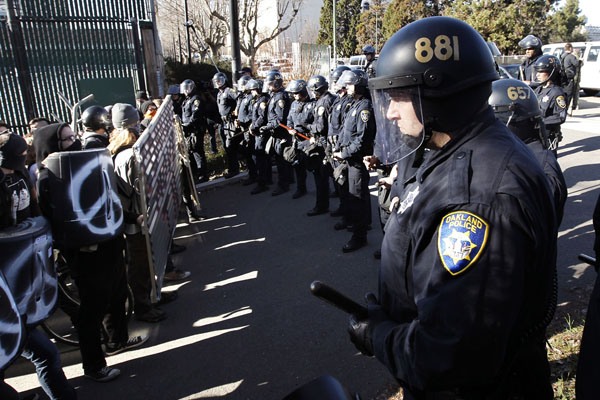
—-Roxanne Dunbar Ortiz, a retired professor from Cal State East Bay, addressing a rally this weekend of the Occupy Oakland  group, which fought police in a pitched battle that ended with 400 arrests.

I said that the Occupy movement would end badly, and it is, not that it should have taken advanced psi-powers to divine that a protest based on ignorance, envy and anarchy with no practical and constructive proposals to offer would eventually end in violence, anger and ugliness. Hate is what it has come down to now, and the party and supporters of the President who came to office promising hope are now pinning their hopes on a sad movement fueled by hate. To say that the protests are also unethical is to flog the obvious. They have cost communities millions of dollars that will be made up in cut services; they have soiled parks and public places, they have provided a meeting place for thugs, vagrants, criminals, and worse ( an Occupier was arrested over the weekend for strangling his parents), and they have embodied a cultural rejection of personal responsibility.

Not to mention an escape from reality.“The fact that everyone now talks about the 99 percent, the 1 percent – that shows Occupy’s won,”  Carter Lavin, 23, of Oakland told the press. “The debate was about debt, not jobs. Now it’s about jobs.”

Sure, Carter. Continue reading →

The Tragedy of the Poles

This week Gallup announced that the United States public is historically polarized in its ideological views. This is tragic news for the United States, and anyone who wants to know why merely needs to understand the significance of recent emissions from the Stygian depths of the Republican Party and the conservative movement.

Today is the Florida primary, and if rationality reigned supreme, Newt Gingrich would receive as many votes as the write-in total for Pee Wee Herman. Once he was unable to thrill the easily thrillable by making grandstanding declarations against the bias of the media—the equivalent of shooting fish in a barrel—Newt, as always, revealed himself as temperamentally, ethically and rationally unqualified to lead the nation, or, quite probably, a plumbing crew. He made irresponsibly grandiose proposals, like colonizing the moon at a time when the nation can’t afford PBS. He attacked President Obama while simultaneously using Obama’s class warfare tactics to denigrate his fellow millionaire, Mitt Romney. Once a pious advocate of Ronald Reagan’s “11th Commandment” that Republicans should not attack each other, he called Romney a liar, a liberal (which, of course, is much worse than a liar at the Right Pole). He heralded an obscure out-of-date robo-poll as showing that he was running neck-and-neck with the former Massachusetts governor in Florida, when he knows that he has lost ground in the race, as every legitimate poll now shows. He made dark hints that Romney—pssst! He’s a Mormon! Be afraid!—-was biased against “our religions.” He threatened, claiming that he would reject any debate with President Obama that had a moderator from the evil, biased media, an especially ridiculous pledge since the main argument ( facile myth, by the by)  for Newt’s candidacy has been that he would thrive in Presidential debates. And, of course, he whined, claiming that his precipitous fall was the fault of liars, the press, the establishment—anybody but Newt. If there is an ethical value he hasn’t breached lately—let’s see: responsibility, accountability, respect, fairness, prudence, honesty, caring, kindness, process, integrity, loyalty—just wait a while.

In short, Gingrich has behaved as he has always behaved under stress, as the mean-spirited, irresponsible, Machiavellian, untrustworthy, self-centered and destructive man that he is. He was waving a huge phosphorous orange flag reading, “I have no business being President!” for all to see. Thanks, Newt!

But a mind-boggling number of ideologues on the right can’t see it. They refuse to see it, because when you are stuck at an ideological pole, reality no longer matters. What matters is that Gingrich is a conservative, closer to their pole than the ideologically flexible Romney, and any references to Newt’s character are “the politics of personal destruction, ” because, you see, character is irrelevant at the poles. How could it not be? After all, the other pole has people of good character, and they are still wrong. “Annoy a liberal, ” Sarah Palin said on Fox. “Vote for Newt!” Yes, that’s a good reason to vote for presidential candidate—to annoy people you don’t like.

When you occupy an ideological pole, you become incapable of open-mindedness, reason, self-improvement or change. You can’t learn, you can’t absorb new data objectively. Everything is automatically squeezed and distorted to fit a pre-determined construct, or is ignored entirely. Lock-step masquerades as integrity. Reason, consideration, compromise, practicality, prudence—not to mention respect, civility, fairness, honesty and kindness—become impossible. The pole is everything. And lest anyone think that by using Newt-blindness as an example, I am rating one pole as superior to the other, I am not. Watch MSNBC for about five minutes to see what I mean.

Rush Limbaugh has a rant that he trots out regularly about the uselessness of moderates. It is a deceitful rant, because he is evoking images of moderates as people who refuse to fully engage in difficult issues, and whose answer to ever problem is “it depends,” meaning, in most cases, “it depends which opinion I heard last.” He is right that such people are useless in a democracy, except to be manipulated by those with more energy, passion, credentials, visibility, fame or certitude. Those are not really moderates, however, but just pliantly ignorant. They have no idea how to examine an issue, so they don’t—in their case, “open mind” means “empty mind.” True moderates, however, are those fair and rational enough to know that there are no ideological templates that work equally well with every problem. They may generally agree with more conservative or liberal positions, but they know that complex problems involve complex solutions, and artificial rules about what must or must never be done just makes some problems unsolvable. They know that people of differing philosophies and points of view are enlightening, not stupid; essential, not evil. The poles, on the other hand, are great places for the empty minds to hang out..,..there, or at Occupy D.C. The poles provide substitutes for thought. They make it easy. Conservative–GOOD! Liberal—BAD!

Or vice-versa.

Polarization is the antithesis of ethics. It divides populations into warring camps whose objective is to win, not to do good, because the poles preclude objective analysis of what good is. Ethics, on the other hand, presupposes that we are all on the same team, and that doing the right thing requires cooperation, not combat.

The nation desperately needs a transformative leader who rejects the poles…as Peter Wehner describes him in Commentary, a leader who  would “turn the page” on the “old politics” of division and anger; who would call for an end of  a politics that “breeds division and conflict and cynicism.” Such a leader would pledge to help the country “rediscover our bonds to each other”  and to “get out of this constant petty bickering that’s come to characterize our politics.” He would “cast off the worn-out ideas and politics of the past.” We need leader who will proclaim an approach to discourse that is alien to the poles, who will say, and mean it, “I will listen to you, especially when we disagree.”

A man claimed to be that leader; his name was Barack Obama.  He told us that the nation had “chosen hope over fear, unity of purpose over conflict and discord”by electing him.  In his inaugural address, he declared “an end to the petty grievances and false promises, the recriminations and worn-out dogmas that for far too long have strangled our politics.”

And then, without the leadership skills to deliver on his soaring promises and unable to handle the intractable opposition of one pole, he retreated to the other.

But there are no ethics at the poles.

Only doctrine, intolerance, arrogance, hate, blindness…

…and failure.