Comment Of The Day: “Unethical Quote Of The Week: Dr. Mary Rudyk”

gun to the head 3

Steve-O-In-NJ has been a veritable Samuel Pepys of late, and there are more than one potential COTD in his recent output. But I’m a sucker for personal anecdotes, so let’s start with this, Steve-O’s Comment of the Day on “Unethical Quote Of The Week: Dr. Mary Rudyk,” in which a hospital official advocated lying and fear-mongering “for the greater good”…

***

“It’s not about changing anyone’s mind, it’s about changing their behavior.

“Many years ago when I had just finished law school and was studying for the bar, still living at home, my mother wanted me to take my aged (86) grandfather to a reunion at his college in MA. I really couldn’t afford to give up four days of study to chauffeur a man who was slipping mentally four hours each way and babysit him while he did nothing but drink himself under the table and repeat embarrassing stories and dirty jokes (his favorite was the one about the misunderstanding in French between a hat and a condom) that my grandmother would always stop him from telling while she was alive.

“Any other time, ok, but while studying for the bar was too big of an ask, and I said sorry, but no, maybe she could ask another family member (there were others). However, Mom was the kind of person who, once she got it into her head that she wanted YOU to do something that she thought was important enough, dammit, she was going to make YOU do it, come high water, hurricane, or the end of the world.

Continue reading

Comment Of The Day: “Post-Labor Day Ethics Laments, 9/7/21” (Item #1, The Baseball Player’s Long Paternity Leave)

alex-verdugo-girlfriend-2021-2-600x600

The Comment of the Day below is really two consecutive comments in the same thread, as Sarah B. argues that fathers are not only justified in leaving their jobs at critical times to be with their wives at childbirth and thereafter for as long as they deem necessary, but that this is the most ethical choice. My note prompting her response involved the case of Red Sox star Alex Verdugo, who left the team at a crucial time when the season hung in the balance, and stayed away for four days to be with his girlfriend and their new-born child: there is no indication that he provided anything but companionship and moral support.

(I just learned that he is not married to the mother (above). No, I don’t think that changes the ethics issue, though it raises others.)

I stated that this was a breach of his duty to the team, which he is paid handsomely to respect. I am quite certain that this is the correct ethical position, but my view represents the resolution of an ethics conflict, where two ethical principles oppose one another. I can’t say that how Sarah prioritizes these principles is wrong, only that I would prioritize them differently, and have in analogous situations.

Here is Sarah B’s Comment of the Day on #1 from the post, “Post-Labor Day Ethics Laments, 9/7/21.” I will have a few rebuttal points at the end…

***

“The priorities are linked, but still need to be ranked and four days is nothing. Heck, if my husband only got four days after the birth of our children, unless his absence from me would literally cause someone to die, I’d give him the choice of his job or his family. If we want men to step up and be good husbands and fathers (which would do amazing things for our society) we need to let them do that. Considering what a woman’s body goes through with the birth of a child and the incredible amount of healing she must do after the fact, four days barely lets a mom get home from the hospital (having had complication-free natural births has led to us getting to go home on day three at my hospital) and set up a good feeding schedule for the first kid (my best kid so far took two weeks before we got the bugs worked out enough for their health and mine). Subsequent kids require so much more because of the need to care for the older children too. The fact of being in high levels of pain for every action and dealing with incredible dizziness for days lead to a new mom being a literal danger to herself and the baby (not to mention any other kids) if left alone. According to my OBs, that condition is totally normal, even expected.

“Due to the danger, new moms are forbidden from lifting their own child or walking with the child in their arms in my hospital. My hospital also asks about the support a mother can expect for at least two weeks post baby before they will even let the child go home with the mother. Sure, a lot of us rely on other family members for that second (or third or fourth week), but the dad has to be there in the beginning if he wants to start himself off on a good foot of proper prioritization of responsibility. Most marriages I have seen where a dad does not give totally of himself for 1-2 weeks after a baby are at best strained. The mother needs support, and who is best able and most desired to give that support, but the father of the baby? If MLB cannot give new fathers a week away at minimum, they need to require that their players are celibate while on contract, so no babies come about. If a multimillion dollar contract is enough to abandon a wife and kid for at a time of great need, it should be enough to abandon sex for. Family is the primary responsibility, and all the more so at the birth of a baby.

Continue reading

Yet Another Texas Abortion Law Freakout Friday Comment Of The Day…

2021-foster-care-us

If only someone had killed them first!

(Sorry, I couldn’t resist, given the upcoming commentary.)

I figure if every time Still Spartan graces us with a comment it gets Comment of the Day status, maybe she’ll weigh in more often.

I agree with almost nothing in her post (other than that the Texas law is bonkers and that it will be struck down, contrary to the bleating of the pro-abortion hysterics), but it’s a provocative and well-written opinion.

Here is Still Spartan’s Comment of the Day, which I hereby decree to be on the relevant post, “Texas’s Clever Anti-Abortion Law.” And I wrestled with myself and lost—at the end, I will re-post my original comment to it.

***

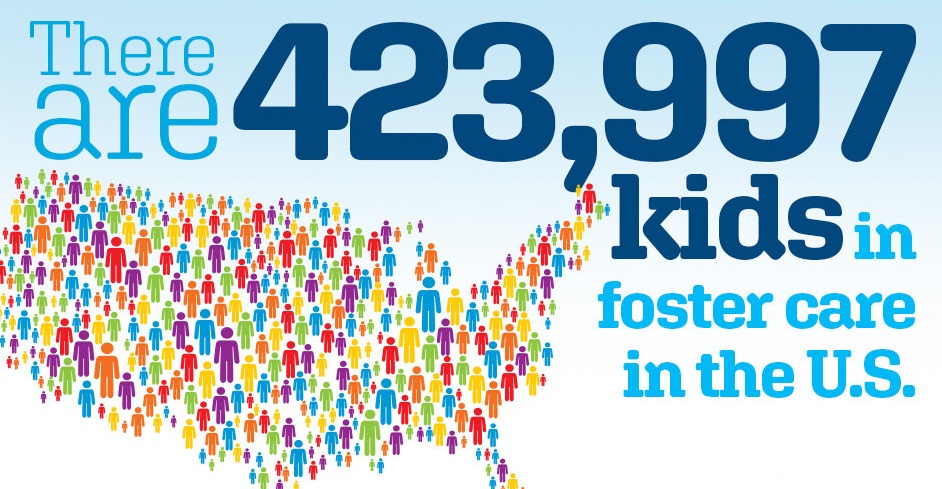
“A quick internet search informs me that there are over 400,000 unwanted or neglected children living in foster care in the United States right now. Why do we want policies creating more unwanted and/or neglected children? Pro life advocates are quick to point out that there are people lined up take newborns, but yet they don’t seem to want the over 400,000 children who are desperate for homes right now. They also don’t seem to want babies born with special medical needs who often end up in foster care.

No one seems to care that most girls and women who seek abortions do so out of desperation: poverty, abuse, fear. I have never met a woman who celebrated the fact that she had one, but I have met many who were grateful that it was available — either for one of the reasons I listed above or because of a birth control failure. All of these women I know went on to have children with partners at a later time, when they were financially able to care for a child and were in a safe and stable relationship. If the initial abortion had not happened, their lives most likely would have gone down a different path and these other children would have never come into being — children who have the benefit of a stable and loving home.

Continue reading

Texas Abortion Law Freakout Friday Presents Comment Of The Day And Response 2 On “Texas’s Clever Anti-Abortion Law”

Down Syndrome abortion

I guess I could also call this “Isaac Comment of the Day Rebuttal Friday,” but it’s not quite as catchy.

Here is Here’s Johnny’s Comment of the Day on the post, “Texas’s Clever Anti-Abortion Law,” followed by, as in the earlier post today, Isaac’s Comment of the Day response.

***

“I am of two minds when it comes to abortion. My left side says people have a right to privacy in medical stuff (especially from government), and an absolute right to control of their own bodies. My right side says killing humans is wrong (mostly).

“The left, generally, when it comes to abortion, shies away from recognizing that a human life is being ended, while otherwise, mostly, proclaim the sanctity of human life. The right, generally, when it comes to abortion, shy away from privacy rights, while, otherwise, mostly, proclaiming that government should just leave us alone.

“The suggestion posed here, that the fetus/unborn child be carried to term and placed for adoption, has merit. The last time I checked, there were a lot of potential adoptive parents.

“But, consider a real-world case that I am all too familiar with. The fetus/unborn child is diagnosed in utero as having Down syndrome. The list of potential adoptive parents shrinks considerably. But, the parents are opposed to abortion, the child is born, and the severity of Down syndrome is far worse than expected. The list of potential adoptive parents would be close to zero. Several surgical procedures are necessary soon after birth, significant expense in money to taxpayers and in both money and time to the parents.
But, the parents never considered placing the child for adoption anyway.
Advance the calendar about a decade and a half. The teen cannot communicate, although she seems to understand some things. She cannot feed herself. She cannot manage using a toilet. She has reached puberty, but cannot manage pads. She can walk, clumsily, but cannot be allowed to wander too far.

Continue reading

It’s Texas Abortion Law Freakout Friday! First Up, Comment Of The Day And Comment Of The Day Reply On “Texas’s Clever Anti-Abortion Law”

Baby in grave

First up on “Texas Abortion Law Freak-out Friday is Extradimensional Cephalopod’s timely exploration of the popular “we should be able to kill unborn babies while they can’t think, before they can” justification for legal abortion. As that characterization might suggest, I hate that argument, which has been made passionately by some abortion advocate every time the topic has arisen on Ethics Alarms. The reason I find it ethically objectionable is that the theory was devised to justify a position that had already been decided. Extradimensional Cephalopod’s comment begins by calling it intellectually honest. I admire his presentation of the argument, but that’s exactly what it isn’t. Abortion advocates, desperately seeking a way to get around the inconvenient fact that a human life was being snuffed out in the procedure and not willing to embrace the “Baby? What baby?” shrug that defines most pro-abortion rhetoric, came up with the “not sentient, ego not human” dodge after already endorsing abortion. This is scientifically and logically dishonest, because a bias—“we really, really want abortion to be legal”—drove the conclusion.

As E.C. makes clear, it is still a better defense of abortion than the fiction that only one human being’s life is at stake. As Isaac also makes clear in his Comment of the Day in response, it’s still not good enough.

First, here is Extradimensional Cephalopod’s Comment of the Day on “Texas’s Clever Anti-Abortion Law.” Isaac’s rebuttal will follow.

***

“The intellectually honest argument for abortion, which I’m still baffled most proponents don’t seem to bring up, is that a person–a sapient being–is not defined by having human DNA or a heartbeat, but by patterns of information in their brain (or whatever module they use to think with).

“There’s disagreement on whether to draw a meaningful distinction between patterns that are sapient and patterns that are subsapient–often called animals–as well as what ethical obligations sapients have to animals. In any case, proponents of abortion regard any information patterns in the brain of a human fetus as being less than sapient, and therefore not subject to the same ethical protections as fully sapient humans. For at least some of a human pregnancy, that belief would be supported by a developing brain not yet having achieved the complexity required to support a sapient consciousness. At some point, it may be that the brain is decently complex but hasn’t absorbed enough information to start forming a consciousness.
I’ve read somewhere that developing humans may start learning sounds and linguistic phonemes while still in the womb, though, and while I haven’t investigated the studies supporting this claim, it’s a claim that must be challenged by those who would argue that unborn humans haven’t absorbed any information.

Continue reading

Comment Of The Day: “Ethics Flea Market, 8/28/21: An Atheist Chaplain And Other Exotica”

triple facepalm

In this potpourri piece, I linked to a Salon rant by a regular contributor named Chauncy DeVega, who, I summarized, “believes conservatives have been programmed by Fox News to believe in an ‘alternate reality’ based on anger and outrage while he proves that he exists in an alternate reality based on anger and outrage.” DeVega’s perspective is genuinely frightening (but then so is “Salon,”) as it is literally what he accuses conservatives of creating, a mad, counter-factual delusion fueled by hate. I consider the piece self-indicting, but I also didn’t have the energy to fisk it. Thus I am grateful to veteran commenter Michael Ejercito for accepting the challenge to a significant extent.

I hope Michael forgives me for injecting a few editorial notes as we proceed. They will be bracketed in italics. I couldn’t resist.

Here is Michael Ejercito’s Comment of the Day on the Chauncy DeVega head-explosion hazard linked to in “Ethics Flea Market, 8/28/21: An Atheist Chaplain And Other Exotica.”

***

I will reply to some of this article….

In my public warnings about the Age of Trump and America’s descent into fascism, I have often been far ahead of the hope-peddlers, stenographers and professional centrists of the mainstream news media. But I am no Cassandra or otherwise possess any preternatural gifts. I simply pay close attention to what the Jim Crow Republicans, Trumpists and other neofascists say and do — and I take them at their word. As a black working-class person in America I do not have the privilege and luxury that many white folks do — especially those with money — of pretending that everything is going to magically be fine, that “the institutions are strong,” that the “norms” of democracy will hold, or that “we are a good people.” I know for certain that the Trumpists and other neofascists are not “exaggerating” or engaging in “hyperbole” in their threats to create a new American apartheid.”

Government executive officials (not legislatures) have taken unprecedented coercive actions purportedly to combat the spread of COVID-19. This recently includes vaccination requirements to go to bars and restaurants, even though no such requirements existed with respect to polio, measles, or mumps.

So he has a point there.

[ME is being arch. That wasn’t DeVega’s point, but that “Trumpists” are trying to create an “apartheid” nation where only whites are protected. I also have to note that this is a great example of DeVega accusing the Right of advocating what the Left is doing. See today’s post on segregated classes at American University.]

Continue reading

Comment Of The Day:”Ethics Hero: Prof. Jonathan Turley (And The Indefensible Whitewash Of The Shooting Of Ashli Babbitt), Part 1″

TOPSHOT-US-POLITICS-ELECTION-TRUMP

As usual when we discuss policing ethics here, the commentary of Jim Hodgson, who actually knows what he is talking about in that field is especially welcome and enlightening. Here is his Comment of the Day on the post, “Ethics Hero: Prof. Jonathan Turley (And The Indefensible Whitewash Of The Shooting Of Ashli Babbitt), Part 1″…

***

Three things:

First, I have worked in a crowd-control team facing rioters, and while I had no doubt there were people in the crowds who wanted to harm us, regardless of the the fact that they were unarmed, we used the less-lethal force options at our disposal (riot shields, 36″ riot batons, tear gas) and the crowd control tactics we had learned, to move and disperse the rioters without using deadly force. For me, the January 6th riot seems to be a colossal failure to anticipate and plan for events which were, at the very least foreseeable, and according to some reports, fully expected to occur. With all the demonstrations and protests that occur in DC, I would expect every law enforcement agency in the area to be well-trained in crowd control, and well-equipped to deal with rioters, with comprehensive plans in place.

It remains to be seen what less-lethal force options were available to Capitol Police officers inside the building, but the fact remains that the officer in question was photographed while poised with gun drawn and finger on the trigger, apparently well before the nature of the threat from the rioters was known to any degree of certainty. If rioters had violently fought their way through a variety of defenses including less-lethal force options effectively deployed against them, it would be easier to conclude that a serious threat was posed. But since the rioters gained entry with relatively minimal resistance, no deployment of less-lethal force, and in some cases it seems were even invited into sensitive areas, the “lethal threat” conclusion seems strained. But, if your only tool is a hammer, everything looks like a nail.

Continue reading

Comment Of The Day: “Comment Of The Day: ‘….Suicide Ethics’”

Head in the oven

Let’s get away from metaphorical national suicide for the nonce and back to more pleasant topics, like actual suicide. Rich in CT posted an excellent comment last week in the discussion, sometimes heated, of the appropriate societal attitude toward suicide and those who indulge in it.

I ended up banning a particularly obnoxious new commenter in the threads on this topic, and this is as good a place as any to point out some things. First, as is almost always the case, I should have seen what kind of participant I was letting into the fray when I let his first comment out of moderation. This is the kind of mistake you make when you are obsessing over getting more diverse commenters, and it was all my fault. Second, it was clear from the beginning that the commenter never bothered to read the comment guidelines. That’s a bad sign. Third, like so many who are moved to comment on a single issue, never to be heard from again, this commenter was ignorant of basic ethical principles and analysis, and, as with the comment guidelines, didn’t feel it necessary to educate himself on the topic of the blog before issuing his opinion in emphatic terms. Finally, his string of comments were all about how the feelings of suicidal people justified their destructive actions. That statement is signature significance for an ethics dolt. Feelings are based on emotions, and emotions don’t factor in to ethical decision-making. In Reciprocity analysis, the feelings of others may need to be considered, but the process of being ethical requires rational and objective reasoning, and this requires recognizes feelings as impediments to the process. Maybe I haven’t been sufficiently clear on this: one of the mains reasons public discourse on so many topics spins away from ethics is that ascendant view that feelings justify conduct.

But I digress! Here is Rich in CT’s Comment of the Day on David C’s Comment of the Day on the post, Sunday Ethics Picnic, 8/15/2021: Afghanistan Accountability And Suicide.

***

“And yes, as far as I know there is research that suggests that if people are fixated for whatever reason on a certain means of suicide, they will not turn to another method if access to that method is removed.”

It took me a few days to get around to addressing this point for the original post. I’ll include the comment here instead.

“Or is the goal to just make sure they give up and go home to swallow sleeping pills?”

Studies have shown this is not the case. Rather, suicide is an impulsive choice at the intersection of desperation and a particular opportunity. The ideation is often linked to a particular method (jump off bridge, pills, etc). Suicidal individuals don’t systematically engage in various methods until they are successful; rather they fixate, as David C says, on a particular method as the solution; they are at most danger when they are at a low point and their preferred method is readily available.

A famous example occurred in England, the trope of sticking one’s head into the oven to suffocate. Prior to the 1970’s, the island used primarily “town gas” for ovens (as opposed to natural gas or propane). Town gas was extracted from coal in a gasworks plant at the edge of town (hence town gas), and piped to each house. As a byproduct of the extraction process, carbon monoxide was produced, and piped directly to each home along with the hydrocarbons.

Carbon monoxide produces a painless death; one loses conscious quickly prior to suffocation. Carbon monoxide is also nearly 100% effective at causing death. Plugging up the vents in the kitchen, blowing out the pilot light, and turning up the gas became an extremely popular method of suicide between the 1800’s and 1970’s, accounting for about half of all successful suicide deaths in England (I believe these statistics hold up elsewhere, too).

Continue reading

Comment Of The Day: “…Oregon High School Grads No Longer Have To Know How To Read, Write, Or Do Math…”

Here’s the third of a run of three impressive Comments of the Day from two days ago: a dissenting take on the pandemic-linked Oregon law allowing students to receive a high school diploma despite not possessing documented proof of basic academic skills at the high school level. Since the author, the much esteemed Curmie, is a professional educator (and not in Oregon) his analysis carries due weight, and is worth pondering.

Below is his Comment of the Day on my post, It’s A “Ripley”! Oregon High School Grads No Longer Have To Know How To Read, Write, Or Do Math At High School Levels.” And I apologize for the inexcusably clichéd musical accompaniment. At least it isn’t the Art Garfunkle version…

***

I’ll stipulate that the argumentation is stupid. That said, the actual change in policy is at the very least far less laughable than you suggest; indeed, I’d argue it’s a net positive.

What has actually happened is that Oregon has decided not to put all its faith in a standardized test run by a for-profit corporation. I don’t think that’s a bad call. Even the most professionally run of these exams have histories of major problems. Numerous math questions aren’t age-appropriate. (The people who write the exams aren’t educators–they’re often education majors who couldn’t get a job as a teacher.) There was a case few years ago where a reading comprehension problem was leaked, and a poet got two out of five questions “wrong” about his own work!

But the writing sections are the worst. Even the testing companies aren’t brash enough to argue that computers can score writing (although some are experimenting with the idea). So they hire graders. These jobs generally pay less than $12 an hour and require only a college degree… in anything! For that kind of money, you’re not going to get someone who can tell the difference between a sonnet and a laundry list.

So the company makes it easy for them: there’s a formula. Five paragraphs. First one says what you’re going to say. Next three, you say it (actually saying anything is more or less optional). Last paragraph: say what you just said. Follow this, without any enormous grammatical errors, and you’ll be fine. But woe betide the student who writes a coherent and persuasive essay… but wraps it up in four paragraphs. (The sonnet/laundry list line is an exaggeration; the five paragraphs or you fail part is not.)

The serious decline in writing skills I see in today’s students relative to their peers of even two decades ago (in the same courses at the same university) has occurred not despite the Great God Accountability (worshiped by both political parties, albeit in different ways), but because of it. I’ve seldom had students question their grades on essays, but when they do, I almost always have to control my urge to scream at them, “you got a bad grade because you didn’t freaking say anything.” But… but… it was five paragraphs, and…

Continue reading

Comment Of The Day: “‘Kill A Western Cultural Institution, Wear Its Skin’: The Case of Classical Music”

Orchestra2

Ethics Alarms’ resident musician has a fascinating Comment of the Day humming with informative observations, and best of all, it has nothing to do with the Wuhan Virus vaccine

Here is David Rohde on the post “‘Kill A Western Cultural Institution, Wear Its Skin: The Case of Classical Music”

***

Jack, it makes perfect sense that you bring Heather Mac Donald’s very long, two-part screed to your readers’ attention. It’s gotten a lot of notice in the music world. Personally I respect Ms. Mac Donald’s place in the overall cultural and political discussion, whether I agree with her writings or not. I’ve noted either her research or simply her references to the variables of two-parent families and basic levels of educational attainment as fundamental explainers of personal achievement, independent of ethnic background. Her views are part of the overall discussion in America today, or should be.

All that said, her big article about classical music is flawed in at least three ways. Here are those issues:

1. A lot of the article confuses music with musicology. The latter field has been kind of nuts for a while, extending way back before last year. The principal educators of today’s and tomorrow’s performing artists are not theoretical musicologists. They’re a combination of distinguished performers themselves and effective pedagogues, often combined in the same person. I’m not going to excuse some of the crazier things that have recently come out of Juilliard and elsewhere, but conservatory education remains very rigorous and performance-focused, indeed arguably too much so given the supply-demand imbalance for classical music talent.

2. The article is not really fair to the Sphinx Organization. One of the things that Sphinx does is to deal with the same overwhelming problem of expenses for families of limited means that you see in sports such as baseball and soccer. This time of year they bring in, for example, string players – yes “black and brown” ones – to top schools and institutions for intensive education and opportunity for rehearsal and performance experience. An example of someone who came out of the Sphinx Organization is the fantastic violinist Melissa White – yes that’s her name. Melissa has performed in our region at the Phillips Collection in D.C. and the Richmond Symphony, and she has numerous recordings to her name with the Harlem Quartet (which actually performs a huge range of traditional classical and other, adventurous music). And as you know, I believe it is completely valid to assert that, just as in other fields of employment, classical music employers should assess the whole person and what they can bring to an institution, even if their performance chops are obviously the primary criterion.

Continue reading