Comment of the Day
Comment Of The Day: “New Orleans’ Historical Air-Brushing Orgy”

I confess: I’m behind in posting Comments of the Day. There are at least two that are on the runway. This one, Steve-O-in-NJ’s discussion of statue-toppling and historical airbrushing in other nations, is the most recent. It also doesn’t involve virulent anti-Trump hysteria, which I am becoming extremely weary of even as I have to chronicle it, since it, and not its target, is one of the major ethical crises of our time. (It also is really, really interesting.)
Here is Steve-O-in-NJ’s Comment of the Day on the post, “New Orleans’ Historical Air-Brushing Orgy”:
There IS some historical precedent for something like this. I don’t know how well-traveled you are, but if you visit Ireland and India you will still see plinths that once held statues of individuals associated with the British Empire that were removed in the aftermath of independence. You will also see relatively new statues of folks associated with the new regime, some of whom, in life, might have been considered criminals or terrorists. Two obvious examples are:
Michael Collins, national hero to the Irish, magnificent bastard to the Brits, and, any way you slice it, terrorist, who achieved his goals by shooting police and soldiers in the back, sniping, and bombing. His bust stands in Dublin and his statue marks the place where he was assassinated after mistakenly thinking he could just turn off the tap of the passions he had stirred up
Tatya Topi, Indian rebel ruler who it is believed gave the order for the massacre of women and children at Cawnpore, later captured and executed by the British. At least three statues in India now honor him as a freedom fighter, and one of them was in fact placed where a memorial to the victims of the massacre once stood.
Some of the monuments that represented the old ways were treated like scrap metal, like a statue of Queen Victoria that once stood in Dublin, dumped in a grass field until a deal was struck to ship it to Sydney, Australia, where it stands now. Five other statues of kings of kings and viceroys were moved to an abandoned area of Coronation Park in New Delhi following independence, where they stand forlorn and poorly maintained, partially because no one wants to pay to have them destroyed or shipped somewhere else in the world that might want them. Ironically, the one of George V, which came from India Gate, was to have been replaced by one of Gandhi, but to this day the canopy is vacant, because the Indian Parliament could not agree on details.
Comment Of The Day (The Post Doesn’t Matter…)

This, from a never to be heard from again commenter named “Angel Sues::
“this dumb stuff is lies… what next is the going to be a bird in my ice cream
Welcome to my world.
Unlike the many obscene, insulting, barely coherent comments I get, read and discard every day, this one haunts me. What the hell could it possibly mean?
Translations would be greatly appreciated.
Thank You.
Comment Of The Day: “Comment Of The Day: ‘Comment Of The Day: No, Insurance Companies Treating People With Pre-Existing Conditions Differently From Other Customers Is Not Discrimination.’”

I agree, this is getting ridiculous: our colloquy on the ethical and policy complexities of health care policy has created the first Ethics Alarms Comment of the Day on a Comment of the Day on a Comment of the Day. Nonetheless, John Billingsley’s COTD is deserving, as well as interesting and informative. Here it is, his comment on Comment Of The Day: “Comment Of The Day: ‘No, Insurance Companies Treating People With Pre-Existing Conditions Differently From Other Customers Is Not Discrimination’”—which in this case you really should read Charlie Green’s post that prompted it.
I have a few comments on specific points.
“New diseases like RLS”
RLS was first described in 1685 and the first detailed clinical description was in 1944 and it was shown in test recordings in 1962. Not really a new disease but a newly publicized disease. Once a medication was developed that was effective at relieving the symptoms, it became profitable for a pharmaceutical company to target it and raise awareness. The company was not being altruistic, but is it wrong to make money by informing someone that there is a way to relieve the distress they are experiencing? If you have ever talked to someone who really has this disorder, you know how much it disrupts their lives. Is it over diagnosed? Possibly, but polysomnography to make a firm diagnosis is expensive and it is a condition where the clinical symptoms are pretty reliable. Probably cheaper to just treat it.
“Because who’s still going to argue with your doc? Especially when he or she gets side benefits from giving in to the latest DTC ads on network news programs?”
I hate DTC ads. I would be good with a spot that just said, do you experience these symptoms (of RLS perhaps)? If you do, tell your doctor. I actually spent quite a bit of time telling patients why they did not need the newest, expensive drug they heard about on TV or in a magazine either because they didn’t meet the criteria for it or because I felt that the cheaper alternatives were just as effective and needed to be tried first. It was a hard sell, particularly when the patient would say, “but my insurance will cover it.” I, and I think most doctors, take being a good steward of the healthcare dollar seriously. In the past there were sometimes substantial “side benefits” from drug companies especially if you used really expensive things like artificial joints or pacemakers. The most I ever received was dinner in a restaurant and things like cheap pens and sticky note pads. These days there are no more cheap ballpoint pens and meals typically are take out from Newks or equivalent in the office during a presentation. Not something I am likely to sell my soul for although I understand the implications. Continue reading
Comment Of The Day: “Comment Of The Day: ‘No, Insurance Companies Treating People With Pre-Existing Conditions Differently From Other Customers Is Not Discrimination.’”
 The health care/ACA/AHCA commentary from readers continues to be uniformly excellent. (It was originally spurred by the post, No, Insurance Companies Treating People With Pre-Existing Conditions Differently From Other Customers Is Not “Discrimination.”) Spartan’s Comment of the Day on the topic has itself sparked its own Comment Of The Day, this one authored by Charles Green.
By fortune’s smiles, I was able to finally meet Charlie last week face to face, as he kindly alerted me that he would be passing through my neighborhood. Finally having personal contact with an Ethics Alarms reader is always a revealing and enjoyable experience, and this time especially so. I think you would all enjoy Charlie; I certainly did. Maybe I need to hold an Ethics Alarms convention.
Here is his Comment of the Day on the post, Comment Of The Day: “No, Insurance Companies Treating People With Pre-Existing Conditions Differently From Other Customers Is Not ‘Discrimination’.”
…The claim that “a free market system” and “freedom of choice” is the solution to all that ails us is a mindless mantra that is only occasionally true, but not always.
It’s important to be clear about when free market solutions are good, and when they are not. It’s not all that hard to sort out. Basically:
Free market solutions ought to be the presumptive default. Unless there is good reason to the contrary, they ought to be the rule.
1. Exception Number 1: Natural monopolies. It makes no sense to have competition for municipal water supplies; airports; multiple-gauge railroads; fishing grounds; groundwater; or police departments. The basic reason is the putative economic benefit is either simply not there, or is absurdly overwhelmed by the social confusion engendered by multiple suppliers.
In these cases, a form of regulated monopoly is desirable. (By the way, the airline industry at a national level is precisely this kind of market; we do not have too little competition there, but too little regulation).
2. Exception Number 2a: Wallet-driven market power monopolies. It’s strategy 101 in business schools that the way to be successful is to be #1 or #2, and the best way to do that is to get more market share than your competition, so you can drive them out of business. The one guaranteed way to do that is to cut prices so low that no one else can compete. Think Walmart. Think Amazon. Think Japanese in the 60s and 70s in any industry.
The reason we have anti-monopoly laws is to reset the playing field when a competitor dominates the market too strongly.
3. Exception Number 2b: Product-driven market power monopolies. Where the product is so obscure, expensive, infinitely variable, and difficult to understand that the producers are de facto in control, because it is too confusing and too dangerous to challenge them.
Drug prescriptions are an interesting example. The ‘free market solution’ to high drug prices was (partly) to let drug companies advertise, and to loosen up the definition of what constituted a ‘new’ drug. What did we get? New diseases like RLS, new definitions of ‘new’ (moving ‘off label’ to ‘on label’) and even higher drug company profits. Because who’s still going to argue with your doc? Especially when he or she gets side benefits from giving in to the latest DTC ads on network news programs?
Comment Of The Day: “No, Insurance Companies Treating People With Pre-Existing Conditions Differently From Other Customers Is Not ‘Discrimination’.”

There have been a lot of lively and articulate debates on Ethics Alarms since it began in late 2009, but I don’t know if any post has generated more thoughtful, informed and enlightening comments than this one. Many of them, and I mean ten or more, are Comment of the Day worthy. I would post them all, but it’s more efficient to just send you to the post. I’m very proud of Ethics Alarms readers on this one. It’s an honor to have followers so astute and diverse.
I chose Spartan‘s comment over the others in part because it was the most overtly about ethics, balancing and altruism. Plus the fact that she gets a lot of flack here, and yet perseveres with provocative comments that are well-reasoned and expressed. She is an excellent representative of all the commenters that add so much to this blog.
Here is Spartan’s Comment of the Day on the post, No, Insurance Companies Treating People With Pre-Existing Conditions Differently From Other Customers Is Not “Discrimination.”
The biggest problem — single payer is a jobs killer. I’ll admit that. Tens of thousands of people will have to find new jobs. Of course, there’s a flip side to this issue. Is it moral to sustain an industry that only benefits the rich and those who have access to employer-sponsored health care?
If we are going to get anywhere in this political debate, we have to be honest. Single payor is not sunshine and rainbows for all. Many people will have to find new jobs. Not everybody will love the care that they are provided. Medical students might decide to become stockbrokers instead because they will not make as much money. (On the plus side, the risk for med mal will go down so maybe there will not be a mass exodus.)
Another truth: a single payer plan will hurt the upper middle class the most. People like me. Because under single payer, I undoubtedly will have to pay more in taxes (the only way it could work), but I most likely will get a lower standard of care down the road. So, I imagine many people like me will go out and buy private insurance to sit on top of government provided medical care. So now I am even out more money. (Similarly, I don’t like my government provided education, so I pay money out of pocket for my kids’ school.)
While acknowledging all of this, I would still vote for single payer. In my view, it’s not ethical to let people die so other people can have jobs. That’s my position. If it means we can never go on another vacation or eat out again, it is more important to me that everyone have access to basic health care.
Comment Of The Day: “Unethical Quote Of The Month: ‘Late Show’ Host Stephen Colbert”
 I admire various regular commenters here for different qualities: eloquence, perspective, courage, perseverance, integrity, loyalty, humor. Steve-O-in NJ is a one of the commenters I admire for his honesty, and willingness to subject his own conduct, past and present, to uncompromising analysis and objective criticism. This is one of the most difficult, and most useful, skills in improving our life competency of being positive participants in society’s ethical evolution. It also requires no small amount of humility and courage.
Here is Steve-O’s Comment of the Day on today’s post, Unethical Quote Of The Month: “Late Show” Host Stephen Colbert:
This isn’t a monologue. This isn’t analysis. This isn’t humor. It’s a rant, plain and simple, a bunch of angry thoughts and insults strung together and delivered harshly. I’m a seasoned ranter, to the point where judges, colleagues, and my family have told me I would do better if I dropped out the 20% of what I write that’s trash talking. I usually use it as spice, but let’s not kid ourselves, it’s pandering to my like-minded friends who will think it’s funny if I refer to Hillary’s appearance or Bernie’s age or whatever.
I have done a lot worse in the past, the lowest point being my storming up the stairs to my office (before I was in public service) angry after a dispute over a parking space with an Indian guy. I got about a minute and a half into a rant about “these fucking dotheads, who the hell invited them over here? They don’t wash, they don’t know how to drive, they stink of curry and onions, they can’t speak the language, they take jobs away from people who were born here, someone needs to call dotbusters on them…” before a horrified colleague yelled “Steven! Listen to what you’re saying!” Continue reading
Comments Of The Day (3): “An Especially Ugly Ethics Quiz: Cam Betrayed”
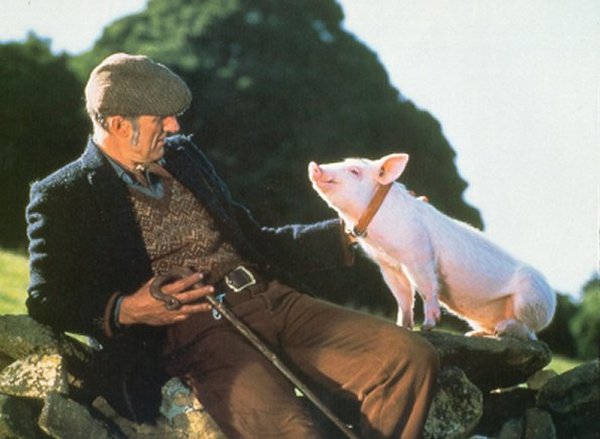
There have been many excellent posts on the Ethics Quiz about the couple that executed their apparently loving therapy dog, a Staffordshire Bull Terrier named Cam. Three comments stand out (I could easily have selected twice this many, however) , one by Paul W. Schlecht, another by slickwilly, and a third by Elizabeth II. They cover some common ground, and together show the complexity and breadth of this issue, which goes beyond mere animal cruelty to our society’s emotional connection, confusion and hypocrisy about animals generally. I decided that they complement each other, and am posting them as a set.
First, here is slickwilly’s Comment of the Day on the post, “An Especially Ugly Ethics Quiz: Cam Betrayed”:
Growing up rural, animal management is a way of life. You care for ‘commercial’ animals and you care for ‘pets.’ Confusing the two causes problems with regards to ‘final disposition.’ You never torture the animal (as this was considered a lack of character and a sign of a dangerous person) but attempt to make the act as painless as possible. (Note this is why you never hunt deer with an insufficient caliber, or take low probability shots that may wound but not quickly lower the target’s blood pressure to induce unconsciousness. Not only is is more humane, but also prevents the meat from being tainted or lost.)
A good working definition of a commercial animal versus a pet is driven by what type of profits are earned on the animal. We (generally) keep and pay for pets for emotional reasons (a type of profit), and do not expect monetary profit. Commercial animals are for food and profit. The line can blur, as in the case of military bomb dogs or ‘barn’ cats, but this generally is the case. It is a pet if you cannot bear to think of eating it. Cows can be pets. Dogs can be junk yard guard animals. The owner’s feelings make the difference.
I remember some folks who were unable to kill their show chickens, pigs, sheep, (or whatever) for delivery to the buyer (who did not bid on a live animal, and paid well over market value to support the college aspirations of the seller.) The Ag teacher’s advice was to never name a meat production animal, if you intend to sell it. Reluctance to complete the life cycle of such animals indicated the person was not suited to that sort of rural agricultural activity. Go grow corn if you like, but don’t raise beef. There was no shame in this: find what you like to do and do it. But make no mistake: anyone who has cared for 20 pigs knows they are NOT pets, and they EAT a lot, which has to be paid for.
Comment Of The Day: “Ethics Dunce, Judicial Division: Arkansas Circuit Judge Wendell Griffen”
The post about the absurd Arkansas judge who saw nothing wrong with taking part in some anti-death penalty protest theater shortly after halting some scheduled executions. Can we say “objectivity”? Sure we can!
The impetus for Steve-O-in NJ’s Comment of the Day was what could be called dicta in the original post about the dubious role models for judicial conduct currently sitting on the U.S. Supreme Court.
Here is Steve-O-in-NJ’s Comment of the Day on the post, Ethics Dunce, Judicial Division: Arkansas Circuit Judge Wendell Griffen:
I agree that SCOTUS needs an ethics code, but, in all fairness, did Eisenhower, Kennedy, Johnson, or Nixon ever attack the SCOTUS or a decision in a speech or an address? FDR was far more politically powerful than Obama ever could hope to be, but even he knew when to back off the SCOTUS. That said, I wonder if he knew from the get-go he was going to break the 2-term tradition and just wait the court out, as justices either died or retired and he replaced them with like-minded judges.
What do you think of an age limit for Federal judges, setting either 70 or 75 as a mandatory retirement age? Although Article III judges serve for the term of their good behavior, arguably that Article didn’t conceive of Federal Judges living well past 70 regularly and living and serving into their 80s and 90s uncommon but now certainly not unheard of. If we can revisit Presidential terms of office, which we already have, if we can revisit the Electoral College, which we already have once and some are asking us to again, and if many vocally want us to revisit both the First and especially the Second Amendments, all of these due to changing circumstances (breach of the 2-term custom, the emergence of political parties, alleged hate speech, and the evolution of firearms beyond single shot muskets) then arguably we can revisit Article III as well.
Comment Of The Day: “More Ethics Observations On The United Flight 3411 Ethics Train Wreck”

Public discussion and media reports is finally waning regarding United’s cascading botch of a full and fully seated flight in which the airline wanted to get four seats back and had neither the law, nor policy, nor sufficient justification to acquire them. Thus its agents lied, exceeded their authority, mistreated a passenger, called in police, and they further escalated the fiasco, badly injuring the victim in the process. (Their conduct was similar in some ways to that of the police officers who killed Eric Garner.)
Even now, however, many people still believe this arose from an overbooked flight. Some misguided pundits are still blaming Dr. Dao. The news media has not taken responsibility for its terrible reporting on this incident, and still hasn’t done a good job explaining what really happened. Meanwhile, Delta has taken advantage of United’s pain by announcing that it will pay up to $10,000 to bumped passengers in the future. And Southwestern won itself an all time record for audacious cheekiness with the above ad, which United deserves. [UPDATE: Apparently this is a hoax, not a real ad. Too bad.]
Here is brian’s Comment of the Day on this ethics train wreck in the sky:
The I don’t think you’re being overly cynical here. I have seen multiple responses from media, politicians, and the CEO all following the basic pattern, propose solutions that do not address what went wrong. A handful of employees acted incompetently, and United (and probably most airlines) didn’t think through their carriage contract, police were ill trained, and the culture of United is horrible in general. But instead of addressing any of those issues, they all have motivated reasons to misconstrue the issues and offer ‘solutions’ to problems that don’t exist.
Things that could be done:
1) CEO comes out and says we are going to train and empower our staff to deal with more and varied types of situations as they arise. We also recognize that our current customer facing staff do not have the appropriate level of customer service training, which is entirely the fault of management. We are going to fix this starting now. We have pulled together XYZ resources and will be meeting weekly for the next 12 weeks to generate a comprehensive plan to begin changing our culture. You can expect an interim report in 4 weeks.
2) CEO says, we are going to set up a true reverse auction, paying cash, for all situations when we have to either remove or deny a paying customer due to reasons beyond their control. We will train all gate staff and front line managers on how to conduct this easy and straight forward auction. We should have been doing it already, because the value of the additional seats we can sell by overbooking far outweigh the costs we incur from the small portion of riders who we must justly compensate for any inconvenience.


I am desperately behind in posting deserving Comments of the Day, and have vowed to catch up. This one, by Zoltar Speaks!, is almost a week old, but fortunately its substance remains very current.
He was responding to the post about Harvard icon Larry Tribe being moved to engage in rumor-mongering and conspiracy theories because of his, and undoubtedly his elite peer group’s, contempt and hatred of the President of the United States. I had been holding it to pair with a long post regarding the daily, embarrassing displays of utter bias and irrationality in the New York Times, based on my forced perusal of the last Sunday edition. That post will arrive sooner or later, but it is unfair to delay wider distribution of Zoltar’s commentary any longer.
I was joking about “Anti-Trump Brain Loss,” but the phenomenon is no joke, and is, in fact, an existential threat to the nation, one more thing that the Trump Deranged are incapable of seeing in their fury. For some reason I was reminded of one of the worst Hollywood movies ever mad, the hilarious sequel to “The Exorcist,” “The Heretic,” in which we learn that locusts are turned voracious and destructive by being in close proximity with each other. Their beating wings brush against other locusts, and it changes them (we are told) into monstrous forces of destruction. [Note: this is mostly nonsense, but not completely.] This is like what I witness on Facebook, in the news media and from the more intellectual-limited among Democratic officials, who declare every incident, episode or tweet coming out of the chaotic Trump White House a crisis, then the news media repeats that it is a crisis, and the anti-Trump locusts fantasize about how “the crisis” will finally give them the chance to do what they have been trying to do since November 8, 2016: undo the election.
I was critical of Professor Turley in the previous post, so let me praise his clarity on this topic now. In a post on his blog called “A Question of Law: Calls for the Indictment or Impeachment of Donald Trump Are Transparent and Premature,” he writes,
Bingo. Trump hatred has transformed previously responsible adults into children, as well as locusts. We have never seen anything like it as a nation, and since the infection has mostly crippled an entire political party, the journalism establishment and the pundit class, the risk of permanent harm to the nation is real. I spent five years warning readers about Donald Trump, and almost two explaining why it was madness to even consider him as a responsible Presidential choice. I did not, however, think for a second that progressive mania in response to a Trump victory—one that arose out of indignation that the Left’s precious agenda would be imperiled by a dolt chosen by the electorate because progressives had become insufferable, arrogant, divisive, cynical, corrupt and increasingly totalitarian—-would create a greater danger than an incompetent President.
Yet that is what has come to pass. I have always detested the Right’s facile dismissal of liberals as “insane,” as in Michael Savage’s book, “Liberalism is a Mental Disorder,” because it echoes the indoctrination tactics of the Soviet Union, which placed dissenters in mental institutions. Dubious political beliefs don’t mean one is crazy, but behaving irrationally and irresponsibly because those beliefs aren’t prevailing can produce symptoms of mental disturbance. That seems to be what we are witnessing now.
The locusts’ wings are beating furiously, changing them, driving them mad.
Here is Zoltar Speaks!’s Comment of the Day, the first of several this weekend, on the post, “This Is The Heartbreak Of Anti-Trump Brain Loss…”:
Continue reading →